Temperature
Reference from the original Physics I textbook.
- Temperature
Temperature characterizes thermal state and determines the direction of spontaneous heat transfer. It is distinct from total internal energy, which also depends on the amount and type of matter.
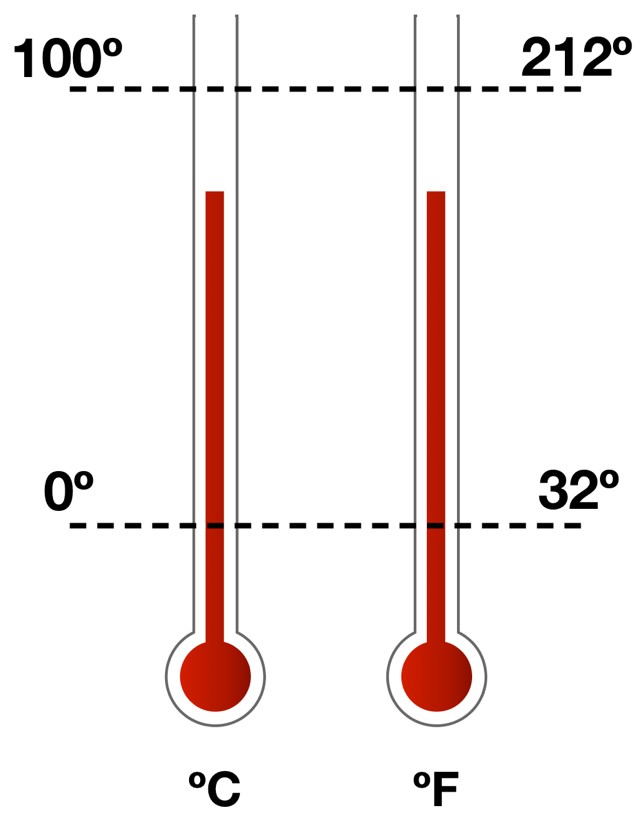
- Related Glossary Terms
Celsius Scale, Celsius to Kelvin Scale Conversion, Fahrenheit Scale
- Index
Reviewed physics notes (1)
These corrections keep the original lesson’s purpose while fixing errors in the source edition.
- Large total internal energy does not imply high temperature. — Reference 1
Glossary and deeper reading · 1 refreshers
These editorial refreshers supplement the reading. Definitions and examples are added guidance; original source wording and recorded answers remain in their original context.
-
Temperature
Temperature is a state quantity that determines the direction of net energy transfer through thermal contact. For a classical ideal gas it is proportional to the average translational kinetic energy per particle, rather than to the total energy of the sample. For example, a small hot metal sample can have a higher temperature but less total internal energy than a large cooler sample.