Unit Vector
Reference from the original Physics I textbook.
- Unit Vector
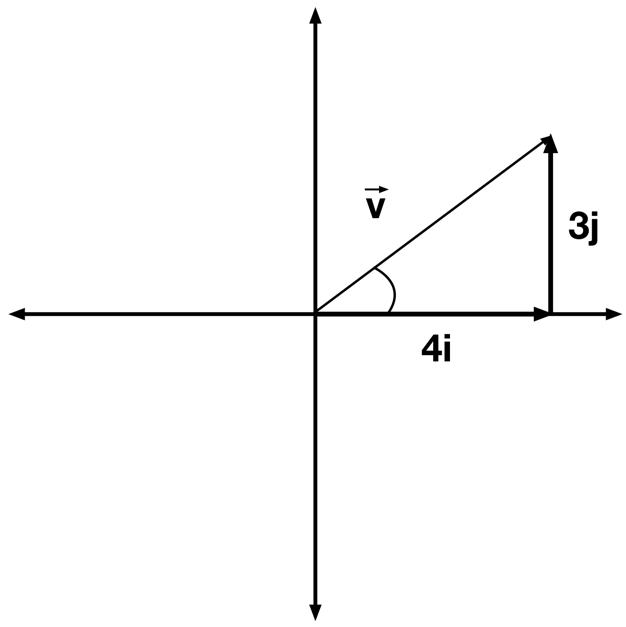
A unit vector is a dimensionless vector of magnitude 1 that specifies a direction. For a nonzero vector A⃗, Â = A⃗/|A⃗|.
The Cartesian unit vectors î, ĵ, and k̂ point along the positive x, y, and z axes, respectively. Each has magnitude 1.
- Related Glossary Terms
- Index
Reviewed physics notes (2)
These corrections keep the original lesson’s purpose while fixing errors in the source edition.
- Unit vectors must be dimensionless; zero vector cannot be normalized. — Reference 1
- Original j notation uses a vector arrow instead of a unit-vector hat. — Reference 1
Glossary and deeper reading · 2 refreshers
These editorial refreshers supplement the reading. Definitions and examples are added guidance; original source wording and recorded answers remain in their original context.
-
Unit vector
A unit vector has magnitude one and specifies a direction. Multiplying it by a signed component gives the vector contribution along that direction. For example, the Cartesian unit vectors identify the positive x, y, and z directions.
-
Vector
A vector is a quantity with a magnitude and a direction, represented by an arrow or by components along chosen axes. Vectors add by adding corresponding components rather than simply adding their magnitudes. For example, an eastward displacement followed by a northward displacement produces a resultant pointing northeast. The zero vector has zero magnitude and no unique direction.