Vectors
Original textbook reading.
One of the most basic concepts that you need to know in physics is the difference between a vector and a scalar, and how to work with both.
Vectors are defined to be any quantity that has both a magnitudeⓘ and a direction. They can be represented by an arrow over the vector variable, e.g. or by being bolded, e.g. . In this guide, vector quantities will be represented by an arrow on top of the variable, .
Magnitude represents how long the vector is, and is often denoted by an absolute value symbol, . It is indicated by a number. Indicating direction is slightly trickier. There are three primary ways to designate the direction of a vector: 1) by angle, 2) by components, and 3) by a unit vector. Let’s look at these ways in more detail.
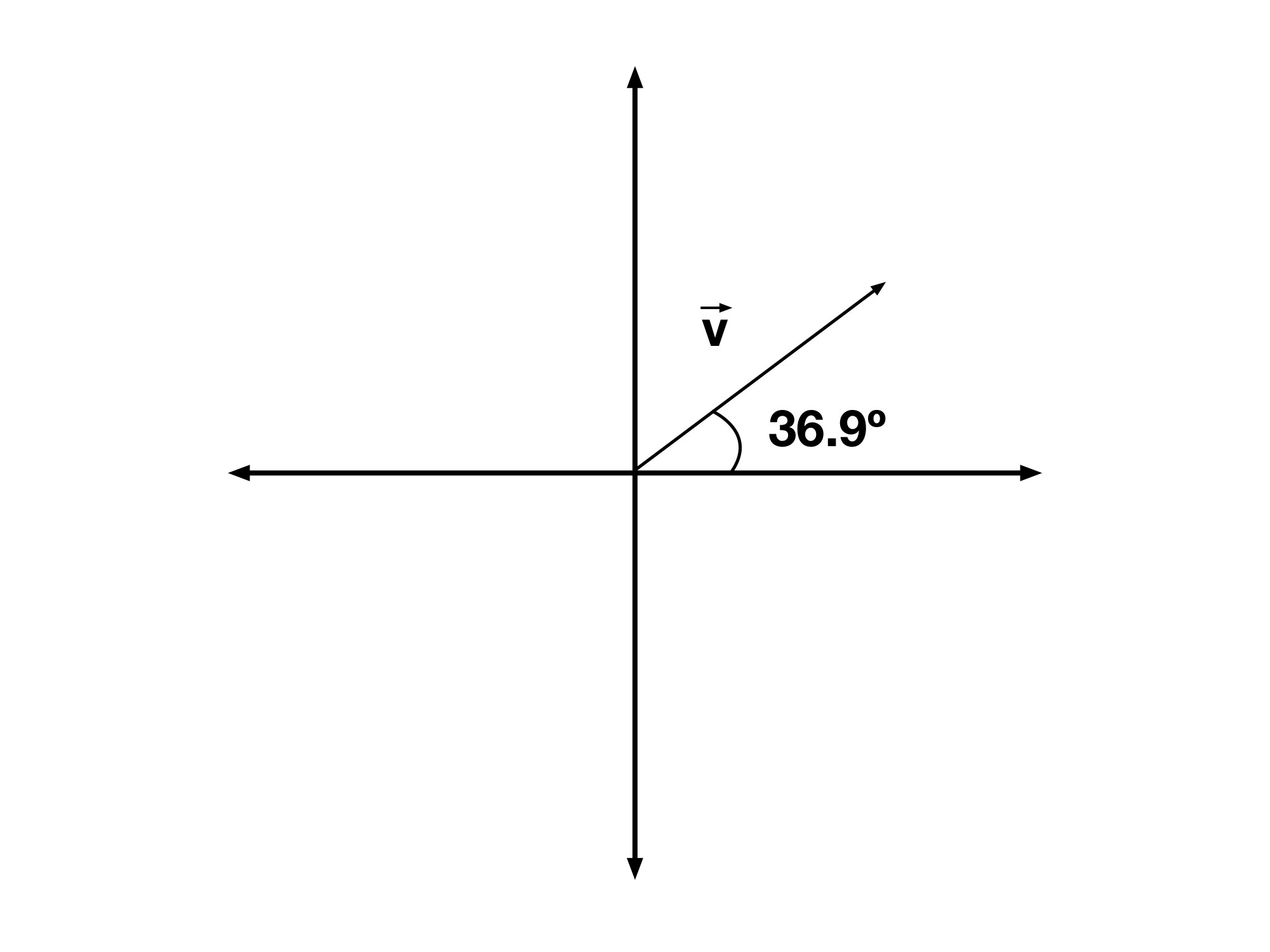
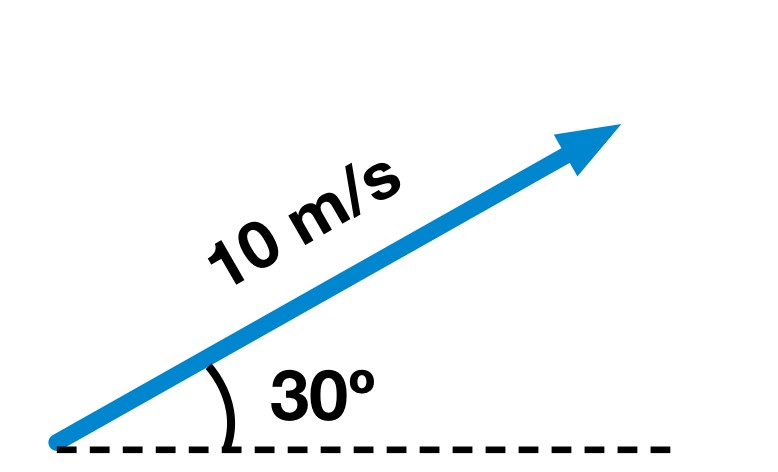
Here is vector I, a vector at an angle of .
Vectors you can move
Predict the direction before moving a slider. Angles here run counterclockwise from +x.
- A: (4, 3)
- B: (-2, 4)
- A+B: (2, 7)
- |A|
- 5
- Direction of A
- 36.87°
- Unit vector Â
- (0.8, 0.6) — dimensionless
- A + B
- (2, 7), magnitude 7.28
- A · B
- 4
- (A × B)𝓏
- 22
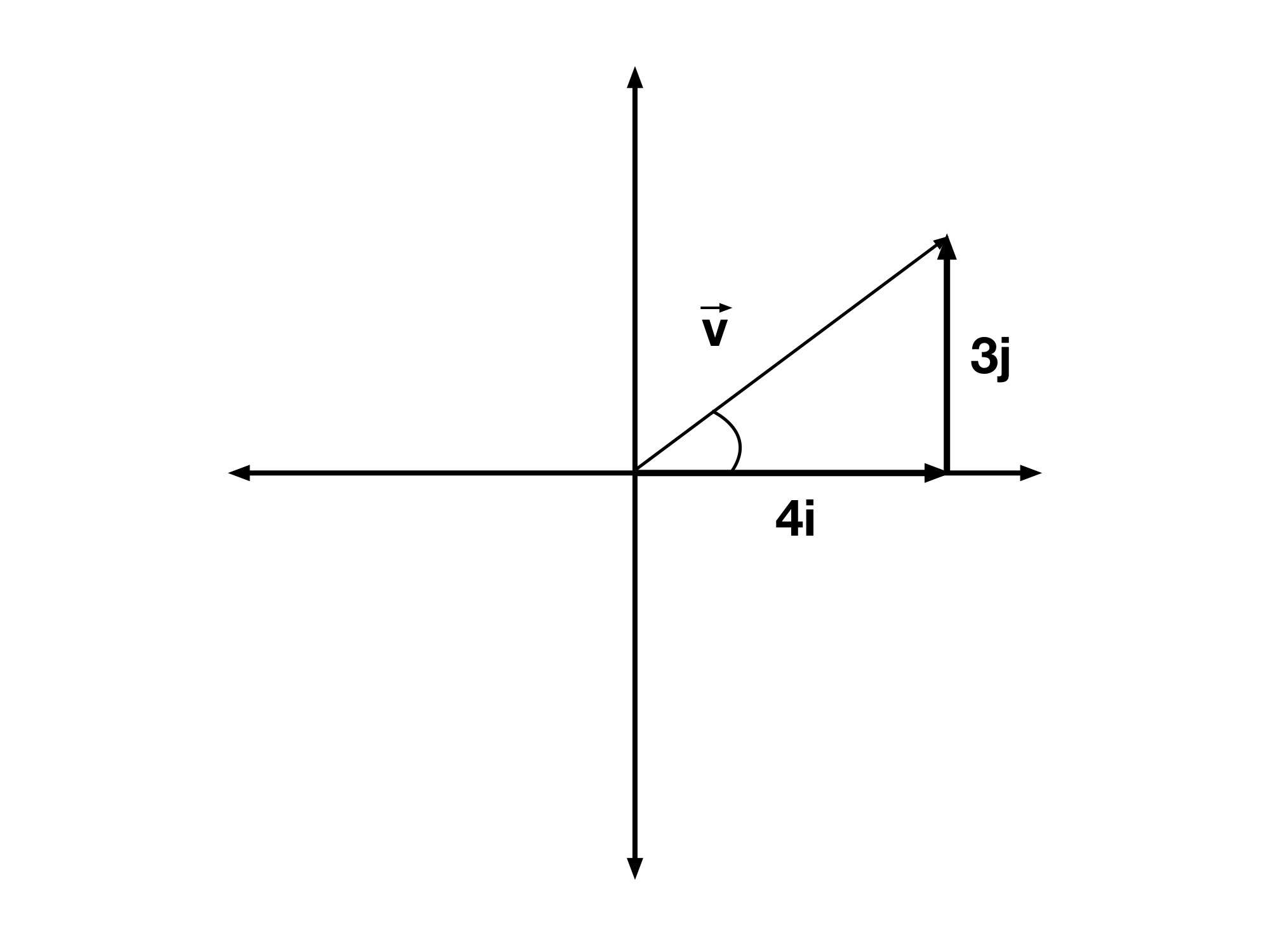
- : By converting the single vector into the sum of two vectors, we are representing a vector in component form. This lets us cover both direction and magnitude. We will learn how to do that soon.
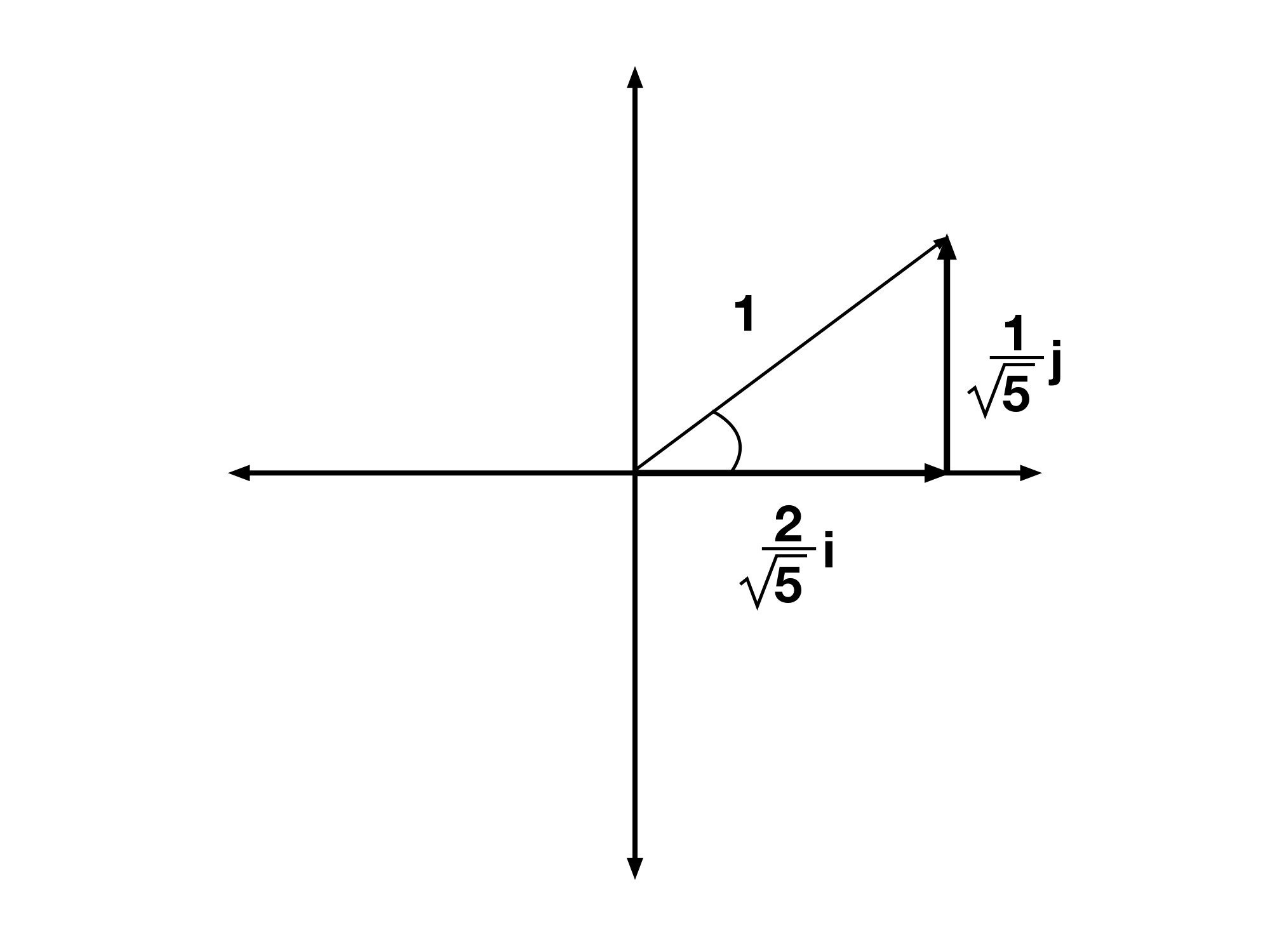
- : This method is similar to the component method above, except the magnitude of the whole vector is 1, thus the name unit vector.
The following table shows some common movement vectors and their scalar equivalents. A scalar is described by a number and its unit; it has no direction. Vectors will be the body of this chapter.
| Scalar | Vector |
|---|---|
| Distance traveled | Displacement (not generally the same magnitude) |
| Instantaneous speed | Instantaneous velocity |
| Magnitude of acceleration | Acceleration |
| Magnitude of jerk | Jerk (rate of change of acceleration) |
Instantaneous speed is the magnitude of instantaneous velocity. Distance traveled, however, need not equal the magnitude of displacement. A car’s speedometer shows speed; its velocity also needs a direction.
Perhaps surprisingly, the difference between distance and displacement is a bit more complicated. Put simply, the distance is the full length traveled during movement; the magnitude of displacement is the shortest distance between the starting point and the end point. Its direction is a vector starting at the starting point and ending at the ending point.
You can refer to Gallery 1.1.2 to clarify the difference between distance and displacement .
Path A
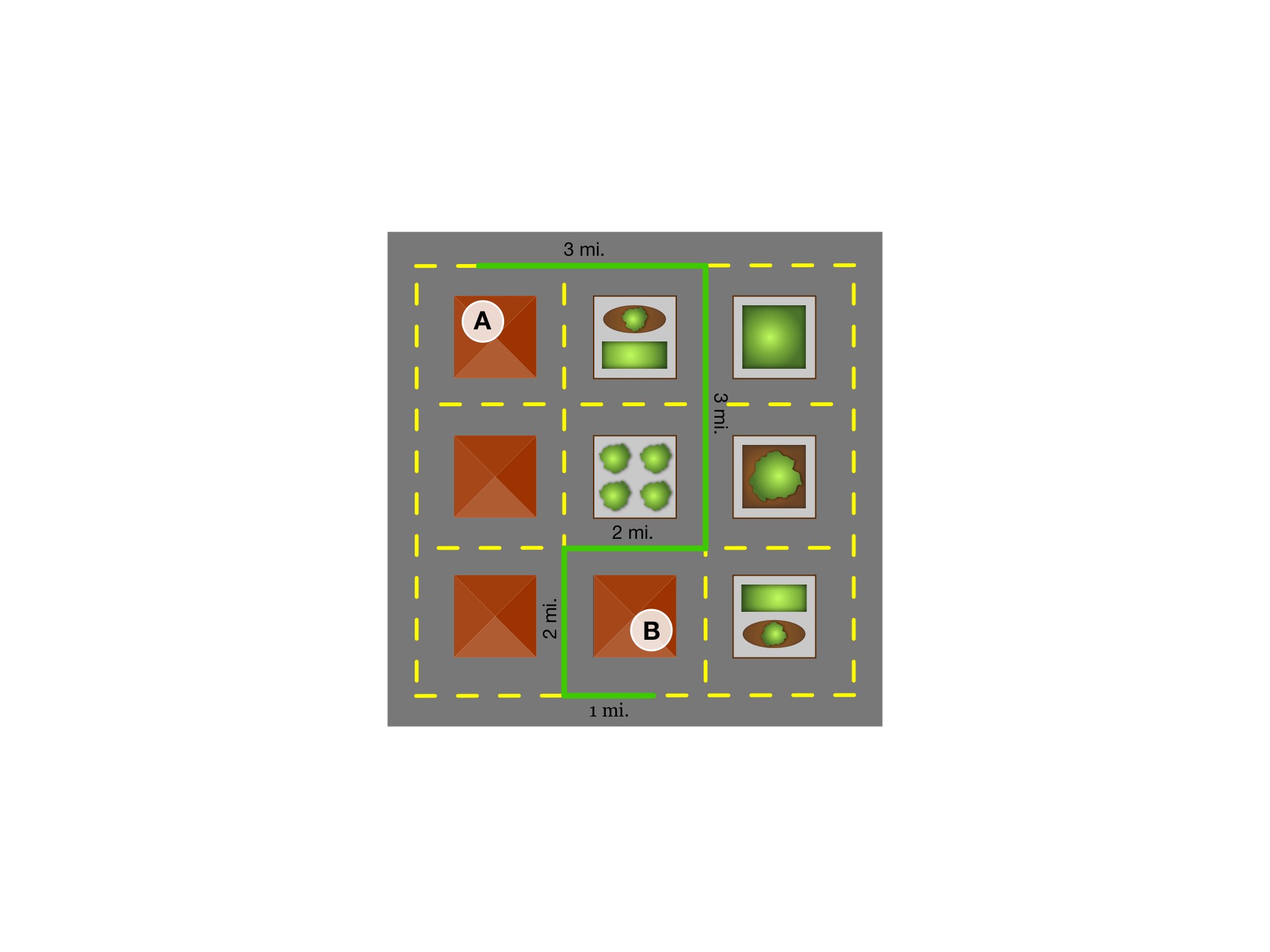
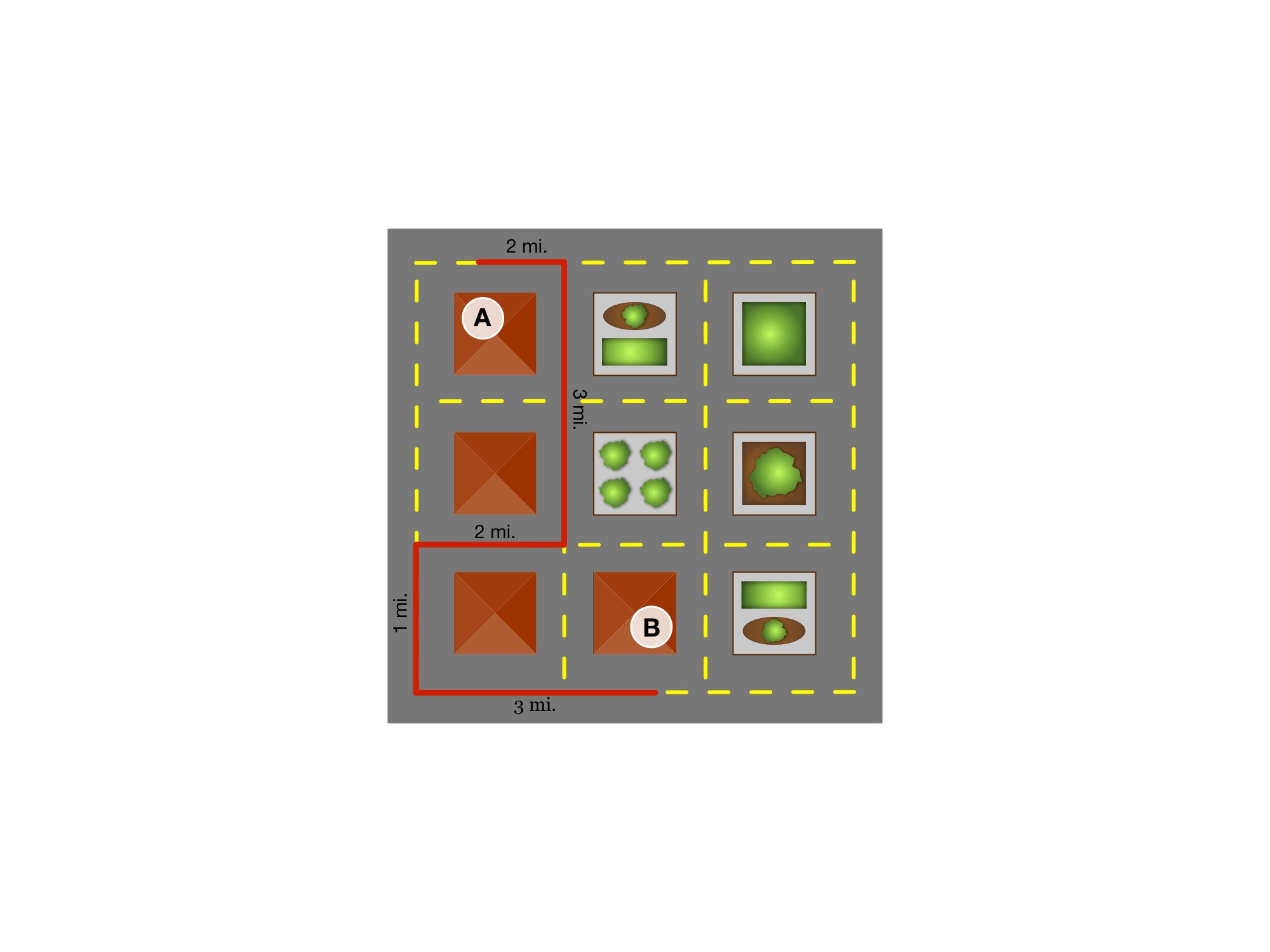
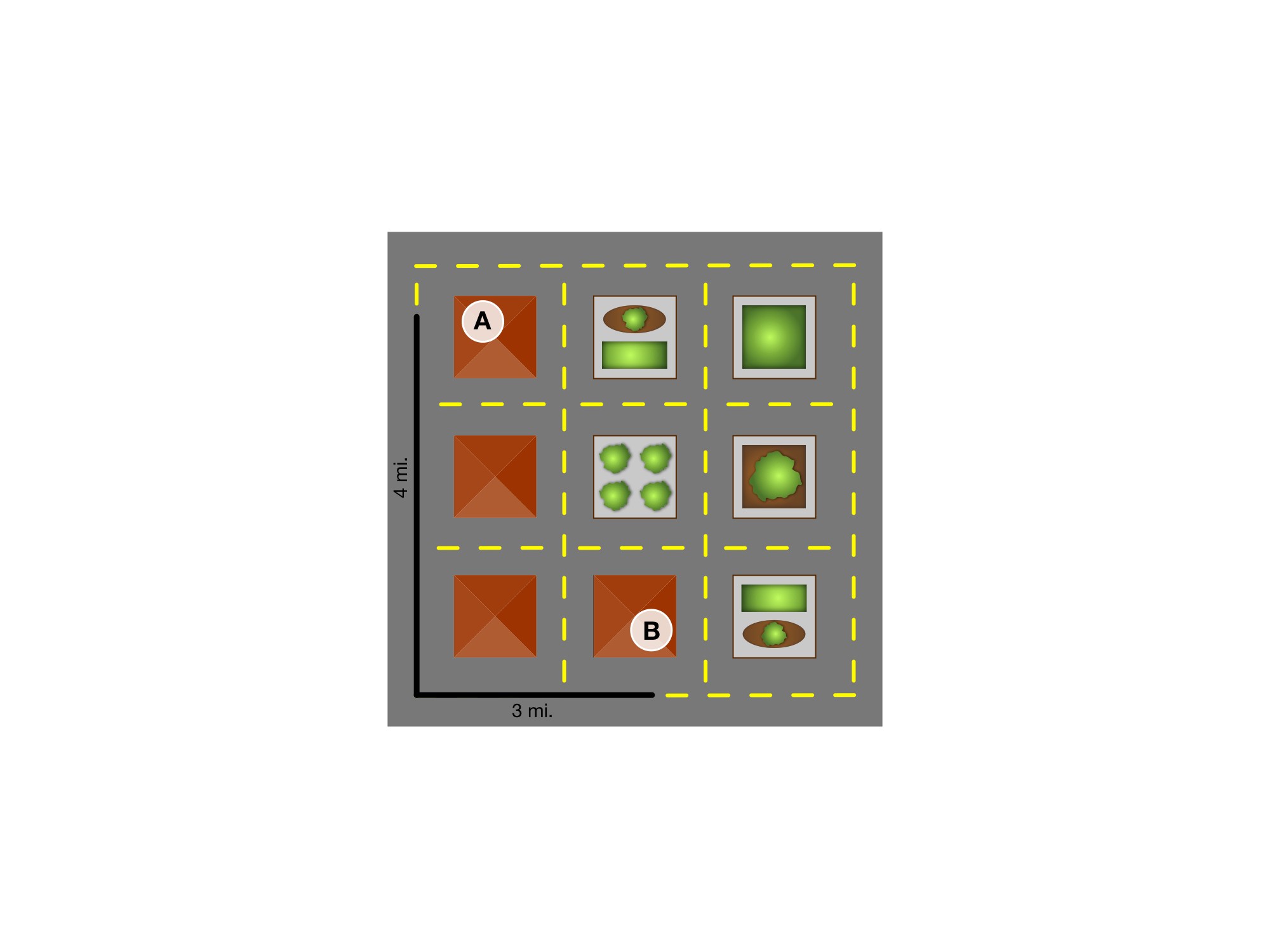
Let’s say that Suzy, has to go from house A to house B. She can take three paths to get there. Each path takes a different track to reach house B, and as such the distances that Suzy travels along each path may vary. But does her displacement change?
If Suzy were to travel along path 1, she will have gone a distance of . However, is this her displacement? Displacement refers to the straight-line distance between the initial point and the ending point. This means that even though Suzy’s path was long, her displacement is less, as displacement is a vector drawn from her starting point to her ending point. Also notice that displacement is the same no matter which path you take, provided you begin and end in the same location. Suzy will have the same displacement no matter which path she takes because she starts and stops at the same place.
Key Point: Displacement is the shortest position vector connecting the beginning and the ending position of motion. Its direction is defined relative to the initial position.

Say we have a man at point A.
Read every step and figure
Step 1
Step 2
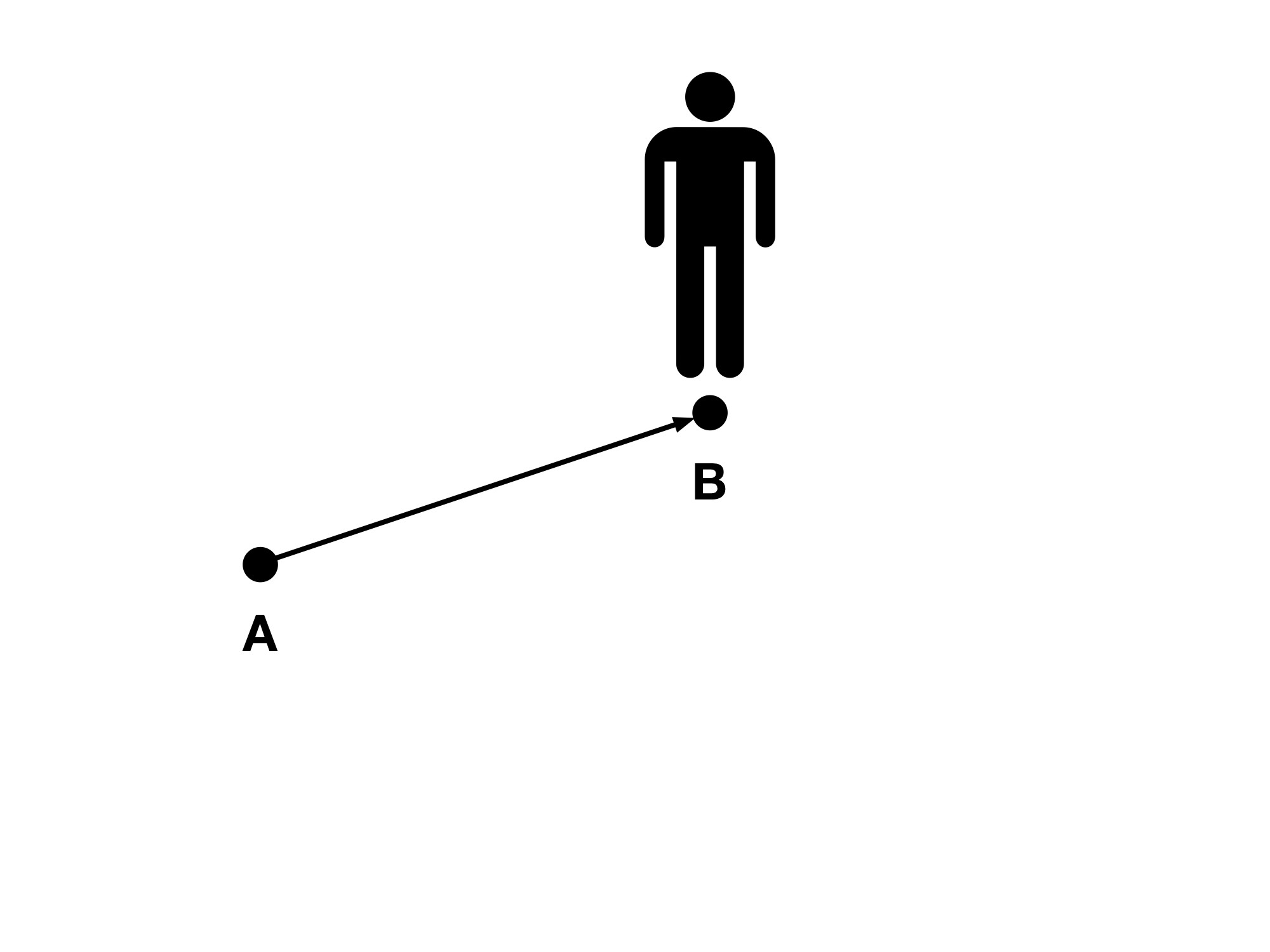
If that man moves from point A to point B in a straight line, then we can see the line , which shows both his distance traveled, and his displacement.
Step 3
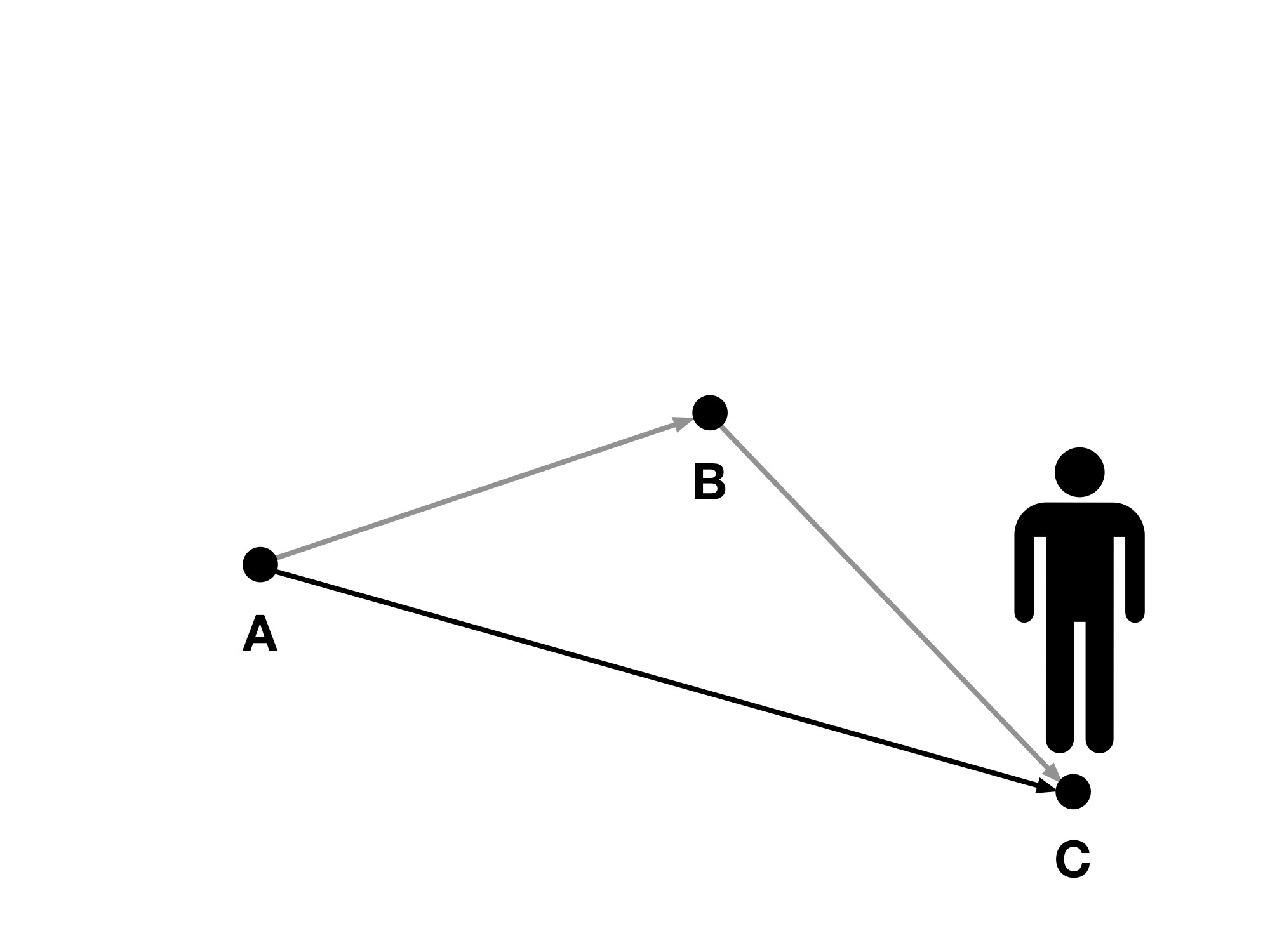
Now, if he moves from point B to point C, his distance has become and . However, his displacement is only the straight-line distance from his initial position to his current: line .
Step 4
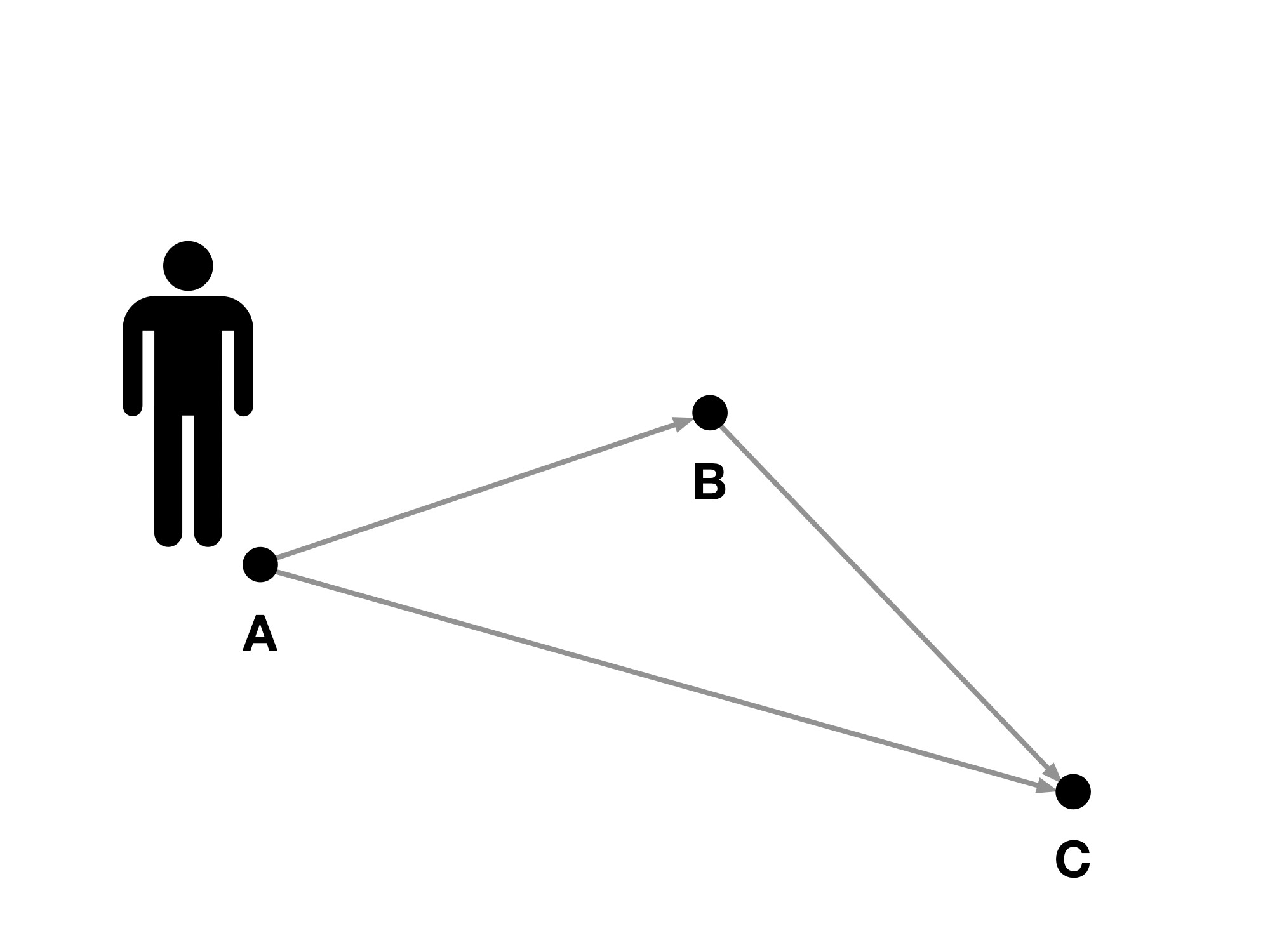
Now he has returned back to point A. His distance is the perimeter of triangle ABC. His displacement, however, is 0, as he is back at his starting position.
Step 5
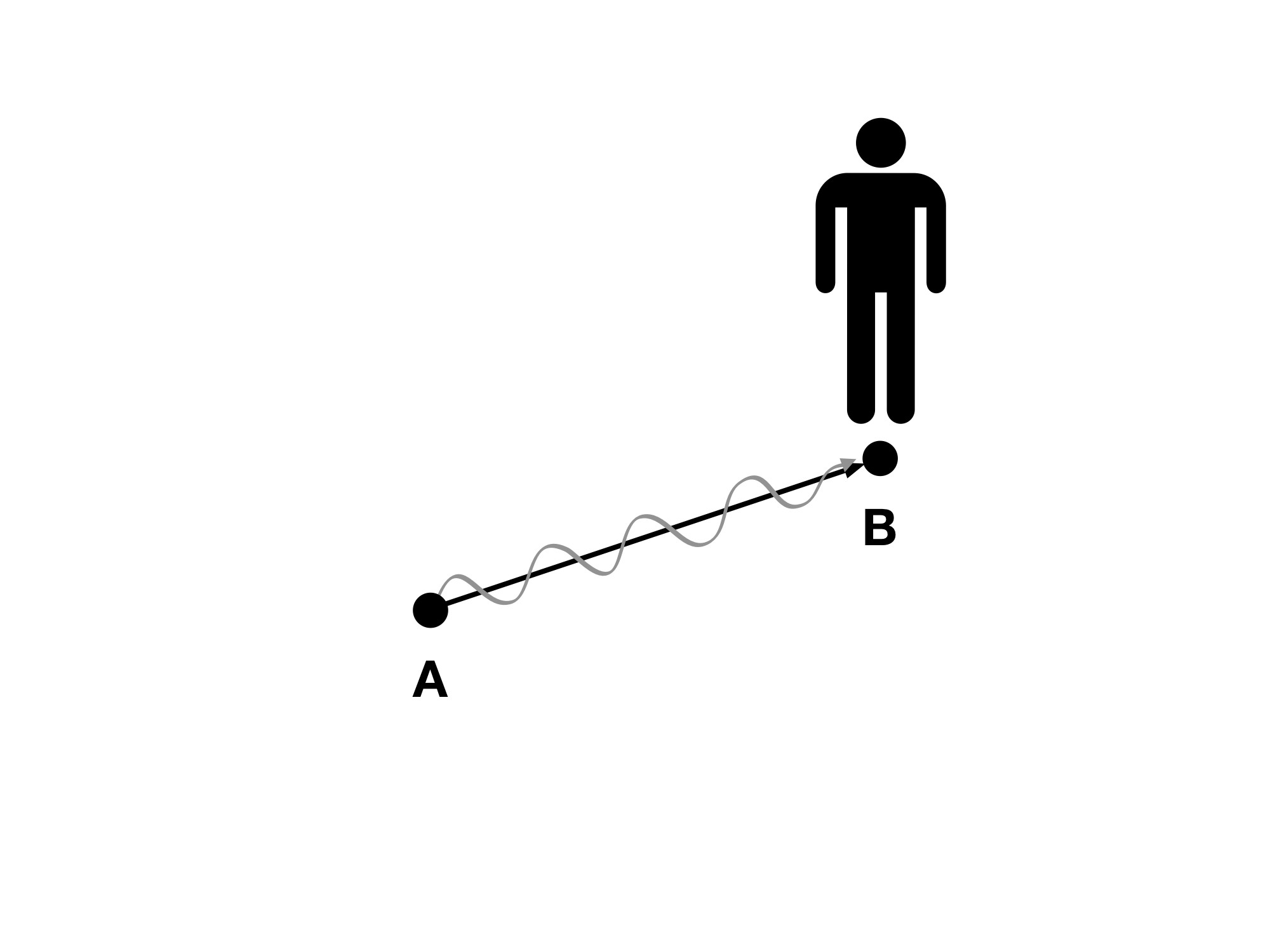
Path A
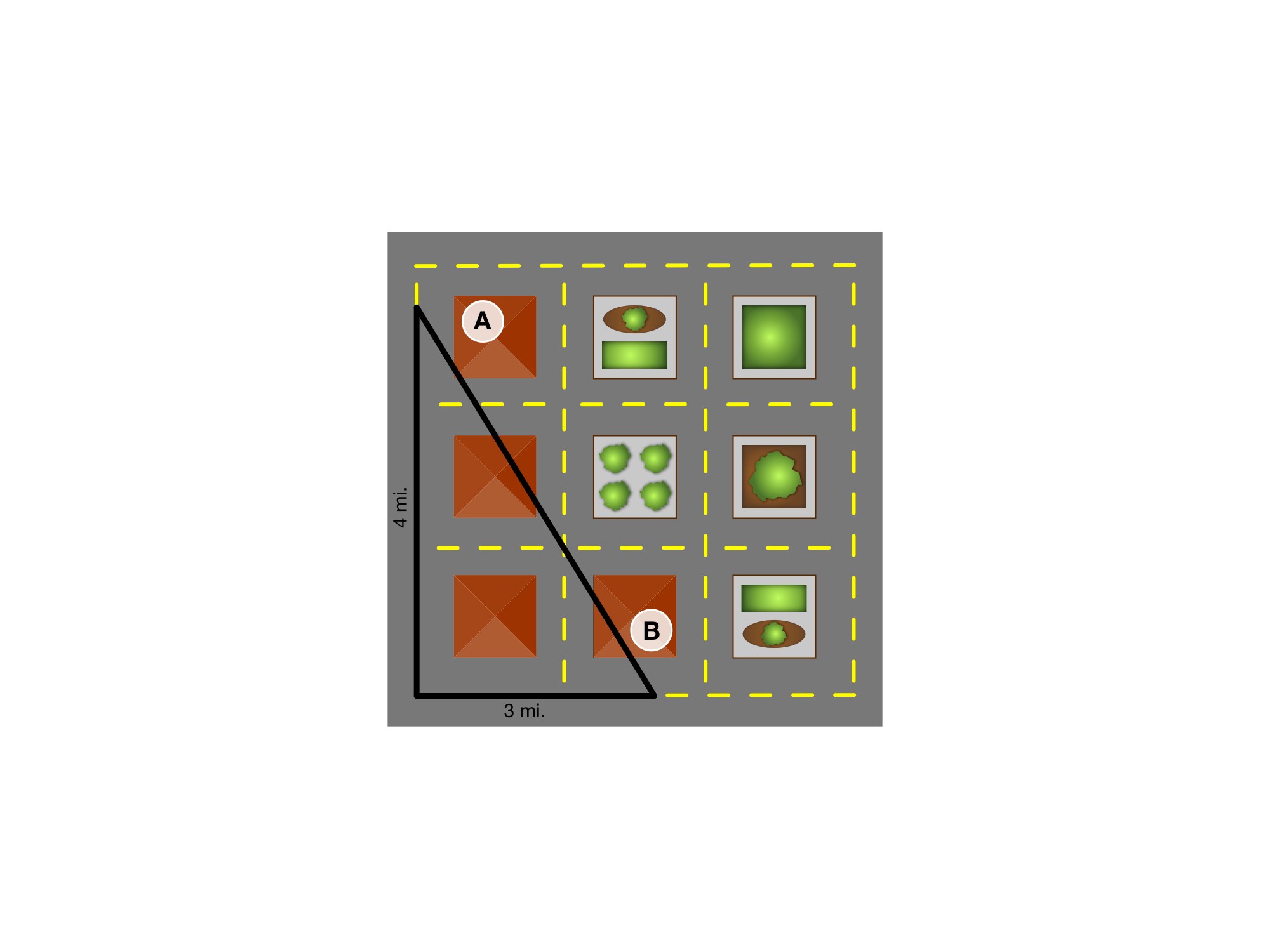
By using the images in the gallery, determine the displacement of Suzy as she travels from house A to house B. Also determine the distance Suzy travels in path C.
Step 1: Find the magnitude of displacement
By setting the displacement vector to be the hypotenuse of a right triangle (as in the fourth image in the gallery), the length can be found. The right triangle has sides of and . This makes the magnitude .
Step 2: Find the direction of displacement
By using the same right triangle as before, we can identify the angle through the formula:
This tells us that the angle is about . As this angle is the angle between the path and due South, we can say that the path is in the direction of East of South.
If we want to use the typical cardinal directions here, we need the complement of the angle. That comes out to be . The direction then becomes South of East.
Another value that has a scalar and vector form that are easily confused is speed and velocity. Typically, speed will be the magnitude of velocity, and velocity will be distinguished from speed by the inclusion of a direction.
Velocity is a bit special itself, however, so we will need to discuss velocity a bit more deeply than we did displacement.
Velocity↗ typically comes in two forms, which are instantaneous and average. Instantaneous velocity refers to the velocity of an object at one time during its travels, and average velocityⓘ refers to the mean velocity of an object over a set time interval.
Average velocity is easily determined if the displacement and time of travel are known. The following equation hows the relationship between average velocity and displacement.
(Equation 1.1.1)
Here, refers to displacement, and refers to time. The subscript on velocity shows that we are discussing average velocity. Realize that both velocity and displacement are vectors, as shown by the arrow over each variable.
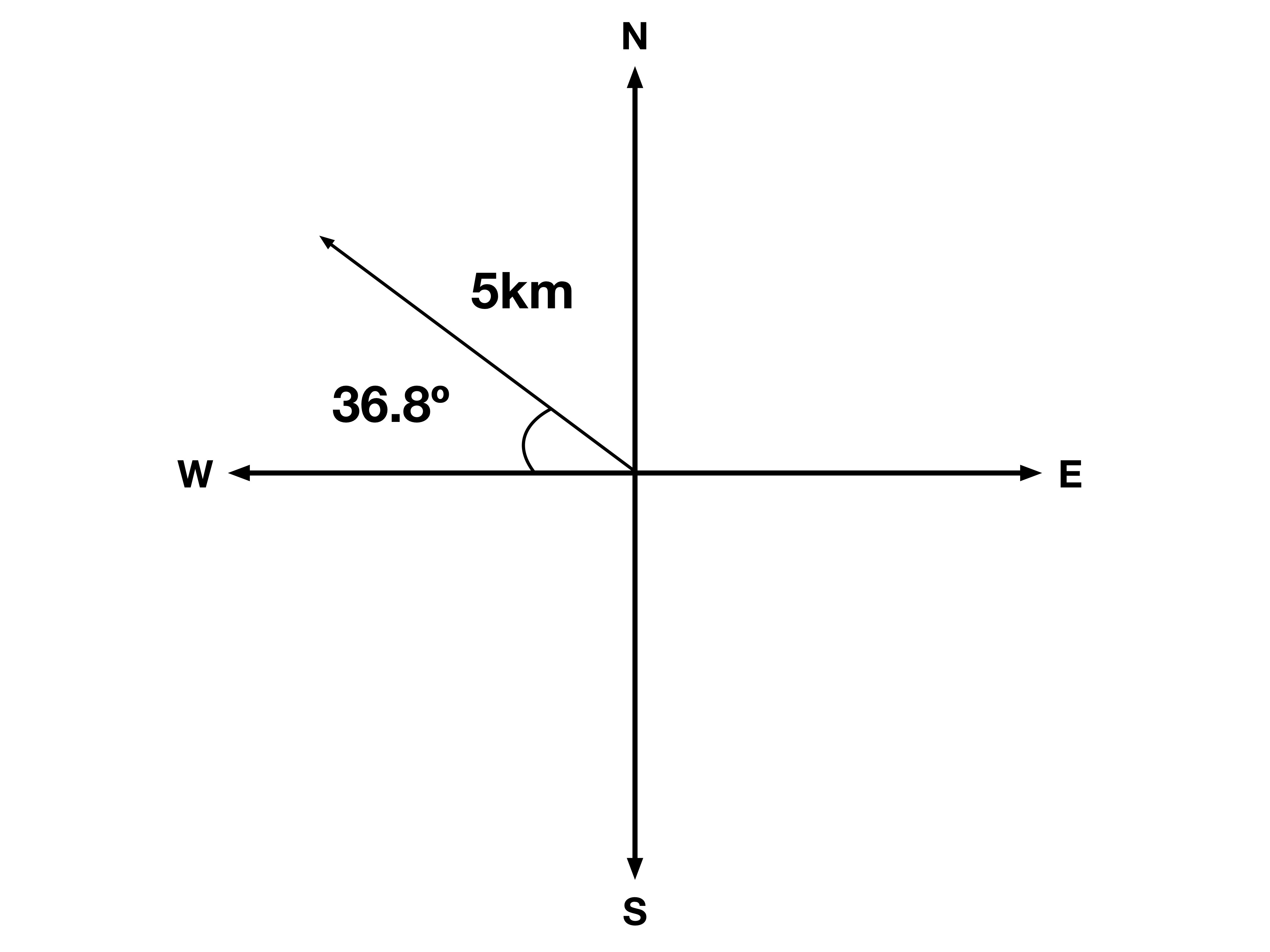
Figure 1.1.1 Our Example Vector, d⃗
(Equation 1.1.2)
Here, the refers to distance traveled instead of displacement. Neither distance nor speed have a direction, so they are both scalars.
Instantaneous velocity describes motion at a particular time. A speedometer shows its magnitude, instantaneous speed. Unless stated otherwise, “velocity” in the following discussion means instantaneous velocity.
One of the simplest ways of writing a vector is shown below. Remember that all vectors must have both a magnitude and a direction.
A second way is by identifying components of the vector and then declaring them using unit vectors, a vector of any direction with a magnitude of 1. Most commonly, the cartesian directions, x, y, z, are used as the directions for the unit vector, with each direction having its own unit vector: , , and , respectively.
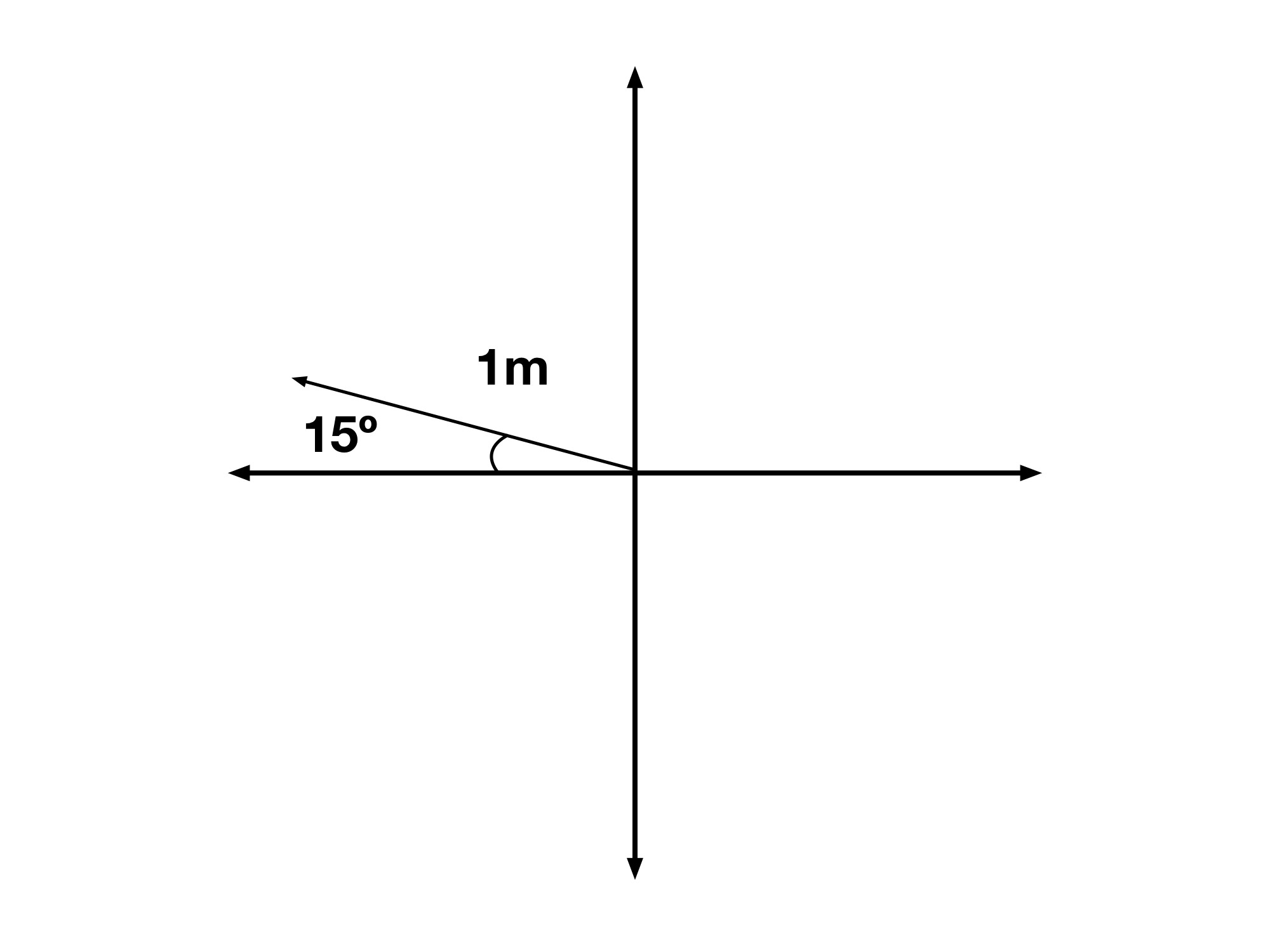
A unit vector has magnitude 1 and no physical unit. The metre label in this original diagram does not apply to a normalized direction vector.
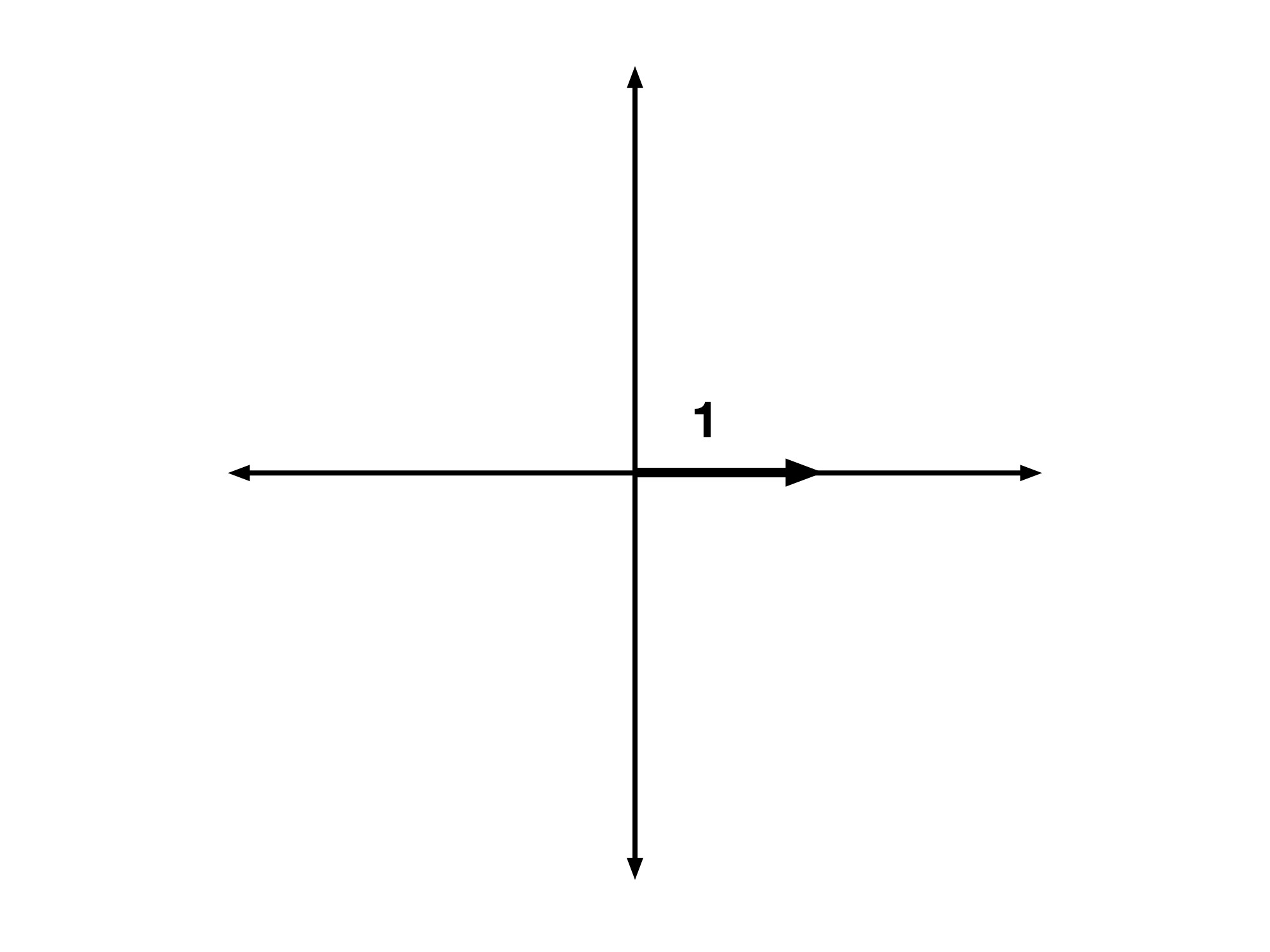
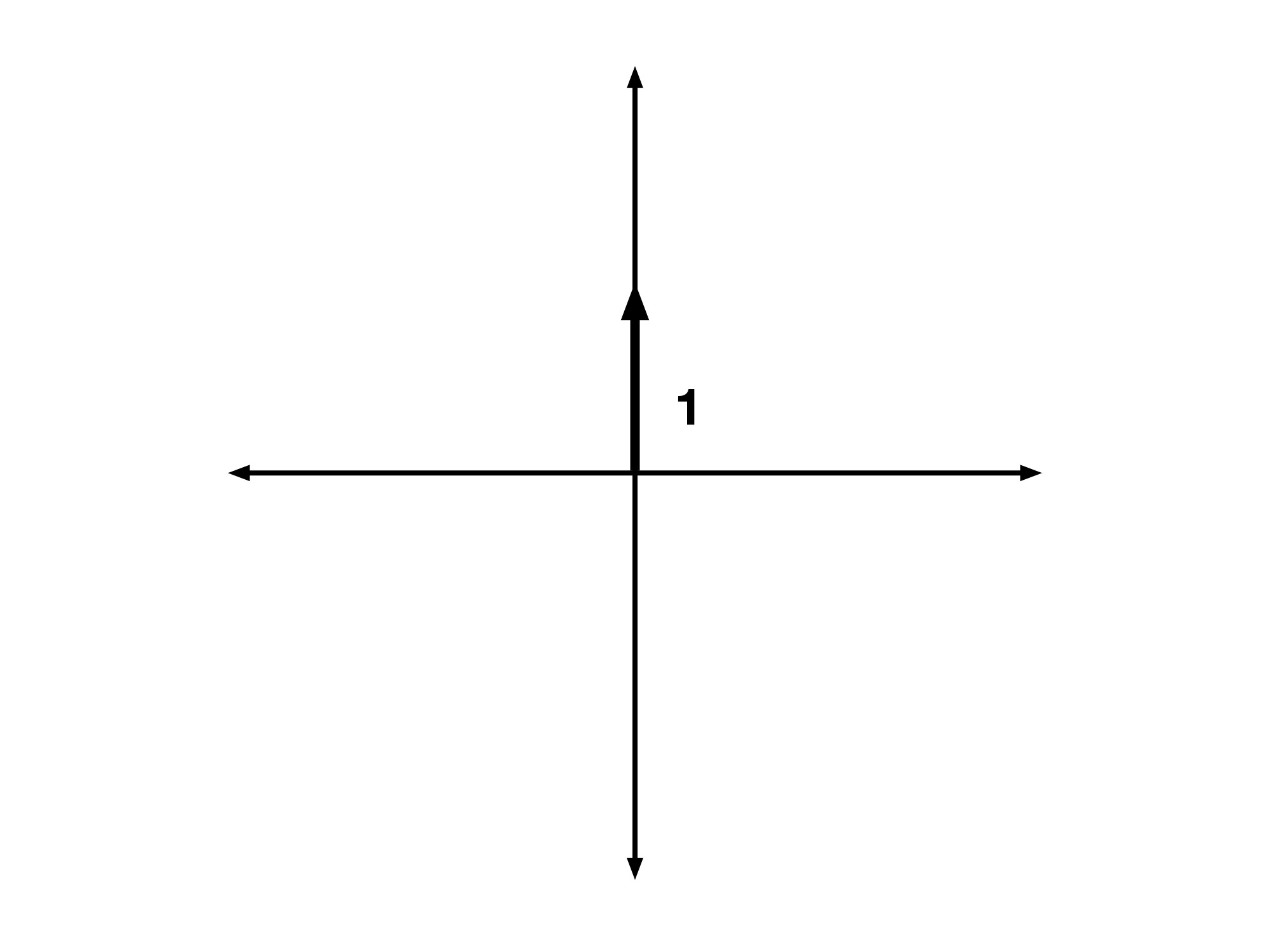
In order to use these unit vectors we must first decide which directions correspond to the x or y axes in your problem. This is also known as defining a co-ordinate system.
In Example Problem 1.1.1, the situation shows a map, and the direction is given in terms of the compass. We define the x-axis to be west to east and the y-axis to be south to north.
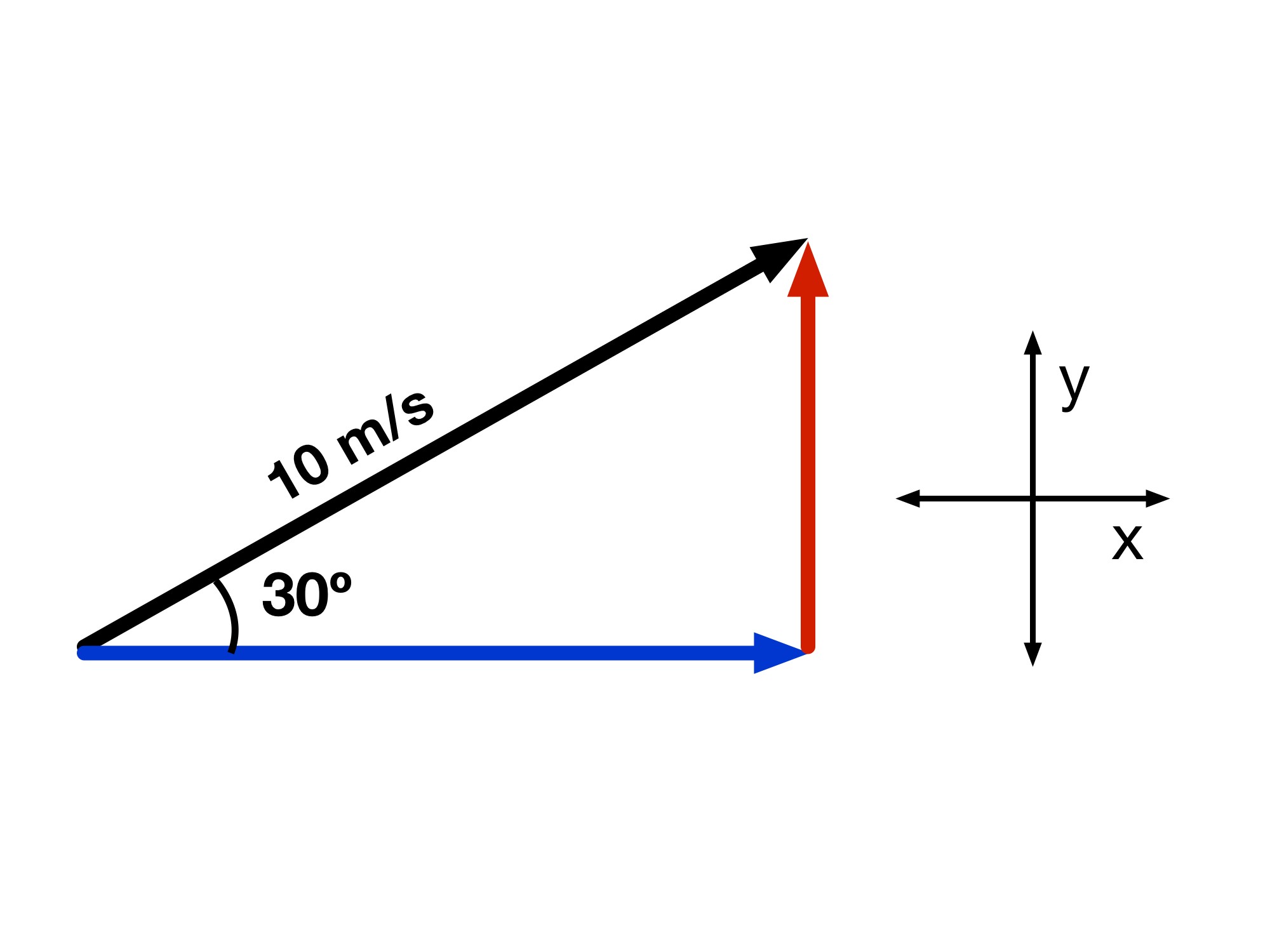
Once we do that, we can break the vector into components by drawing a right triangle, using the vector in question as the hypotenuse and have each leg be parallel to the x and y axes.
Once the magnitudes of each side are determined, then the vector can be written by components. To do this, the vector is defined by the sum of the products of the unit vectors and each of their components. In this case, has components of in the positive y direction and in the positive x direction. Therefore, we write the vector as:
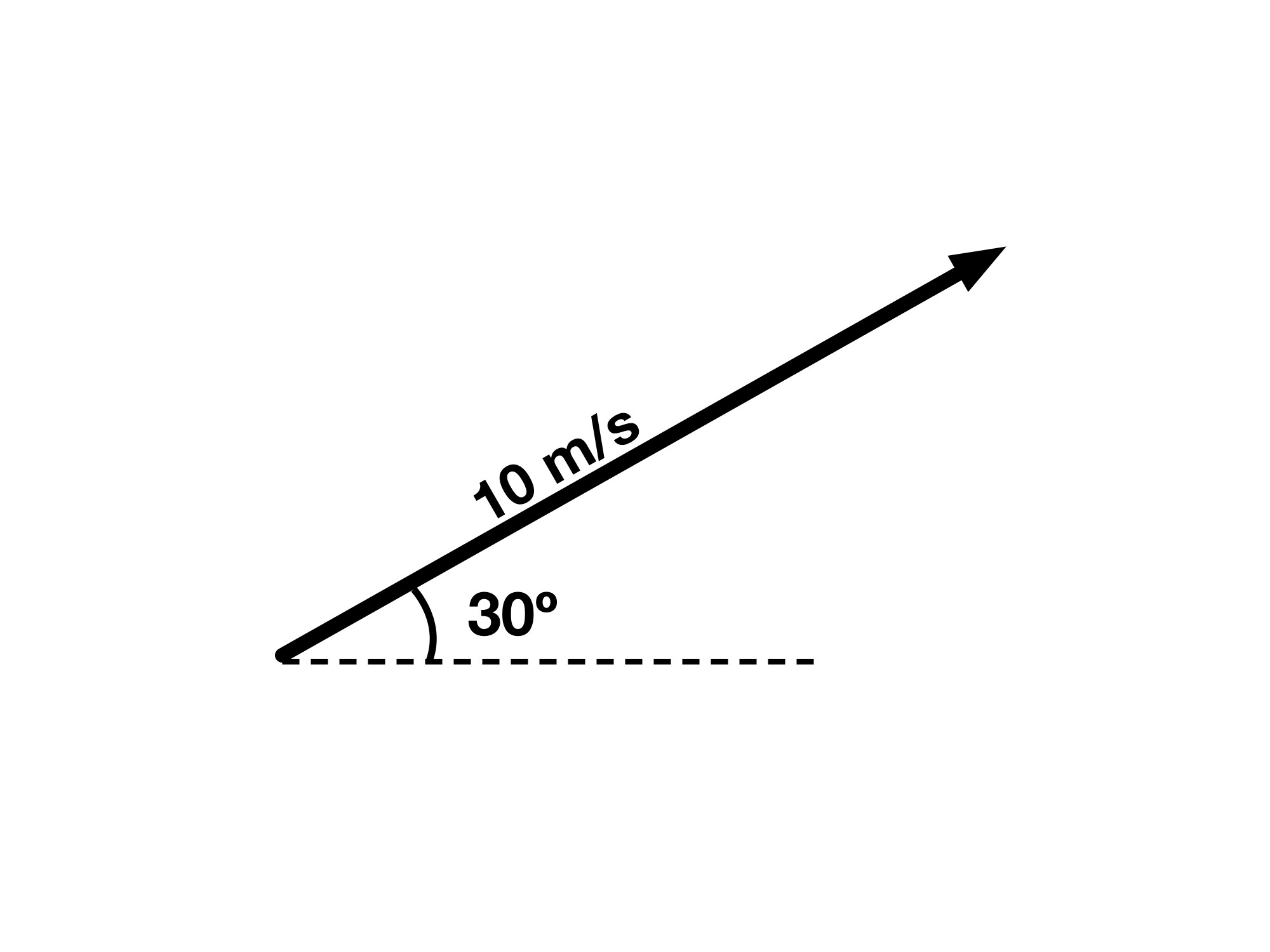
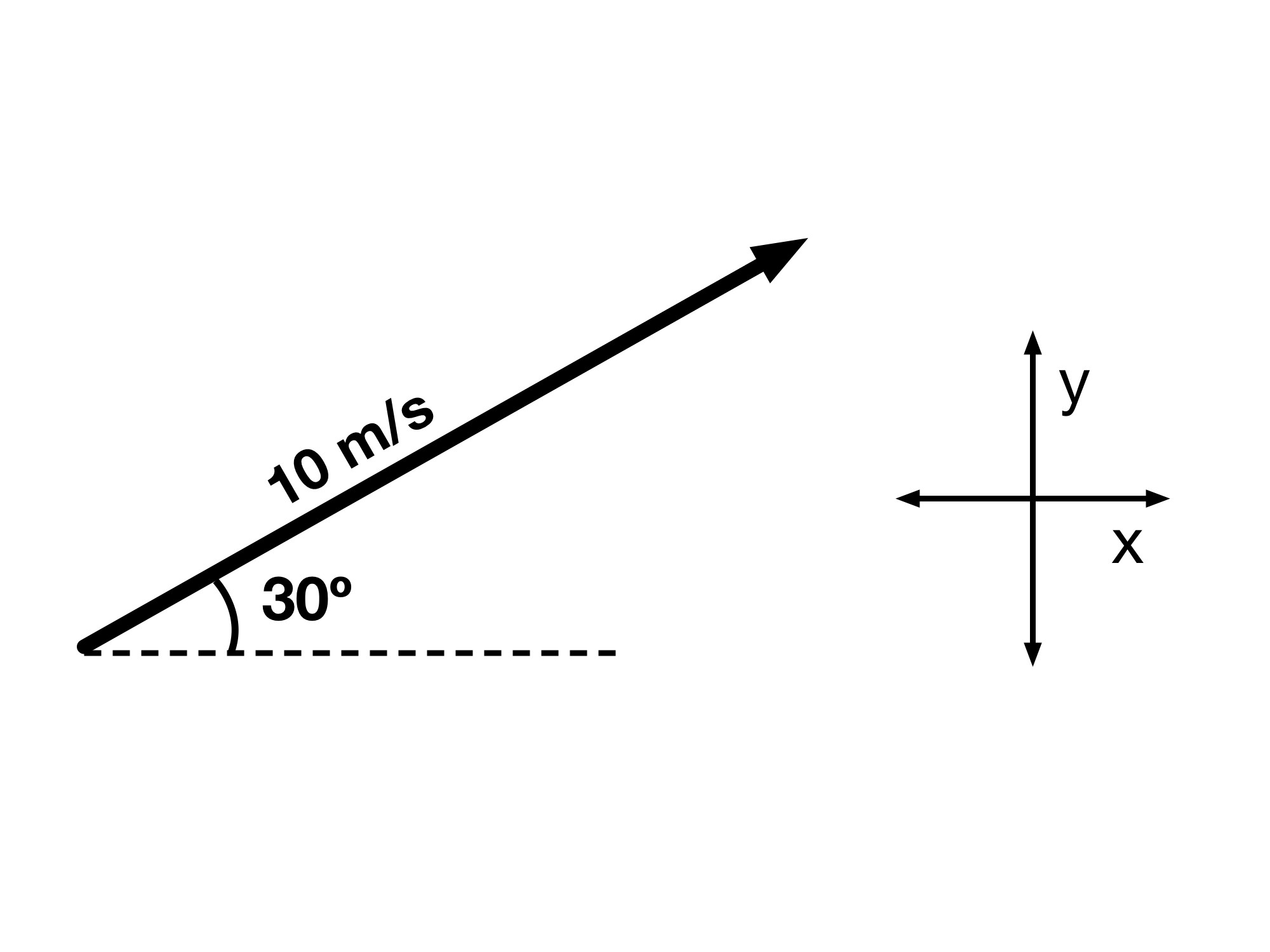
Here is a vector with a known magnitude and direction.
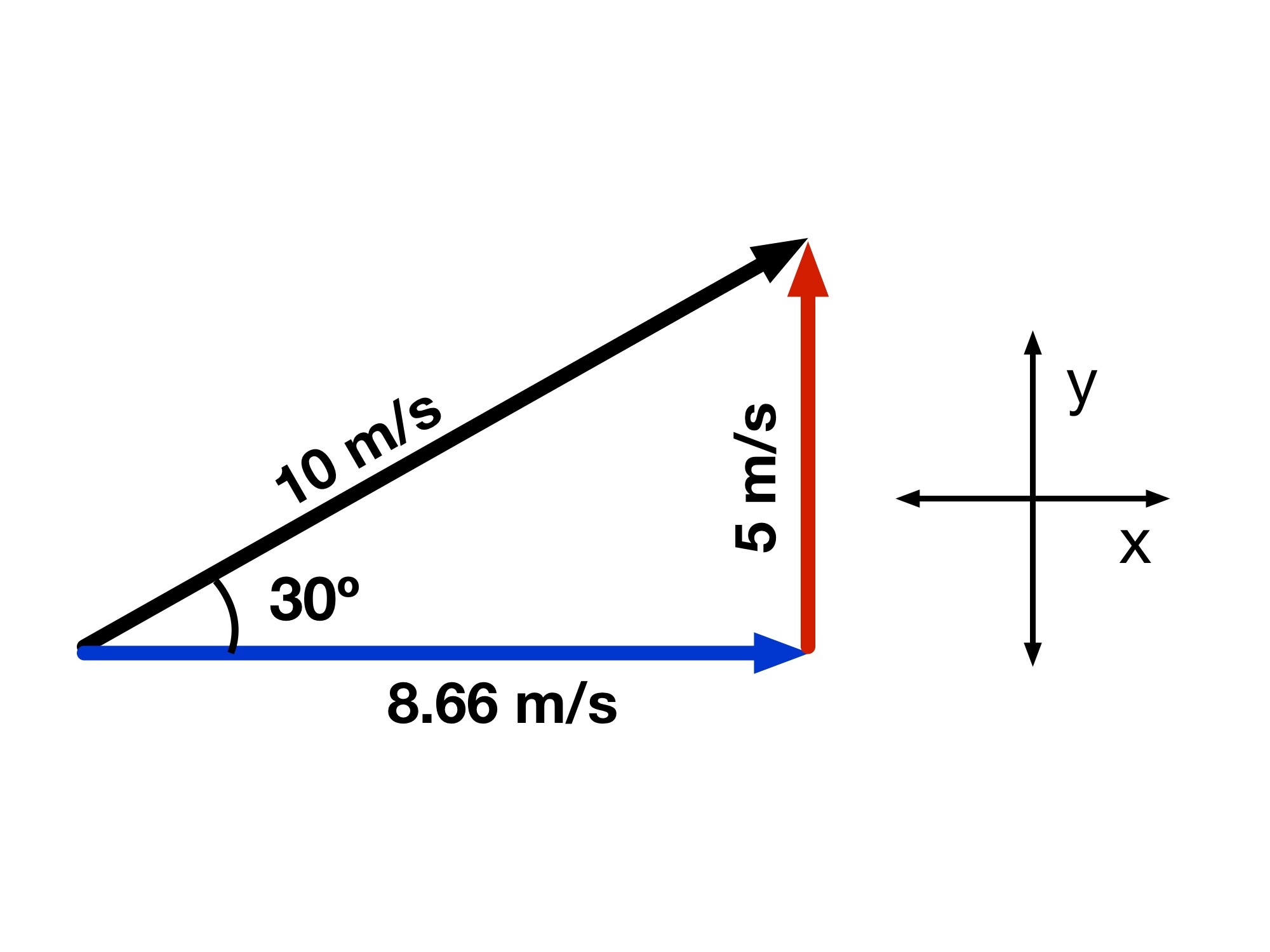
Another way of writing vectors by components is similar to writing coordinates. Instead of using parentheses, though, we use angle brackets, . The vector components are ordered x, y, z, just as any coordinate would be labeled. for this vector, labeling in this fashion results in:
The components of a vector can also be presented in a vertical line, surrounded by parentheses. This is shown in here using our same example vector.
The top component is in the direction, the bottom is the , and were there a component, that would be below the .
Another notation that is important illustrates the magnitude of a vector, which is independent of direction. This looks like . As we are dropping the direction, calculating the magnitude of a vector like this results in a scalar.
Pop Quiz 1.1.1 Vectors
Question 1 of 5 · 0 correct
AP Topic 1.5 · Read the worked solution
The magnitude of a vector is sometimes very easy to calculate, when the vector is given in terms of magnitude and direction, just take the magnitude from that. When the vector is given in component form, however, you have to use the Pythagorean Theorem to solve for the magnitude.


Reviewed physics notes (10)
These corrections keep the original lesson’s purpose while fixing errors in the source edition.
- A unit vector has magnitude one; its individual components need not each have magnitude one. — Reference 1, Reference 2, Reference 3
- Scalars are described by a number and unit, without a direction. — Reference 1, Reference 2, Reference 3
- Instantaneous speed equals velocity magnitude; distance does not generally equal displacement magnitude. — Reference 1, Reference 2, Reference 3
- A speedometer shows speed, while velocity also includes direction. — Reference 1, Reference 2, Reference 3
- The 10 m/s vector at 30° from +x has components (8.66, 5) m/s; the source swaps them. — Reference 1, Reference 2, Reference 3
- Vector coordinate notation uses angle brackets. — Reference 1, Reference 2, Reference 3
- The Suzy map uses miles, so the worked solution keeps miles throughout. — Reference 1, Reference 2, Reference 3
- The displacement is 36.9° east of south, equivalent to 53.1° south of east. — Reference 1, Reference 2, Reference 3
- Path C totals 11 miles, rather than 12. — Reference 1, Reference 2, Reference 3
- The scalar/vector table now identifies magnitudes and rates of change accurately; the original Pull/Jump labels were incorrect. — Reference 1, Reference 2, Reference 3
Glossary and deeper reading · 9 refreshers
These editorial refreshers supplement the reading. Definitions and examples are added guidance; original source wording and recorded answers remain in their original context.
-
Vector
A vector is a quantity with a magnitude and a direction, represented by an arrow or by components along chosen axes. Vectors add by adding corresponding components rather than simply adding their magnitudes. For example, an eastward displacement followed by a northward displacement produces a resultant pointing northeast. The zero vector has zero magnitude and no unique direction.
-
Scalar
A scalar is a quantity described by a value and unit without a spatial direction. A scalar can have a sign when its definition or reference permits one; scalar does not mean always positive. For example, mass is a scalar, whereas the velocity of that mass also needs a direction.
-
Magnitude
Magnitude is the nonnegative size of a vector quantity. It does not specify direction, and it differs from a signed component. For example, a westward velocity can have a negative x component while its speed, the velocity magnitude, stays positive.
-
Vector component
A vector component describes the part of a vector along a chosen axis. Its signed value changes when the axes change, even though the physical vector remains the same. For example, a diagonal launch velocity can be resolved into horizontal and vertical components that share the same elapsed time.
-
Unit vector
A unit vector has magnitude one and specifies a direction. Multiplying it by a signed component gives the vector contribution along that direction. For example, the Cartesian unit vectors identify the positive x, y, and z directions.
-
Instantaneous velocity
Instantaneous velocity is the rate of change of position at a particular moment. On a position-versus-time graph, its component is the slope of the tangent at that time. For example, the velocity just before a ball lands differs from the average velocity of its entire flight.
-
Displacement
Displacement is the vector change in position from the start of an interval to its end. It depends on those endpoints rather than the length or shape of the path traveled. For example, walking around a closed track and returning to the start gives zero displacement but a nonzero distance traveled.
-
Velocity
Velocity describes how position changes with time and includes direction. Instantaneous velocity describes one moment, while average velocity is displacement divided by elapsed time. For example, a car turning a corner can change velocity while maintaining the same speed.
-
Average velocity
Average velocity is the displacement over an interval divided by the elapsed time. It is a vector and need not equal the average speed, which uses total distance. For example, a runner who returns to the starting line has zero average velocity for the full lap.