Reference from the original Physics I textbook.
These answers follow the reviewed models and worked solutions. Several source problems have inconsistent givens; their answers state the limitation or the interpretation used. Follow the problem number for the reasoning.
1. Introduction
Original chapter problems 1–10| Problem | Reviewed answer |
|---|
| 1 | R = (0.7785, 6.2426) m/s = 6.2910 m/s at 7.11° E of N = (6.2910 m/s)(0.1238 î + 0.9923 ĵ). |
|---|
| 2 | Distance 71 km; displacement (9, −8) km, magnitude 12.04 km at 41.63° S of E. |
|---|
| 3 | The North Pole is one solution; it is not unique on a sphere. |
|---|
| 4 | A × B = −459.62 k̂ m², into the screen when +x is right and +y is up. |
|---|
| 5 | A right-handed; B left-handed; C right-handed; D right-handed. |
|---|
| 6 | Approximately −1.6635 × 10³ N². |
|---|
| 7 | β · γ = 0 if α ≠ 0; without that assumption the value is not determined. |
|---|
| 8 | η = 19.25%. |
|---|
| 9 | Displacement 0 m; distance approximately 988.50 m. |
|---|
| 10 | −288. |
|---|
2. Force
Original chapter problems 1–10| Problem | Reviewed answer |
|---|
| 1 | a = (−0.215, +3.932) m/s²; magnitude 3.938 m/s² at 93.132° counterclockwise from +x. |
|---|
| 2 | 2.542 m below the anchor. |
|---|
| 3 | 3 sails. |
|---|
| 4 | Terminal speed 9.192 m/s; terminal velocity 9.192 m/s downward. |
|---|
| 5 | μₖ = 0.01215 (dimensionless). |
|---|
| 6 | Moving uphill: 5.115 m/s² uphill on μₖ = 0.20; 5.358 m/s² uphill on μₖ = 0.10. Moving downhill: 6.085 and 5.842 m/s² uphill respectively, so it slows until it stops. |
|---|
| 7 | 10 kg mass: 3.267 m/s² downward. 5 kg mass: 3.267 m/s² upward. |
|---|
| 8 | New A–B tension 20 N. |
|---|
| 9 | Minimum F = 8.782 N downward; any F from 8.782 N to 10.818 N downward can maintain rest. |
|---|
| 10 | 49 N downward at the free end for steady lifting; F > 49 N gives upward acceleration. |
|---|
3. Kinematics
Original chapter problems 1–10| Problem | Reviewed answer |
|---|
| 1 | 1.98 × 10²⁰ N toward Earth. |
|---|
| 2 | (a) 3.424 m above launch; (b) 1.672 s. |
|---|
| 3 | 178.590 m. |
|---|
| 4 | 41.410° above horizontal. |
|---|
| 5 | Mars in both comparisons; about 2.64 times the Earth range and 6.68 times the Jupiter range under these assumptions. |
|---|
| 6 | 7 m. |
|---|
| 7 | No positive real mass pair exists. The stated force is about twice the maximum compatible force; at least one supplied datum must be corrected. |
|---|
| 8 | Orbit count implies 1.688 m/s; the stated mass and radius require circular speed 53.422 m/s and about 158 205 orbits per planet year. The source data are inconsistent. |
|---|
| 9 | (a) 114.681 m; (b) −32.940 m/s; (c) (22.936, −32.940) m/s, speed 40.139 m/s; (d) 55.150° below horizontal; (e) 0.229 s remaining. |
|---|
| 10 | For every point on the ellipse, d₋ + d₊ = 2a, the major-axis length. |
|---|
4. Momentum
Original chapter problems 1–10| Problem | Reviewed answer |
|---|
| 1 | v_f = -10.94 m/s; speed 10.94 m/s away from the wall. |
|---|
| 2 | 1.33 m/s in crate A’s initial direction. |
|---|
| 3 | Typical ranking, greatest to least: boulder > bowling ball > football > bullet. |
|---|
| 4 | 0.0778 m/s upward. |
|---|
| 5 | Cue ball: 3.448 m/s at +34°; target ball: 1.441 m/s at −42°. |
|---|
| 6 | 4.82 m/s west. |
|---|
| 7 | Average belt force: 28.3 kN opposite the initial motion. |
|---|
| 8 | Average ground contact force: 2.59 kN upward; average net force: 2.00 kN upward. |
|---|
| 9 | 2.80 m/s left. |
|---|
| 10 | Stops 0.577 m into the patch; no exit speed. |
|---|
5. Energy
Original chapter problems 1–10| Problem | Reviewed answer |
|---|
| 1 | D: the man increasing his pace. |
|---|
| 2 | 14.3 m/s at the bottom. |
|---|
| 3 | Minimum launch energy 88.9 kJ; uphill travel time 3.54 s. |
|---|
| 4 | Rebound height 7.09 m; velocity before second impact 11.8 m/s downward. |
|---|
| 5 | With equal masses and ideal projectile motion, Phil goes 1.539 times as far. Difference ΔR = (4.3281 kg·m)/m; a numerical distance requires the common mass m. |
|---|
| 6 | K_contact = 7.12 J; contact speed = 1.334 m/s; ramp distance = 0.2147 m. |
|---|
| 7 | Upward lifting work 83.5 kJ; modeled fat consumption 4.39 g. |
|---|
| 8 | Bullet speed 273 m/s toward the block. |
|---|
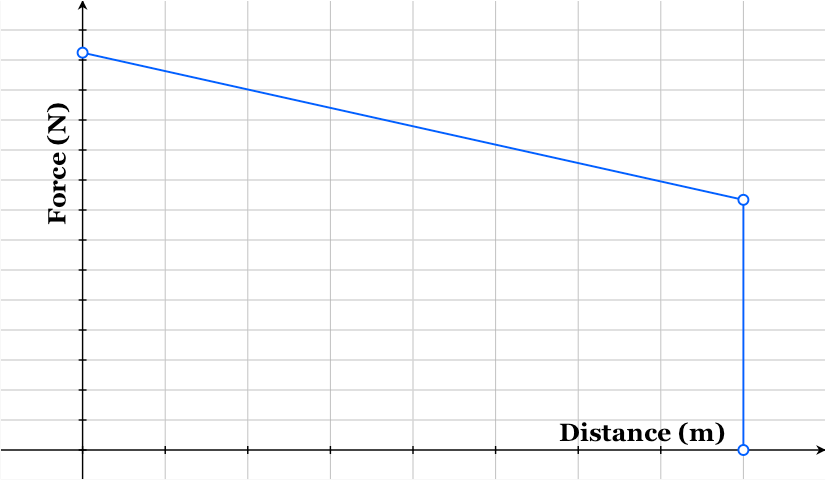
| 9 | W = 863 J; F(x) = 132.435 − 6.13125x N for 0 ≤ x ≤ 8 m. |
|---|
| 10 | Stops 0.577 m into the patch; no exit speed. |
|---|
6. Rotational Motion
Original chapter problems 1–10| Problem | Reviewed answer |
|---|
| 1 | Plane: inward lift component; car: inward resultant of road normal force and static friction; Tarzan: inward vine tension component; planet: solar gravity. |
|---|
| 2 | The original circular-orbit data are inconsistent. Force-based altitude: 3.36 × 10⁷ m; required circular speed there: 3.16 × 10³ m/s. |
|---|
| 3 | Maximum rise: 14.7 m above the launch position. |
|---|
| 4 | No unique real-skater speed follows from the data. General answer: 30 I_i/I_f rpm. Explicit I ∝ r² model: 187.5 rpm. |
|---|
| 5 | Minimum radius: 1.70 km; minimum time: 16.5 s. |
|---|
| 6 | No solution with positive hanging weights for uniform beams; the bottom beam alone would require a −2.14 kg star. |
|---|
| 7 | Central-pull model: a_i = 18.8 m/s² inward and v_f = 22.7 m/s. Ideal stationary wrapping model: speed stays 4.0 m/s; its curvature acceleration is not determined by the original data. |
|---|
| 8 | The 0.90 kg hoop stores 0.225 J more rotational kinetic energy. |
|---|
| 9 | Altitude ≈ 3.58 × 10⁷ m (35,800 km); directly overhead stationarity requires an equatorial city. |
|---|
| 10 | a = 3.60 m/s² (right down, left up); T_R = 46.6 N; |α| = 20.0 rad/s² clockwise; passing speed = 3.36 m/s. |
|---|
7. Thermo-physics
Original chapter problems 1–10| Problem | Reviewed answer |
|---|
| 1 | T_f ≈ 3317°C within the supplied model; neither listed phase transition is reached. |
|---|
| 2 | c_m = 0.0279 J/(g·K) = 27.9 J/(kg·K), conditional on the printed 100 kg and the ideal calorimeter model. |
|---|
| 3 | T_f ≈ 20.58°C. |
|---|
| 4 | L_f ≈ 0.50191 m = 50.191 cm; extension ≈ 1.91 mm. |
|---|
| 5 | t = 13,368 s ≈ 3.71 h. |
|---|
| 6 | Q ≈ 26.2 MJ during 10 s. |
|---|
| 7 | T_f ≈ 65.156°C; edge ≈ 0.999067 cm; volume ≈ 0.997203 cm³. |
|---|
| 8 | Acetone requires less: 9.61 MJ versus 16.98 MJ for water, a difference of 7.37 MJ. |
|---|
| 9 | Second equilibrium temperature: 20.1290°C. |
|---|
| 10 | It lengthens by 12.1 mm; lengths are 19.9945 m at −5°C and 20.0066 m at 50°C. |
|---|
8. Fluids
Original chapter problems 1–10| Problem | Reviewed answer |
|---|
| 1 | n = 3.51 × 10⁻⁵ mol. |
|---|
| 2 | T = 40.6 N downward on the ball; initial acceleration = 4.06 m/s² upward. |
|---|
| 3 | The stated numerical data imply T₂ = 461.04 K = 187.89 °C; the bath descriptions are inconsistent. |
|---|
| 4 | Block density = 2.17 × 10³ kg/m³; gasoline density = 813 kg/m³. |
|---|
| 5 | Bottom depth = 10.3 cm; 1.7 cm of the rod remains above water. |
|---|
| 6 | For the written 40 cm rise: v₂ = 0.498 m/s and P₂ = 4.62 × 10⁵ Pa = 4.56 atm. |
|---|
| 7 | Ideal pressure = 34.92 atm; van der Waals pressure with the source constants = 36.34 atm. |
|---|
| 8 | Pressure drives the jets; reaction forces from the jets produce the torque of a rotating sprinkler. |
|---|
| 9 | Mean downstream speed = 25.3 m/s. |
|---|
| 10 | Initial ideal flow rate = 8.91 m³/s; horizontal travel during 3 s = 42.0 m. |
|---|
9. Waves
Original chapter problems 1–10| Problem | Reviewed answer |
|---|
| 1 | Resultant displacement = +0.432U. |
|---|
| 2 | Resultant displacement = +11.0U. |
|---|
| 3 | The audience hears 89.47% of the emitted frequency, a 10.53% decrease. |
|---|
| 4 | Recession speed = 0.324c ≈ 9.72 × 10⁷ m/s. |
|---|
| 5 | Glass angle to the normal = 16.14°; θ₂ as drawn from the surface = 73.86°. |
|---|
| 6 | No transmitted exit ray and no defined exit θ. Total 20 J does not determine wavelength; for a hypothetical single 20 J photon, λ = 9.93 × 10⁻²⁷ m. |
|---|
| 7 | No electrons are emitted in the stated model; the momentum of an emitted electron is not defined. |
|---|
| 8 | Air distance ≈ 1.67 km; water distance ≈ 7.42 km. |
|---|
| 9 | Approximately 3.16 × 10⁷ equal independent sources; minimum integer count 31,622,777. |
|---|
| 10 | Incident power on one eardrum ≈ 1.74 × 10⁻⁴ W = 0.174 mW. The emitted source power is undetermined. |
|---|
10. Harmonics
Original chapter problems 1–10| Problem | Reviewed answer |
|---|
| 1 | L=3π/8 m≈1.18 m. |
|---|
| 2 | k≈0.529 N/m. |
|---|
| 3 | Intended answer: two nodes (n=1); the exact source numbers do not form an exact normal mode. |
|---|
| 4 | Formal k₂=−15.326 N/m; no solution with an ordinary positive-stiffness second spring. |
|---|
| 5 | Equation-based v=2 m/s. Geometry-and-period subset: v≈0.149 m/s. No single model satisfies every given. |
|---|
| 6 | Conditional period-formula result: m≈4.83 kg. |
|---|
| 7 | Tangential acceleration at bottom: 0. If 4 m/s is the centre speed: a_CM=16 m/s² and a_tip=32 m/s² upward. If it is the far-tip speed: a_CM=4 m/s² and a_tip=8 m/s² upward. No unique tip distance follows. |
|---|
| 8 | Free–free model: y=(1 m)cos(3πx/2)cos(πt/5), with x in m and t in s. Fixed–fixed alternative: y=(1 m)sin(πx)cos(πt/5). |
|---|
| 9 | k=580/9 N/m≈64.4 N/m; b=8/3 kg/s. The 12 s amplitude envelope is 0.183156 source units, so the model has no finite exact stop. |
|---|
| 10 | T_M≈16.3 s. |
|---|
Read the historical source answer key
The original source key contains errors. Use the reviewed answers above.
This section is devoted to answering your chapter problems. We haven’t included full solutions, so the intention behind this section is just to let you see if you have the correct answer.
- or
- ,
- The man is at the North Pole.
-
- The coordinate systems’ handednesses are:
- right
- left
- right
- right
- is perpendicular to
is parallel to
is perpendicular to
-
-
-
-
- Mars. Since the planet has a lower mass, the acceleration due to gravity is lower, extending the time a projectile can last in the air. It will also travel farther on Jupiter because most of Jupiter is made of gas, so the projectile will keep falling.
-
- The answers are:
- Answer is solution. Nice Try.
- Having a higher mass would give an object higher inertia. Therefore, the ranking would be:
Ping Pong Ball < Baseball < Bowling Ball < Cannon Ball -
- D: this is kinetic energy, not potential.
- ,
- ,
- Phil destroys Rory by .
- The answers are:
- The answers are:
-
- The answers are:
- Air Resistance
- Friction w/ Surface
- Tension of Vine
- Gravity
-
- The answers are:
-
- ;
- Acetone
-
-
- The answers are:
- The answers are:
- The velocity of the water coming from the tip of the nozzle is so great that it pushes the sprinkler, causing it to rotate.
- The Answers are:
- The answers are:
-
- ;
- ;