Parallel Axis Theorem Equation
Reference from the original Physics I textbook.
- Parallel Axis Theorem Equation
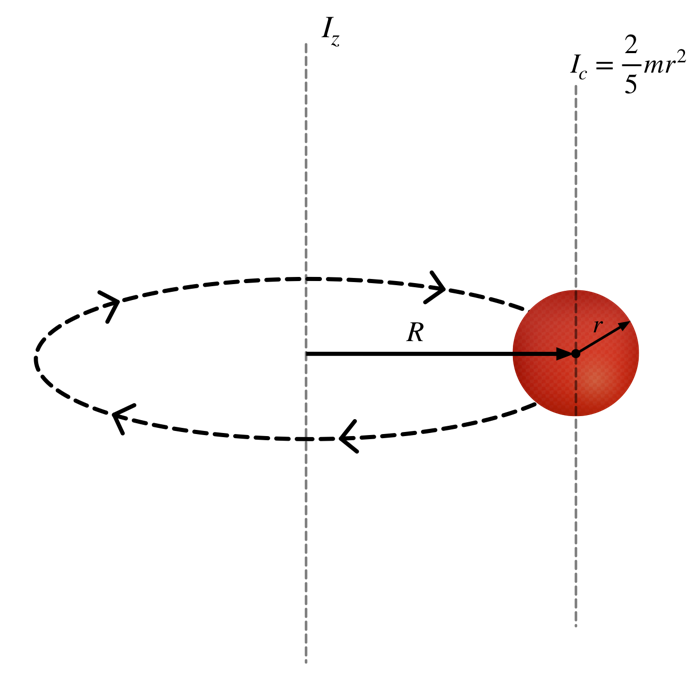
I_z = inertia about the new axis; I_c = inertia about the parallel axis through the center of mass (kg·m²); m = mass (kg); R = perpendicular separation of the two parallel axes (m).
- Related Glossary Terms
Moment of Inertia↗, Moment of Inertia Equation, Parallel-Axis Theorem
- Index
Reviewed physics notes (1)
These corrections keep the original lesson’s purpose while fixing errors in the source edition.
- Parallel-axis theorem requires a center-of-mass reference axis. — Reference 1
Glossary and deeper reading · 2 refreshers
These editorial refreshers supplement the reading. Definitions and examples are added guidance; original source wording and recorded answers remain in their original context.
-
Parallel-axis theorem
The parallel-axis theorem relates rotational inertia about a center-of-mass axis to inertia about a parallel displaced axis. The displaced-axis value is the center-of-mass value plus total mass times the squared separation of the axes. For example, a uniform rod has greater rotational inertia about one end than about a parallel axis through its middle.
-
Rotational inertia
Rotational inertia measures how strongly a mass distribution resists a change in angular velocity about a specified axis. Mass farther from that axis contributes more strongly because each contribution depends on squared distance. For example, moving small masses outward along a rotating rod increases its rotational inertia without changing its total mass.