Vector Math
Original textbook reading.
Use the component and tip-to-tail work for AP vectors. The cross-product and three-dimensional right-hand-rule material is extra exploration.
Being able to write out vectors is a useful first step, but now we need to be able to do something with those vectors.
When working with vectors, it is often necessary to add together different vectors to identify a resultant vectorⓘ.
Adding vectors together is the simplest aspect of vector math. We actually did a bit of vector addition in the previous section. By defining one vector by its components, we are actually defining that vector as a sum of each component vector.
The basic idea of adding vectors is to align them “head to tail” and then draw a vector from the tail of the first vector to the tip (or head) of the last. This method is shown in Gallery 1.2.1.
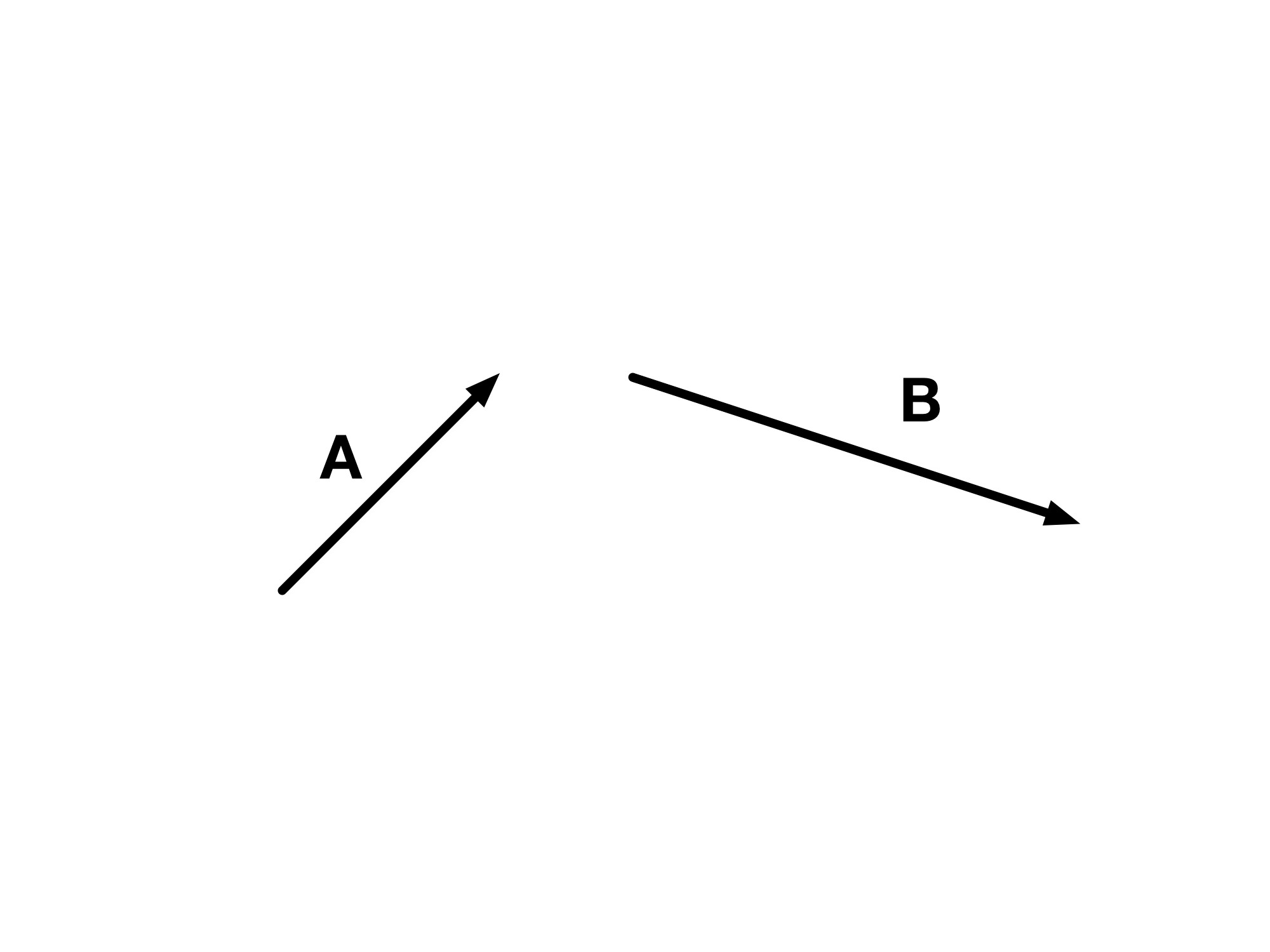
For this example, we will be adding these two valueless vectors, and .
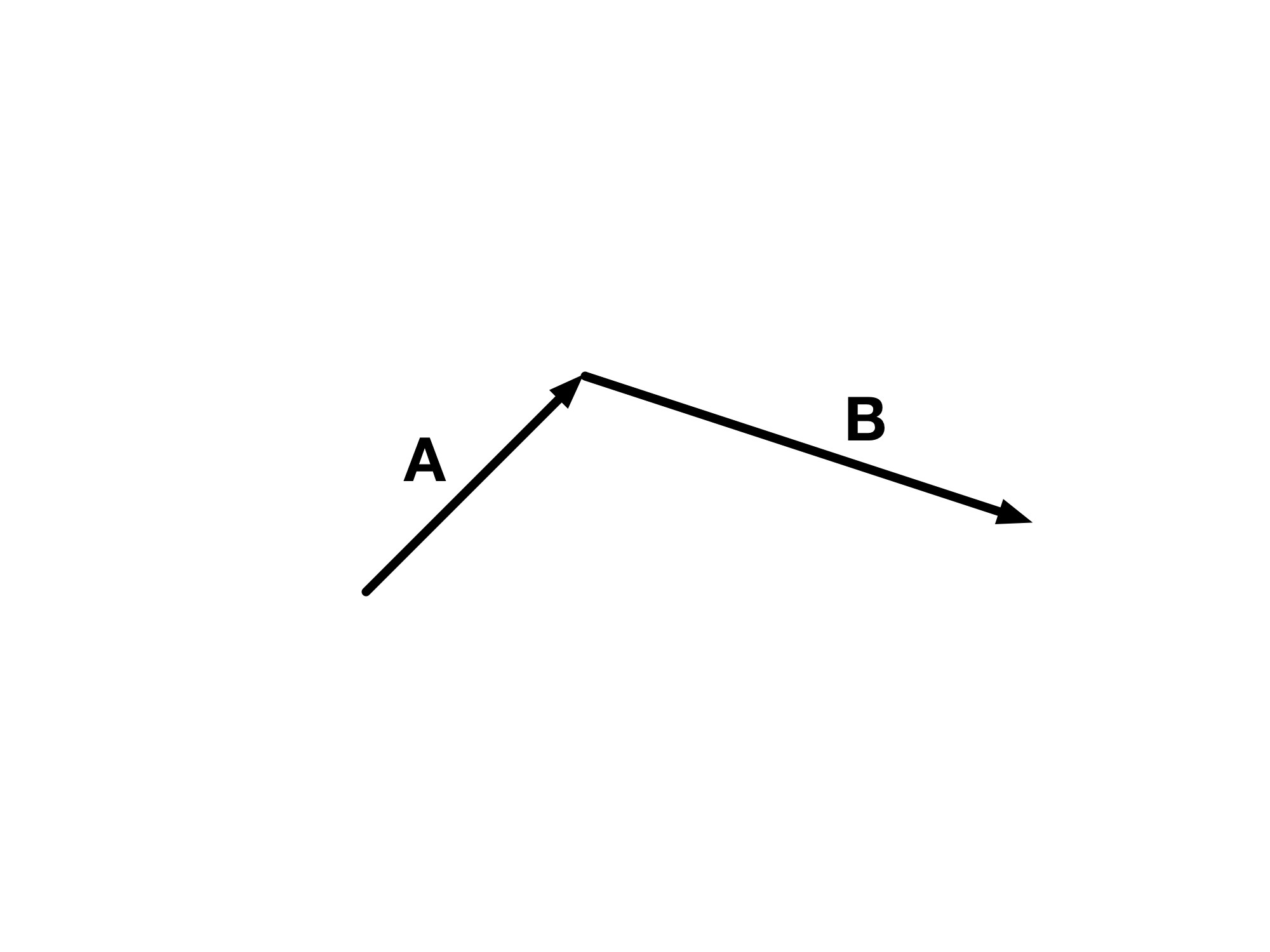
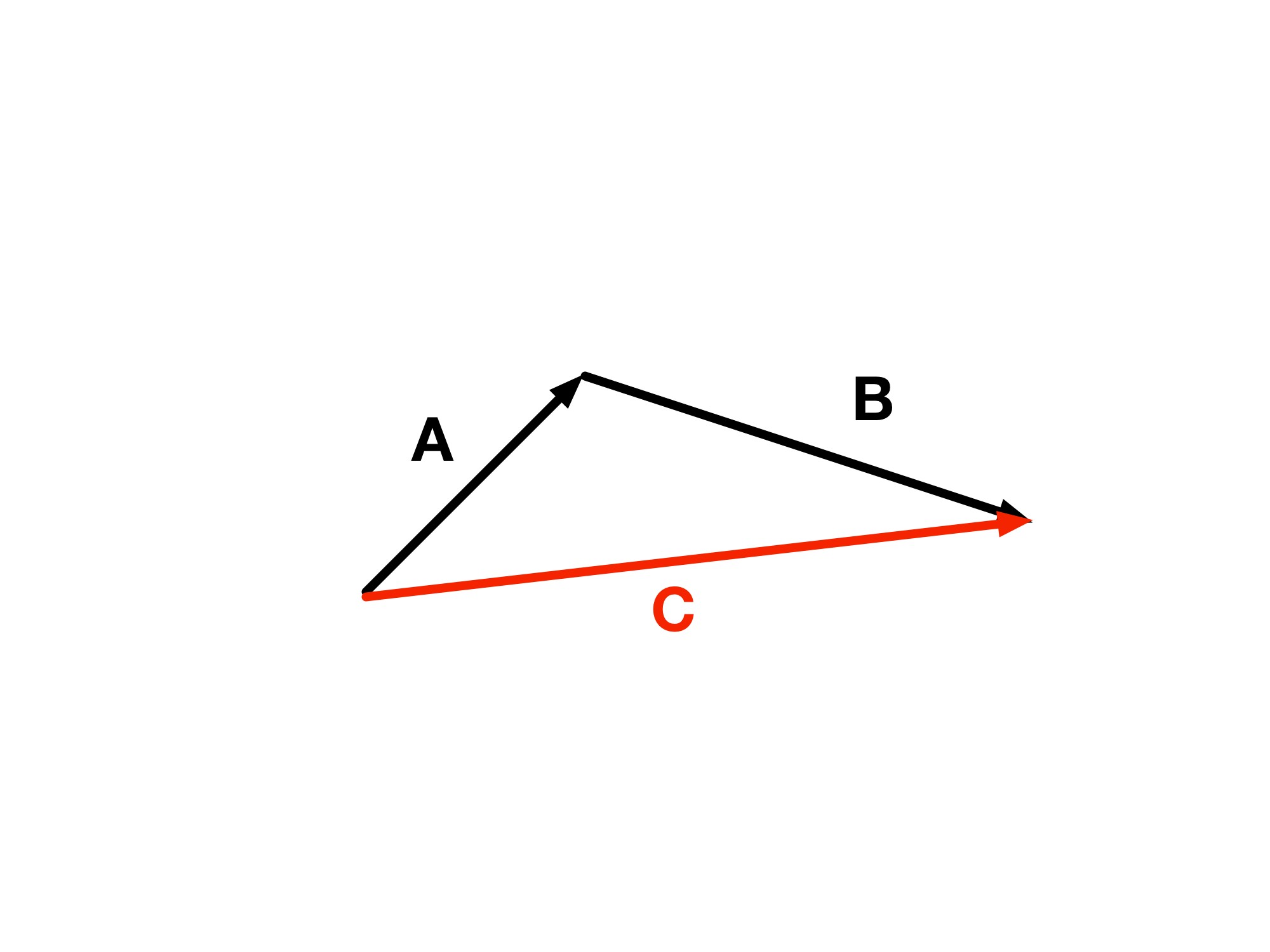
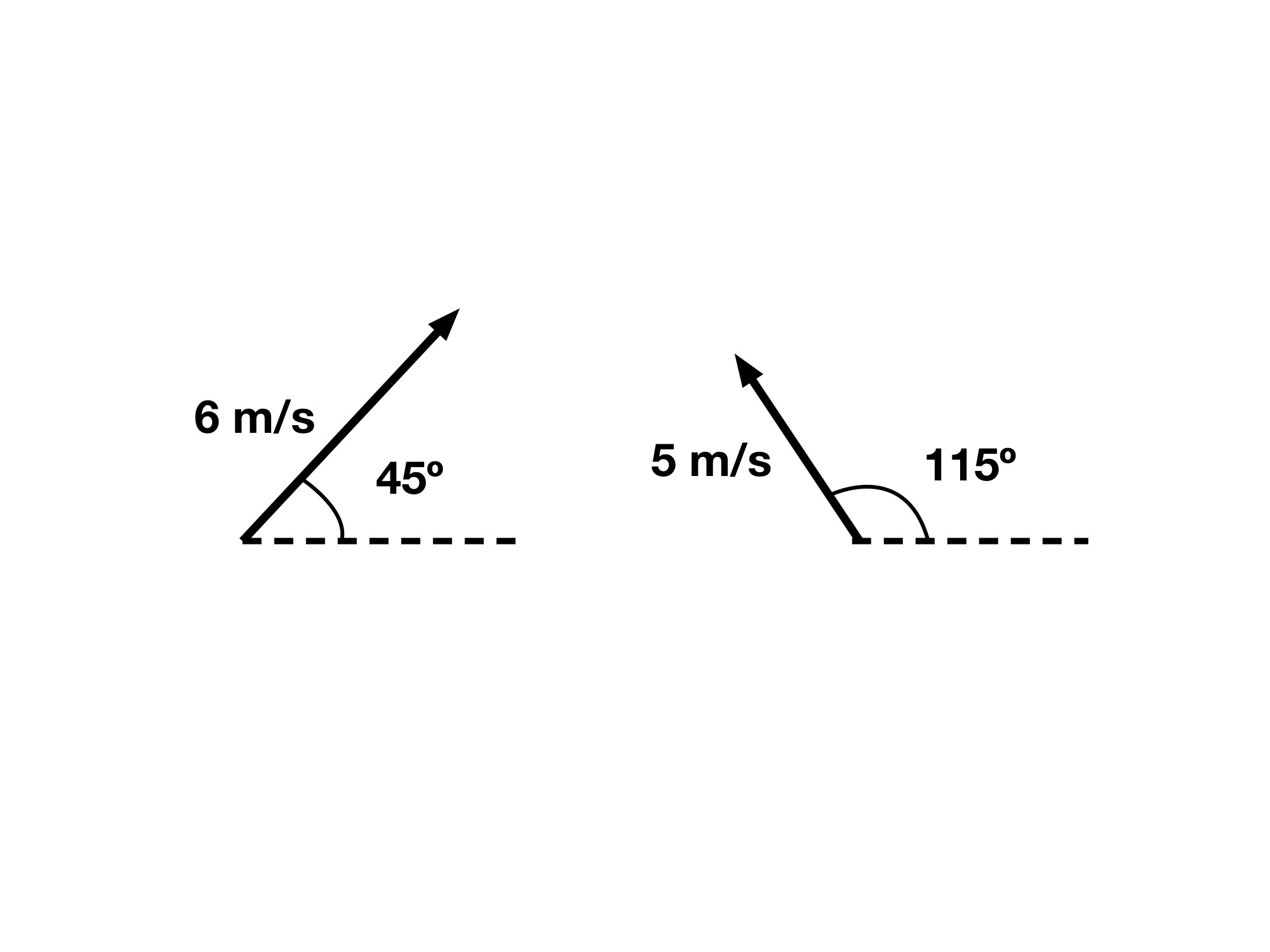
If we want to find the sum of these two vectors, it would result in fairly complicated geometry. Therefore, we will start by finding the components of each vector along common axes.
Read every step and figure
Step 1
If we want to find the sum of these two vectors, it would result in fairly complicated geometry. Therefore, we will start by finding the components of each vector along common axes.
Step 2
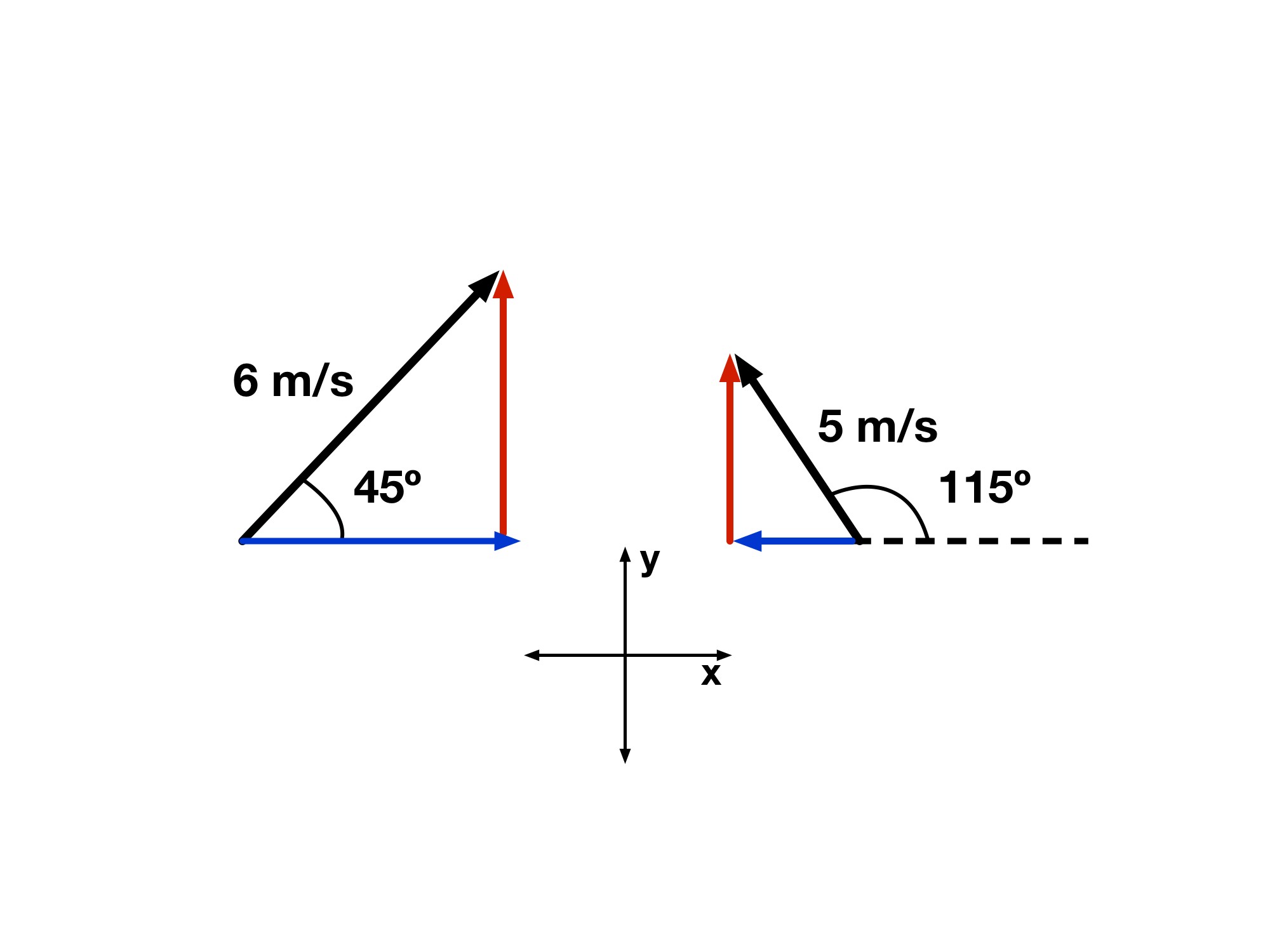
Just like we learned, the first step in defining components is drawing an x and y axis for the system, and then drawing component vectors along those directions
Step 3
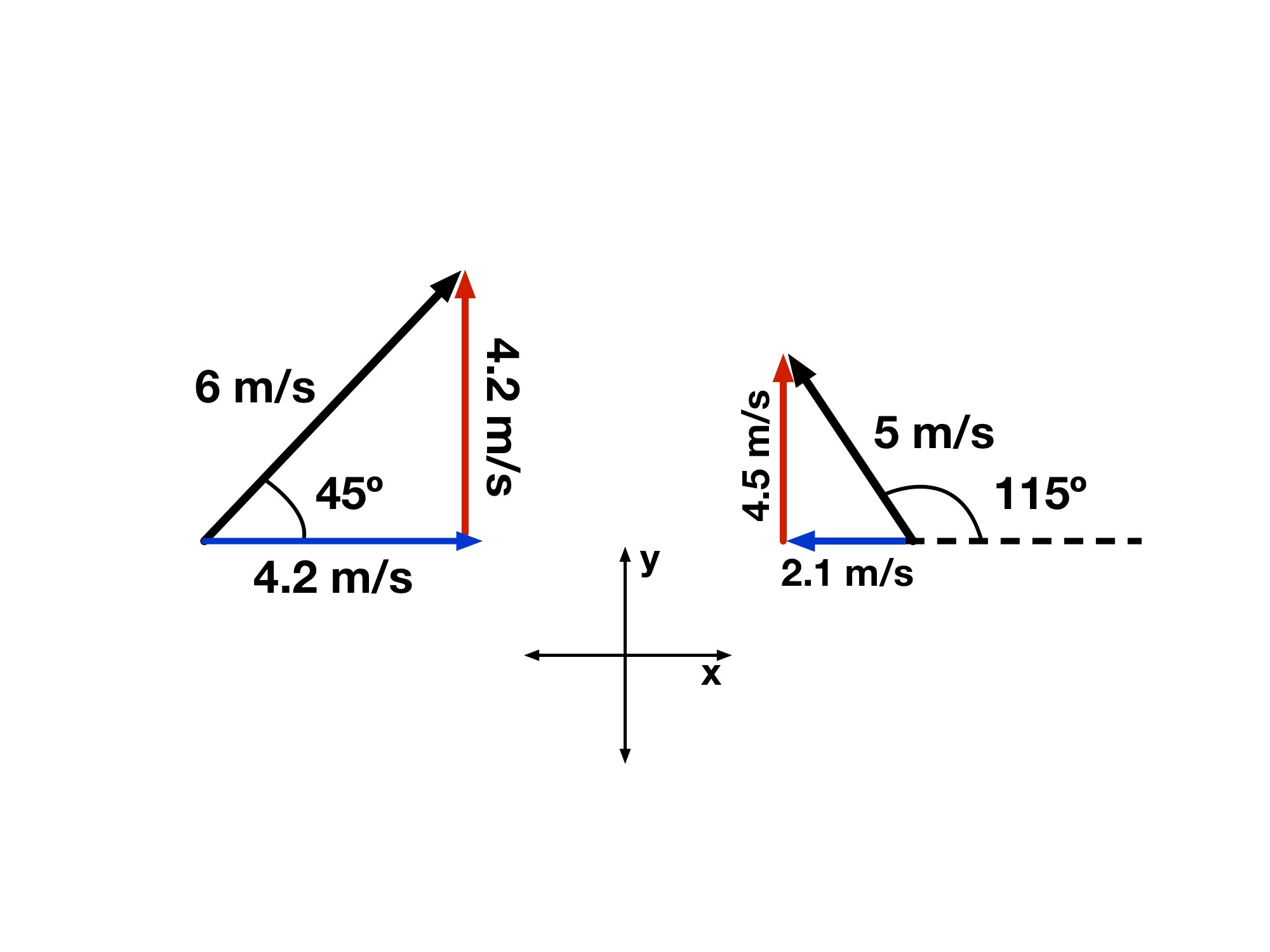
Step 4
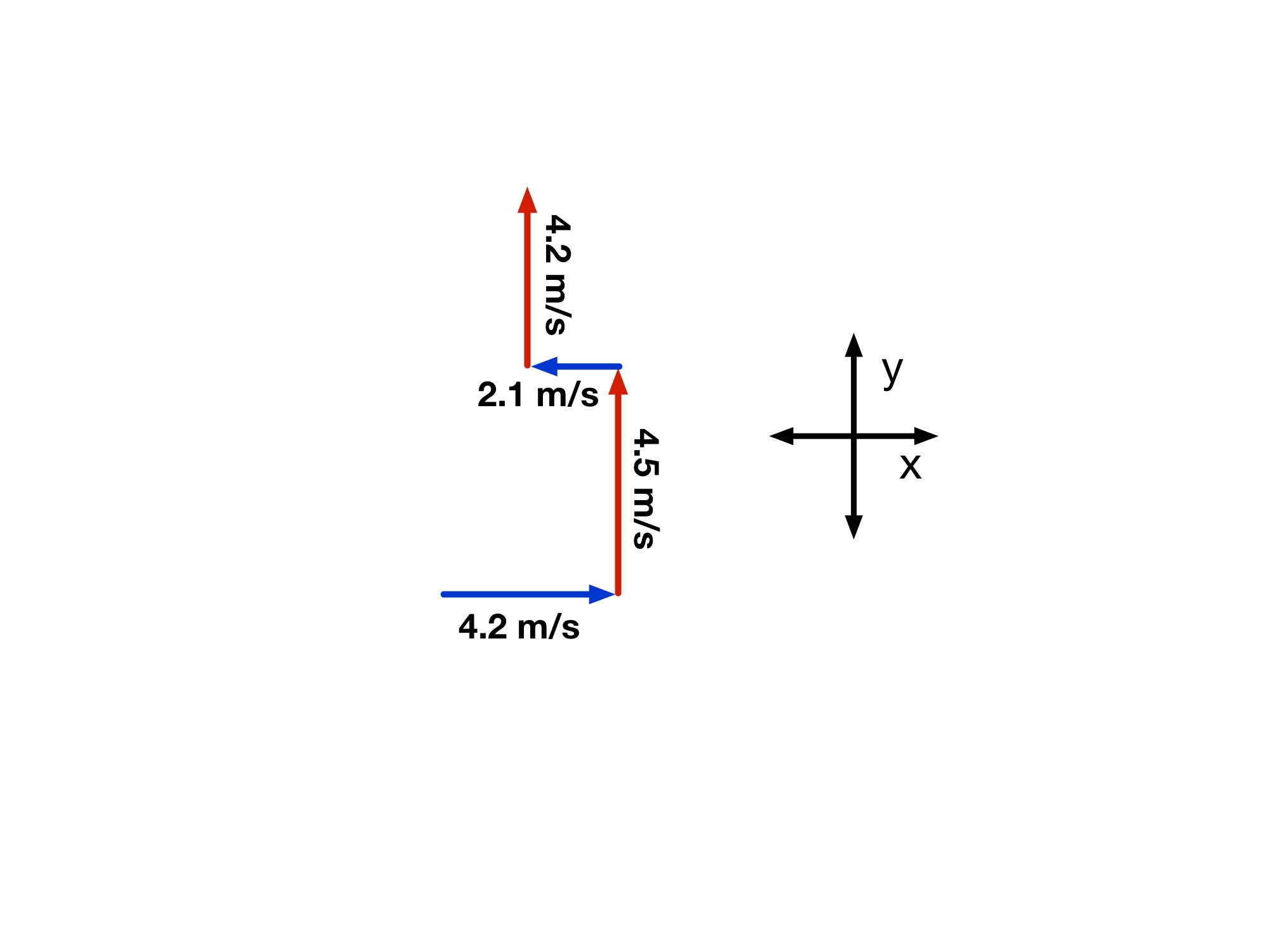
his step is where it gets tricky. Here, we take all the component vectors and line them up tip-to-tail, as we add them together. Notice the two x-aligned vectors are overlapping. This is due to their opposite directions.
Step 5
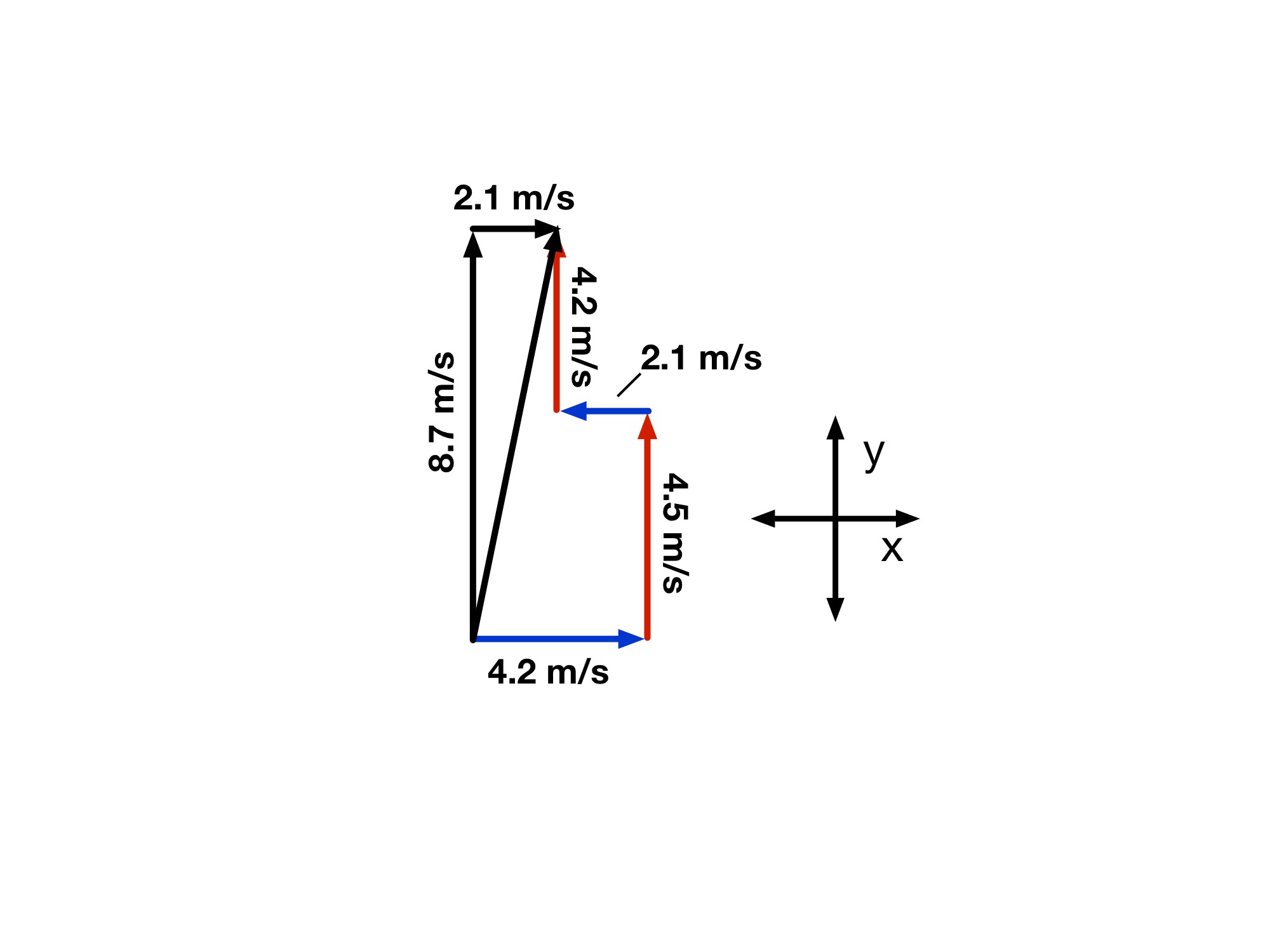
The resultant components are vₓ = 6 cos 45° + 5 cos 115° = 2.13 m/s and vᵧ = 6 sin 45° + 5 sin 115° = 8.77 m/s. The original image rounds intermediate components.
Step 6
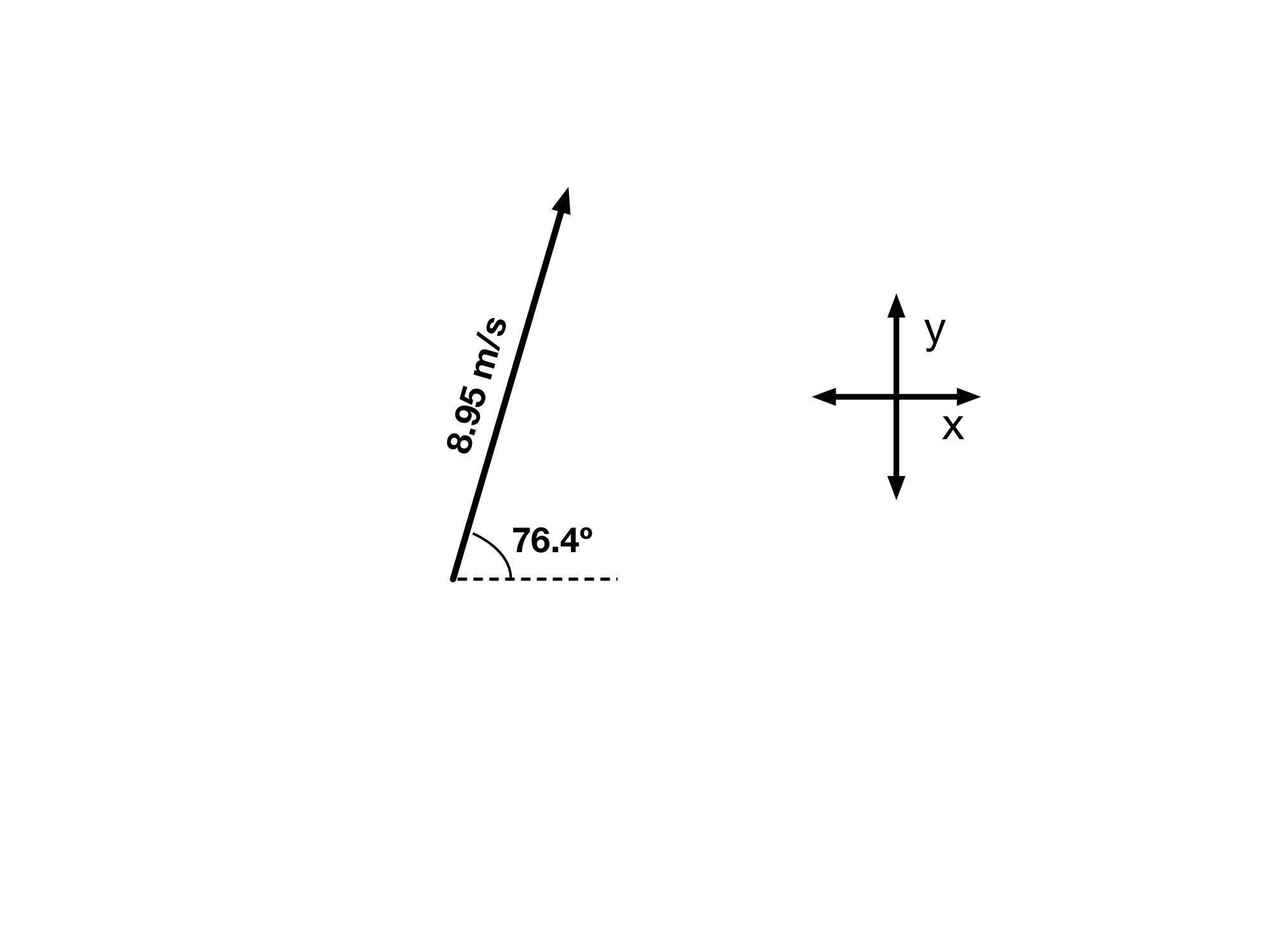
In a fixed coordinate system, add vectors by adding their signed components: (A + B)ₓ = Aₓ + Bₓ and (A + B)ᵧ = Aᵧ + Bᵧ. Negative components already represent the opposite direction.
Vector addition gets more complicated when introducing vectors that have an awkward angle between them. To add together those vectors, one ‘brute force’ approach is to identify the components of each vector, and then add each component vector.
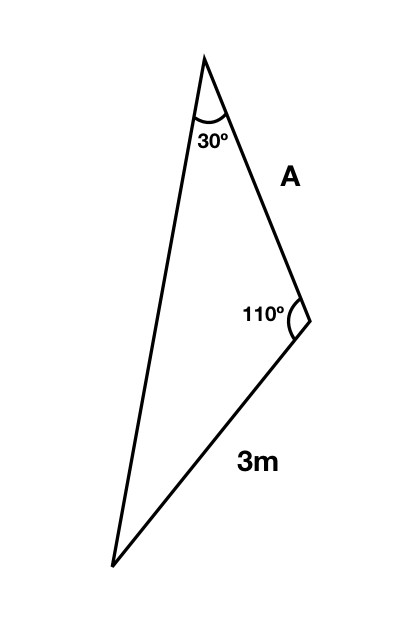
As that approach is fairly intense, it is only recommended for cases where the vectors are given in their component forms. If the vectors are given in the form of a magnitude and direction, then it is potentially easier to use the laws of sines and cosines.
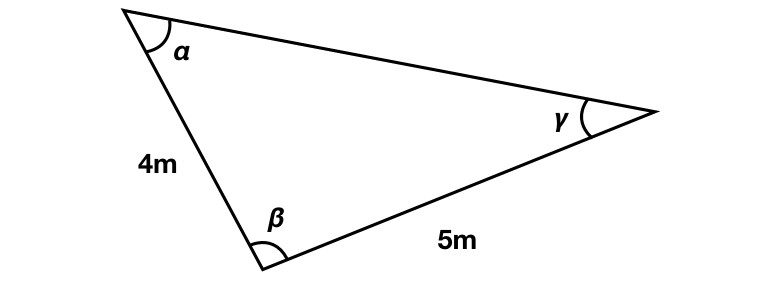
Figure 1.2.1 Reference Triangle
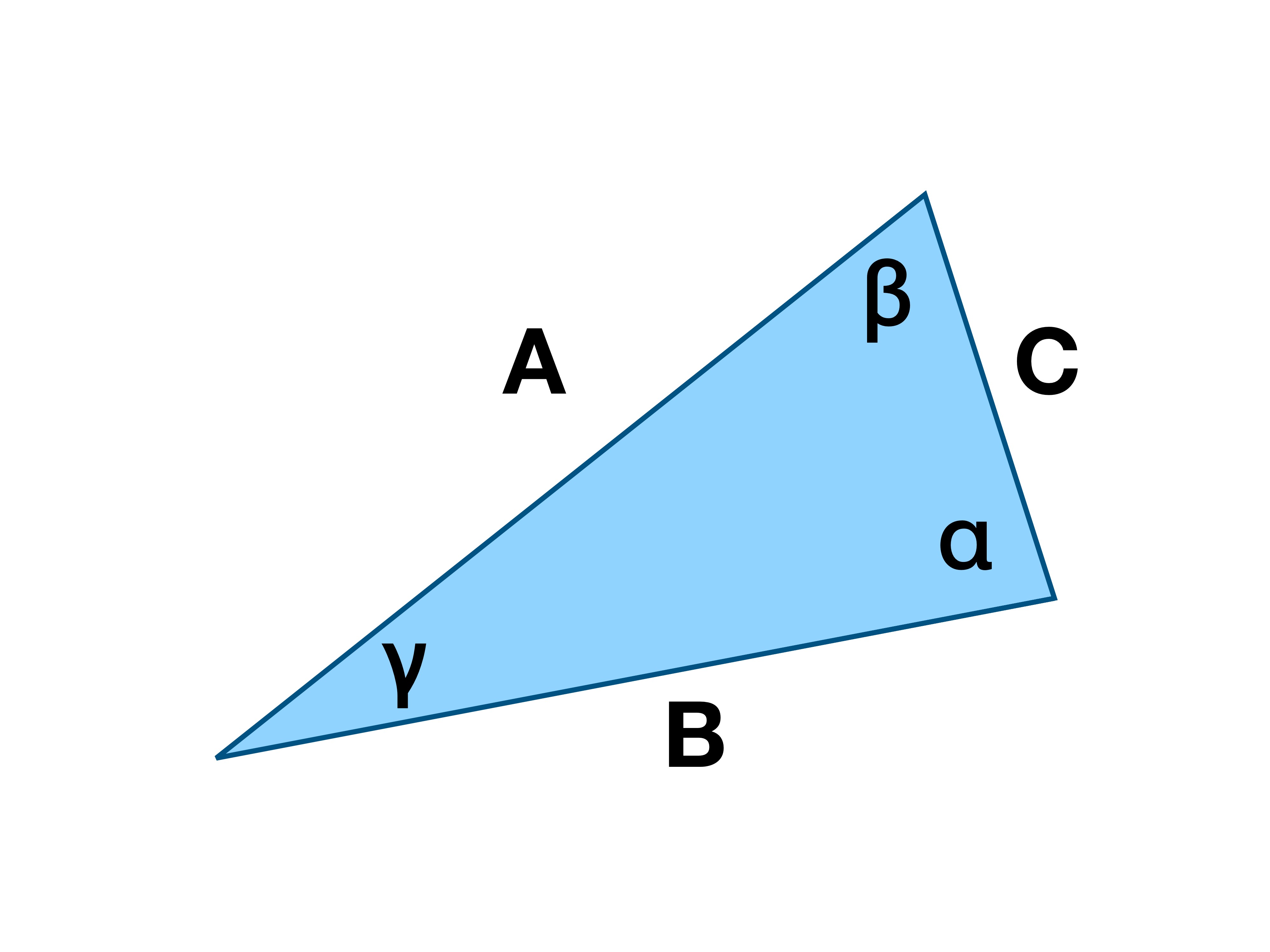
Figure 1.2.1 is a reference to the variables in the following equations. The important thing to note here is the location of each greek letter in comparison to is associated latin character (, ; , ; , ). Each angle corresponds to the side of the triangle opposite to it. That consistency is needed to successfully use these formulas.
(Equation 1.2.1)
(Equation 1.2.2)
The first equation, the law of cosines will be the go-to equation for identifying the magnitude of the resultant vector.
The second equation, the law of sines, is used to identify the angles between the resultant vector and the original vector, for identifying the resultant vector’s direction.
These equations are together used to solve for the resultant vector, and this approach is one of the easiest ways of dealing with vector addition where the vector magnitudes and directions are given.
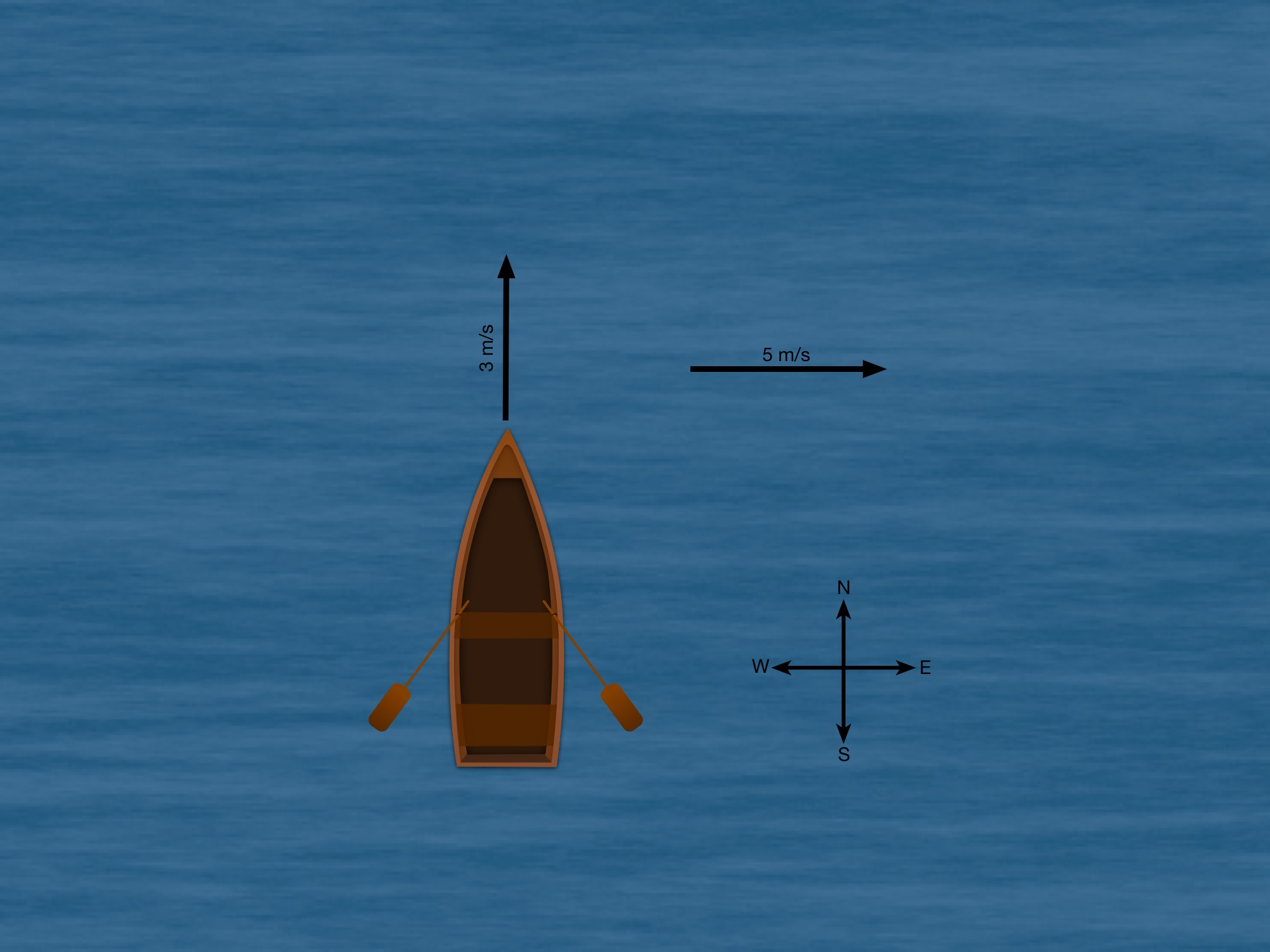
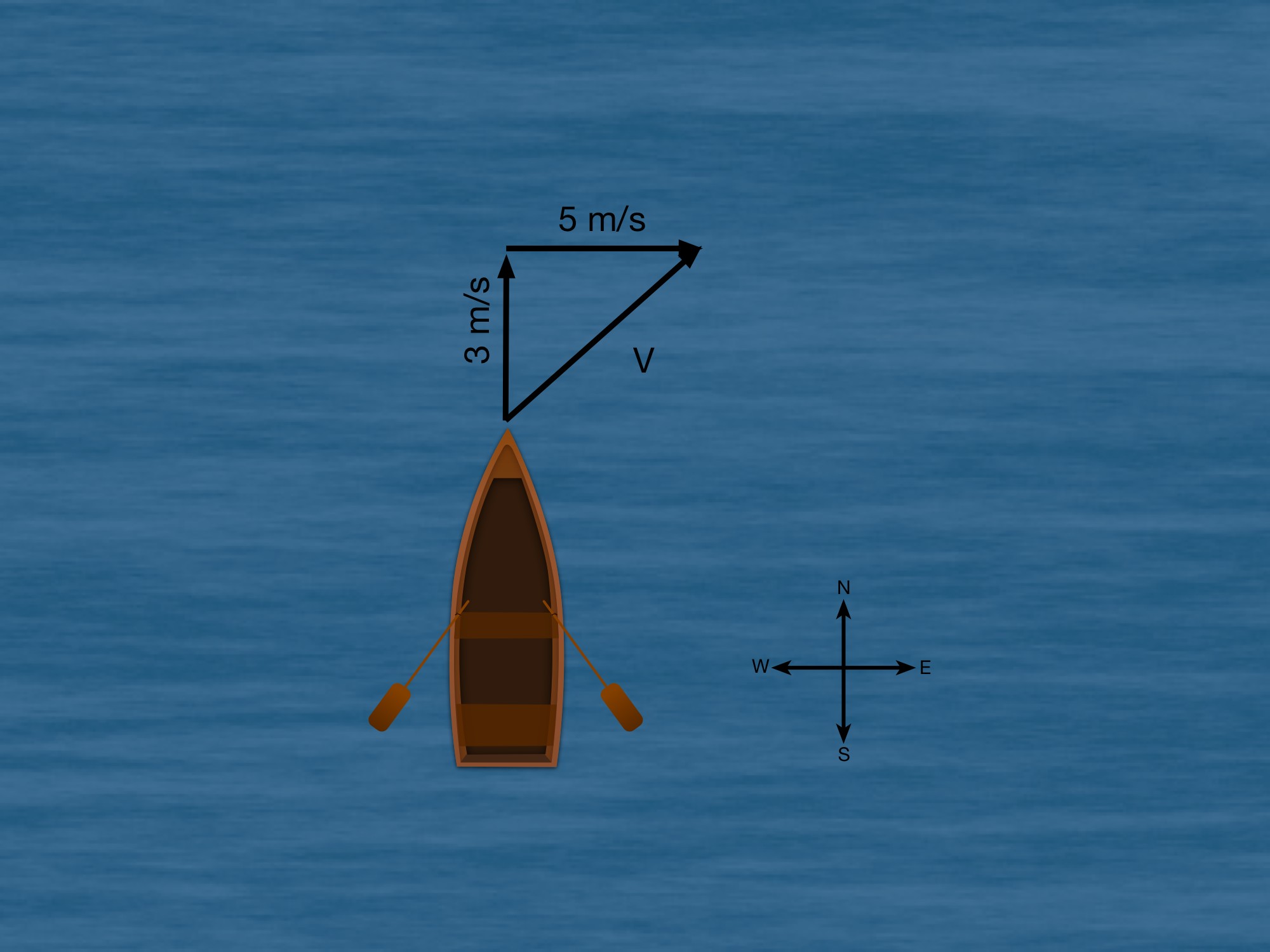
What is the boat’s velocity relative to the ground?
Pop Quiz 1.2.1 Laws of Sines and Cosines
Question 1 of 5 · 0 correct
AP Topic 1.5 · Read the worked solution
Read every full question without answers
Question 1
Question 2
Question 3
Question 4
Question 5
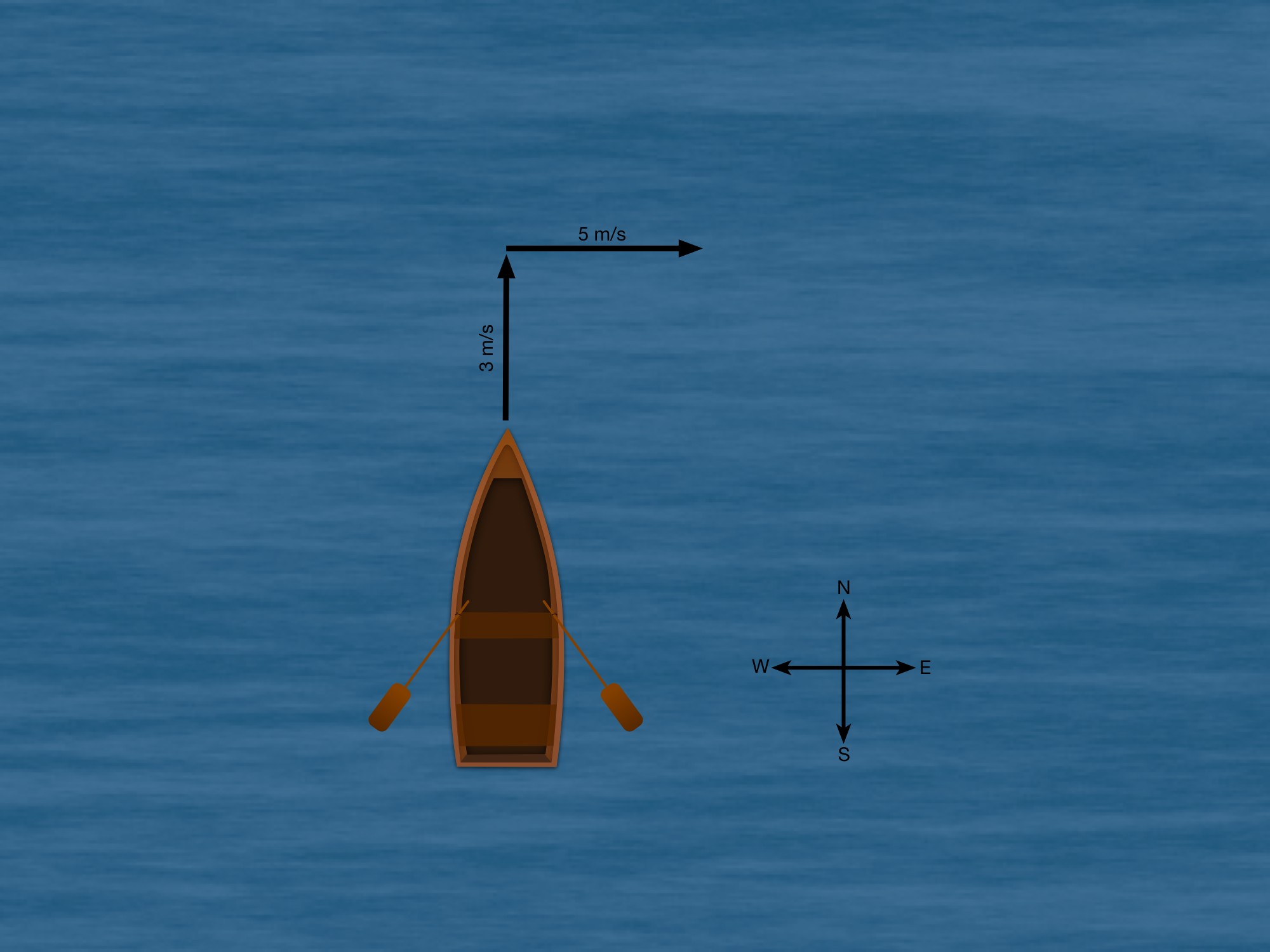
A man is trying to cross a river that is flowing from west to east at . The man has a velocity of going north across the river. What is the man’s resulting velocity relative to the ground?
Step 1: Align the vectors
Line up the vectors that are being added, and make sure to place the vectors head to tail.
Step 2: Draw the resultant vector
Create a resultant vector by drawing an arrow that begins at the first vector’s tail, and finishes at the last vector’s tip.
Step 3: Determine the resultant vector’s magnitude
In this case, as the vectors are perpendicular to one other, the pythagorean theorem is sufficient to determine the resultant vector’s magnitude. In this case, we get as the magnitude.
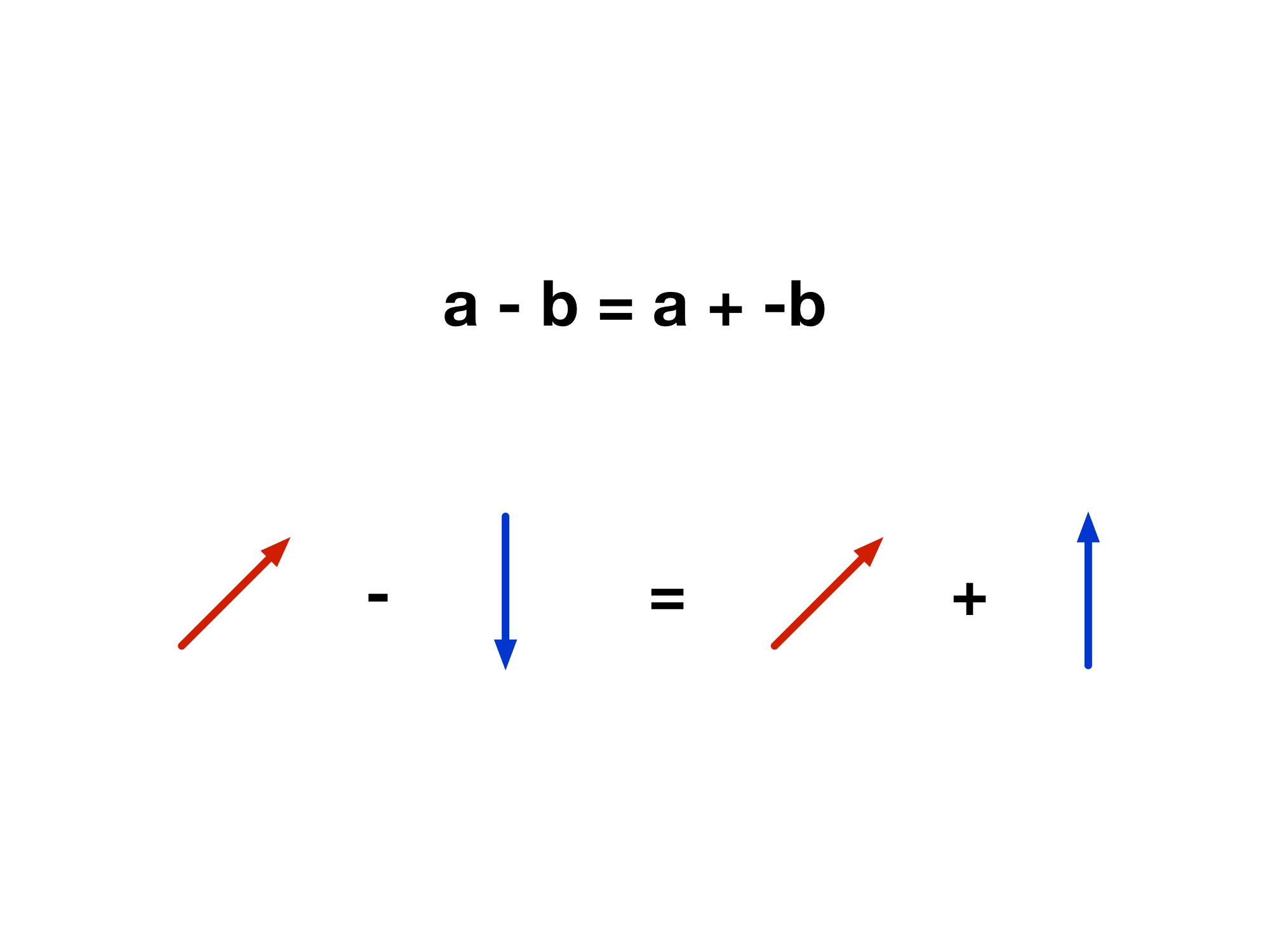
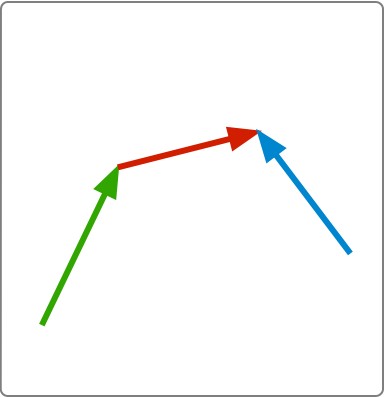
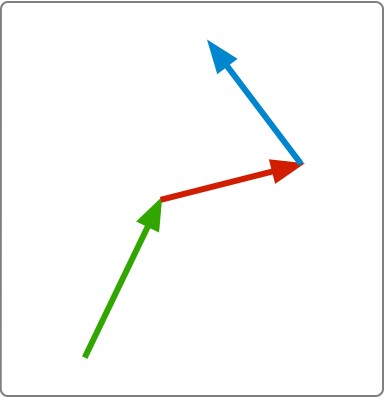
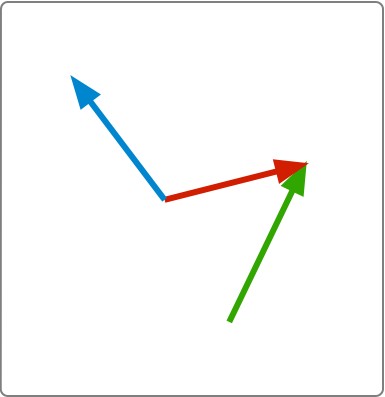
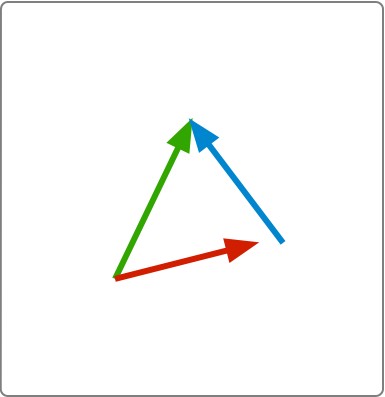
Just like in normal algebra, subtraction can be considered the addition of a negative. For vectors, a negative vector is simply a reversed vector.
Read every step and figure
Step 1
Just like in normal algebra, subtraction can be considered the addition of a negative. For vectors, a negative vector is simply a reversed vector.
Step 2
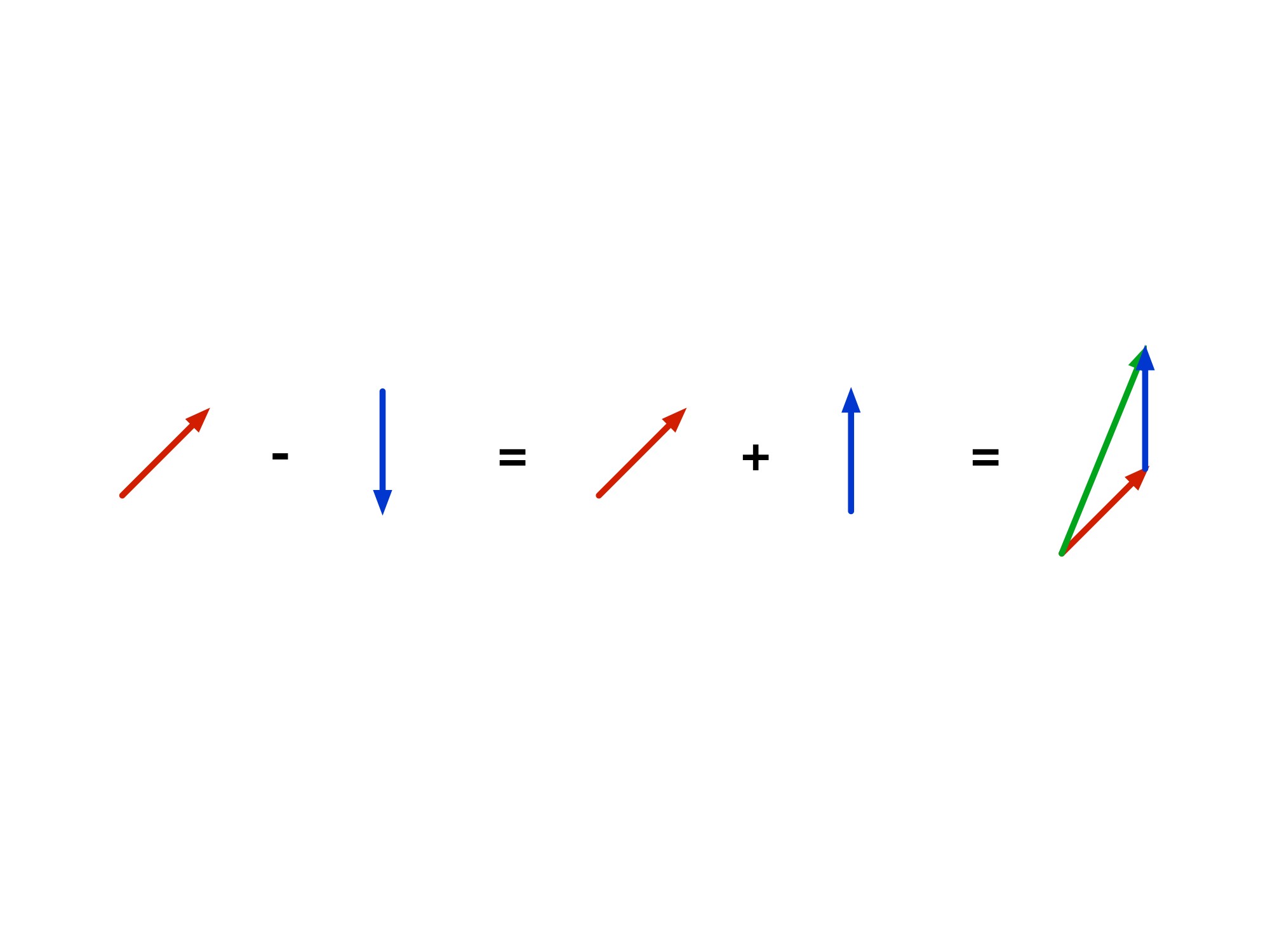
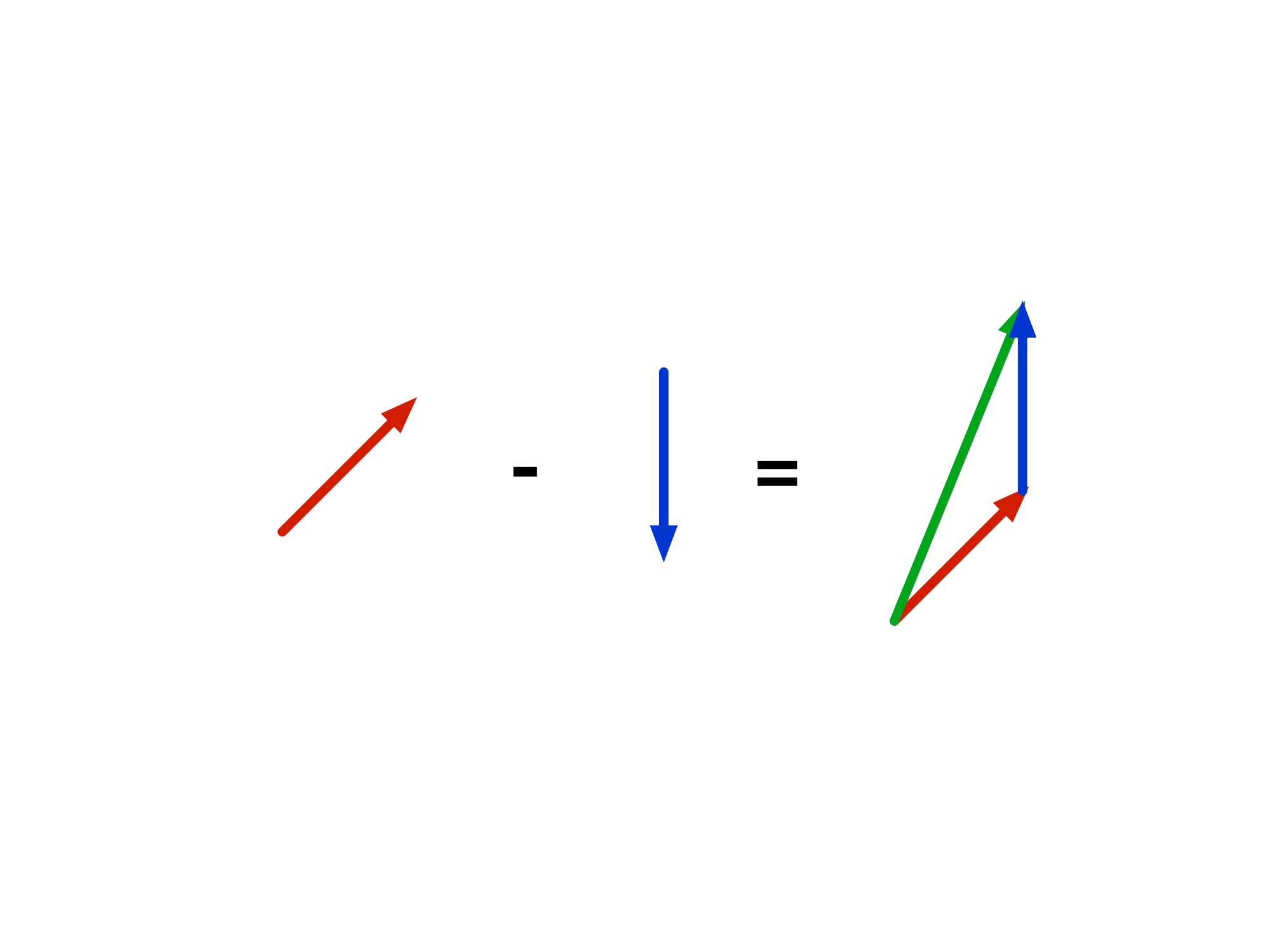
Therefore, to subtract a vector, we simply reverse the vector to be subtracted, and then add those vectors.
Step 3
Step 4
Step 5
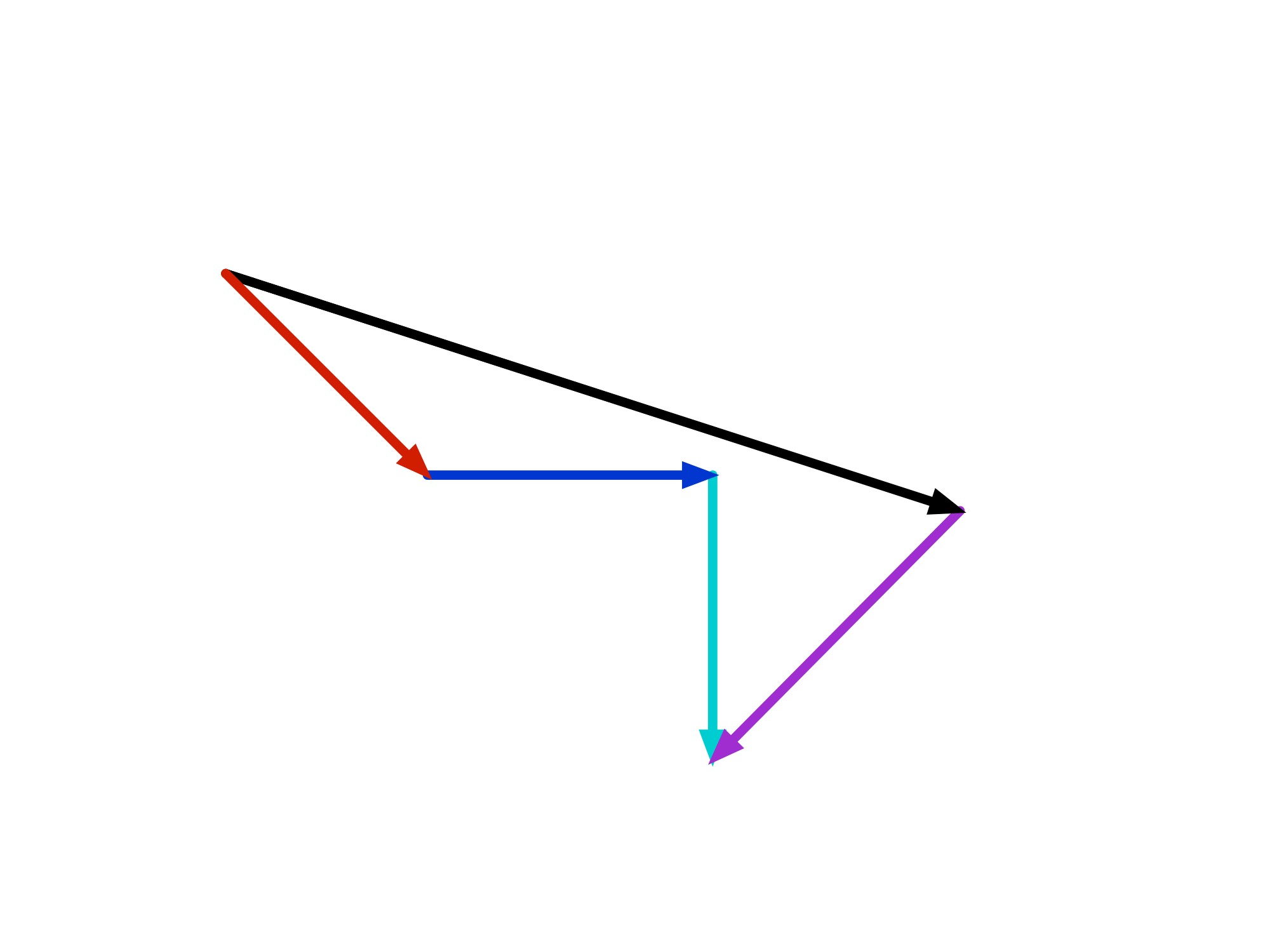
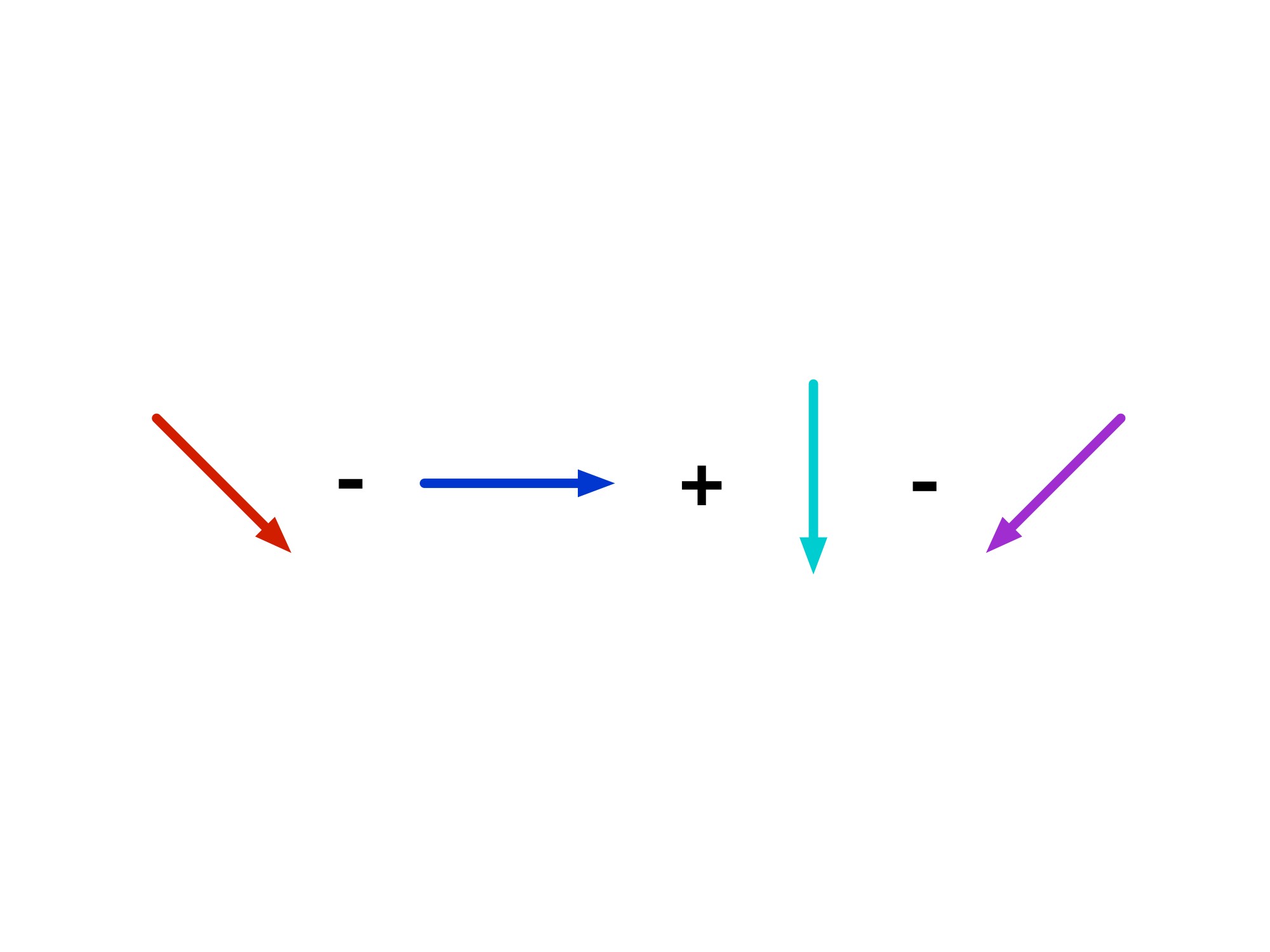
Vector subtraction can be done just like vector addition so it is still a resultant vector, with the only difference being that one vector is reversed, as that is what happens when a vector is multiplied by . This means that you take the given vector, swap the tip and the tail, and then add them normally. Even for subtraction, vectors are always aligned tip to tail, because it is still addition, just with one vector reversed .
Pop Quiz 1.2.2 Vector Addition
Question 1 of 5 · 0 correct
AP Topic 1.5 · Read the worked solution
Read every full question without answers
Question 1
Question 2
Question 3
Question 4
Question 5
Sometimes a scalar is multiplied by a vector. Say you wanted to find out what you would get if you doubled your velocity.
That would look like:
Multiplying a vector by a scalar changes its magnitude by the absolute value of that scalar. A positive scalar preserves its direction; a negative scalar reverses it; multiplying by zero gives the zero vector.
Vector multiplication with other vectors occurs in two forms, the dot product and the cross product. The dot product of vectors and is depicted as , and their cross product is depicted as .
The dot product can be calculated in two ways: by magnitude or by components. The first equation is the magnitude equation, with being the angle between the two vectors:
Next is the component equation:
Key Point: Dot products are scalars, and have no direction. Therefore, the order the vectors are multiplied does not matter, so .
The goal of a cross product is to identify a vector that is perpendicular to the two vectors being multiplied, and which has a magnitude equal to the area of a parallelogram made by the vectors, as shown below.
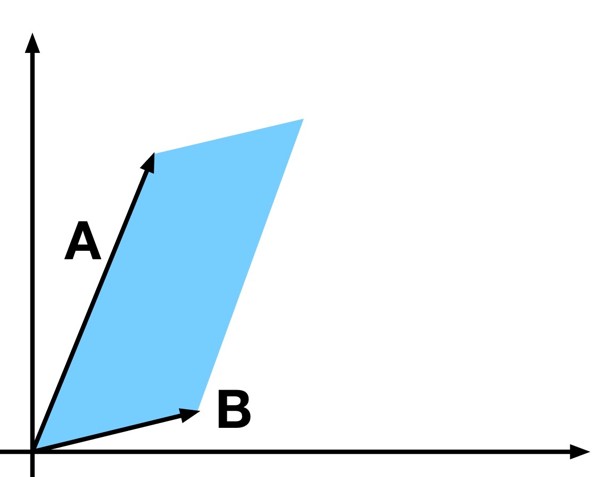
The calculation of a cross product is fairly simple if the magnitudes and directions of the vectors in question are known. The cross product is found via the following formula:
(Equation 1.2.5)
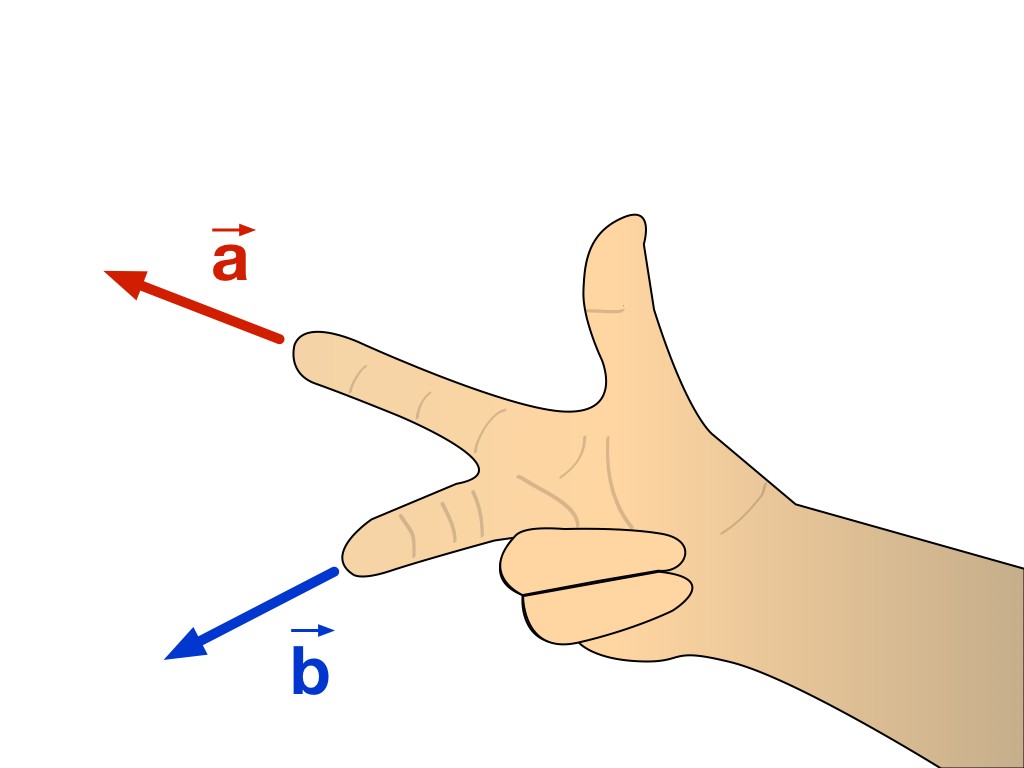
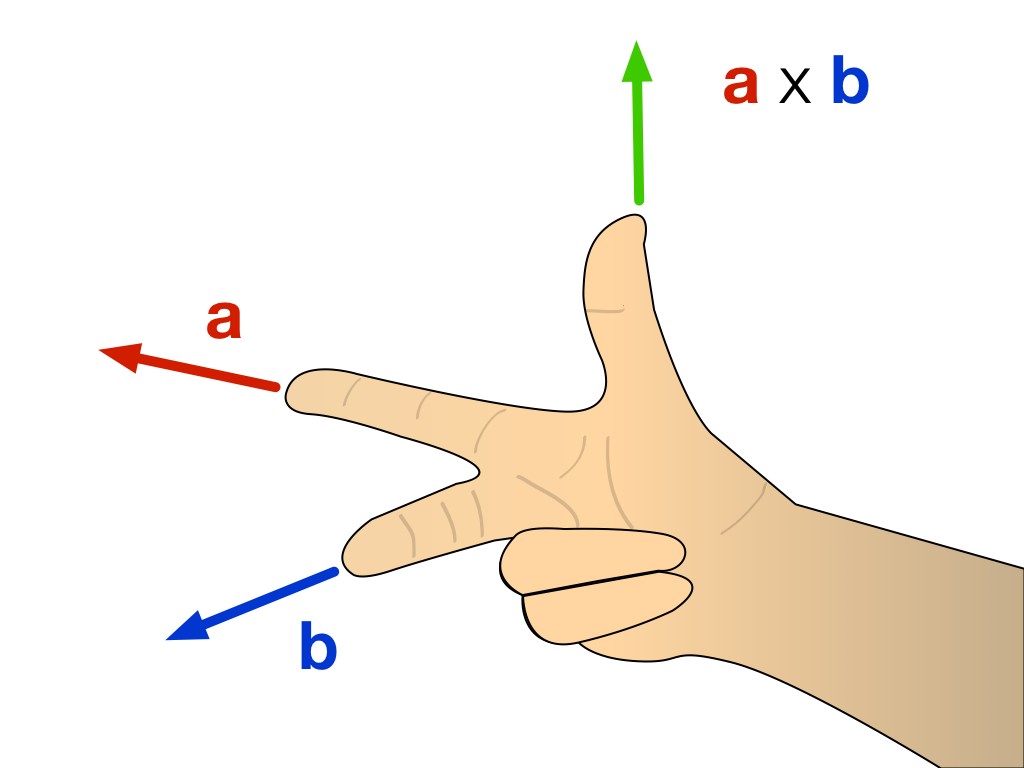
The unit vector in the equation is a unit vector whose direction is determined via the right-hand ruleⓘ. This rule is shown below.
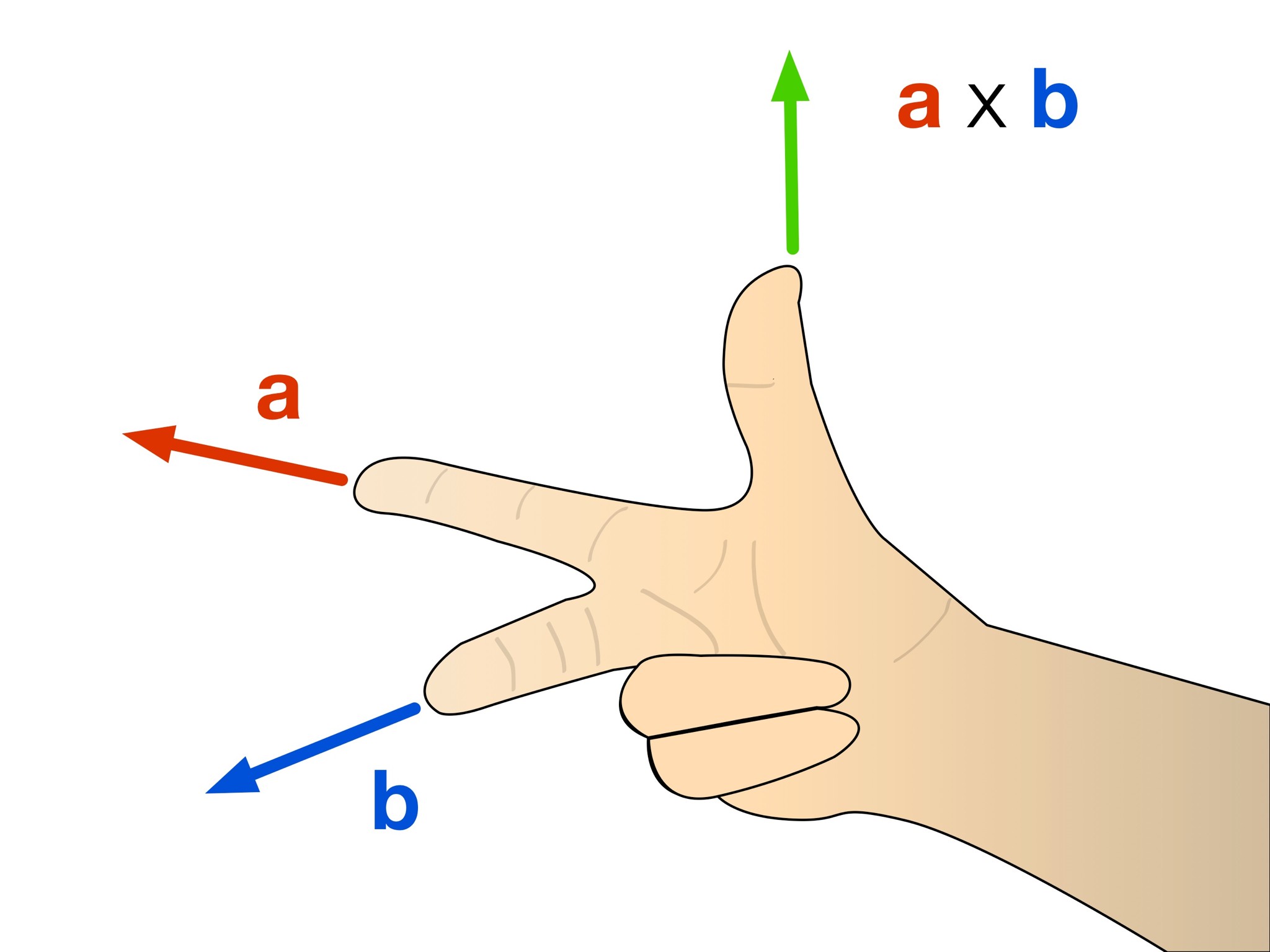
Key Point: A nonzero cross product is perpendicular to both input vectors. If the vectors are parallel or either is zero, their cross product is the zero vector and has no direction.
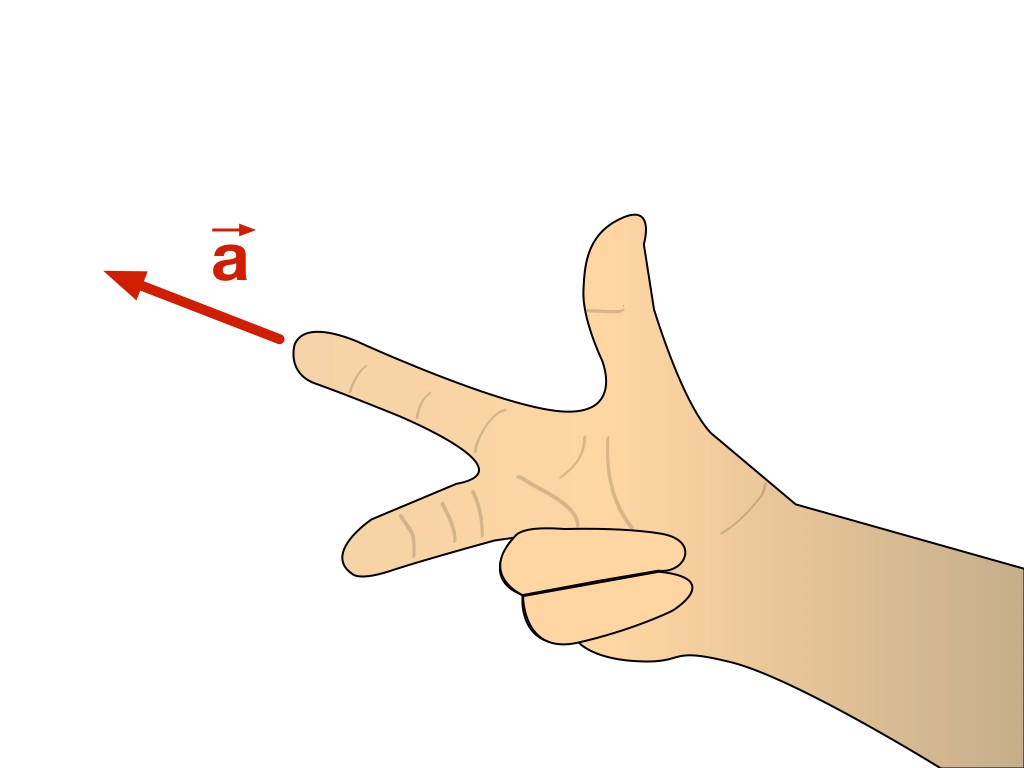
Start by pointing your pointer finger in the direction of the vector.
What is the cross product, , if the vectors are defined as:
Step 1: Identify the magnitude of the cross product
The magnitude is found by the basic cross product definition in Equation 1.2.5. This gives us a value of .
Step 2: Identify the direction of the cross product
Take east as +x, north as +y, and upward as +z. Then a⃗ × b⃗ points downward (−k̂) by the right-hand rule.
Step 3: Present the cross product
a⃗ × b⃗ = −35.36 k̂ m²/s.
Pop Quiz 1.2.3 Right-Hand Rule
Question 1 of 5 · 0 correct
Extra exploration · Read the worked solution
Read every full question without answers
Question 1
Question 2
If vector was directed northwards, and vector was directed eastwards, where would:
the vector be directed?
the vector be directed?
Question 3
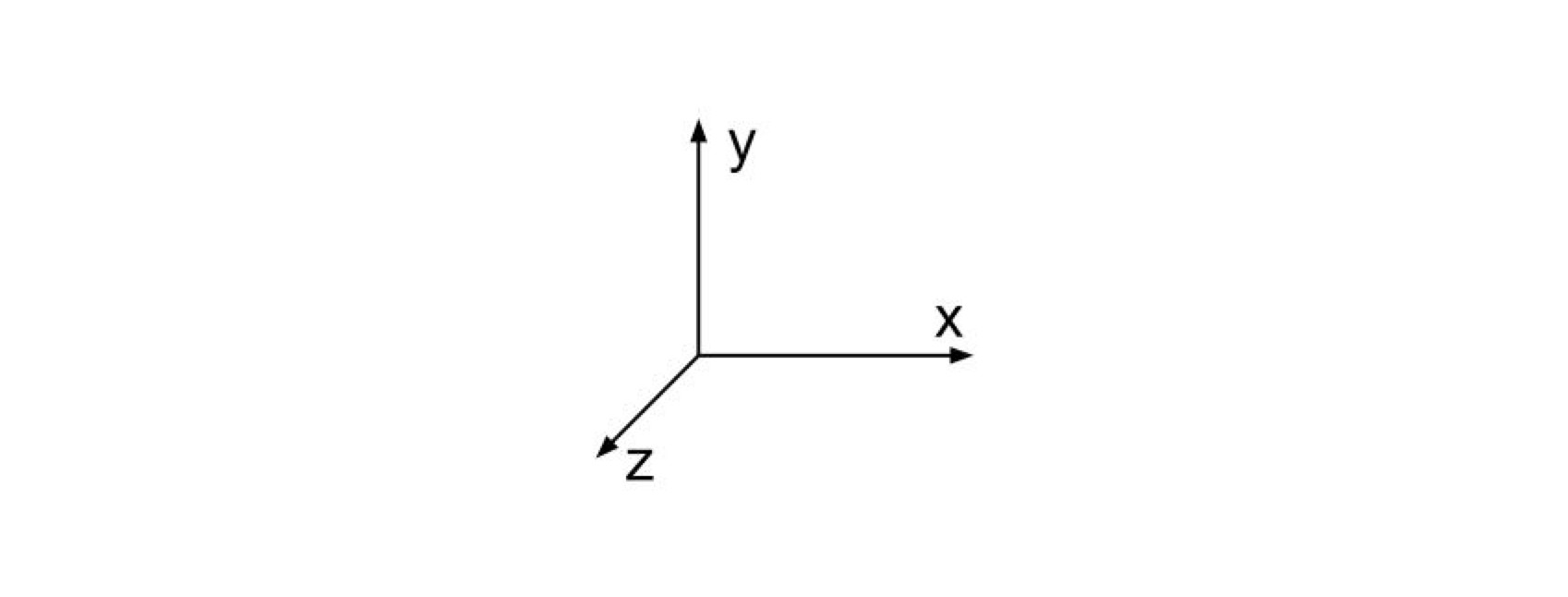
Is the following coordinate system right-handed? That is, is the vector in the direction of the cross product ?
Question 4
Question 5


Reviewed physics notes (12)
These corrections keep the original lesson’s purpose while fixing errors in the source edition.
- Prevents subtracting a negative component twice. — Reference 1
- Original says direction always remains unchanged. — Reference 1
- Zero cross product has no perpendicular direction. — Reference 1
- Original rounds incorrectly to 30° and fails to specify the east reference. — Reference 1
- The river flows west to east; north of west is the wrong quadrant. — Reference 1
- Specifies axes for the otherwise ambiguous word down. — Reference 1
- Correct rounding and explicitly states vector direction. — Reference 1
- Parallel can include oppositely directed vectors; revised prompt preserves the native True key. — Reference 1
- Dot product zero does not force a 90° angle if either vector is zero. — Reference 1
- Dot product of two displacement vectors has units of length squared. — Reference 1
- Use the unrounded source inputs to prevent accumulated rounding error. — Reference 1
- The caption omits the magnitude and the raster result accumulates rounding error. — Reference 1
Glossary and deeper reading · 9 refreshers
These editorial refreshers supplement the reading. Definitions and examples are added guidance; original source wording and recorded answers remain in their original context.
-
Vector
A vector is a quantity with a magnitude and a direction, represented by an arrow or by components along chosen axes. Vectors add by adding corresponding components rather than simply adding their magnitudes. For example, an eastward displacement followed by a northward displacement produces a resultant pointing northeast. The zero vector has zero magnitude and no unique direction.
-
Resultant vector
A resultant vector is the vector sum of two or more vectors. Its components are the sums of the corresponding components of the vectors being combined. For example, two equal forces in opposite directions have a zero resultant even though both forces are present.
-
Vector component
A vector component describes the part of a vector along a chosen axis. Its signed value changes when the axes change, even though the physical vector remains the same. For example, a diagonal launch velocity can be resolved into horizontal and vertical components that share the same elapsed time.
-
Magnitude
Magnitude is the nonnegative size of a vector quantity. It does not specify direction, and it differs from a signed component. For example, a westward velocity can have a negative x component while its speed, the velocity magnitude, stays positive.
-
Scalar
A scalar is a quantity described by a value and unit without a spatial direction. A scalar can have a sign when its definition or reference permits one; scalar does not mean always positive. For example, mass is a scalar, whereas the velocity of that mass also needs a direction.
-
Velocity
Velocity describes how position changes with time and includes direction. Instantaneous velocity describes one moment, while average velocity is displacement divided by elapsed time. For example, a car turning a corner can change velocity while maintaining the same speed.
-
Cross product
A cross product combines two vectors to form a vector perpendicular to both. Its magnitude depends on both magnitudes and the sine of their included angle, while reversing input order reverses its direction. For example, a force whose line of action passes through the pivot gives zero torque cross product about that pivot.
-
Unit vector
A unit vector has magnitude one and specifies a direction. Multiplying it by a signed component gives the vector contribution along that direction. For example, the Cartesian unit vectors identify the positive x, y, and z directions.
-
Right-hand rule
A right-hand rule is a convention for determining the direction of a vector cross product or a current-produced magnetic field. The chosen gesture must use the correct input vectors in their correct order, with reversal when a negative charge requires it. For example, the thumb-and-curl rule around a straight wire uses conventional current as the thumb direction.