Newton’s Laws and FBDs
Original textbook reading.
Many of you have heard of this scientist called Isaac Newton. Perhaps you have even heard that he wrote a few laws. Well, that’s what this section is about, but first we need to understand what force is.
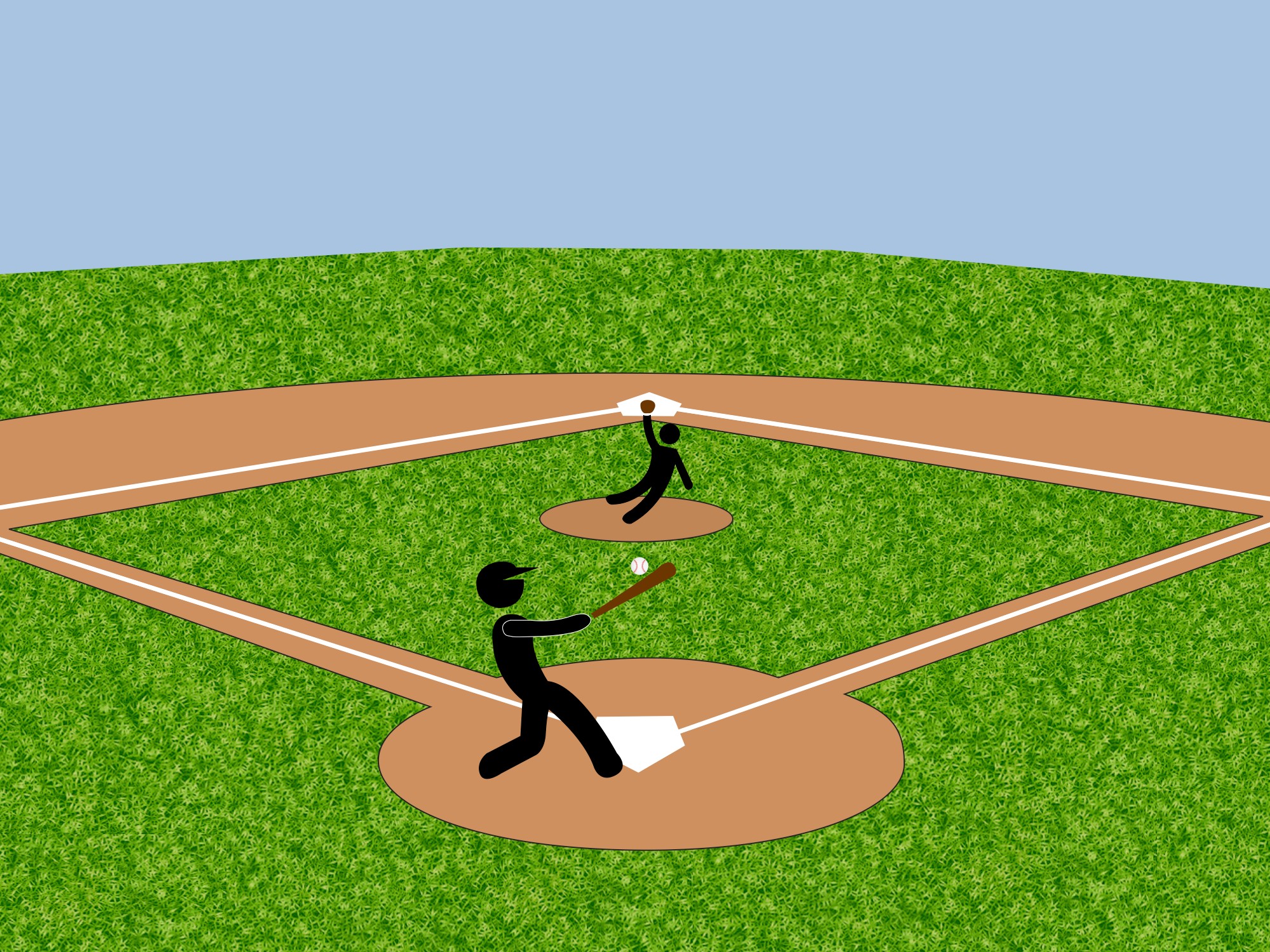
Baseball bats apply a force to send the baseballs flying away.
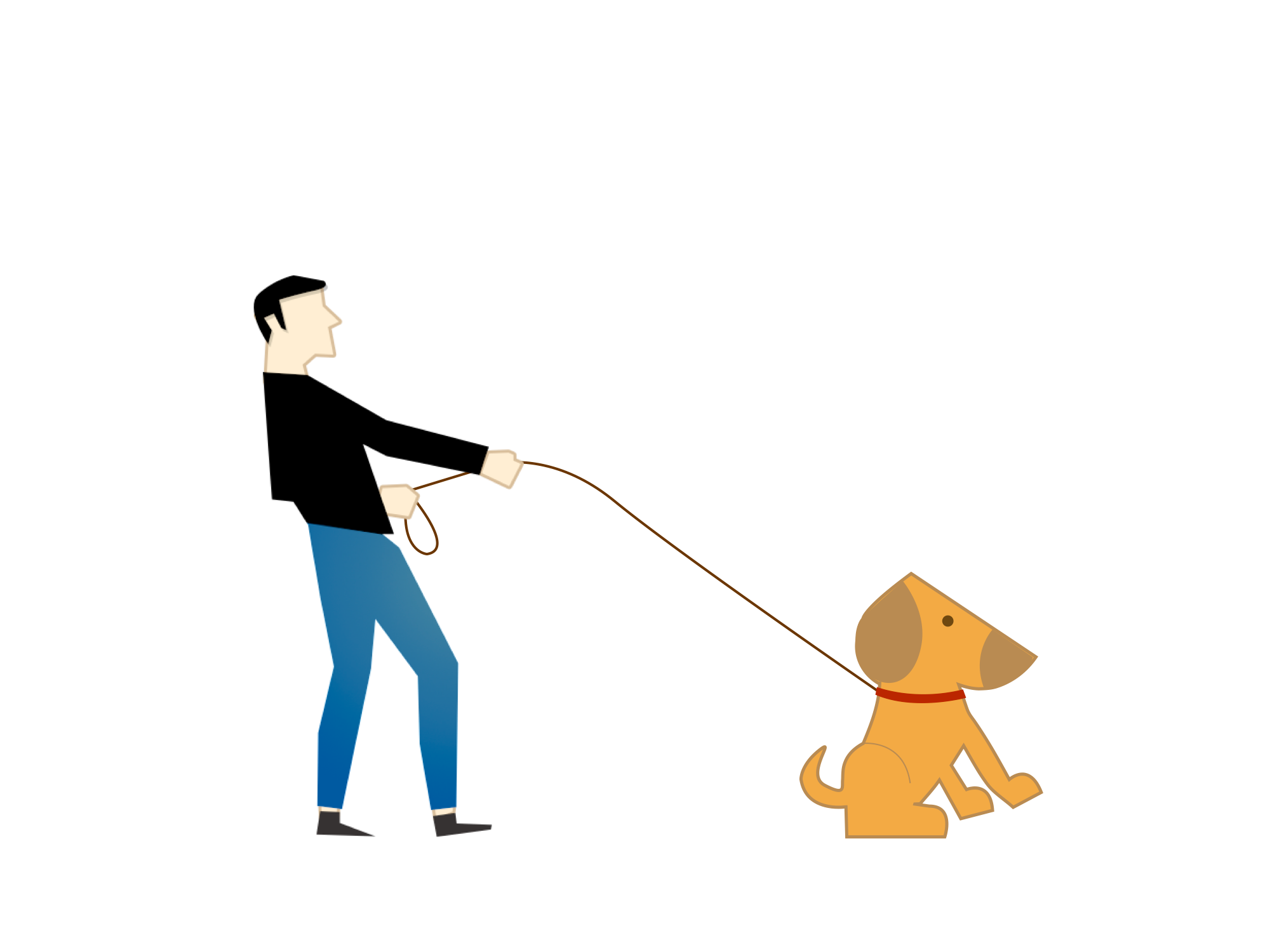
Whenever we interact with the world, we have to apply a force on something in order to move or stop it. Our legs apply a force on the ground and car axles apply a force on the wheels to create motion.
Newton’s three laws describe motion in inertial frames within classical mechanics. They are excellent models for ordinary speeds and scales.
Newton’s First Law: In an inertial frame, an object stays at rest or moves with constant velocity if the net external force is zero. A change in velocity requires a nonzero net external force.
Newton’s Second Law: In an inertial frame, the net external force is the rate of change of momentum. For constant mass, it equals mass times acceleration. This applies even when acceleration varies with time.
ΣF⃗ = ma⃗ (Equation 1.3.1). Force is measured in newtons: 1 N = 1 kg·m/s². If only one force acts, it is also the net force.
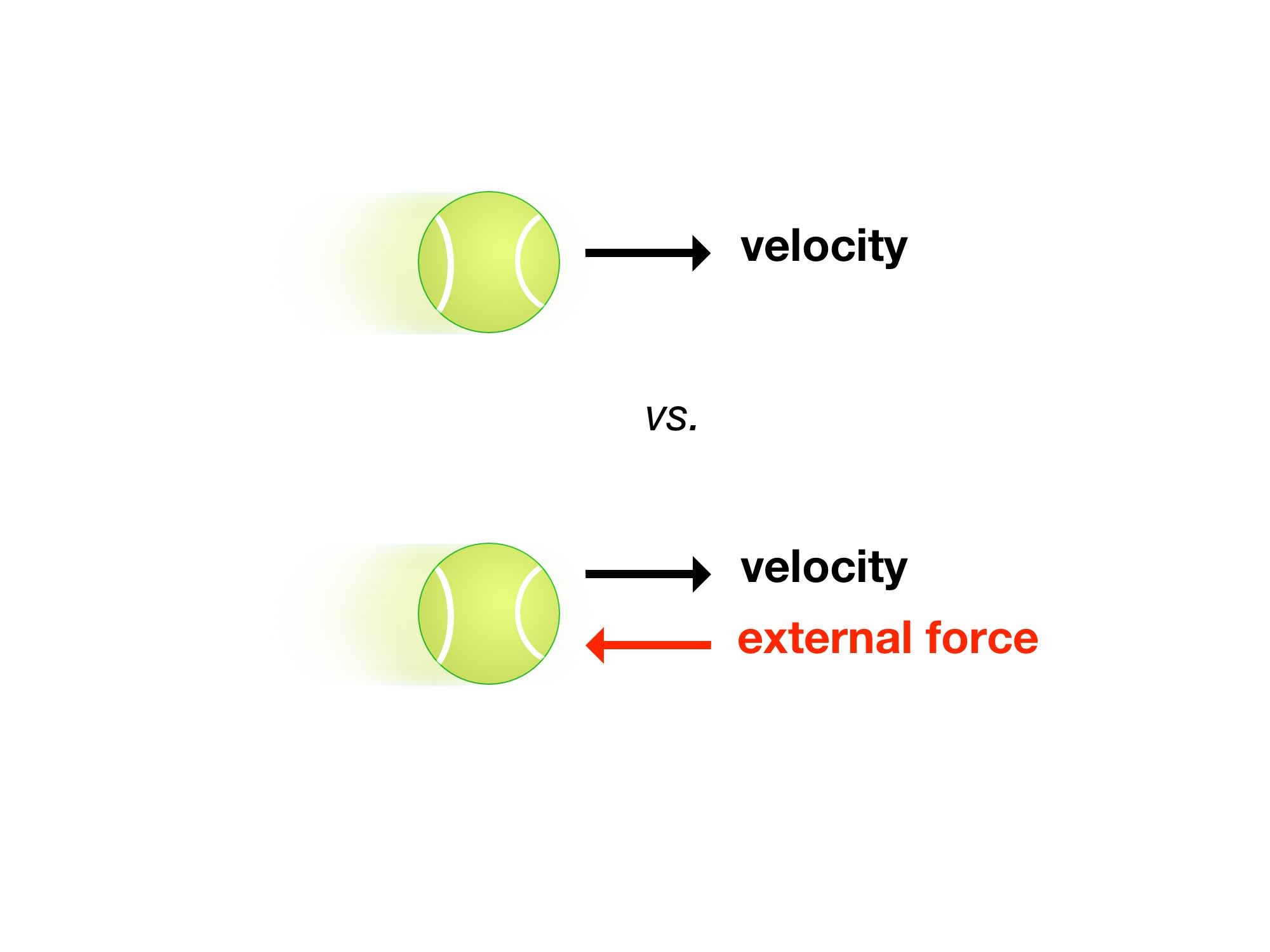
First Law: The picture above shows a tennis ball traveling with a certain velocity, therefore it has motion. The motion will stay constant unless acted on by an external force as displayed by the bottom image, which can be things such as drag force or gravitational force.
Read every step and figure
Step 1
First Law: The picture above shows a tennis ball traveling with a certain velocity, therefore it has motion. The motion will stay constant unless acted on by an external force as displayed by the bottom image, which can be things such as drag force or gravitational force.
Step 2
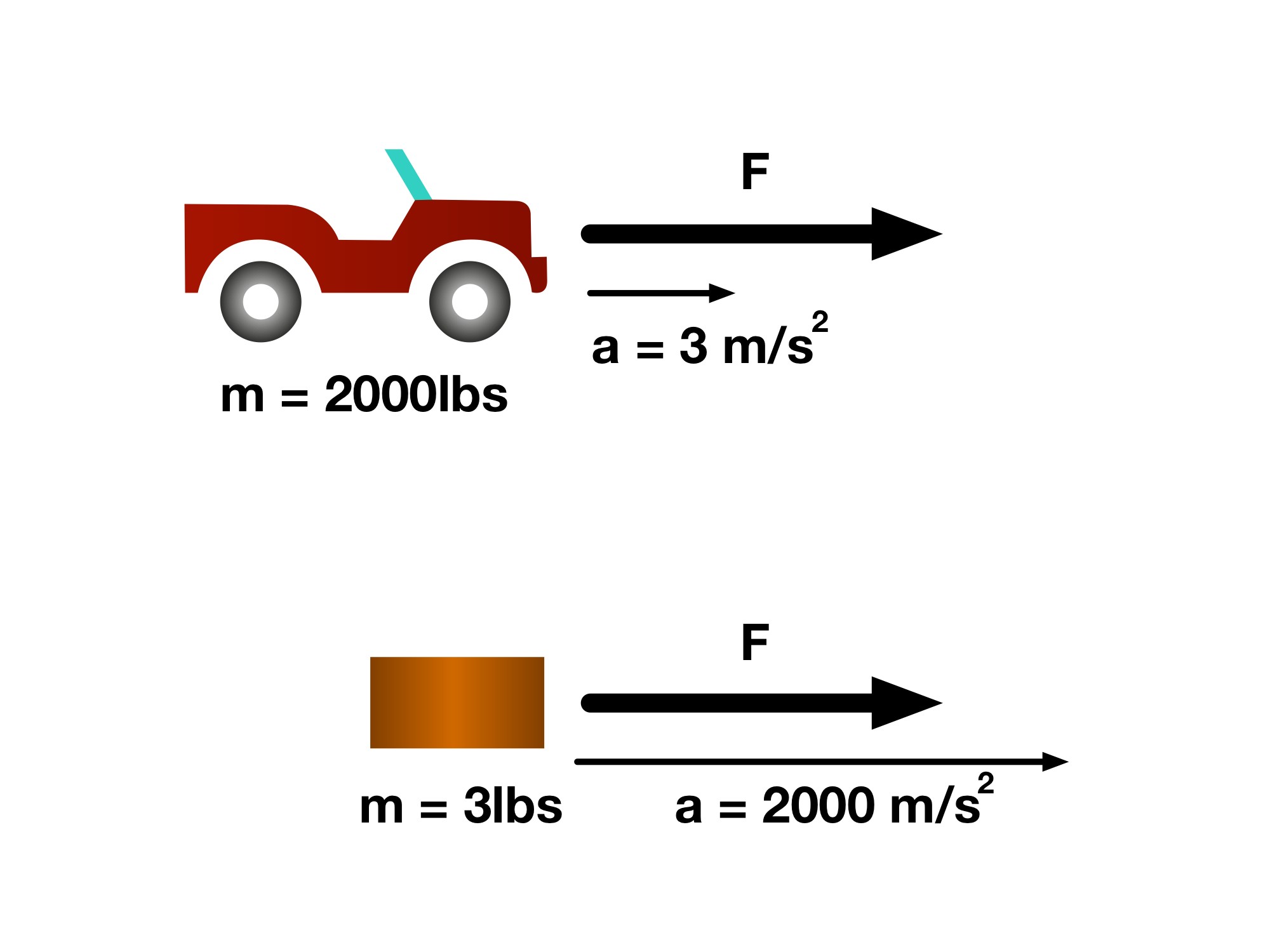
Second Law: Notice that in order for both objects to have the same force associated with them, the smaller box must have an acceleration that is much higher than the larger car.
Step 3
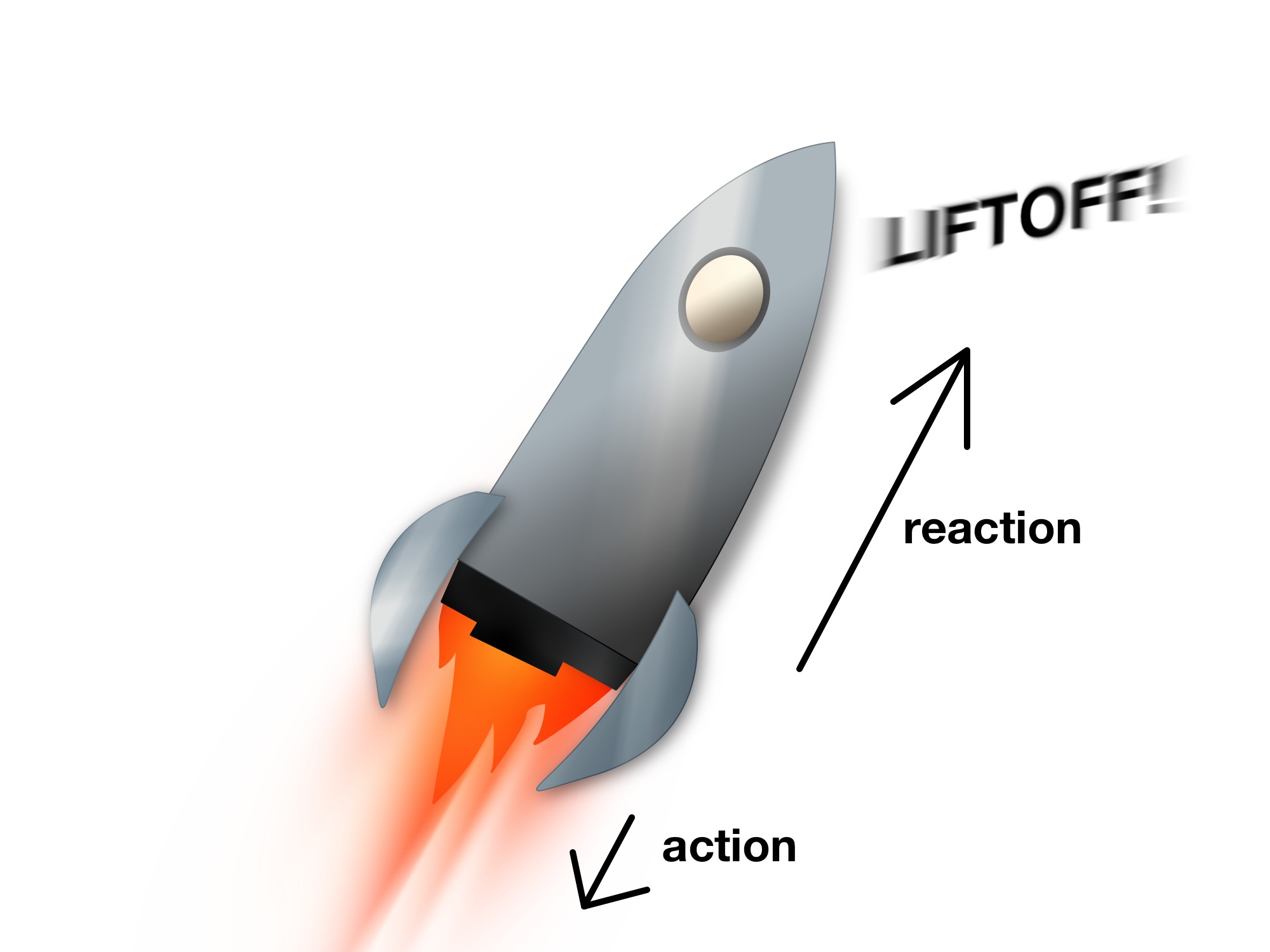
Newton’s Third Law: When A exerts a force on B, B exerts an equal and opposite force on A. The two forces act on different objects; they do not cancel in one object’s free-body diagram. See Gallery 1.3.2.
Free body diagrams (FBDs) are used for analyzing the forces acting on an object. They are important because they help us calculate the net force acting on an object. Figure 1.3.1 shows a very simple free body diagram. Let’s assume that this is a ball in mid-air on Earth and let’s also assume that there is no air resistance. Therefore, there is only one force acting on it and it is directed downward as displayed. Recall that Newton’s Second Law states that , where any object that has a mass and acceleration will have an associated force with it.
Figure 1.3.1 Falling Ball
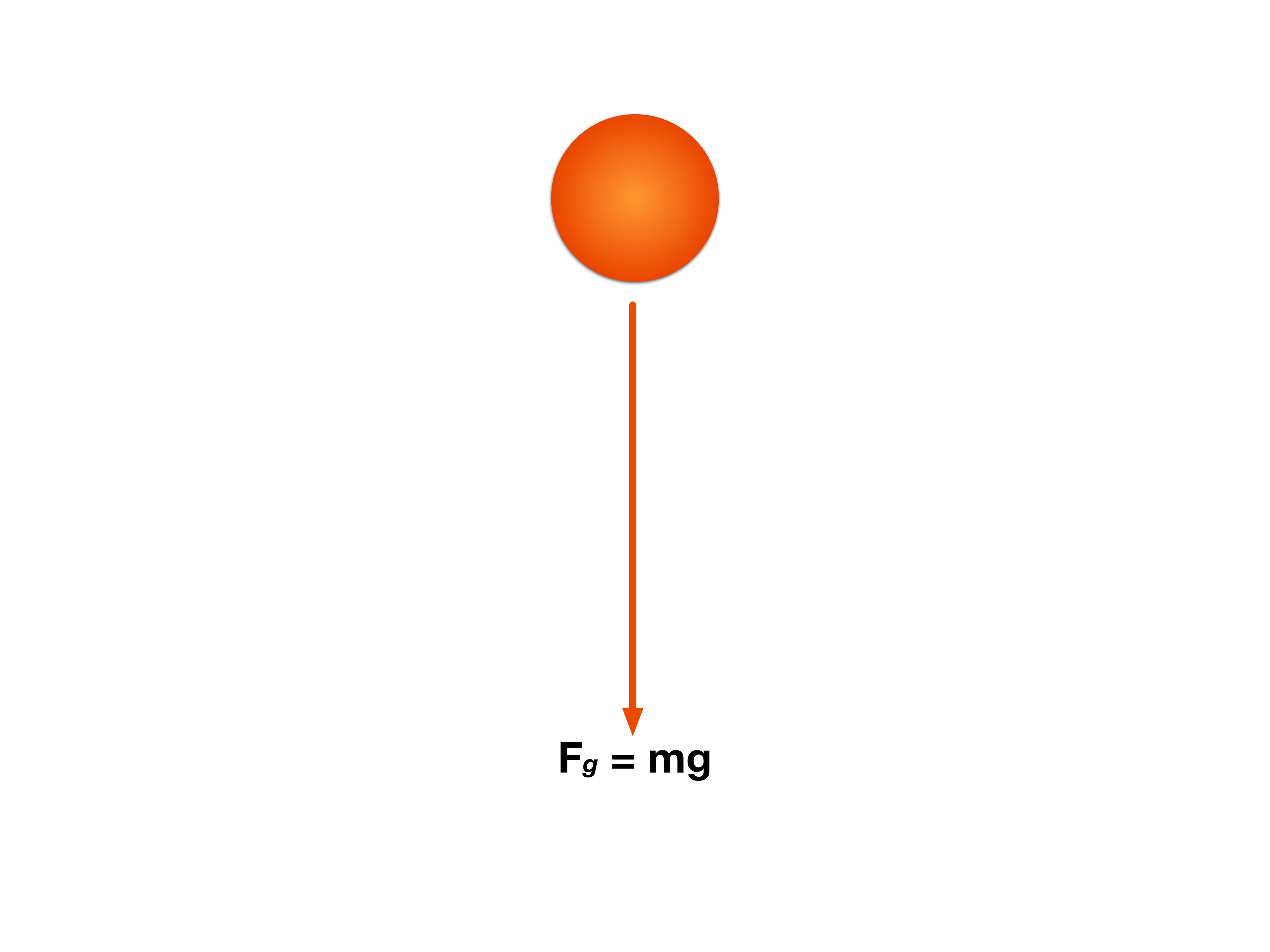
The force on this ball, as shown in the picture, is . The in the equation represents gravity↗. It has a constant magnitude and is always directed downwards in all FBDs. It is represented numerically by having a value of downward. In our example, gravity () replaces acceleration () in Equation 1.3.1. Gravity in this case, is the source of acceleration that is acting on the ball and is what causes it to move in the downward direction. It is referred to as the force of gravity and can be written as .
Does changing the ball’s initial velocity change its weight? In this near-Earth model, no: F⃗_g = mg⃗ is independent of velocity. Other forces, such as air drag, can depend on velocity.
Figure 1.3.2 shows a constant horizontal force applied to a box on a frictionless plane. The box accelerates according to Newton’s second law. The third-law partner is the force the box exerts back on the agent applying the push.
Figure 1.3.2 Block on a Plane
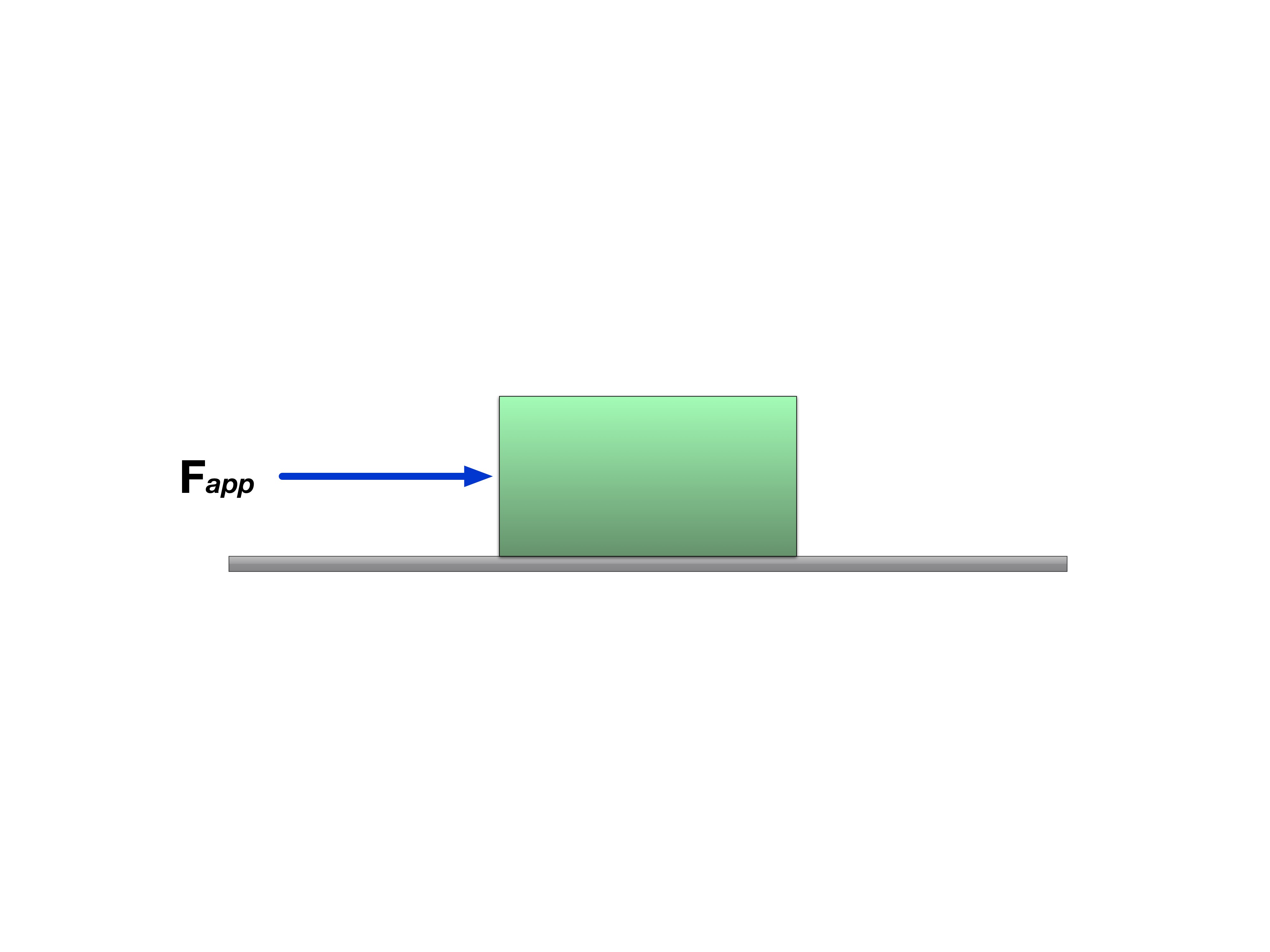
That is not the only force acting on the block, though, so our Free-Body Diagram is incomplete. Have you ever wondered how you are able stand on the ground without falling through? Or how your table doesn’t break when you place a lot of textbooks on top of it? This is because the ground is pushing back on you with a force just enough to prevent you from having any vertical acceleration. This is called the Normal Forceⓘ, which can be written as either or . It is defined as the force exerted on an object which is perpendicular to the plane of contact. It is another ever-present force to include in your FBDs. In the box in Figure 1.3.2, the normal force would be acting directly upward on the box to counteract gravity .
Figure 1.3.3 Complete FBD
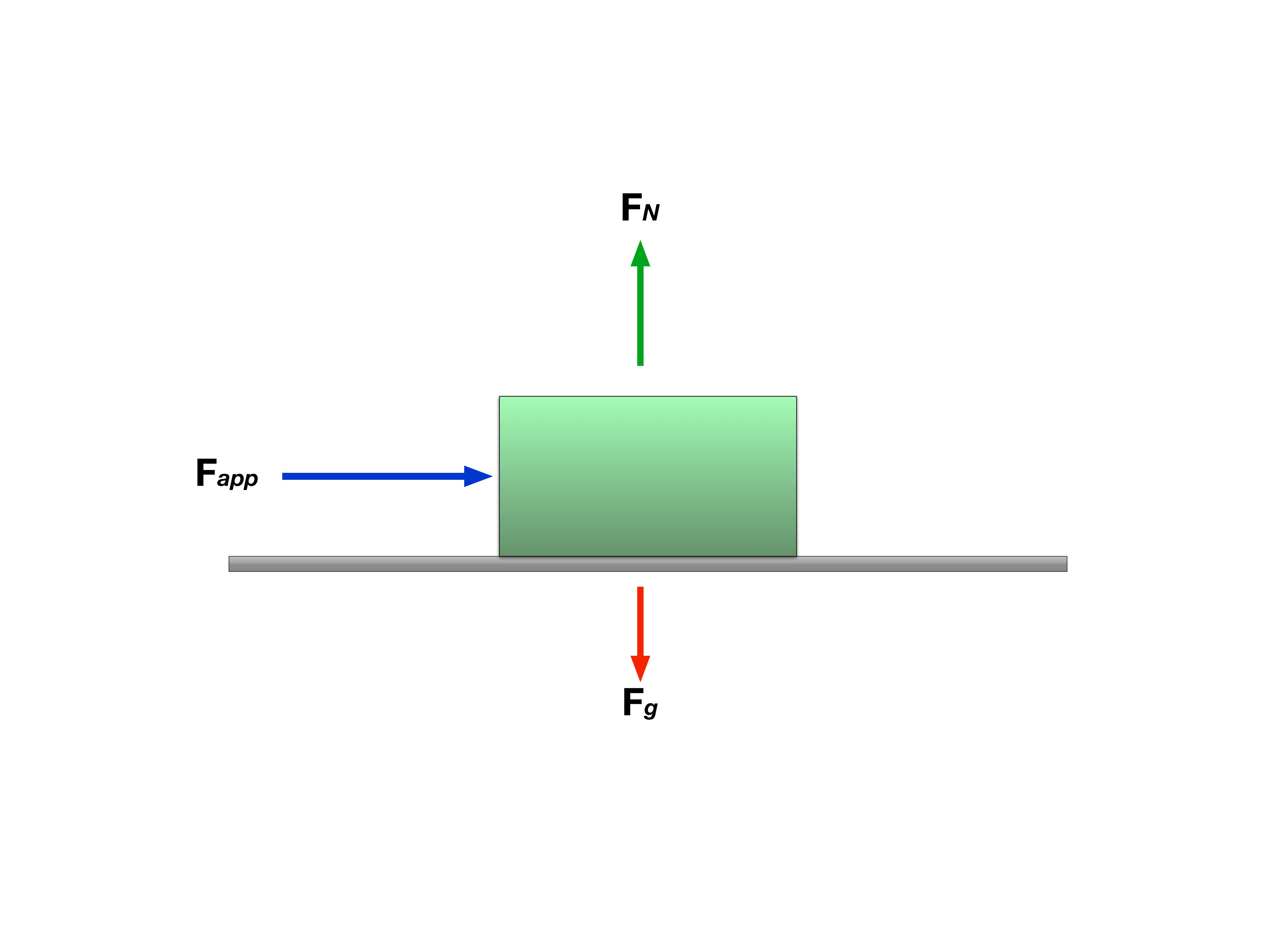
Figure 1.3.3 shows the full free body diagram for our box system. Notice how the forces are clearly labeled with arrows to indicate the direction that those forces are acting. The FBD shows that there is an applied force acting on the box, a force due to gravity, and a normal force . This is a complete free body diagram.
Inclined Plane with Friction
Next we are going to discuss another classic system. Instead of a flat plane, we place a box on an inclined plane, and we still have a force applied to it, this time pulling it to the left. We will also introduce friction here. With friction, as the box slides down the inclined plane, it should experience some resistance in the opposite direction of motion. This resistance that the box will feel as it slides down the plane is known as the Friction Force or .
Examples of this can be when you rub your hands together and you feel the resistance in between them or when you slide in your socks on the floor.
Key Point: Kinetic friction opposes sliding between the contacting surfaces. Static friction opposes their tendency to slide; it need not oppose the object’s motion relative to the ground.
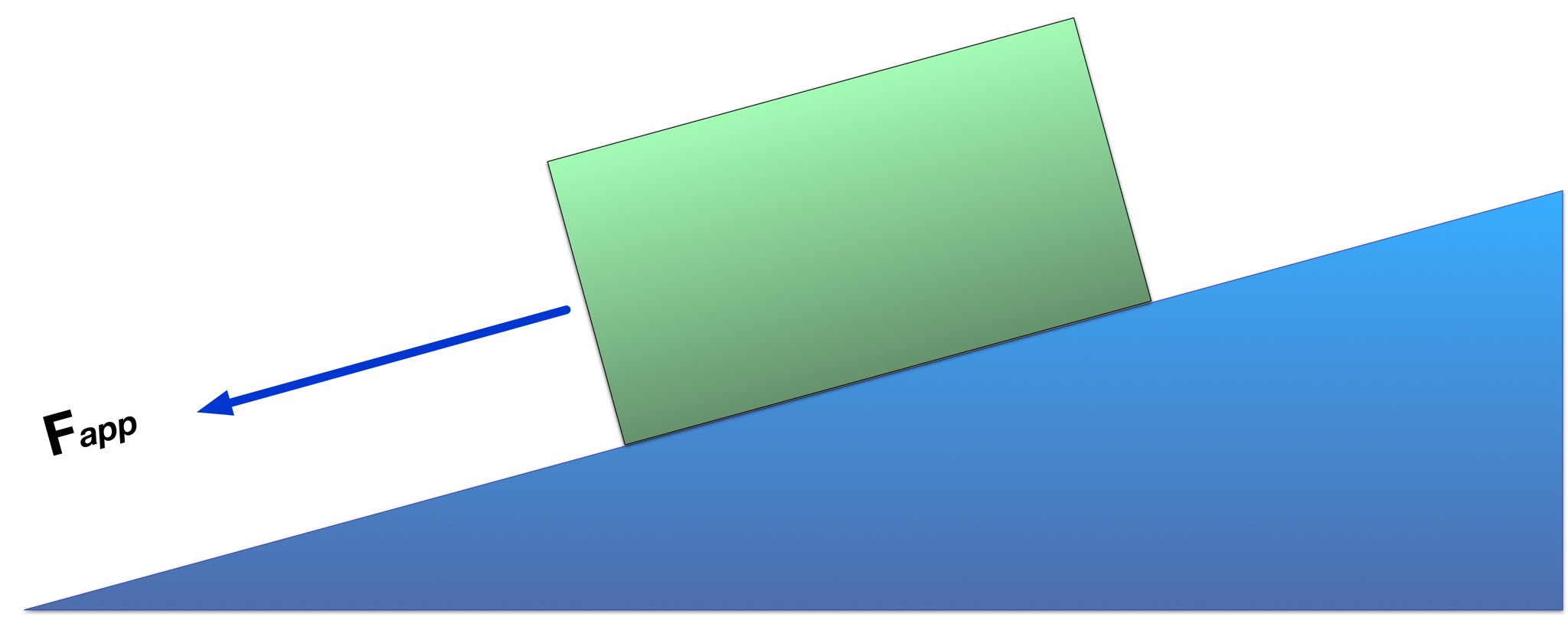 Figure 1.3.4 is the free body diagram for our box on an inclined plane. Notice again how the FBD only shows the forces acting on the object that affects its overall motion.
Figure 1.3.4 Complete FBD
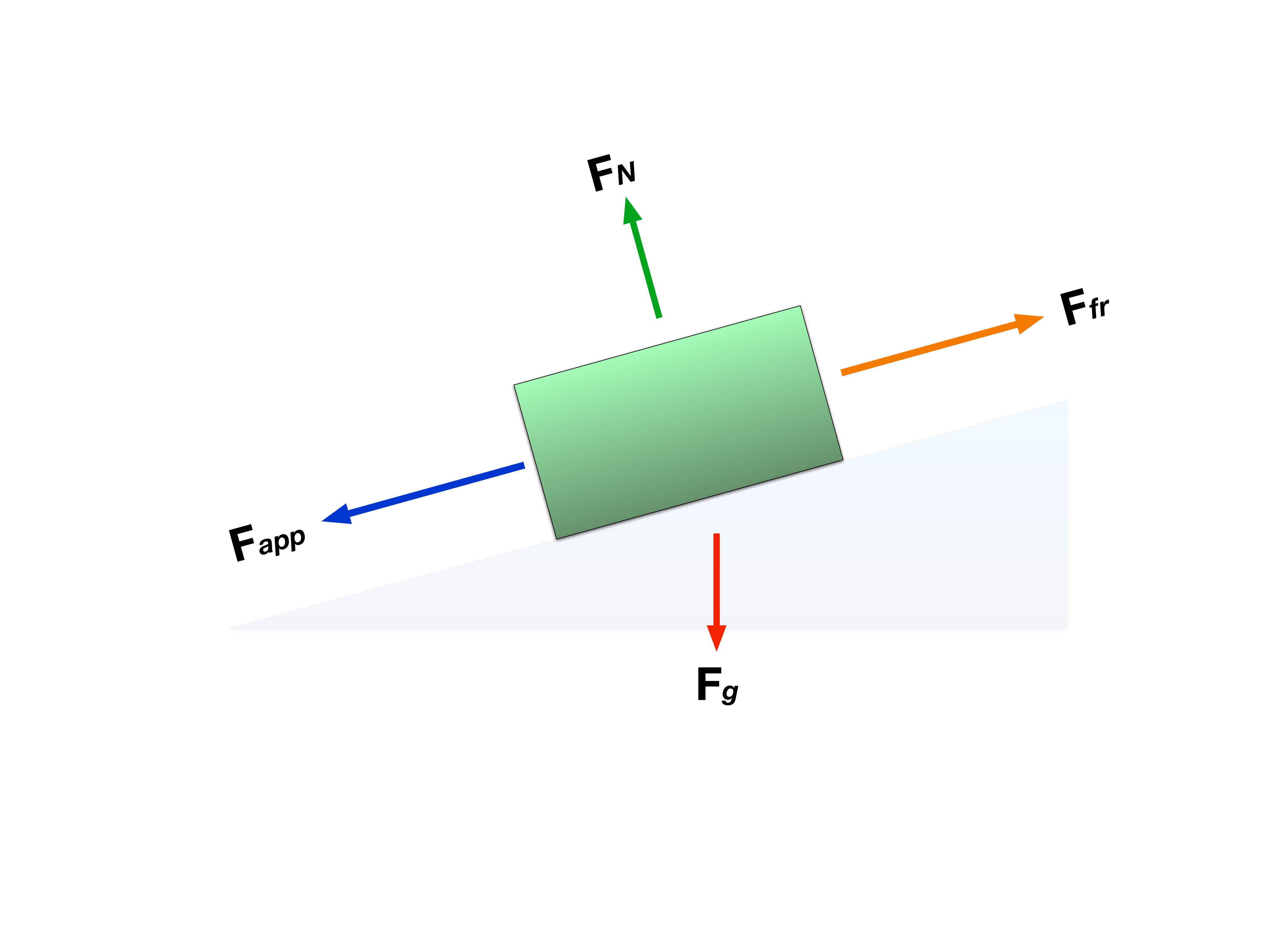
Block on a plane rising to the right: the applied force points down the slope, friction up the slope, weight vertically down, and the normal force perpendicular out of the plane.
In our FBD, there are four forces affecting the object. The applied force , the gravitational force , the normal force , and the frictional force .
An important thing to notice is that up to this point, we’ve only been discussing forces and motion of objects on flat surfaces. With this inclined plane example, notice how the gravitational force and normal force are not in the same direction. Since force is a vector, it has components, which we will be something that we cover later. Just keep this concept of components in mind .
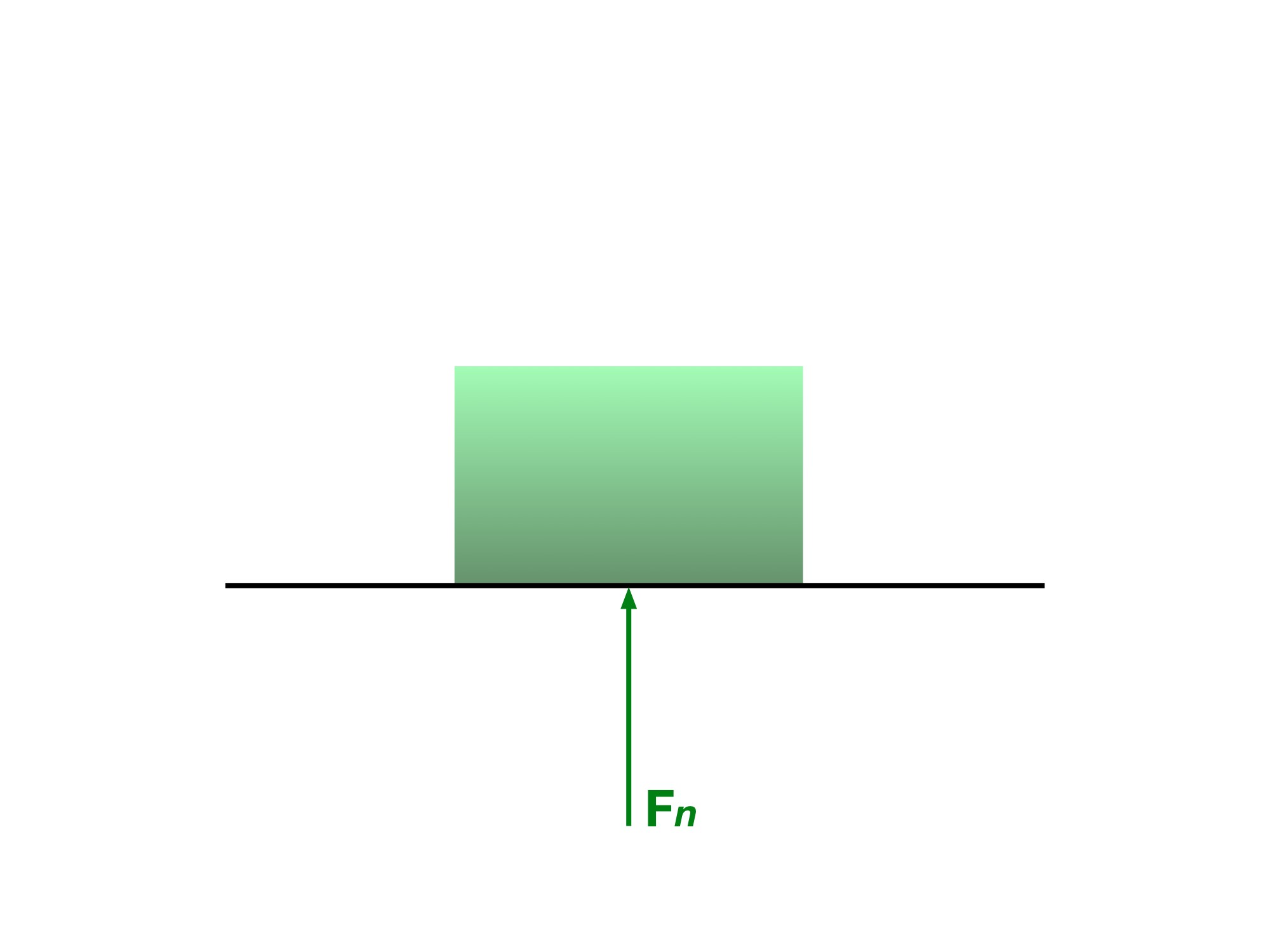
A normal force is always straight up from the surface beneath an object.
Read every step and figure
Step 1
Step 2
Step 3
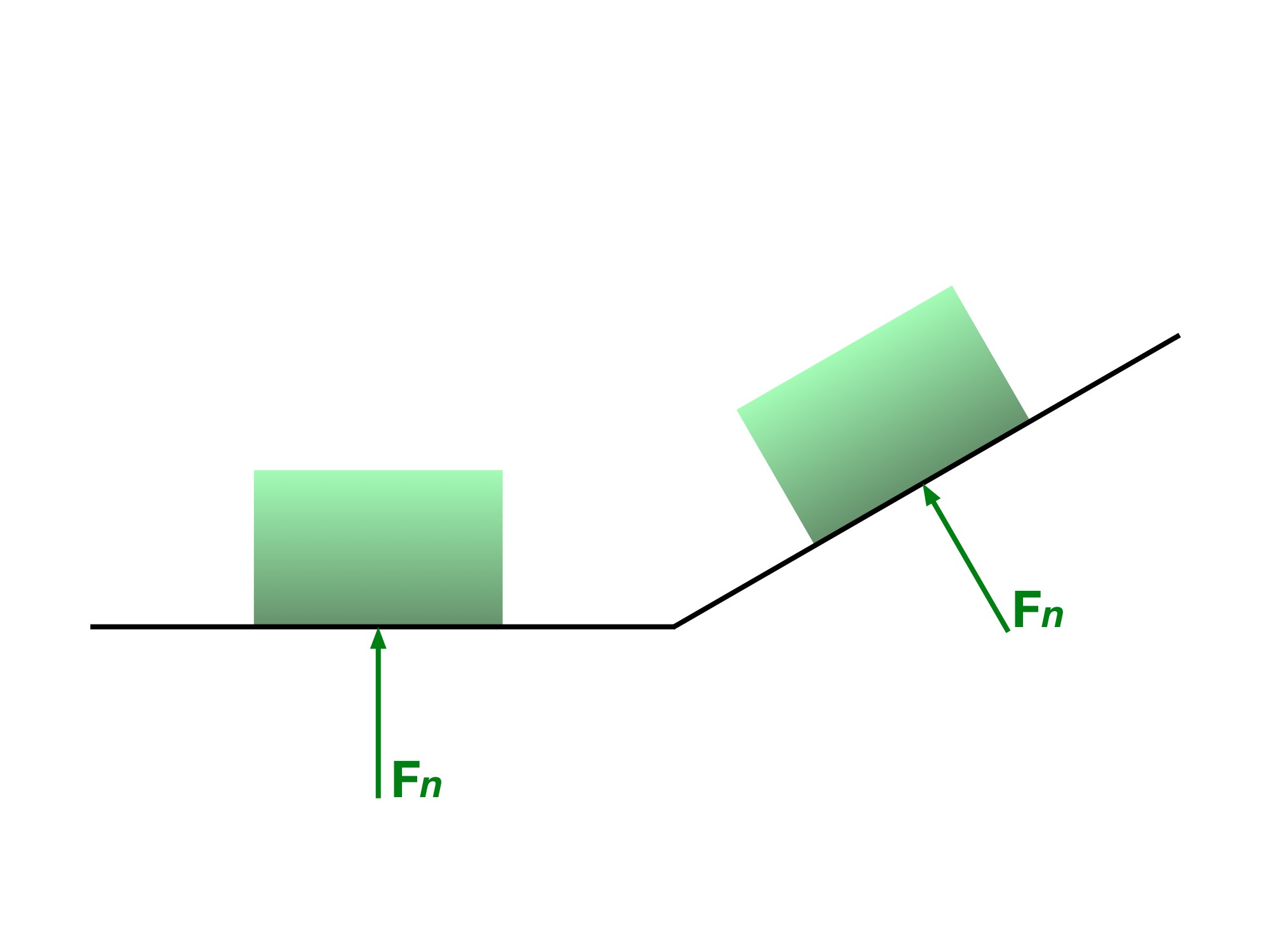
Step 4
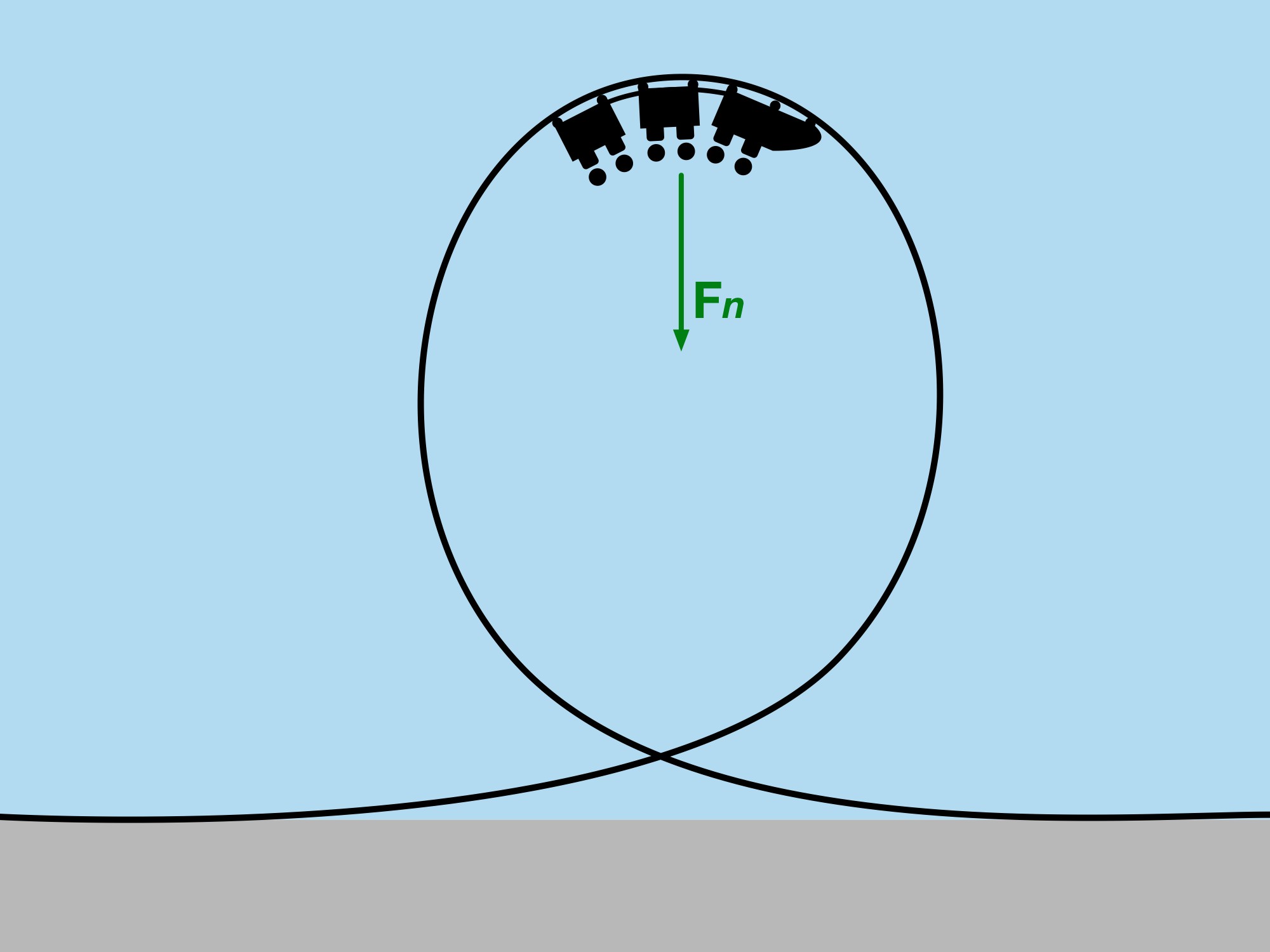
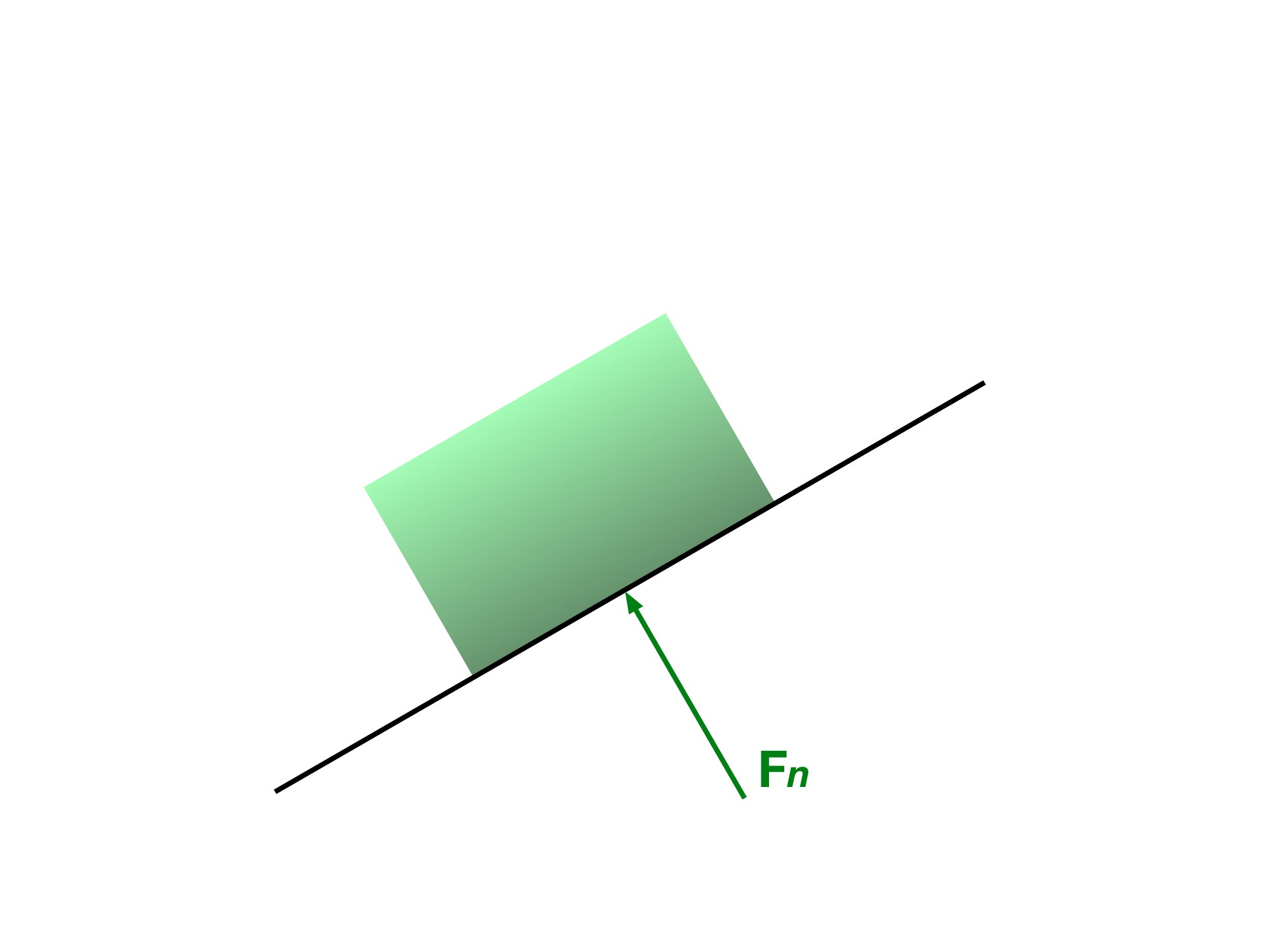
Key Point: The Normal Force always acts perpendicular to the plane on which an object is. It is the force exerted by the dirt underneath your feet that keeps you from sinking into the ground. It is the combination of forces exerted by your hand that allows you to hold this device steady. It takes on many forms.
Pop Quiz 1.3.2 Free Body Diagrams
Question 1 of 5 · 0 correct
AP Topic 2.2 · Read the worked solution
This man would prefer to not fall into the fire, so he gets a friend to pull him out. Match the forces with their respective arrows.
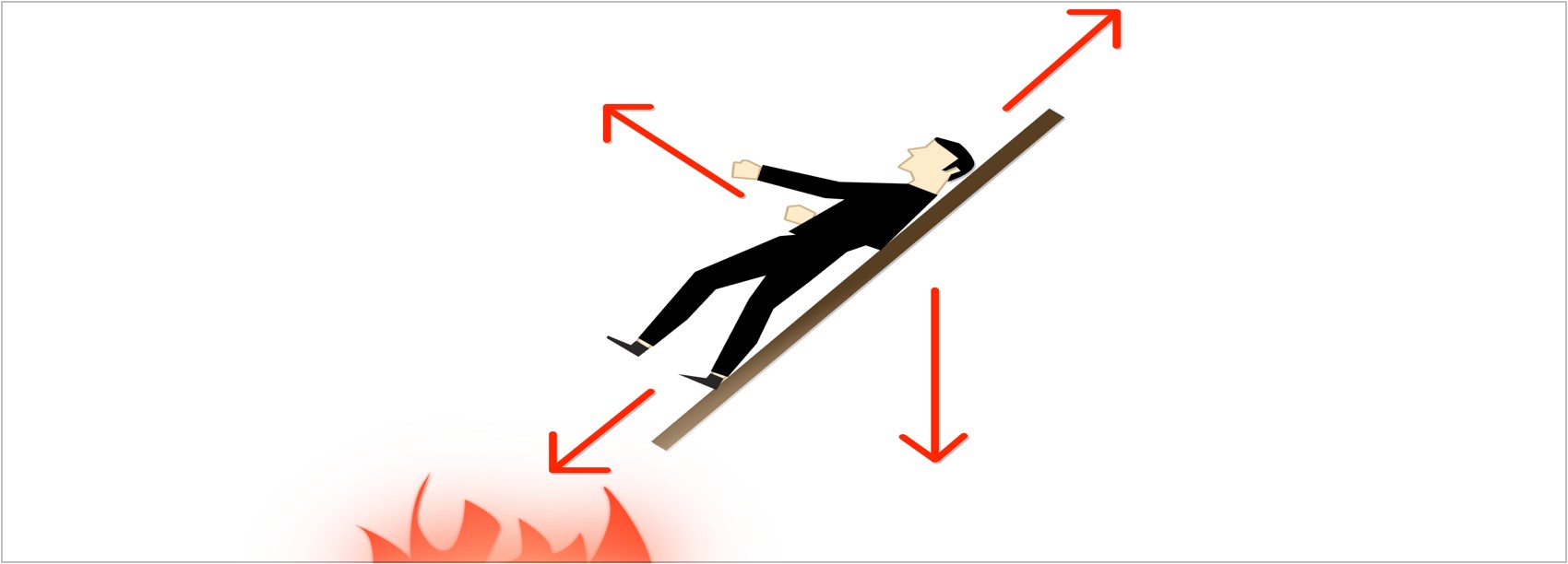 1234
Read every full question without answers
Question 1
This man would prefer to not fall into the fire, so he gets a friend to pull him out. Match the forces with their respective arrows.
1234Match these labels to the numbered figure targets. Write your matches before opening the separate worked answer.
Question 2
Question 3
Question 4
Question 5


Reviewed physics notes (11)
These corrections keep the original lesson’s purpose while fixing errors in the source edition.
- Newton’s laws do not govern all motion in the universe without limits. — Reference 1
- Original confuses any outside force with net force. — Reference 1
- Law is not limited to constant acceleration. — Reference 1
- Source F=ma requires the net-force meaning. — Reference 1
- Third-law reaction is a force, not the resulting motion. — Reference 1
- Source generalizes velocity independence from gravity to every force. — Reference 1, Reference 2
- Box movement is not the third-law reaction. — Reference 1
- Source states friction always opposes ground-frame motion. — Reference 1
- Fuel fire and upward motion are not the force pair. — Reference 1
- Focuses the prompt on the first-law behavior preserved by its native key. — Reference 1
- Original required-force-to-move wording can depend on gravity and friction; preserves Both B and C native key. — Reference 1
Glossary and deeper reading · 16 refreshers
These editorial refreshers supplement the reading. Definitions and examples are added guidance; original source wording and recorded answers remain in their original context.
-
Force
A force describes an interaction that can change an object’s momentum. It is a vector measured in newtons, so both size and direction matter when forces are added. For example, a rope can pull a cart while the floor exerts friction in another direction.
-
Inertial frame
An inertial frame is a reference frame in which an object with no net external force moves at constant velocity. Frames moving at constant velocity relative to an inertial frame are also inertial in the Newtonian model. For example, a steadily moving train is approximately inertial, whereas a train accelerating out of a station is not.
-
Velocity
Velocity describes how position changes with time and includes direction. Instantaneous velocity describes one moment, while average velocity is displacement divided by elapsed time. For example, a car turning a corner can change velocity while maintaining the same speed.
-
External force
An external force is exerted on part of a chosen system by something outside that system. The sum of external forces determines the rate of change of the system’s total momentum. For example, Earth’s gravitational force is external to a system consisting only of a falling ball.
-
Linear momentum
Linear momentum is a vector describing an object’s motion and equals mass times velocity in the nonrelativistic model. The vector sum of momenta is conserved when the net external impulse on the system is zero. For example, two identical carts moving equally fast in opposite directions have zero total linear momentum but nonzero total kinetic energy.
-
Acceleration
Acceleration is the vector rate of change of velocity with time. It can change an object’s speed, direction, or both, and it is measured in meters per second squared. For example, a satellite moving at constant speed in a circular orbit accelerates toward the center.
-
Net force
Net force is the vector sum of all forces acting on the object or system under consideration. For constant mass in an inertial frame, it equals mass times acceleration. For example, equal upward and downward forces give zero net force even though neither force is zero.
-
Drag
Drag is a force from a fluid that opposes an object’s motion relative to that fluid. Its dependence on speed, shape, and fluid properties varies with the physical regime. For example, a parachute increases air drag by presenting a large area to the moving air.
-
Gravity
Gravity is the attractive interaction between masses in the Newtonian model. For spherical bodies or point-mass approximations, its strength decreases with the square of the separation between their centers. For example, Earth’s gravity provides the inward force that keeps a satellite in orbit.
-
Magnitude
Magnitude is the nonnegative size of a vector quantity. It does not specify direction, and it differs from a signed component. For example, a westward velocity can have a negative x component while its speed, the velocity magnitude, stays positive.
-
Weight
Weight is the gravitational force exerted on an object by a specified attracting body. Near Earth’s surface its magnitude is approximately mass times the local gravitational field strength, and it is measured in newtons. For example, an astronaut has less weight on the Moon while retaining the same mass.
-
Normal force
A normal force is a contact force perpendicular to the local surface of contact. Its magnitude is set by the motion and the other forces, so it need not equal the object’s weight. For example, a wall’s normal force on a leaning ladder points horizontally rather than upward.
-
Kinetic friction
Kinetic friction acts between surfaces that slide relative to one another. It opposes their relative slipping and is often modeled with magnitude equal to the kinetic-friction coefficient times the normal force. For example, a rapidly moving belt can exert forward kinetic friction on a slower box sliding on it.
-
Static friction
Static friction opposes the tendency for relative sliding between surfaces that are not sliding at their contact. In the simple model it adjusts up to a maximum set by the coefficient of static friction and normal force. For example, static friction can push a walking person forward when the foot pushes backward on the ground.
-
Vector
A vector is a quantity with a magnitude and a direction, represented by an arrow or by components along chosen axes. Vectors add by adding corresponding components rather than simply adding their magnitudes. For example, an eastward displacement followed by a northward displacement produces a resultant pointing northeast. The zero vector has zero magnitude and no unique direction.
-
Vector component
A vector component describes the part of a vector along a chosen axis. Its signed value changes when the axes change, even though the physical vector remains the same. For example, a diagonal launch velocity can be resolved into horizontal and vertical components that share the same elapsed time.