Angular Momentum Equation
Reference from the original Physics I textbook.
- Angular Momentum Equation
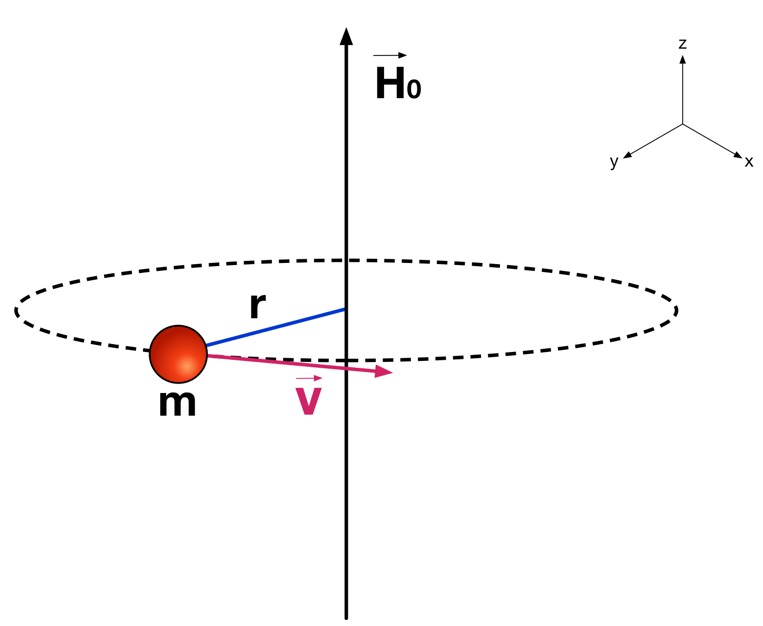
Angular momentum about O: H⃗_O = r⃗ × p⃗ = m(r⃗ × v⃗).
H⃗_O = angular momentum (kg·m²/s = N·m·s); r⃗ = position from O (m); p⃗ = linear momentum (kg·m/s); v⃗ = velocity (m/s).
- Related Glossary Terms
- Index
Reviewed physics notes (2)
These corrections keep the original lesson’s purpose while fixing errors in the source edition.
- The source drops the cross product in its final r(mv) expression. — Reference 1
- Source momentum unit kg/(m·s) is incorrect. — Reference 1
Glossary and deeper reading · 1 refreshers
These editorial refreshers supplement the reading. Definitions and examples are added guidance; original source wording and recorded answers remain in their original context.
-
Angular momentum
Angular momentum describes motion about a specified point or axis. For rigid rotation about a fixed principal axis it can be written as rotational inertia times angular velocity; a translating particle can also have angular momentum about a point. For example, a ball moving past a pole has angular momentum about the pole even though the ball’s path is straight.