Chapter 1 Solutions
Worked solutions to all thirty problems, with the reason for each step. These explanations were added for this edition; the chapter answer key and original worked examples follow below.
Chapter problems → · Chapter answer key → · Original worked examples →
Problem 1
Original problem · added worked solution
Authored worked explanation for the original source problem.
Source review note: The source short answer is 2. The printed expression includes a final −1, so the reviewed result is 1.
At , and .
Why: Both coordinates are negative in quadrant III, so tangent is positive.
Thus , and .
Why: Take the reciprocal of sine before squaring the product.
Reviewed answer: 1
Takeaway: Squaring removes a sign; it does not remove the final subtraction.
Final answer
Problem 2
Original problem · added worked solution
Authored worked explanation for the original source problem.
and .
Why: Use the 30–60–90 triangle.
with .
Why: The denominator is a difference of squares and the secant identity makes it 1.
The quotient is .
Why: There is no need to approximate the π/8 values.
Reviewed answer:
Takeaway: Simplify an identity before reaching for a calculator.
Final answer
Problem 3
Original problem · added worked solution
Authored worked explanation for the original source problem.
At , , , , and .
Why: Sine is positive and cosine is negative in quadrant II.
The two squared products are and .
Why: Square each entire product, then add.
.
Why: Both terms are nonnegative after squaring.
Reviewed answer:
Takeaway: Track the signs before you square them away.
Final answer
Problem 4
Original problem · added worked solution
Authored worked explanation for the original source problem.
The graph has maximum 4 and minimum −2, so amplitude is and midline is .
Why: Amplitude is half the vertical range; the midline is its average.
Successive peaks are apart, so the horizontal coefficient is .
Why: The period of sin(bx) is 2π/|b|.
The curve rises through its midline at , giving .
Why: An increasing midline crossing is the convenient zero phase for a positive sine wave.
Reviewed answer:
Takeaway: Read height, period, and phase as three separate features.
Final answer
Problem 5
Original problem · added worked solution
Authored worked explanation for the original source problem.
From problem 4, the sine angle is .
Why: Keep the same amplitude, midline, and period.
, so .
Why: A phase identity converts the same curve from sine to cosine.
Equivalently ; adding another full period gives the other source form.
Why: A phase shift by a whole period does not change a periodic graph.
Reviewed answer:
Takeaway: Different-looking formulas can describe the same sinusoid.
Final answer
Problem 6
Original problem · clarified · added worked solution
Clarification: Apply the vertical compression before the upward translation; equivalently use the combined transform g(x)=a f(x−h)+k.
Authored worked explanation for the original source problem.
Source review note: The source gives (1/2)e^(−x)+1, which reflects rather than shifts right. The reviewed formula uses the usual combined-transform convention; literally applying the listed up-shift before compression would instead give (1/2)e^(x−1)+1/2, so the order wording is also ambiguous.
Replace by to get .
Why: Inside subtraction shifts the graph one unit right.
Multiply the exponential height by 1/2 and put the final midline at 1: .
Why: This uses the standard transform convention: compress relative to the original x-axis, then translate upward.
Reviewed answer:
Takeaway: Inside changes move input locations; outside changes alter heights.
Final answer
Problem 7
Original problem · added worked solution
Authored worked explanation for the original source problem.
Source review note: The source lists domain (−1,1) and range all real numbers. Principal arcsin includes ±1 and has range [−π/2,π/2].
Sine restricted to is one-to-one and reaches every value in .
Why: A function must be one-to-one before it has an inverse function.
Swap the restricted sine domain and range: arcsin accepts inputs from −1 to 1 and returns angles from to , including the endpoints.
Why: The inverse exchanges inputs with outputs.
Reviewed answer: Domain [−1,1]; range [−π/2,π/2].
Takeaway: An inverse trig function returns one principal angle, not every possible angle.
Final answer
Problem 8
Original problem · added worked solution
Authored worked explanation for the original source problem.
Source review note: The source reports 3.36; the value is about 3.36509, which rounds to 3.37 to two decimal places. The source is retained.
and .
Why: Change of base replaces each logarithm with a natural logarithm quotient.
Move constant factors into powers, then combine the sum: .
Why: The power and product log rules apply because both arguments are positive.
Evaluate the two quotients to get approximately 3.3651.
Why: Keep extra digits until the end; the source's 3.36 is a truncated approximation.
Reviewed answer:
Takeaway: A sum of logarithms becomes the log of a product.
Final answer
Problem 9
Original problem · added worked solution
Authored worked explanation for the original source problem.
.
Why: The argument is positive, so the power rule applies.
Expand to and use .
Why: Products add logs and quotients subtract logs.
, giving .
Why: This matches the requested form with single factors inside each logarithm.
Reviewed answer:
Takeaway: Expand the argument's multiplication and powers, not a sum inside a logarithm.
Final answer
Problem 10
Original problem · clarified · added worked solution
Clarification: Identify the standard exponential/logarithmic reflections that match the labeled raster graph. The equations are inferred from the graph.
Authored worked explanation for the original source problem.
Source review note: The source key says “Nope”. These authored formulas were inferred from the source raster with its labeled axes; exact generating equations are not embedded in the archive.
The green curve passes through and decreases toward the x-axis; blue passes through and falls to the right; orange passes through and rises toward zero to the right.
Why: Reflecting the black exponential across the y-axis gives e^(−x); reflecting across the x-axis gives −e^x; both reflections give −e^(−x).
Yellow passes through , is increasing, and has a vertical asymptote at x=0, so it matches . Purple is its reflection .
Why: Swapping exponential inputs and outputs yields its inverse logarithm; the intercept and asymptote distinguish it from an exponential transform.
Cyan and pink are the same log pair reflected into x<0, giving and . They pass through .
Why: Replacing x with −x reflects a graph across the y-axis and changes its domain to negative inputs.
Check the inferred equations against several grid landmarks, such as the green height at x=1 and the yellow height at x=2.
Why: The source is a raster plot, so these equations are inferred from its labeled scale rather than recovered from original generating data.
Reviewed answer: Green ; blue ; orange ; pink ; cyan ; purple ; yellow .
Takeaway: Reflections explain the exponentials; inverse functions explain the logarithms.
Final answer
Problem 11
Added problem and worked solution
Quick unit-circle check: find exactly.
Authored solution to an added practice problem.
lies in quadrant IV, with and .
Why: The reference angle is π/6.
.
Why: Secant is the reciprocal of cosine.
Reviewed answer:
Takeaway: Use the reference angle and quadrant together.
Final answer
Problem 12
Added problem and worked solution
Simplify , and keep the original domain restrictions.
Authored solution to an added practice problem.
.
Why: The reciprocal factors cancel only when their original denominators are nonzero.
Therefore exclude multiples of π/2, where sine or cosine vanishes.
Why: Simplification must not add points to the original domain.
Reviewed answer: , where and .
Takeaway: A simplified constant can still have domain restrictions.
Final answer
Problem 13
Added problem and worked solution
Solve for .
Authored solution to an added practice problem.
means .
Why: Isolate the trig function first.
On , sine is 1/2 in quadrants I and II: and .
Why: Both angles have the same positive vertical coordinate on the unit circle.
Reviewed answer: or .
Takeaway: An equation may have more solutions than the principal inverse value.
Final answer
Problem 14
Added problem and worked solution
If and θ is in quadrant II, find .
Authored solution to an added practice problem.
Since θ is in quadrant II, .
Why: The quadrant determines the missing square-root sign.
.
Why: Use the double-angle identity without finding θ numerically.
Reviewed answer: .
Takeaway: The sign of the missing trig value matters.
Final answer
Problem 15
Added problem and worked solution
List the amplitude, period, midline, and horizontal shift of .
Authored solution to an added practice problem.
Write the angle as .
Why: Factor the input coefficient before reading the horizontal shift.
The outside coefficient −2 gives amplitude 2 and reflection; the period is , and −4 is the midline.
Why: Amplitude uses absolute value, while a negative sign reverses peaks and troughs.
Reviewed answer: Amplitude 2; period ; midline ; shift right.
Takeaway: Read a horizontal shift only after factoring the angle.
Final answer
Problem 16
Added problem and worked solution
A sinusoid has maximum 3, minimum −5, and successive peaks at and . Write one equation.
Authored solution to an added practice problem.
The amplitude is and the midline is .
Why: Use the highest and lowest values.
Peaks six units apart give ; a peak at zero makes cosine convenient.
Why: Positive cosine begins at a maximum.
Combine the features: .
Why: The equation then has peaks at 0 and 6 as required.
Reviewed answer: .
Takeaway: Choose a base function that fits a visible landmark.
Final answer
Problem 17
Added problem and worked solution
Move left 3, reflect across the x-axis, stretch vertically by 2, then move up 4. Give the equation, domain, and range.
Authored solution to an added practice problem.
Moving left three replaces x with .
Why: Inside addition shifts inputs left.
Apply reflection and stretching to get , then add 4.
Why: The specified order leaves the final vertical shift outside the multiplication.
Require . The square root is nonnegative, so the output is at most 4.
Why: The input radical and output sign determine the domain and range.
Reviewed answer: ; domain ; range .
Takeaway: Specify transformation order when outside operations do not commute.
Final answer
Problem 18
Added problem and worked solution
A table gives , , and . If , find and .
Authored solution to an added practice problem.
For , x=−1 selects and x=0 selects .
Why: The transformed input tells you which table entry to use.
and .
Why: Only after selecting the input do we apply the outside operations.
Reviewed answer: and .
Takeaway: An input shift changes the table lookup, not the table's heights.
Final answer
Problem 19
Added problem and worked solution
Stretch vertically by 3, shift it right 2 and down 1. Give the function, its horizontal asymptote, and its value at .
Authored solution to an added practice problem.
Right two gives ; stretching by 3 and moving down one gives .
Why: Each operation appears in its own place in the formula.
As , the exponential tends to 0, so the horizontal asymptote is −1. At x=2 the exponential is 1, so .
Why: A shift moves the exponential's baseline but not its positive nature.
Reviewed answer: ; asymptote ; .
Takeaway: An asymptote and one landmark quickly check an exponential transform.
Final answer
Problem 20
Added problem and worked solution
Expand assuming .
Authored solution to an added practice problem.
Separate the product and quotient: .
Why: All factors are positive on the stated domain.
Use since x>0.
Why: The positive-domain condition avoids an omitted absolute value.
Reviewed answer: , for .
Takeaway: Log rules come with domain assumptions.
Final answer
Problem 21
Added problem and worked solution
Combine into one log. State the original domain.
Authored solution to an added practice problem.
Move the coefficient: .
Why: A log coefficient becomes a power.
Add the ln5 and subtract ln(x−1) to get .
Why: Adding multiplies arguments; subtracting divides them.
Reviewed answer: , for .
Takeaway: Preserve the original positive arguments when combining logs.
Final answer
Problem 22
Added problem and worked solution
Solve over the real numbers.
Authored solution to an added practice problem.
Combine to , with .
Why: The original logarithms both need positive arguments.
gives , but only 3 lies in the domain.
Why: Exponentiating a log equation is valid on its domain; algebra alone can introduce an invalid candidate.
Reviewed answer: .
Takeaway: Check proposed roots against the original logarithms.
Final answer
Problem 23
Added problem and worked solution
Evaluate exactly using change of base.
Authored solution to an added practice problem.
.
Why: Change to a common base.
and , so the ratio is 3/2.
Why: Powers of the same positive base make the exact value visible.
Reviewed answer: .
Takeaway: An exact value can be easier than a decimal.
Final answer
Problem 24
Added problem and worked solution
For restricted to , find its inverse and the inverse domain.
Authored solution to an added practice problem.
Set with , swap x and y, and solve .
Why: An inverse reverses input and output roles.
The original nonnegative restriction chooses rather than the negative branch.
Why: The inverse range must equal the original domain.
The original range is , so that becomes the inverse's domain.
Why: Square roots require a nonnegative radicand.
Reviewed answer: , domain .
Takeaway: The original domain restriction chooses the inverse branch.
Final answer
Problem 25
Added problem and worked solution
Compare and . Explain the difference.
Authored solution to an added practice problem.
, and principal arcsin returns the angle in .
Why: 5π/6 lies outside that output interval.
lies in arccos's principal interval , so arccos returns the same angle.
Why: The two inverse trig functions use different principal intervals.
Reviewed answer: , while .
Takeaway: Inverse trig only cancels trig within its chosen principal interval.
Final answer
Problem 26
Added problem and worked solution
Let and . Find both compositions and their domains.
Authored solution to an added practice problem.
because is always positive.
Why: The input to ln is valid for every real x.
requires x>0, the domain of ln.
Why: The composition cannot be used where its inner function is undefined.
Reviewed answer: for every real x; only for .
Takeaway: A composition inherits the inner function's domain.
Final answer
Problem 27
Added problem and worked solution
For , state the period and every excluded input.
Authored solution to an added practice problem.
Tangent is undefined when its angle is .
Why: Its cosine denominator vanishes there.
For , solve to get .
Why: The input factor halves both the period and the spacing between vertical asymptotes.
Subtracting 1 moves the graph vertically but leaves those inputs unchanged.
Why: A vertical translation cannot repair an undefined input.
Reviewed answer: Domain excludes for integers k; period .
Takeaway: Vertical movement does not shift vertical asymptotes horizontally.
Final answer
Problem 28
Added problem and worked solution
You know and . A transformed curve passes through and . Find a and b.
Authored solution to an added practice problem.
At x=2, .
Why: The horizontal shift sends x=2 back to the table's input 0.
At x=3, .
Why: Use the second known height.
Subtract the equations: , so a=−2 and b=5.
Why: Two distinct source heights determine the vertical scale and translation.
Reviewed answer: , .
Takeaway: A transformed graph's landmarks can solve for its unknown parameters.
Final answer
Problem 29
Added problem and worked solution
A friend claims . Find the mistake and give a counterexample.
Authored solution to an added practice problem.
The valid identity is .
Why: The square on secant comes from dividing sin²+cos²=1 by cos².
At π/4, , but .
Why: One valid counterexample disproves the proposed identity.
Reviewed answer: The claim is false; at the left side is 2 and , while .
Takeaway: A missing square changes an identity into a false statement.
Final answer
Problem 30
Added problem and worked solution
Find the inverse of and state its domain.
Authored solution to an added practice problem.
Set and isolate .
Why: Undo the outside addition and multiplication first.
Take ln: ; now interchange input and output names.
Why: Ln undoes the positive exponential.
Since the original range is , require the inverse input x>5.
Why: The inverse domain is the original range.
Reviewed answer: for .
Takeaway: Undo a transform in reverse order.
Final answer
Chapter answer key and worked steps
Answers and worked steps for the original problems, including verified corrections where needed.
-
Corrected answer
1Problem 1 → -
Original short answer
Problem 2 → -
Original short answer
Problem 3 → -
Original short answer
Problem 4 → -
Original short answer
Three possible answers:Problem 5 →
-
Corrected answer
Problem 6 → -
Corrected answer
Domain [−1,1]; range [−π/2,π/2].Problem 7 → -
Checked answer
Problem 8 → -
Original short answer
Problem 9 → -
Checked answer
Green ; blue ; orange ; pink ; cyan ; purple ; yellow .Problem 10 →
Source worked examples
These are the book’s example problems and worked steps, with the original explanations.
Example problem 1.2.1
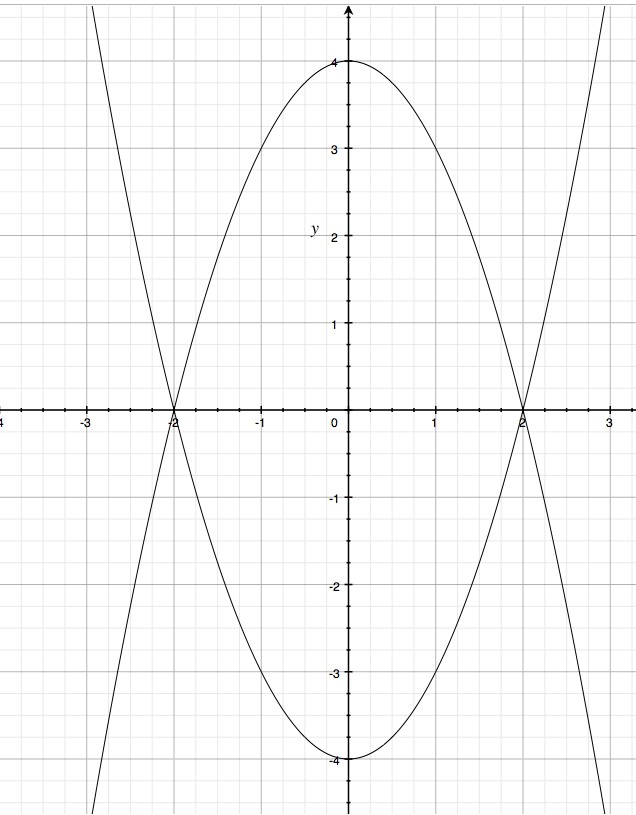
Perform all three reflections mentioned for the function .
Gallery 1.2.1 Examples of reflection at work.
Read all original image captions
Image 1
Image 2
Image 3
Image 4
Example Problem 1.2.2
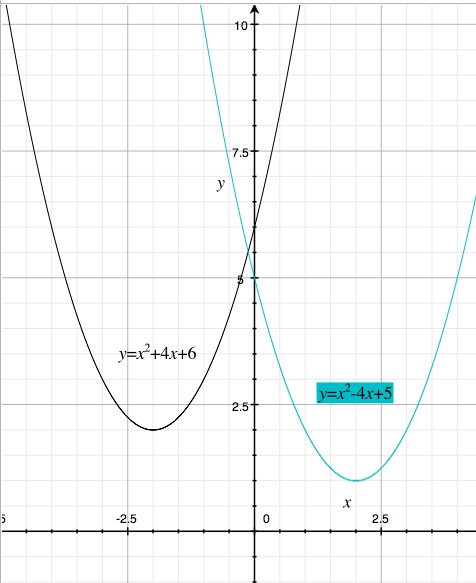
Translate the equation y= so that the new vertex is four values to the right and one value down. Write the new function.
Gallery 1.2.2. Graphs from Example Problems 1.2.2 and 1.2.3
Example Problem 1.2.3
Translate the equation horizontally 3 units in the positive direction and –2 units in the vertical direction. Write the final equation.
Gallery 1.2.2. Graphs from Example Problems 1.2.2 and 1.2.3