Chapter 4 Solutions
Worked solutions to all thirty problems, with the reason for each step. These explanations were added for this edition; the chapter answer key and original worked examples follow below.
Chapter problems → · Chapter answer key →
Problem 1
Original problem · added worked solution
Use the ratio, root, and comparison test to determine the convergence of the following series.
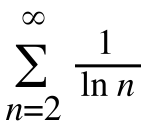
- For integers , , so .
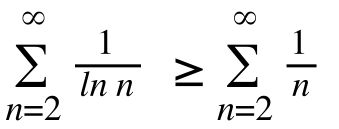
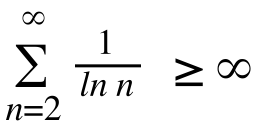
- The harmonic series starting at 2 diverges. Since every term of the displayed positive series is larger, direct comparison proves divergence.
Final answer
Diverges.
Problem 2
Original problem · added worked solution
Use the ratio, root, and comparison test to determine the convergence of the following series.
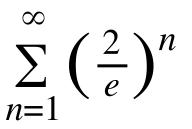
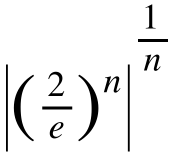
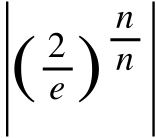
- For , the nth root is .
- Since , the root-test limit is less than 1, so the series converges absolutely.
Final answer
Converges; root-test limit .
Problem 3
Original problem · added worked solution
Use the ratio, root, and comparison test to determine the convergence of the following series.
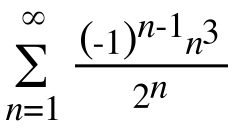
- Use absolute values: . Its nth root is .
- Because , .
- The root-test limit is , proving absolute convergence of the alternating series.
Final answer
Absolutely convergent; root-test limit .
Problem 4
Original problem · added worked solution
Use the ratio, root, and comparison test to determine the convergence of the following series.
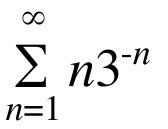
- The nth root of is .
- Since , the root-test limit is .
Final answer
Converges.
Problem 5
Original problem · added worked solution
Use the ratio, root, and comparison test to determine the convergence of the following series.
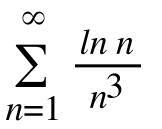
- For , and , so .
- The comparison p-series has exponent 2 and converges. Direct comparison therefore proves convergence of the displayed series.
Final answer
Converges.
Problem 6
Original problem · added worked solution
Use the ratio, root, and comparison test to determine the convergence of the following series.
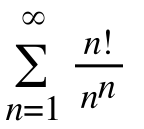
- For , calculate .
- Take logarithms: .
- Thus the ratio limit is , proving convergence.
Final answer
Converges; ratio-test limit .
Problem 7
Original problem · added worked solution
Use the ratio, root, and comparison test to determine the convergence of the following series.
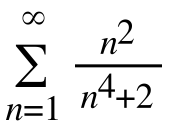
- For , , so .
- Since converges, the original series converges by direct comparison.
Final answer
Converges.
Problem 8
Original problem · added worked solution
Use the ratio, root, and comparison test to determine the convergence of the following series.
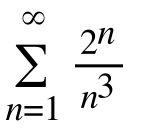
- For , .
- The limit is 2, greater than 1. The terms eventually grow and cannot approach zero, so the series diverges.
Final answer
Diverges; ratio-test limit .
Problem 9
Original problem · added worked solution
Use the ratio, root, and comparison test to determine the convergence of the following series.
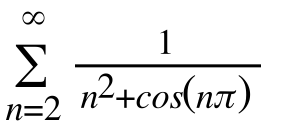
- For , , so .
- Therefore .
- The comparison p-series converges, so the displayed series also converges.
Final answer
Converges.
Problem 10
Original problem · added worked solution
Use the ratio, root, and comparison test to determine the convergence of the following series.
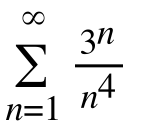
- With , calculate .
- The ratio limit is 3, greater than 1, so the series diverges.
Final answer
Diverges; ratio-test limit .
Problem 11
Original problem · added worked solution
Use the ratio, root, and comparison test to determine the convergence of the following series.
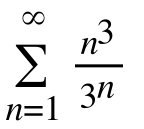
- For , calculate .
- The limit is , so the series converges.
Final answer
Converges; ratio-test limit .
Problem 12
Original problem · added worked solution
Use the ratio, root, and comparison test to determine the convergence of the following series.
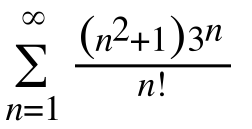
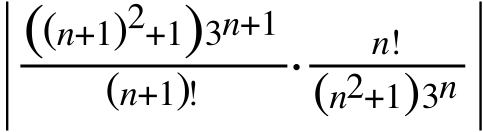
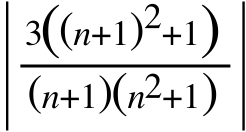
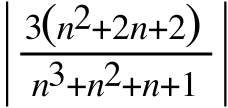
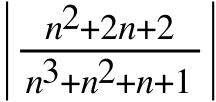
- For , .
- The numerator has degree 2 and the denominator degree 3, so this ratio tends to 0.
- Since , the ratio test proves convergence.
Final answer
Converges; ratio-test limit .
Problem 13
Original problem · added worked solution
Use the ratio, root, and comparison test to determine the convergence of the following series.
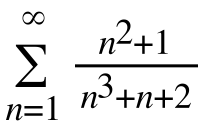
- The terms are positive. Compare them with .
- The ratio is .
- A finite positive comparison limit transfers convergence behavior. The harmonic series diverges, so this series diverges.
Final answer
Diverges.
Problem 14
Original problem · added worked solution
Use the ratio, root, and comparison test to determine the convergence of the following series.
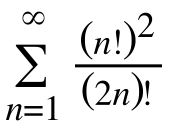
- For , cancel factorials: .
- The ratio tends to , so the series converges.
Final answer
Converges; ratio-test limit .
Problem 15
Original problem · added worked solution
Use the ratio, root, and comparison test to determine the convergence of the following series.
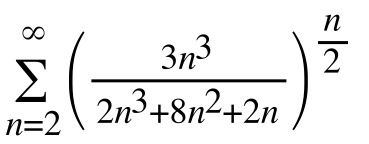
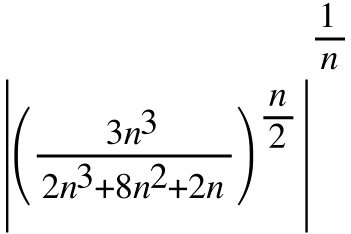
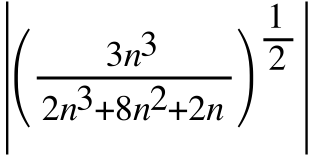
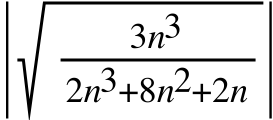
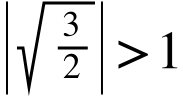
- The nth root of is .
- Divide inside the radical by . The limit is .
- The root test therefore proves divergence.
Final answer
Diverges; root-test limit .
Problem 16
Added problem and worked solution
Use the ratio test to determine whether converges.
- For , cancel common factors to get .
- This tends to infinity and is eventually greater than 1, so the terms do not tend to zero and the series diverges.
Final answer
Diverges.
Problem 17
Added problem and worked solution
Use the ratio test to determine whether converges.
- For , the ratio is .
- The limit is 0, less than 1, so the series converges.
Final answer
Converges.
Problem 18
Added problem and worked solution
Determine convergence of using the root test.
- The nth root of the positive term is .
- Divide by to find the limit . The root test proves convergence.
Final answer
Converges; root-test limit .
Problem 19
Added problem and worked solution
Determine convergence of using the root test.
- The nth root of is .
- Its logarithm is , so the root-test limit is .
- The series diverges by the root test.
Final answer
Diverges; root-test limit .
Problem 20
Added problem and worked solution
Determine convergence of using the root test.
- The nth root of is .
- Take logarithms: .
- Hence the root-test limit is , proving convergence.
Final answer
Converges; root-test limit .
Problem 21
Added problem and worked solution
Use direct comparison to determine convergence of .
- For every , .
- The series with terms converges because it is a p-series with exponent 2. Direct comparison gives the result.
Final answer
Converges.
Problem 22
Added problem and worked solution
Use limit comparison to determine convergence of .
- Compare with the positive harmonic terms .
- The ratio is .
- Since the harmonic series diverges and the ratio limit is finite and positive, the original series diverges.
Final answer
Diverges.
Problem 23
Added problem and worked solution
Use limit comparison to determine convergence of .
- The leading powers suggest comparison with .
- Compute .
- This positive finite limit transfers convergence from .
Final answer
Converges.
Problem 24
Added problem and worked solution
Apply the ratio test to . Explain its conclusion, then determine the actual convergence with another valid test.
- For , .
- A ratio-test limit of 1 is inconclusive; it does not prove either convergence or divergence.
- The p-series test independently proves convergence because the exponent is .
Final answer
Ratio test inconclusive; the series converges by the p-series test.
Problem 25
Added problem and worked solution
Determine convergence of using direct comparison.
- For , , so . Both denominators are positive.
- Taking reciprocals reverses this inequality: .
- Half of the harmonic series diverges, so direct comparison proves divergence.
Final answer
Diverges.
Problem 26
Added problem and worked solution
Determine convergence of with the ratio test.
- For , cancel factorials to obtain .
- The numerator grows quadratically and the denominator cubically, so the ratio tends to 0.
- A ratio-test limit less than 1 proves convergence.
Final answer
Converges.
Problem 27
Added problem and worked solution
Determine convergence of using the ratio test.
- For , form the ratio and cancel: .
- The leading coefficients give ratio limit .
- The ratio test therefore proves convergence.
Final answer
Converges; ratio-test limit .
Problem 28
Added problem and worked solution
For a real parameter , determine exactly when converges. Check the boundary cases.
- If , all terms vanish, so the series converges. For , the ratio is .
- Thus gives convergence, while gives divergence by the ratio test.
- At , the ratio test is inconclusive, but the terms equal and do not tend to zero. This boundary case diverges.
Final answer
Converges for ; diverges for .
Problem 29
Added problem and worked solution
For real , determine convergence of using limit comparison.
- For real , all terms are positive. Compare with .
- Their ratio is , so they have the same convergence behavior.
- A p-series with exponent converges exactly when , or . At it is harmonic, and for it also diverges.
Final answer
Converges exactly for ; diverges for .
Problem 30
Added problem and worked solution
Determine convergence of by giving a useful upper bound.
- For , because .
- Thus the whole positive term is bounded above by .
- The first comparison series is a convergent p-series and the second a convergent geometric series. Their sum converges, so direct comparison proves the original series converges.
Final answer
Converges.
Chapter answer key and worked steps
Answers and worked steps for the original problems, including verified corrections where needed.
-
Original worked answer
Problem 1 →The series diverges through the comparison test
Because ln n < n for n>2,
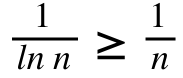
The series diverges.
-
Original worked answer
Problem 2 →The series converges through the root test.
=

=
=
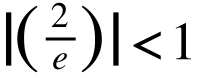
The series converges.
-
Original worked answer
Problem 3 →The series converges through the root test.
=
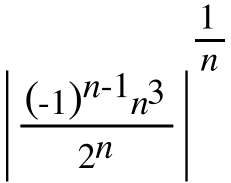
=
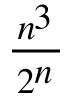
=
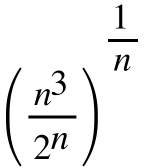
=
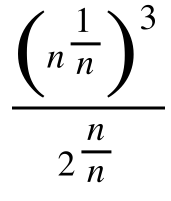
=
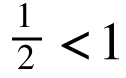
The series converges.
-
Original worked answer
Problem 4 →The series converges through the root test.
=
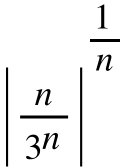
=
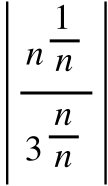
=
 < 1
The series converges.
-
Original worked answer
Problem 5 →The series converges through the comparison test.
Because
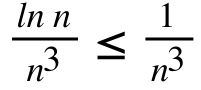
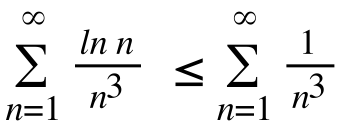
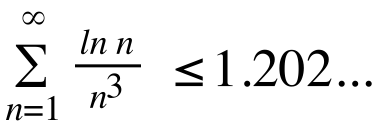
The series converges.
-
Original worked answer
Problem 6 →The series through the ratio test.
=
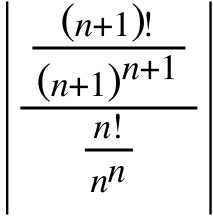
=
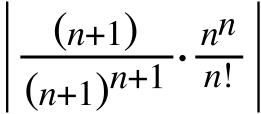
=
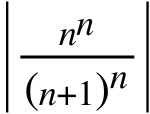
=
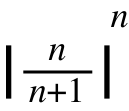
=
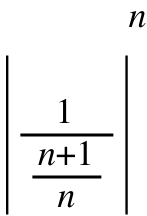
=
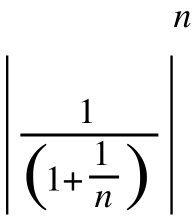
=
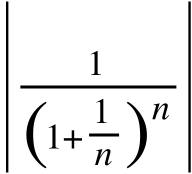
=
 < 1
The series converges.
-
Original worked answer
Problem 7 →7. The series converges through the comparison test.
Because
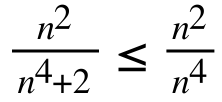 and
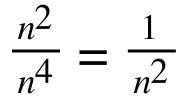 ...
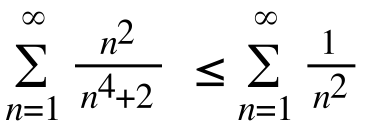
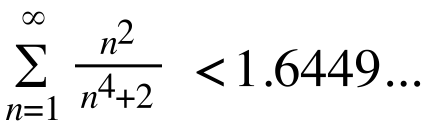
The series is convergent.
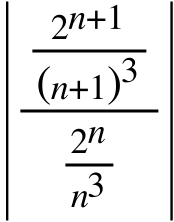
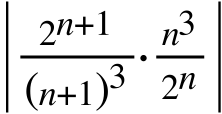
The series diverges through the ratio test.
=
-
Original worked answer
Problem 8 →=
=
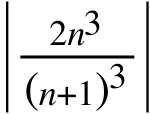
=
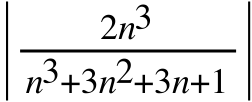
=
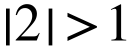
The series diverges.
-
Original worked answer
Problem 9 →The series converges through the comparison test.
Because
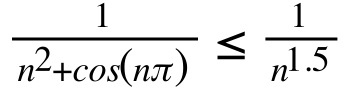
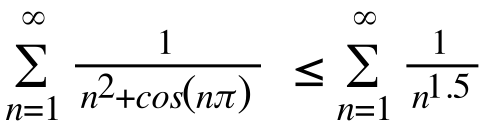
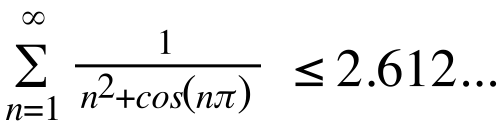
The series converges.
-
Original worked answer
Problem 10 →The series diverges through the ratio test.
=
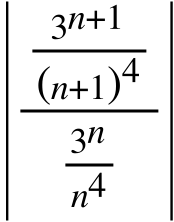
=
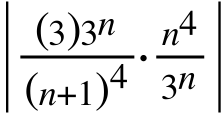
=
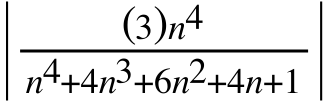
=
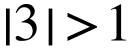
The series diverges.
-
Original worked answer
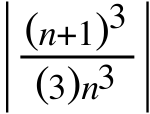
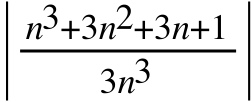
Problem 11 →The series converges through the ratio test.
=
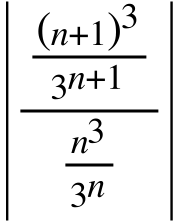
=
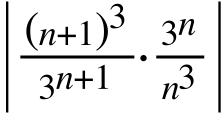
=
=
=
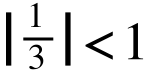
The series converges.
-
Original worked answer
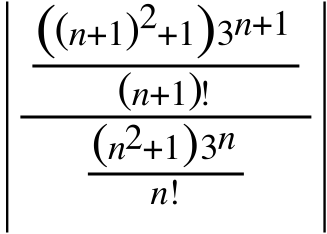
Problem 12 →The series converges through the ratio test.
=
=
=
=
= 3
= 0 < 1
The series converges.
-
Original worked answer
Problem 13 →The series diverges through the comparison test.
Because
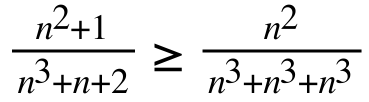 and
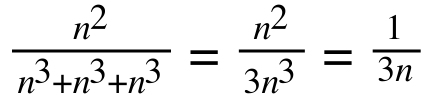
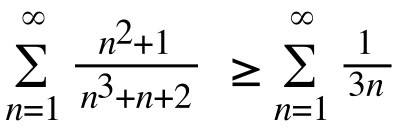
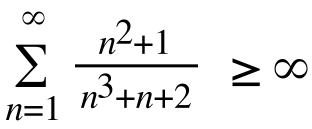
The series diverges.
-
Original worked answer
Problem 14 →The series converges through the ratio test.
=
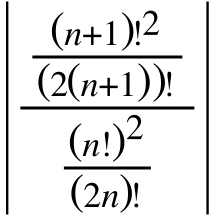
=
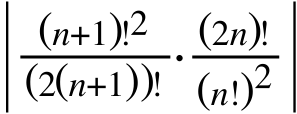
=
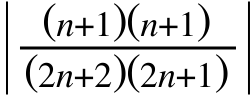
=
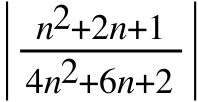
=
 < 1
The series converges.
-
Original worked answer
Problem 15 →The series diverges through the root test.
=
=
=
=
The series diverges.