Chapter 8 Problems
Thirty chapter problems: 5 from the original book and 25 added for more practice.
Read the chapter problems → · Chapter solutions →
-
Original problem
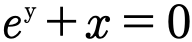
Implicitly derive the following functions.
-
Original problem · clarified
Determine if the given differential equation is linear and state its order.
Clarified version of part (c): the displayed differential expression is set equal to zero. This supplies a complete equation for classification.
-
Original problem
Determine if the given function is a solution to the given differential equations.
-
Original problem
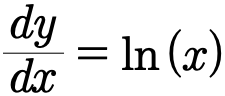
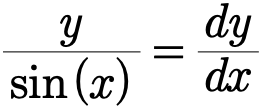
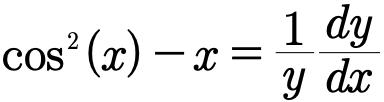
Use separation of variables to solve the following differential equations.
-
Original problem
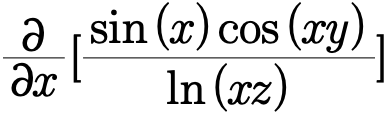
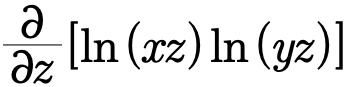
Compute the given partial derivatives.
-
Added problem
Find implicitly for . State where your formula applies.
-
Added problem
Find implicitly for .
-
Added problem
Implicitly differentiate .
-
Added problem
Find implicitly for .
-
Added problem
Find implicitly for .
-
Added problem
State the order and decide whether is linear.
-
Added problem
State the order and decide whether is linear.
-
Added problem
State the order and decide whether is linear.
-
Added problem
Is a solution of ? Verify by substitution.
-
Added problem
Solve by direct integration. Include all integration constants.
-
Added problem
Solve by separation of variables.
-
Added problem
Solve and state the restrictions on the solution.
-
Added problem
Solve .
-
Added problem
Solve . Include equilibrium solutions and domain restrictions.
-
Added problem
Solve and include all equilibrium solutions.
-
Added problem
Solve with .
-
Added problem
Solve . State the interval restriction.
-
Added problem
Solve . An implicit solution is acceptable.
-
Added problem
For , find both first partial derivatives.
-
Added problem
Find both first partial derivatives of .
-
Added problem
Compute both mixed second partial derivatives of .
-
Added problem
Find the first partial derivatives of .
-
Added problem
For , find and .
-
Added problem
Find the first partial derivatives and domain of .
-
Added problem
For , compute the mixed derivative taking one derivative in each of z, y, and x.