Introduction to Energy
Original textbook reading.
This Section is a little text heavy so bear with us, but trust me this is a very important section...so pay attention!!
This is a very complex idea as energy is everywhere around us. It is usually represented by a quantity (a number) that describes the condition of one or more objects. Our society and world run by using this idea of energy efficiently. We use energy to create electricity, to fly airplanes, to move trains and cars, and even our own bodies use energy to burn calories and digest food. Energy is all around us and is an important property that governs our Universe.
Energy can change form and be transferred between objects. The total energy of an isolated system remains constant; for a system that exchanges energy with its surroundings, include those transfers in the balance.
Let’s see if we can relate energy in terms of something we all know. Let’s talk about money. Imagine that you have a certain amount of U.S dollars, and you plan to travel to different countries. Let us equate the U.S dollars to the initial energy of your system.
Now when you travel to another country, say Mexico, you plan to convert the same amount of money you started with to the peso. Now the conversion rate is different from dollar to peso. You can think of this conversion as your energy being transformed to another form of energy.
Next imagine taking a portion of your peso and then traveling over to Germany, where you convert some of your pesos to euros. Now you have a different type of money (or different energy). The key thing point here is that no matter what type of currency you have, you’re total amount of money still remains the same (this is assuming that you don’t waste all your money on beer and sauerkraut in Germany or chile rellenos in Mexico) This is synonymous with the principle that your total energy within a system is conserved such that you have the same amount of energy in the end as you did in the beginning.
Hopefully this analogy helps in the understanding of energy. Now let’s move onto two forms of energy which will be particularly important for our future references.
Figure 5.1.1 Kinetic Energy of a Locomotive!
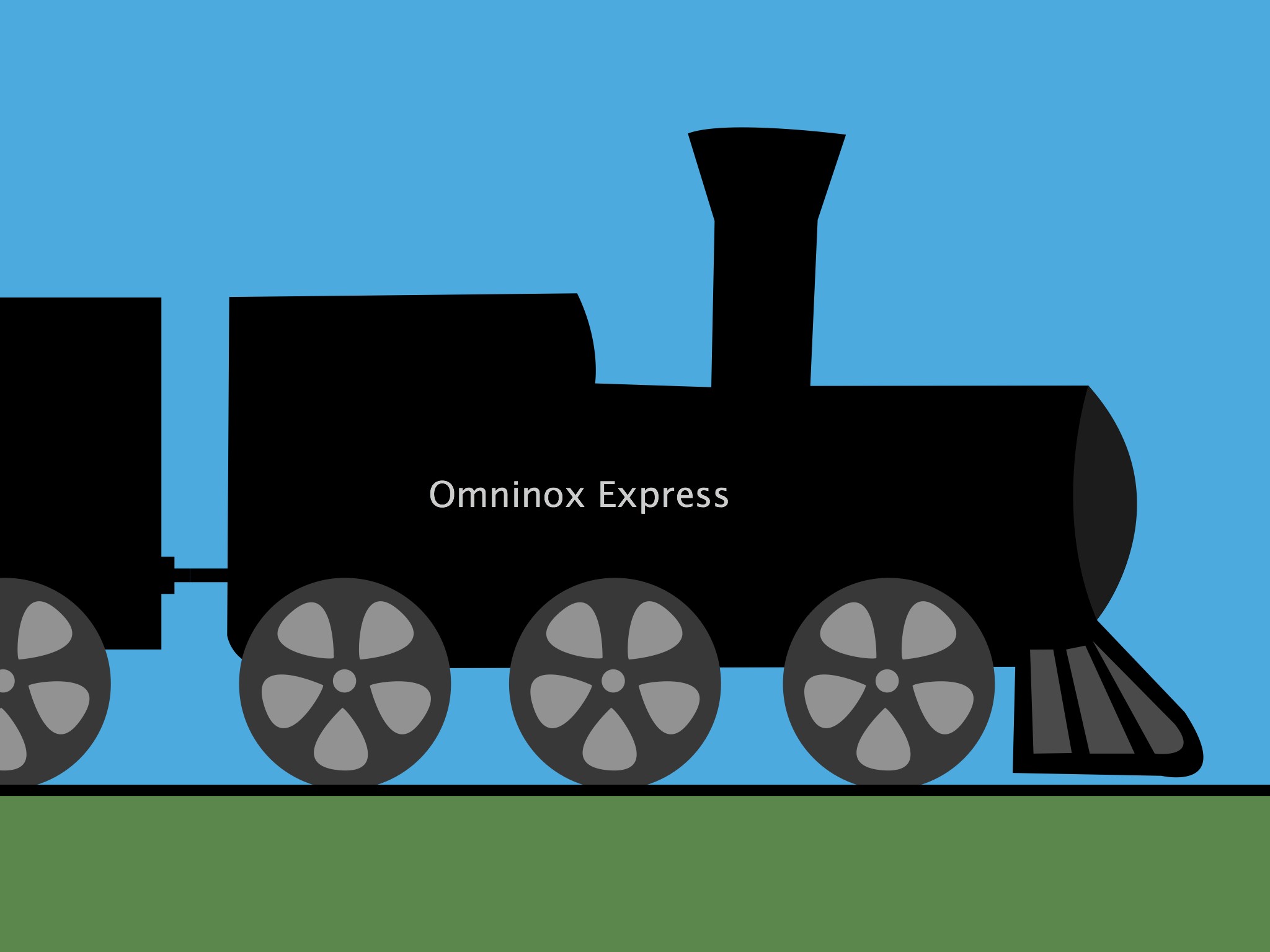
Kinetic energy↗ is the energy associated with the motion of an object.
Translational kinetic energy is K = ½mv²: it is proportional to mass and to the square of speed. A massive train at high speed therefore has a large translational kinetic energy.
Potential energy↗ is the energy that an object has due to it’s relative position in a system. Hopefully Gallery 5.1.1 can help clarify this. Notice how in the first image, there are three phases that the ball is at. In the light blue section, the ball is released from rest and swings around to the darker blue section where it again reaches a certain point before it’ll want to travel back towards the left.
The pendulum’s lowest point can be chosen as zero gravitational potential energy. This is a reference choice, not a claim that no energy or motion is possible there: a moving pendulum has maximum kinetic energy at that point.
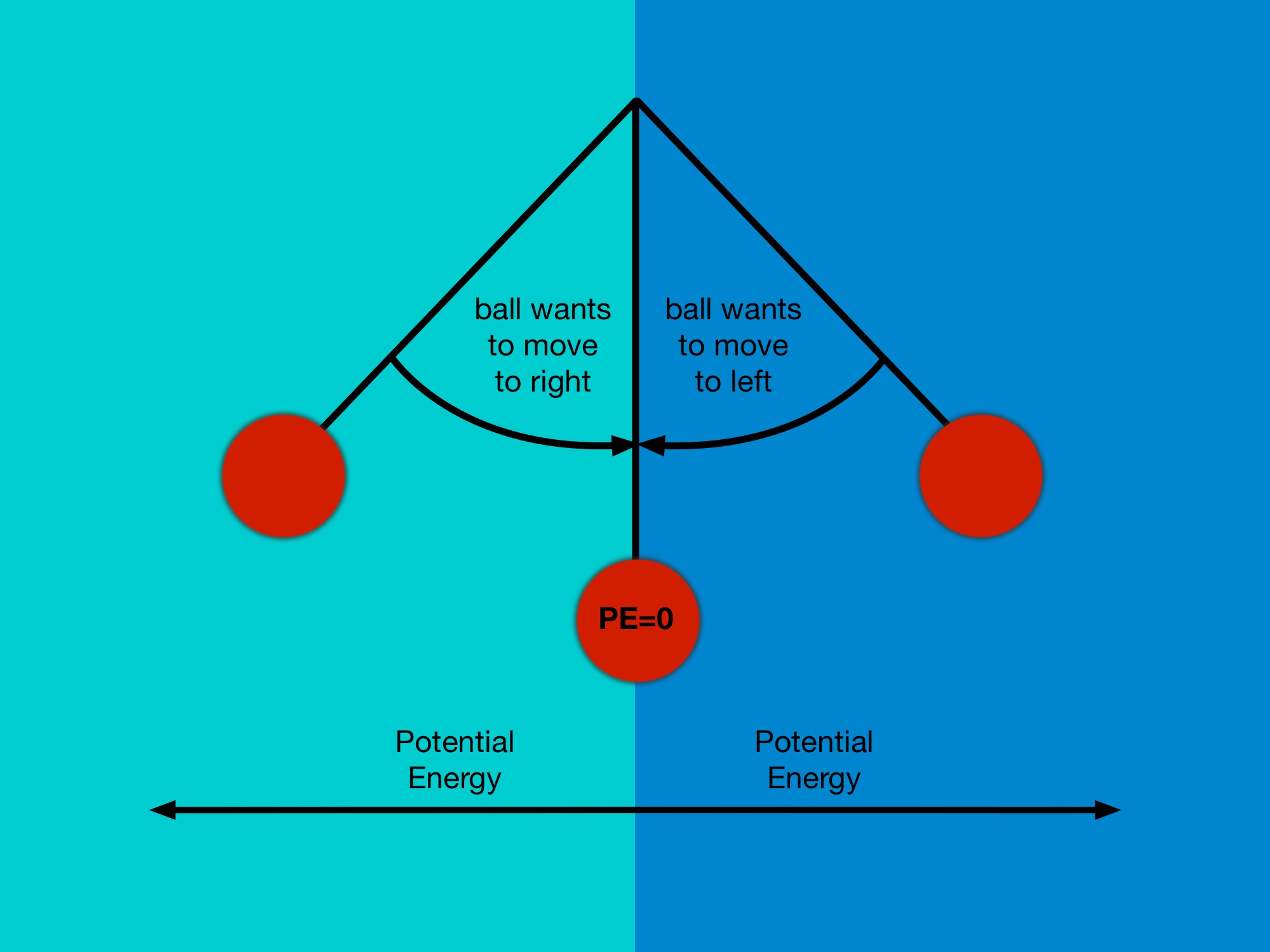
This is a prime example of potential energy. It’s a ball being released from rest from the left and traveling to the right. In the light blue section, the ball has the potential to fall and swing around towards the right side.
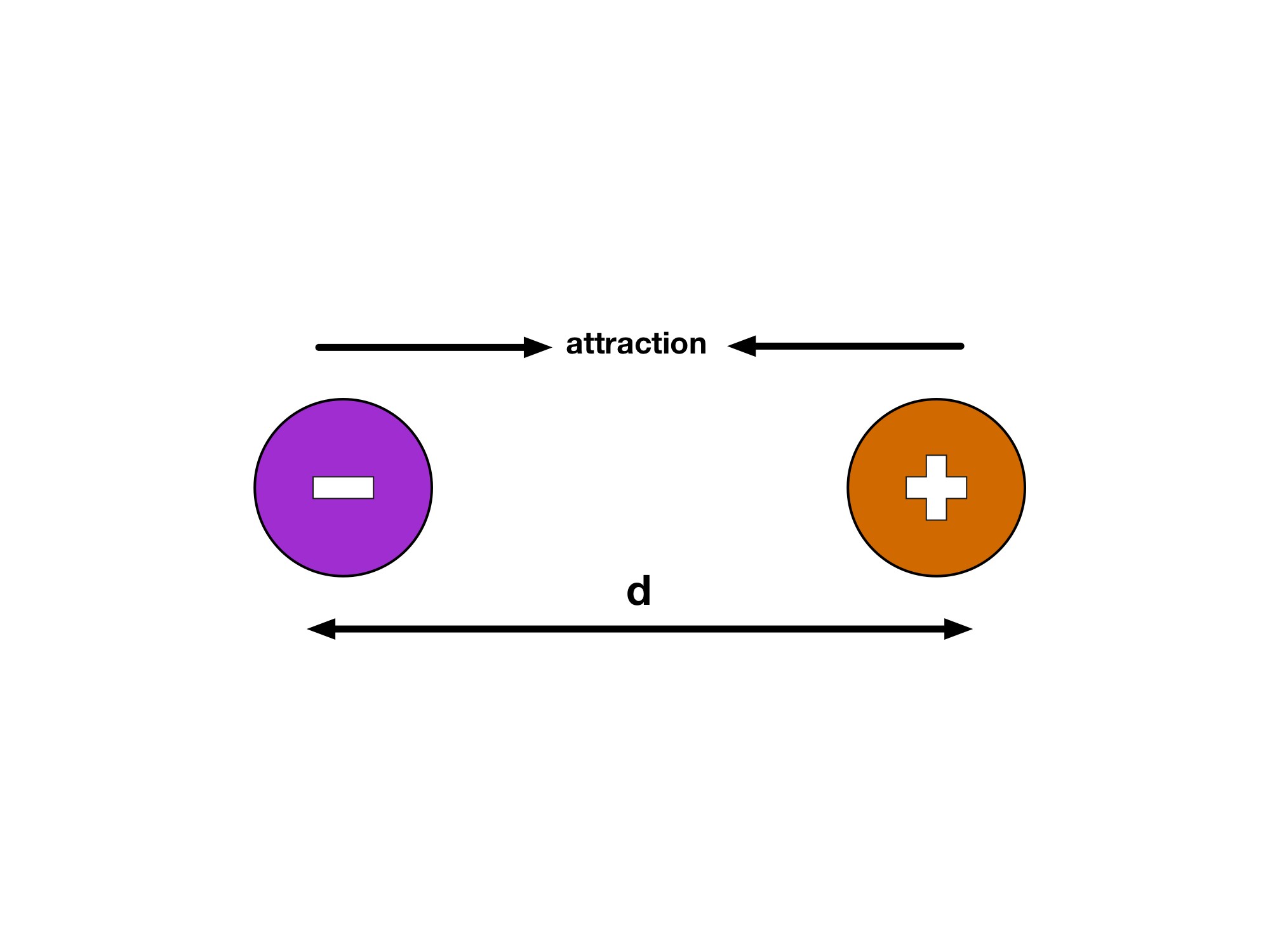
A positive and negative charge attract. Their interaction can be described by electric potential energy of the two-charge system, which depends on their separation. Electric potential is a different quantity: potential energy per unit charge. These ideas are developed in later electricity chapters.
Figure 5.1.2 Positive and Negative Work
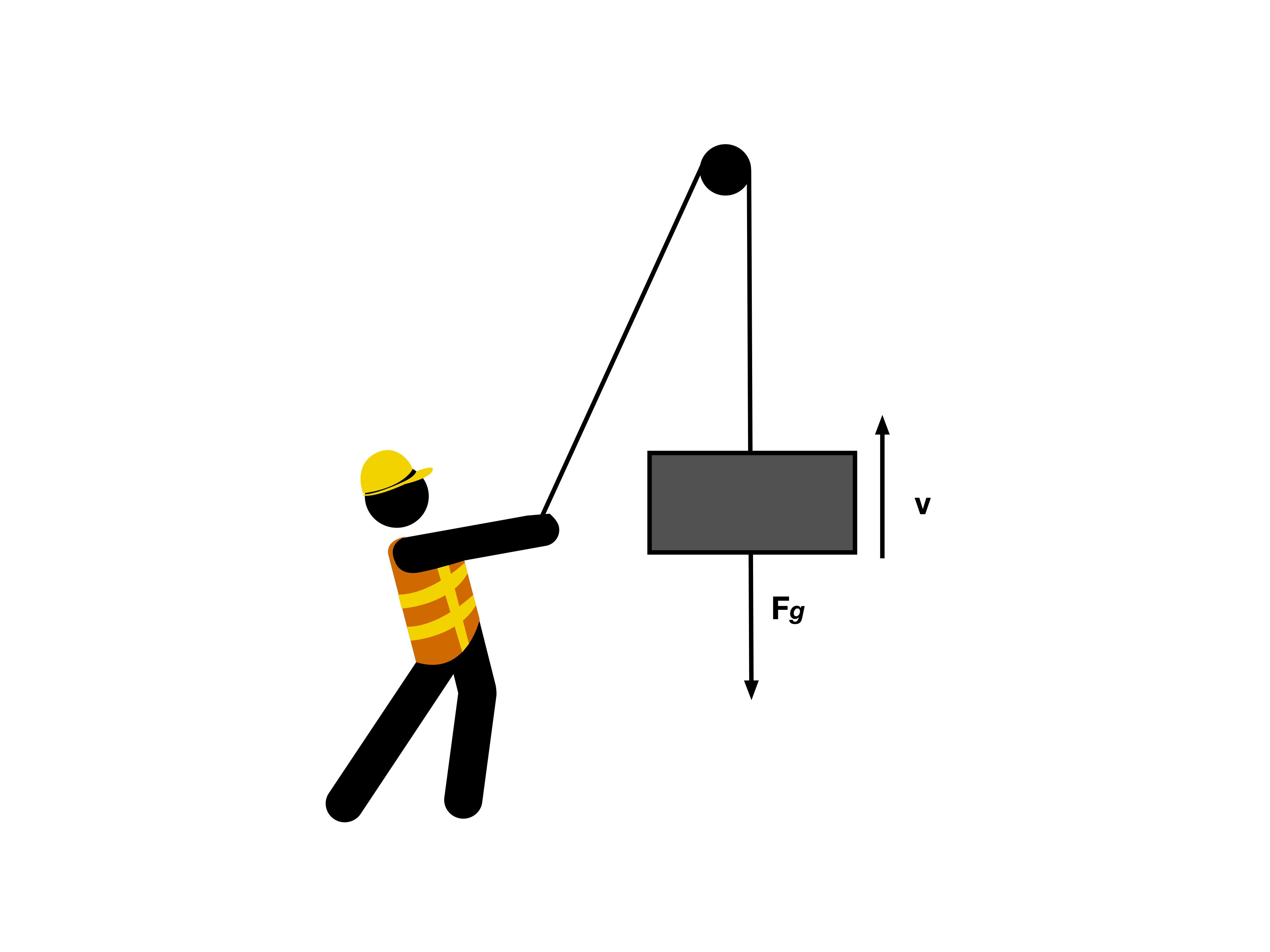
Like we said earlier, energy can be transformed into different types of energy but ultimately the total amount of energy within a system is conserved.
A car’s fuel stores chemical energy. Combustion can transfer energy to a piston and then to the rotating wheels and translating car. Some also becomes thermal energy and leaves with exhaust or heat; include those transfers when choosing the system boundary.
Now that we’ve gone over the basics of what energy is, let’s go more in depth about what kinetic and potential energy really mean.
Work transfers energy through a force acting across displacement. For a particle, net work equals its kinetic-energy change; a single force’s work can be offset by the work of other forces.
work is when energy is transferred to or from an object via a force acting on it.
Energy transferred to the object is considered positive work while energy transferred from the object is considered negative work. Now let’s see if we can come up with an expression for this relationship.
We know from Section 2.4, our work equation, and we said earlier that when you do work on an object, you increase its kinetic energy from it’s initial state. So then it makes sense to say that:
the kinetic energy of an object in it’s before and after state can be thought of as its initial and final state respectively so the statement above can be written as:
K_f = K_i + W_net (Equation 5.1.1). Equivalently, ½m(v_f²−v_i²)=∫F_net·dr. For a constant net force this is F_net·Δr (Equation 5.1.2).
Pop Quiz 5.1.1 Concepts about Energy and Work
Question 1 of 5 · 0 correct
AP Topic 3.3 · Read the worked solution
At the bottom of a moving pendulum’s swing, take gravitational potential energy to be zero. Which statement correctly describes its kinetic energy and the ratio K/U?
Read every full question without answers
Question 1
Question 2
Question 3
A refrigerator requires a larger pulling force to move at the same constant speed on its sliding feet than on wheels. Over the same horizontal distance, why is more mechanical work required on its sliding feet?
Question 4
Question 5
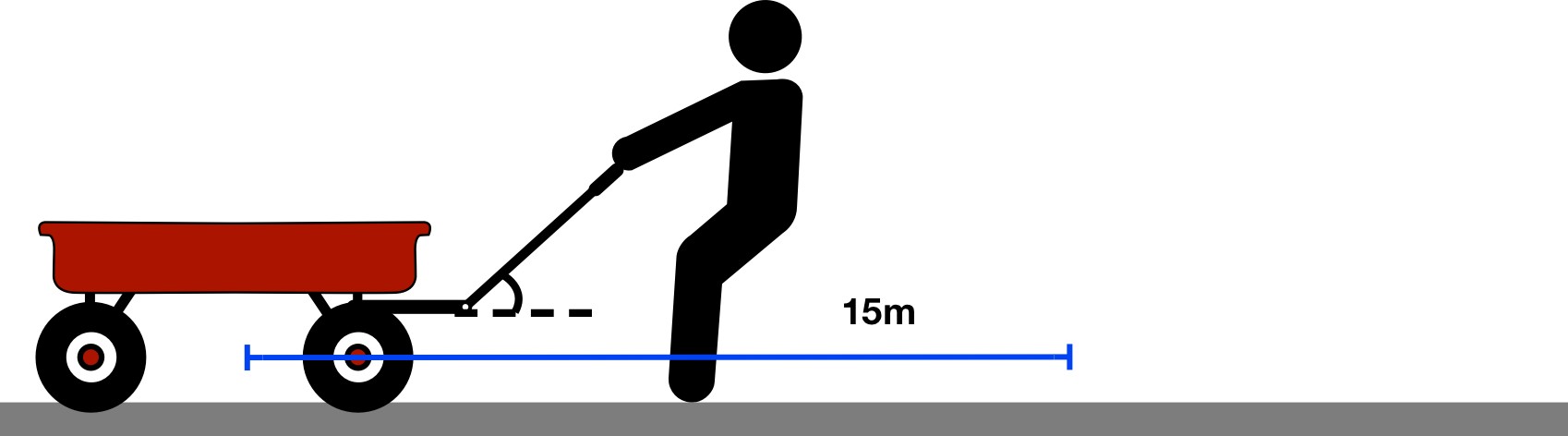
A man pulls a wagon by exerting a force on the handle, at an angle of . What is the work done by the man if he pulls the wagon for ?


Reviewed physics notes (20)
These corrections keep the original lesson’s purpose while fixing errors in the source edition.
- Conservation was stated for an arbitrary non-isolated system. — Reference 1
- Source says proportional to velocity rather than square of speed. — Reference 1
- Zero potential energy does not imply zero energy or zero potential for motion. — Reference 1
- Piston motion is kinetic energy, not “mechanical potential”;closed does not imply isolated. — Reference 1
- Work is not a stored energy form, and the theorem uses net work. — Reference 1, Reference 2
- Specify net work and constant-force condition. — Reference 1, Reference 2
- K/0 is mathematically undefined, not a well-defined energy ratio of infinity. — Reference 1
- Correct the existing keyed answer. — Reference 1
- Zero net displacement does not erase work by a force applied only during one leg. — Reference 1
- Original sameforce and samedistance premise fixes identical pulling work and contradicts the requested conclusion. — Reference 1, Reference 2
- Supply one unambiguously false alternative. — Reference 1
- Replace the erroneous “work more quickly” claim. — Reference 1
- Correct answer under the revised larger-force premise. — Reference 1, Reference 2
- Avoid a false all-of-the-above key. — Reference 1
- The source confuses potential energy with force magnitude and electric potential. — Reference 1
- The source labels a potential-energy example as electric potential. — Reference 1
- The pushing force does 500 N·0.001 m=0.5 J. — Reference 1
- Correct outward pushing work. — Reference 1
- Correct energy-conversion explanation. — Reference 1, Reference 2
- Only the friction/thermal alternative is correct. — Reference 1, Reference 2
Glossary and deeper reading · 11 refreshers
These editorial refreshers supplement the reading. Definitions and examples are added guidance; original source wording and recorded answers remain in their original context.
-
Isolated system
An isolated system exchanges neither energy nor matter with its surroundings. In a momentum problem, conservation of total momentum specifically requires zero net external impulse over the interval analyzed. For example, two colliding carts can be treated as momentum-isolated horizontally when the external horizontal impulse is negligible.
-
Kinetic energy
Kinetic energy is energy associated with motion relative to a chosen reference frame. For a nonrelativistic translating object it is one half of its mass times speed squared. For example, doubling a cart’s speed quadruples its translational kinetic energy when its mass stays fixed.
-
Potential energy
Potential energy describes energy associated with the configuration of interacting parts of a system. Its numerical zero is a chosen reference, while differences in potential energy determine physical energy changes. For example, separating Earth and a ball changes their gravitational potential energy even though the energy belongs to their interaction.
-
Pendulum
A pendulum is a system that swings about a support under a restoring torque. A simple pendulum approximates a small mass on a light string and follows simple harmonic motion only for sufficiently small angles. For example, a short string pendulum completes small swings more quickly than a longer one under the same gravitational field.
-
Gravitational potential energy
Gravitational potential energy is energy associated with the relative positions of attracting masses. Near Earth, changes can be approximated by mass times gravitational field strength times height change when that field is nearly constant. For example, lifting a book increases the gravitational potential energy of the book–Earth system.
-
Heat
Heat is energy transferred between systems because of a temperature difference. It describes a transfer rather than a substance or energy store contained in an object. For example, when a warmer mug transfers energy to a cooler hand, the mug loses internal energy and the hand gains it.
-
Physical system
A physical system is the object or collection of objects chosen for an analysis. Its boundary determines which forces and energy transfers count as internal or external. For example, friction between a block and a floor is an external interaction for the block alone but internal when both are included.
-
Mechanical work
Mechanical work is energy transferred by a force through displacement of its point of application. For a constant force on a particle, it depends on the force component along the particle’s displacement, and it can be positive, negative, or zero. For example, a magnetic force perpendicular to a particle’s displacement does zero work on that particle.
-
Displacement
Displacement is the vector change in position from the start of an interval to its end. It depends on those endpoints rather than the length or shape of the path traveled. For example, walking around a closed track and returning to the start gives zero displacement but a nonzero distance traveled.
-
Force
A force describes an interaction that can change an object’s momentum. It is a vector measured in newtons, so both size and direction matter when forces are added. For example, a rope can pull a cart while the floor exerts friction in another direction.
-
Net force
Net force is the vector sum of all forces acting on the object or system under consideration. For constant mass in an inertial frame, it equals mass times acceleration. For example, equal upward and downward forces give zero net force even though neither force is zero.