Chapter 8 Solutions
Worked solutions to all thirty problems, with the reason for each step. These explanations were added for this edition; the chapter answer key and original worked examples follow below.
Chapter problems → · Chapter answer key → · Original worked examples →
Problem 1
Original problem · added worked solution
Authored worked explanation for the original source problem.
Replace infinity with B and integrate: .
Why: An infinite endpoint must be evaluated through a limit.
As B→∞, e^(−3B)→0, giving 1/3.
Why: The positive decaying integrand has a finite accumulated area.
Reviewed answer:
Takeaway: Infinity is a limiting endpoint, not a number to substitute.
Final answer
Problem 2
Original problem · added worked solution
Authored worked explanation for the original source problem.
Split .
Why: Each term becomes a standard power.
Integrate to −x⁻¹−(3/2)x⁻²+C.
Why: Increase each exponent by one and divide by the new exponent.
Reviewed answer: , x≠0.
Takeaway: Split a polynomial numerator before choosing a technique.
Final answer
Problem 3
Original problem · added worked solution
Authored worked explanation for the original source problem.
Source review note: The source gives −3/x for the first term. The printed denominator is 3x⁴, so that term integrates to −1/(3x).
The integrand is .
Why: Divide every numerator term by 3x⁴.
Integrate each power to get the displayed primitive.
Why: The coefficient 1/3 on the first term must remain.
Differentiating the answer reproduces the printed integrand.
Why: This checks both coefficients and powers.
Reviewed answer: , x≠0.
Takeaway: Distribute a denominator over every numerator term.
Final answer
Problem 4
Original problem · added worked solution
Authored worked explanation for the original source problem.
.
Why: Divide by the exponent slope −1/2 when finding the primitive.
Take B→∞ to get 6.
Why: The exponential tail vanishes.
Reviewed answer:
Takeaway: The decay coefficient affects the total area.
Final answer
Problem 5
Original problem · added worked solution
Authored worked explanation for the original source problem.
Source review note: The source gives +π/4. The printed integral includes a leading negative sign, so its reviewed value is −π/4.
A primitive is for −1/2<x<1/2.
Why: Its derivative includes the chain factor 2 and the original negative sign.
At the singular endpoint use the right-hand limit of this primitive: .
Why: Arcsine has a finite endpoint value even though the integrand is unbounded there.
Reviewed answer:
Takeaway: A negative integrand over increasing bounds gives a negative signed integral.
Final answer
Problem 6
Original problem · added worked solution
Authored worked explanation for the original source problem.
Source review note: The source gives (1/3)arctan(3x−2)+C, whose derivative is 1/((3x−2)²+1), lacking the printed square root. This source problem requires a logarithmic primitive beyond the listed inverse-trig patterns.
Complete the square: .
Why: The radical is positive for all real x.
Let u=3x−2, giving one-third of , whose primitive is .
Why: The log argument is positive because √(u²+1)>|u|.
Substitute back; differentiating the logarithm verifies the radical denominator.
Why: The square root distinguishes this primitive from arctan's 1/(1+u²).
Reviewed answer:
Takeaway: Recognize the exact denominator, including whether it has a square root.
Final answer
Problem 7
Original problem · added worked solution
Authored worked explanation for the original source problem.
Source review note: The source gives √5, but x²−5x−1 is negative on most of the printed integration interval. No real integral over [0,6] exists as written.
Require for the square root in the denominator.
Why: It must be positive rather than merely nonnegative because it divides the numerator.
Its roots are ; throughout [0,(5+√29)/2) the radicand is negative.
Why: The positive root is about 5.19258, inside the stated interval.
The integrand is not real-defined on a whole portion of [0,6], so there is no real definite integral on that interval.
Why: An endpoint limit cannot repair an entire interval of nonreal values.
Reviewed answer: The printed integral is not defined as a real integral over [0,6].
Takeaway: Check the integrand's domain across the full interval before integrating.
Final answer
Problem 8
Original problem · added worked solution
Authored worked explanation for the original source problem.
Source review note: The source primitive is consistent but omits +C in this indefinite integral.
Rewrite .
Why: Complete the square in x².
The derivative of u=x²−4 is 2x, so the integrand is u′/(1+u²), the derivative of arctan u.
Why: The numerator exactly matches the inner derivative.
Reviewed answer:
Takeaway: An indefinite integral must include an arbitrary constant.
Final answer
Problem 9
Original problem · added worked solution
Authored worked explanation for the original source problem.
Source review note: The source gives arcsec(√(x²+1))+C, whose derivative is not the printed integrand. The reviewed logarithmic primitive differentiates correctly; this inherited problem uses a more advanced recognition than the chapter’s inverse-trig table.
Complete the square: .
Why: Use x² as the intermediate variable.
With u=x²+3/2, du=2x dx; .
Why: u≥3/2, so the radical and logarithm are defined on the whole real line.
Substitute u back and verify by differentiation.
Why: The derivative of the logarithmic primitive is exactly u′/√(u²−1/4).
Reviewed answer: .
Takeaway: A radical of a completed square can require a log, not an inverse secant.
Final answer
Problem 10
Original problem · added worked solution
Authored worked explanation for the original source problem.
Source review note: The source expression is equivalent on 0<x<1 but writes √(1−x), so it does not extend to x>1, and omits +C. The reviewed form covers both original real intervals.
Let u=√x, so x=u² and dx=2u du. The integrand becomes 1/(u²−1) du.
Why: The differential cancels the radical factor, while the original domain keeps x>0 and x≠1.
.
Why: This algebraic identity can be checked by a common denominator.
Integrate to and substitute u=√x.
Why: The absolute values give valid logs on either connected domain interval.
Reviewed answer: on 0<x<1 or x>1.
Takeaway: Keep the domain and constant while simplifying an equivalent primitive.
Final answer
Problem 11
Added problem and worked solution
Find .
Authored solution to an added practice problem.
Integrate 3x², 4x, and −5 separately.
Why: Linearity applies to an indefinite integral.
Their primitives are x³, 2x², and −5x, plus an arbitrary constant.
Why: Differentiate the result to recover every term.
Reviewed answer:
Takeaway: Check powers and coefficients by reversing the calculation.
Final answer
Problem 12
Added problem and worked solution
Evaluate .
Authored solution to an added practice problem.
A primitive of 2x is x².
Why: Use the inverse power rule.
Evaluate .
Why: The upper bound's primitive value comes first.
Reviewed answer:
Takeaway: Definite integration measures a difference of primitive values.
Final answer
Problem 13
Added problem and worked solution
Evaluate on a real interval that avoids zero.
Authored solution to an added practice problem.
A primitive of 1/x is ln|x| on each sign interval.
Why: The ordinary power formula does not apply at exponent −1.
Multiply by 3 and include C.
Why: The constant multiple carries through integration.
Reviewed answer: , x≠0.
Takeaway: Exponent −1 is the power-rule exception.
Final answer
Problem 14
Added problem and worked solution
Find .
Authored solution to an added practice problem.
A primitive of sin x is −cos x and of e^x is e^x.
Why: Use the familiar derivative pairs in reverse.
Keep the constant multiples 2 and 3 and add C.
Why: Linearity combines the primitives.
Reviewed answer:
Takeaway: Verify the cosine sign before finishing.
Final answer
Problem 15
Added problem and worked solution
Evaluate and explain the zero result.
Authored solution to an added practice problem.
An antiderivative of x³ is x⁴/4.
Why: Use the inverse power rule.
.
Why: The negative and positive parts cancel as signed areas.
Reviewed answer:
Takeaway: A zero signed integral need not mean zero geometric area.
Final answer
Problem 16
Added problem and worked solution
Evaluate and explain its sign.
Authored solution to an added practice problem.
The forward integral is .
Why: Evaluate the easy forward direction first.
Reversing the bounds negates that value, giving −3.
Why: The orientation of a definite integral matters.
Reviewed answer:
Takeaway: Reversed endpoints reverse the sign.
Final answer
Problem 17
Added problem and worked solution
Find F given and .
Authored solution to an added practice problem.
All primitives of 3x² are x³+C.
Why: The integration constant is initially free.
F(2)=12 implies 8+C=12, so C=4.
Why: The initial value picks the particular primitive.
Reviewed answer: .
Takeaway: Initial conditions are used after finding the primitive family.
Final answer
Problem 18
Added problem and worked solution
Evaluate .
Authored solution to an added practice problem.
.
Why: The inverse power rule applies on x≥2.
Taking B→∞ gives 1/8.
Why: The tail primitive vanishes at infinity.
Reviewed answer:
Takeaway: A finite tail follows from a finite limiting primitive value.
Final answer
Problem 19
Added problem and worked solution
Determine whether converges.
Authored solution to an added practice problem.
.
Why: The primitive is logarithmic, not a negative power.
ln B increases without bound as B→∞.
Why: A decaying integrand alone does not guarantee a finite area.
Reviewed answer: Diverges to .
Takeaway: Decay must be fast enough for its primitive to approach a finite limit.
Final answer
Problem 20
Added problem and worked solution
Evaluate .
Authored solution to an added practice problem.
A primitive of e^(−x/2) is −2e^(−x/2).
Why: The inside slope contributes the reciprocal factor.
At upper cutoff B the integral is , which tends to 2e^(−1/2).
Why: The offset lower endpoint retains its exponential value.
Reviewed answer:
Takeaway: A tail starting later has less area.
Final answer
Problem 21
Added problem and worked solution
Evaluate as an improper integral.
Authored solution to an added practice problem.
Use a positive lower cutoff a: .
Why: The integrand is unbounded at zero, so start with a finite interval inside its domain.
As a→0⁺, √a→0, giving 2.
Why: The singular endpoint has a finite limiting area.
Reviewed answer:
Takeaway: An infinite height can still have a finite improper area.
Final answer
Problem 22
Added problem and worked solution
Find .
Authored solution to an added practice problem.
Write the denominator as 4[1+(x/2)²].
Why: Match the standard inverse tangent pattern.
The proposed primitive differentiates to .
Why: Both scale factors are needed.
Reviewed answer:
Takeaway: Use a derivative check to keep scale factors correct.
Final answer
Problem 23
Added problem and worked solution
Find on its interior real domain.
Authored solution to an added practice problem.
Factor the radical as .
Why: The positive factor 3 comes outside the square root.
The derivative of arcsin(x/3) is , exactly the integrand.
Why: The inner 1/3 cancels the radical's scale.
Reviewed answer: , for |x|<3.
Takeaway: A scaled arcsine can absorb the full radical coefficient.
Final answer
Problem 24
Added problem and worked solution
Evaluate .
Authored solution to an added practice problem.
Complete the square: x²−4x+5=(x−2)²+1.
Why: A shift reveals the standard pattern.
The inner x−2 has derivative 1, so no extra factor is needed.
Why: Differentiate arctan(x−2) to check.
Reviewed answer:
Takeaway: Complete the square before searching for an inverse-trig primitive.
Final answer
Problem 25
Added problem and worked solution
Evaluate .
Authored solution to an added practice problem.
A primitive is arctan(x²), since its derivative is 2x/(1+x⁴).
Why: The numerator matches the inside derivative.
.
Why: The definite endpoints have familiar inverse tangent values.
Reviewed answer:
Takeaway: Spot an inside derivative multiplying a familiar outer pattern.
Final answer
Problem 26
Added problem and worked solution
Rewrite using . Do not evaluate it.
Authored solution to an added practice problem.
For θ in [0,π/6], dx=cosθ dθ and √(1−x²)=cosθ.
Why: The chosen angle interval keeps cosine nonnegative.
At x=0, θ=0; at x=1/2, θ=π/6. Substitution cancels the cosine factor.
Why: Change the variable, differential, and both bounds together.
Reviewed answer: With x=sinθ, the integral becomes .
Takeaway: A definite substitution has three coordinated changes.
Final answer
Problem 27
Added problem and worked solution
For , find F′(x).
Authored solution to an added practice problem.
The integrand √(1+t²) is continuous for every real t.
Why: The Fundamental Theorem of Calculus applies on any finite interval.
An accumulation from a fixed bound to x differentiates to the integrand at x.
Why: The moving upper bound supplies the current endpoint height.
Reviewed answer: .
Takeaway: An accumulation derivative can be easier than finding a primitive.
Final answer
Problem 28
Added problem and worked solution
Find the derivative of .
Authored solution to an added practice problem.
Let G(u)=∫₀ᵘcos t dt, so G′(u)=cos u.
Why: The accumulation's derivative is the endpoint integrand.
F(x)=G(x²), giving F′=G′(x²)·2x.
Why: The moving endpoint itself requires the chain rule.
Reviewed answer: .
Takeaway: A nontrivial upper endpoint contributes its derivative.
Final answer
Problem 29
Added problem and worked solution
A student writes . What is missing? If the primitive must have F(0)=3, what is it?
Authored solution to an added practice problem.
Every x²+C differentiates to 2x.
Why: Differentiation erases additive constants.
The primitive x² alone omits the other family members; the given initial value sets C=3.
Why: An indefinite integral and a selected primitive are different outputs.
Reviewed answer: The complete family is ; with F(0)=3 it becomes x²+3.
Takeaway: Write the family before applying extra information.
Final answer
Problem 30
Added problem and worked solution
Evaluate .
Authored solution to an added practice problem.
A primitive of 1/√(1−x²) is arcsin x on (−1,1).
Why: The integration interval lies inside its finite-derivative domain.
.
Why: Use principal angles in radians.
Reviewed answer:
Takeaway: The principal inverse value fixes the exact definite result.
Final answer
Chapter answer key and worked steps
Answers and worked steps for the original problems, including verified corrections where needed.
-
Original short answer
Problem 1 → -
Original short answer
Problem 2 → -
Corrected answer
, x≠0.Problem 3 → -
Original short answer
Problem 4 → -
Corrected answer
Problem 5 → -
Corrected answer
Problem 6 → -
Corrected answer
The printed integral is not defined as a real integral over [0,6].Problem 7 → -
Checked answer
Problem 8 → -
Corrected answer
.Problem 9 → -
Checked answer
on 0<x<1 or x>1.Problem 10 →
Source worked examples
These are the book’s example problems and worked steps, with the original explanations.
Example Problem 8.1.1
Solve
Interactive 8.1.1 Example Problem 8.1.1
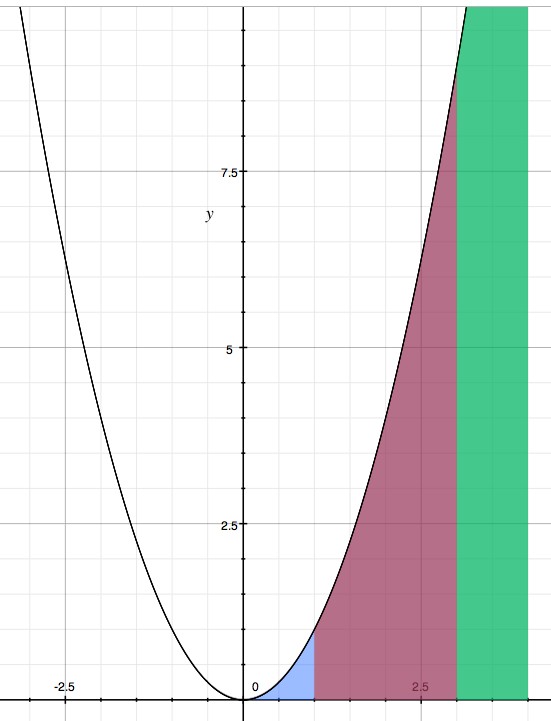
Read all original figure notes
Leftover Area
Second Term
Third term
Example Problem 8.1.2
Calculate
Example Problem 8.2.1
Evaluate
Example Problem 8.2.2
Evaluate
Example Problem 8.3.1
Calculate the indefinite integral
Example Problem 8.3.2
Evaluate the indefinite integral
Example Problem 8.4.1
FFR - Substitution and Differentials →
Convert the integral into one with a differential of by substituting .
Example Problem 8.4.2
FFR - Substitution and Differentials →
Evaluate the indefinite integral