FFR - Substitution and Differentials
This original textbook reading covers part of the AP topic. Follow the AP course outline for complete topic instruction and practice.
Just as we had chain rule for derivatives, we have to have an equivalent way of calculating more complex integrals. This is where u-substitution comes in. For a complex integral where the argument is not just x, but another function of x, our best bet is to rewrite the integral in terms of another function.
However, we must also change the differential term, dx, to accommodate the change in variables. Suppose we wanted to change x to θ. We would also have to change the differential dx to dθ. For definite integrals, we have to also change the interval of integration (unless the beginning and ending values of the new function stay within the same interval, but this is rarely the case). Let’s learn this by example.
Convert the integral into one with a differential of by substituting .
Let’s briefly go over what we learned in this chapter:
- Integrals help us measure the area under any curve.
- Integrals are the same as an anti-derivative (First FTC)
- The area under the curve between points a and b is equal to the anti-derivative at b minus the anti-derivative at a (Second FTC).
- We can use the same techniques to evaluate integrals as we used to find derivatives, except backwards (ex: Inverse power rule, inverse trigonometric functions)
- The chain rule pops up in evaluating some complex integrals, so we must keep an eye out for when an “outside” function is multiplied by its “inside” derivative.
Caution: It is recommended that you read through Chapter 9 before starting the problems for Chapter 8, because there is some overlap, and Chapter 9 will give you a stronger foundation for solving problems in Chapter 8; otherwise, you may feel like throwing a pillow against a wall or face-palming yourself constantly.
For the upcoming chapter problems you may need to refer to the inverse trigonometric integrals.
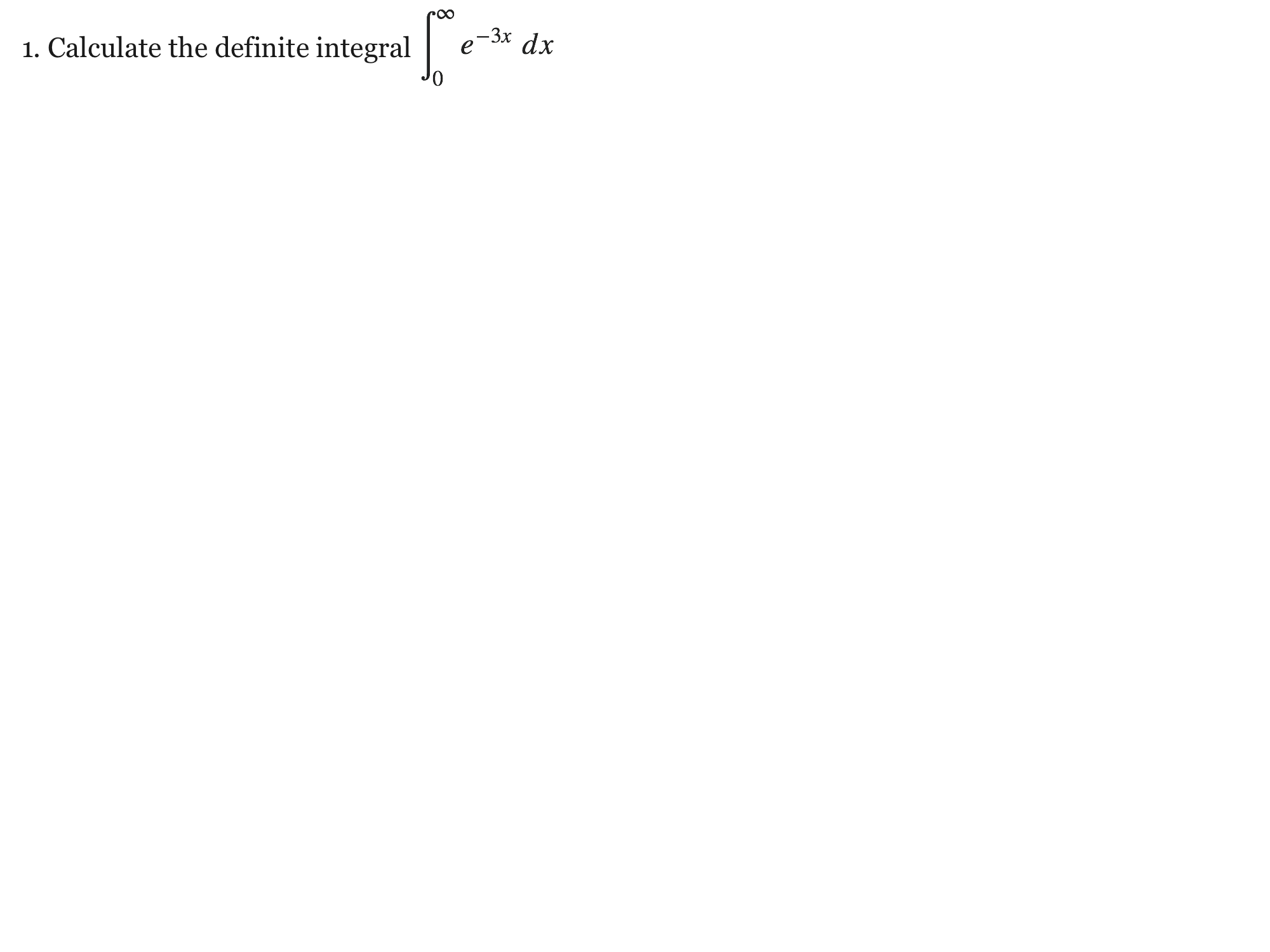
Show your work for Problem 1
Drawing is temporarily unavailable. Work on paper if needed, then record your reasoning here.
Saving written working requires JavaScript. Keep your work on paper or in your own notes; the source problem above remains available.
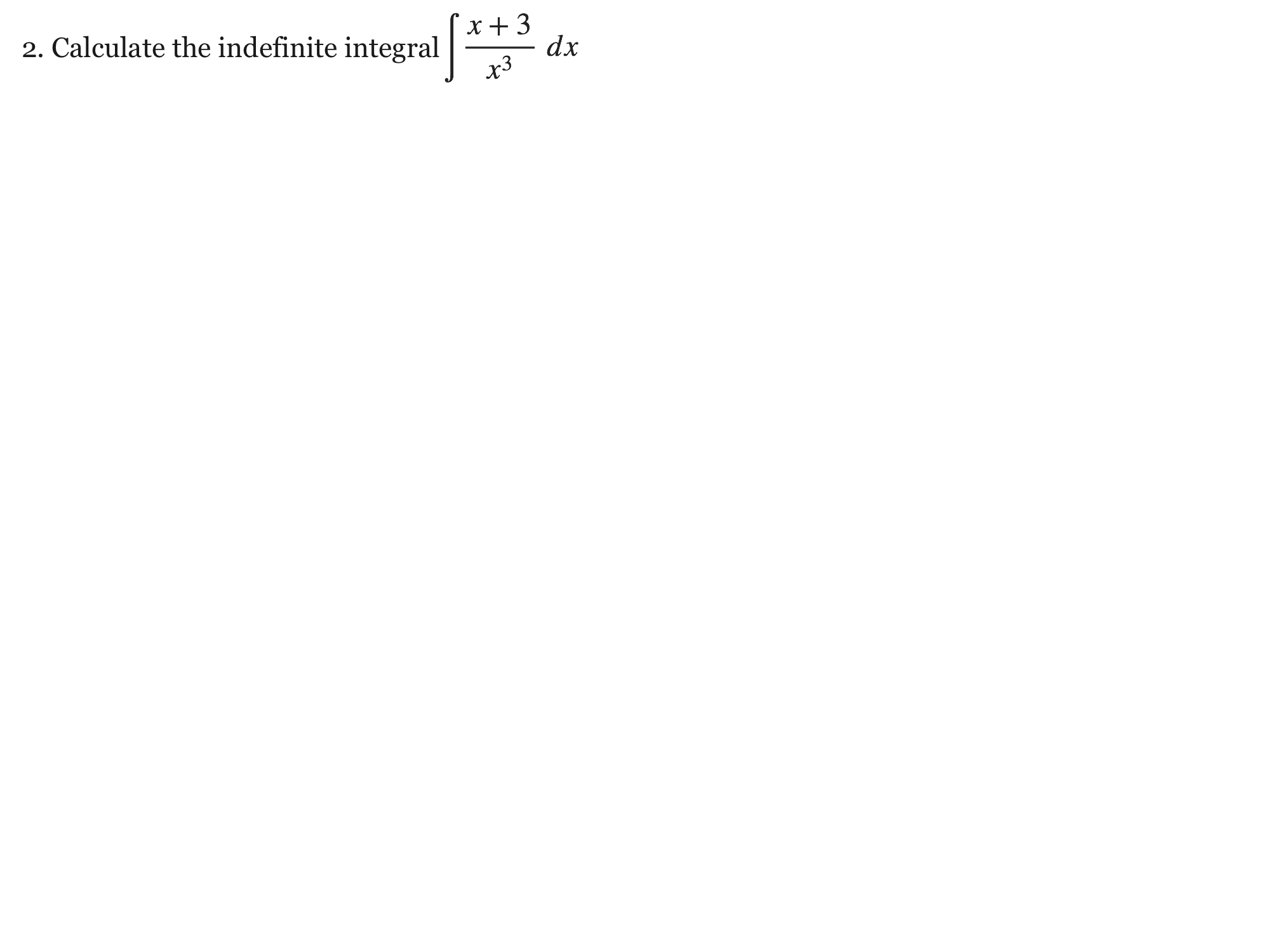
Show your work for Problem 2
Drawing is temporarily unavailable. Work on paper if needed, then record your reasoning here.
Saving written working requires JavaScript. Keep your work on paper or in your own notes; the source problem above remains available.
- Calculate the definite integral
- Calculate the indefinite integral
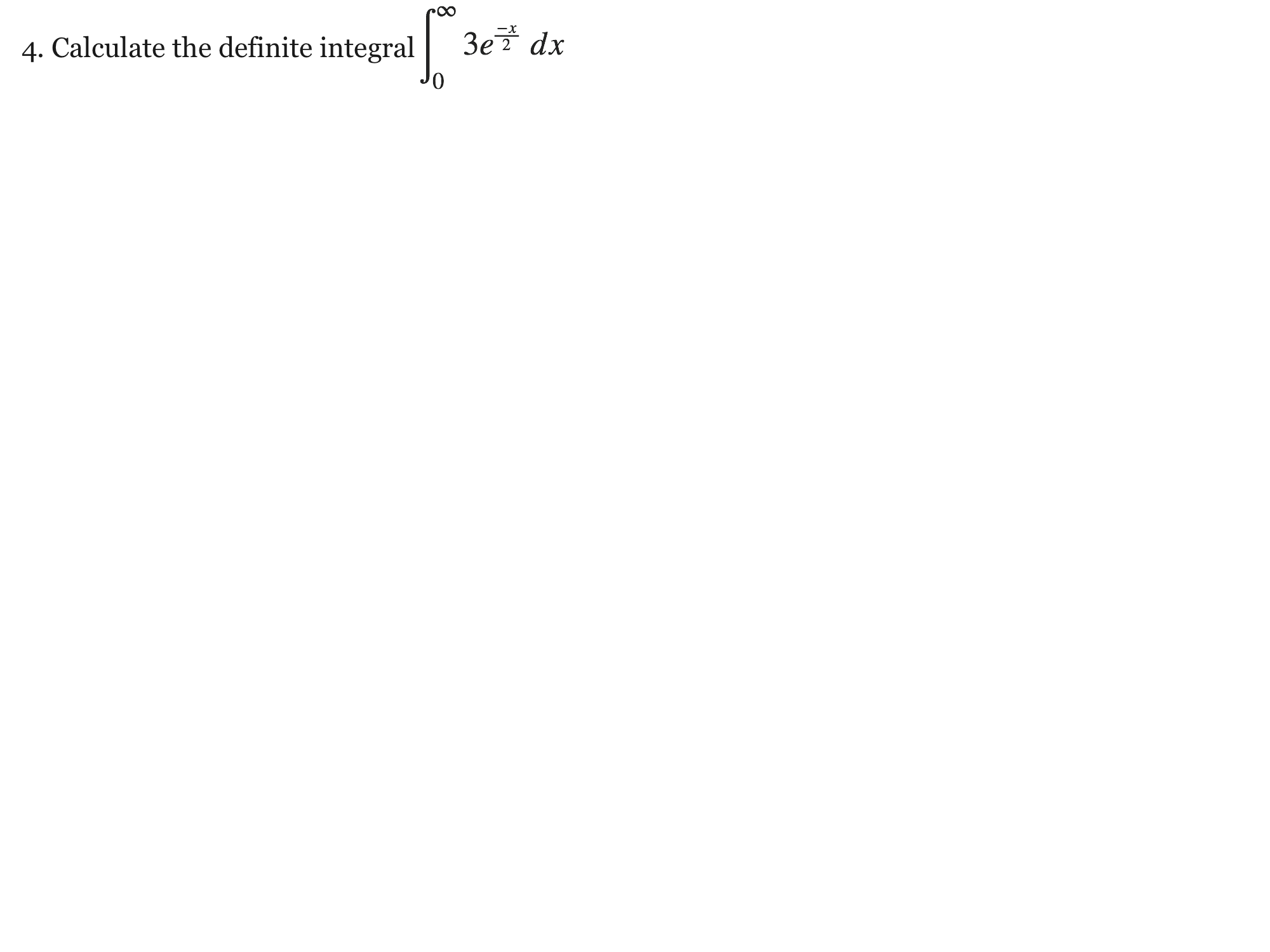
Show your work for Problem 4
Drawing is temporarily unavailable. Work on paper if needed, then record your reasoning here.
Saving written working requires JavaScript. Keep your work on paper or in your own notes; the source problem above remains available.
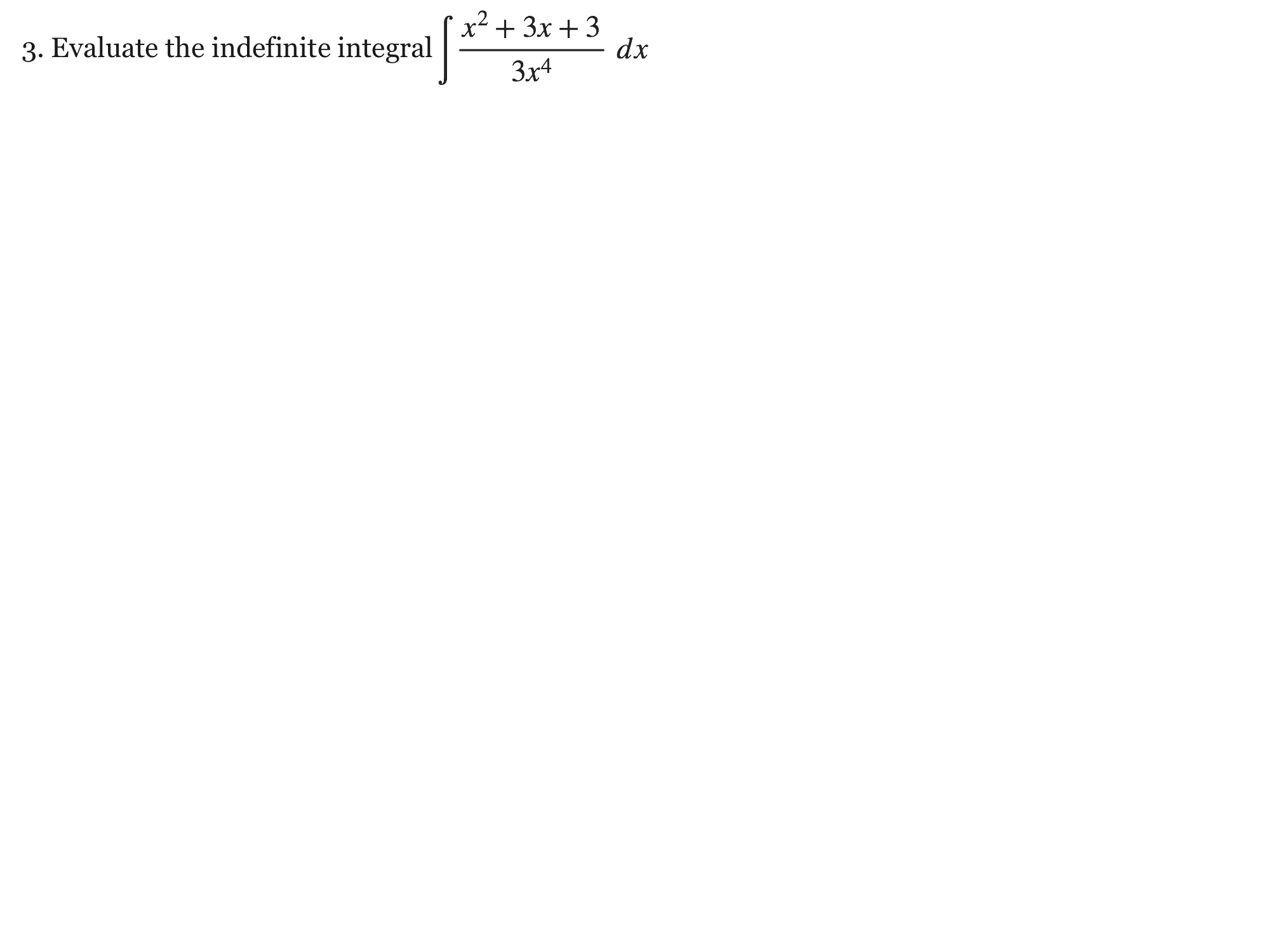
Show your work for Problem 3
Drawing is temporarily unavailable. Work on paper if needed, then record your reasoning here.
Saving written working requires JavaScript. Keep your work on paper or in your own notes; the source problem above remains available.
- Evaluate the indefinite integral
- Calculate the definite integral
Show your work for Problem 5
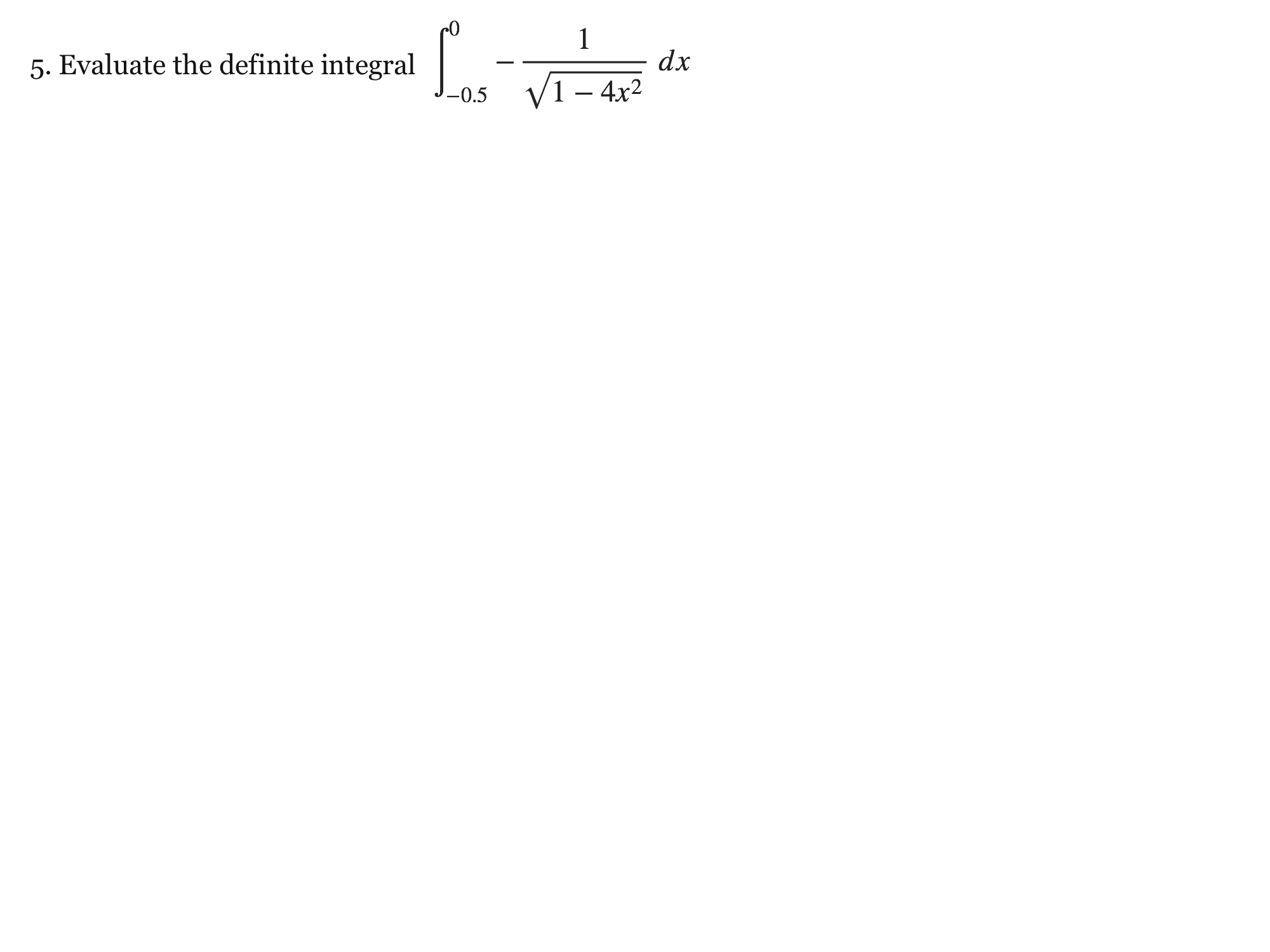
Drawing is temporarily unavailable. Work on paper if needed, then record your reasoning here.
Saving written working requires JavaScript. Keep your work on paper or in your own notes; the source problem above remains available.
Show your work for Problem 6
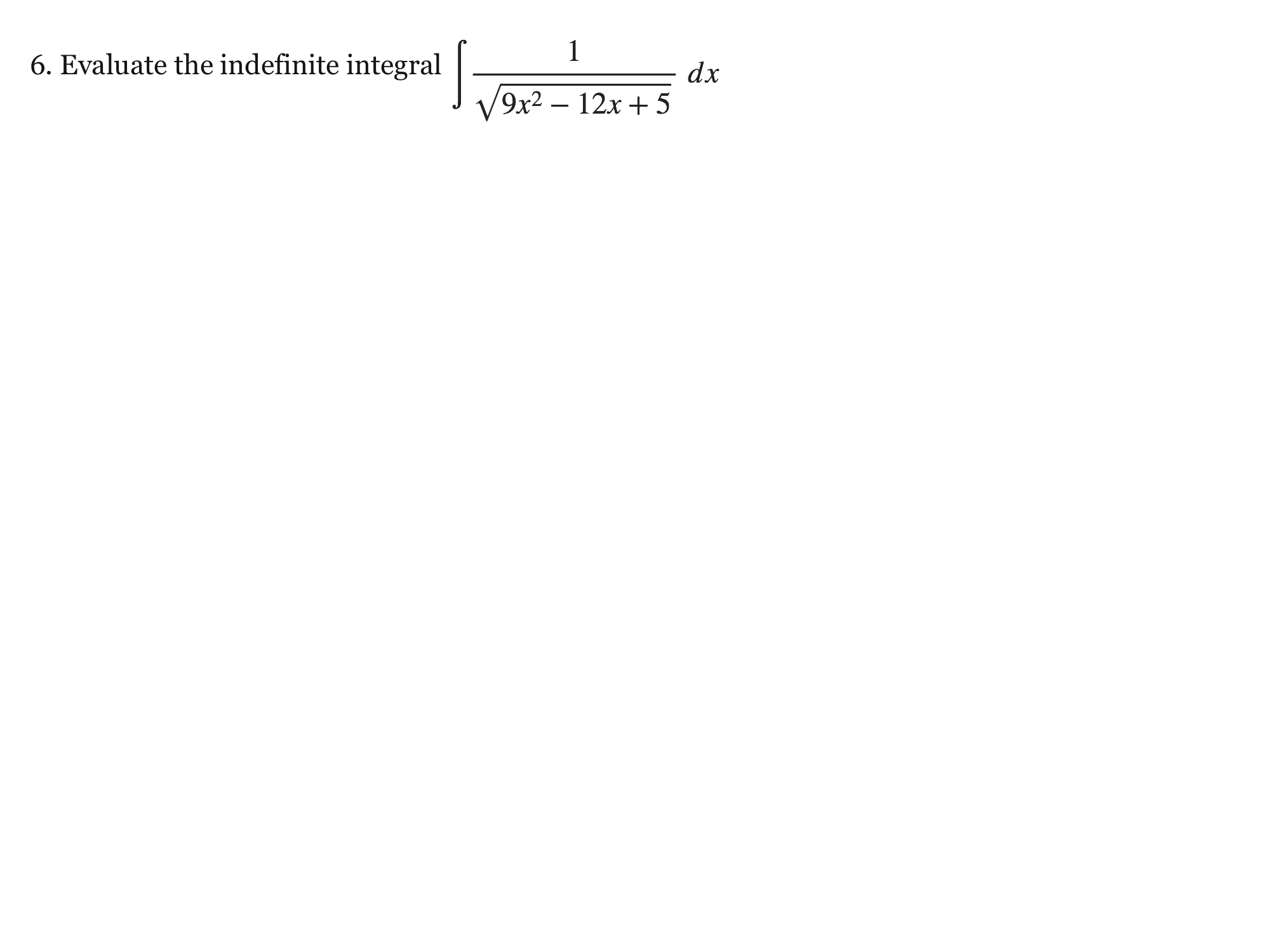
Drawing is temporarily unavailable. Work on paper if needed, then record your reasoning here.
Saving written working requires JavaScript. Keep your work on paper or in your own notes; the source problem above remains available.
- Evaluate the definite integral
- Evaluate the indefinite integral
Show your work for Problem 7
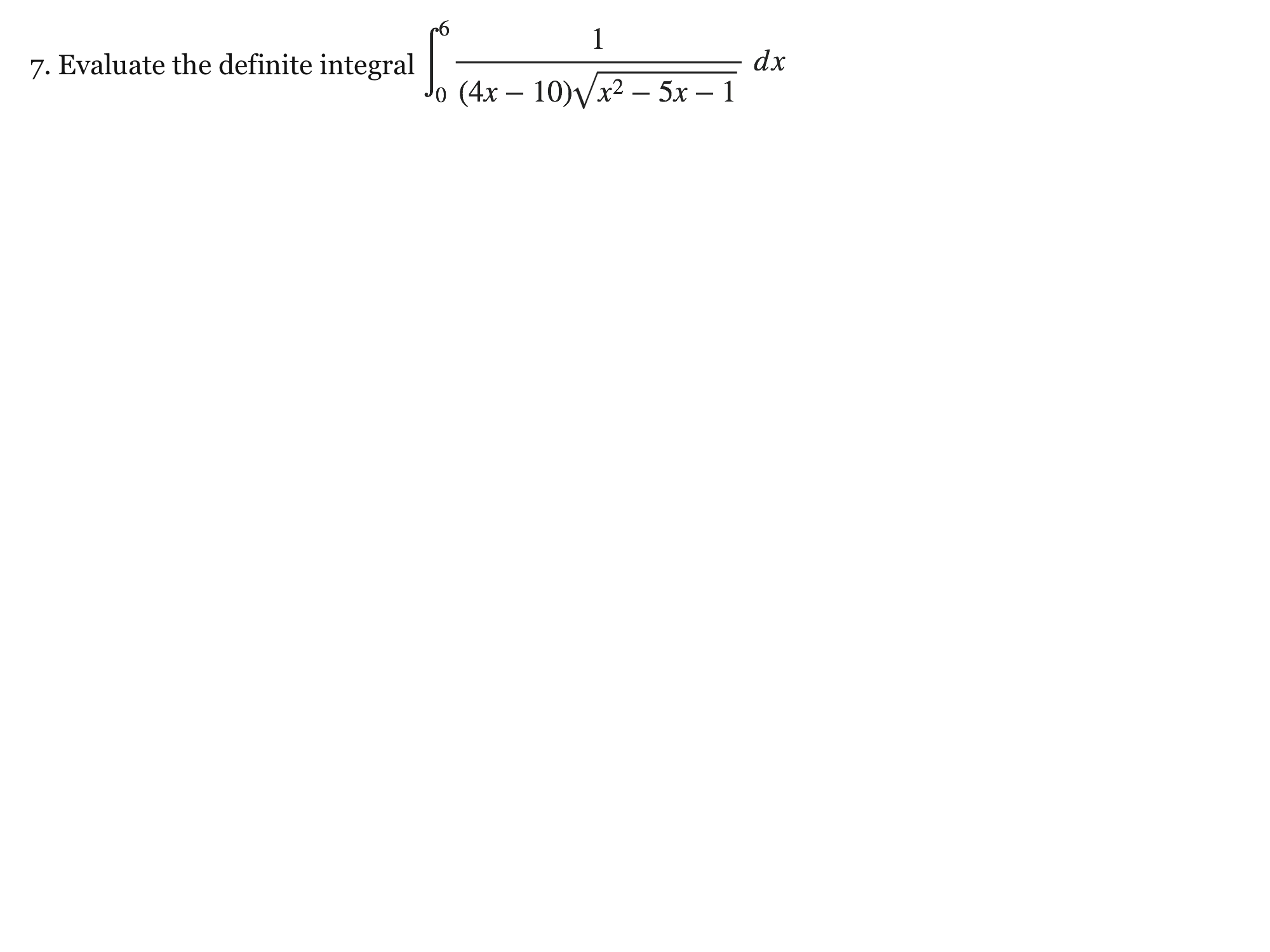
Drawing is temporarily unavailable. Work on paper if needed, then record your reasoning here.
Saving written working requires JavaScript. Keep your work on paper or in your own notes; the source problem above remains available.
Show your work for Problem 8
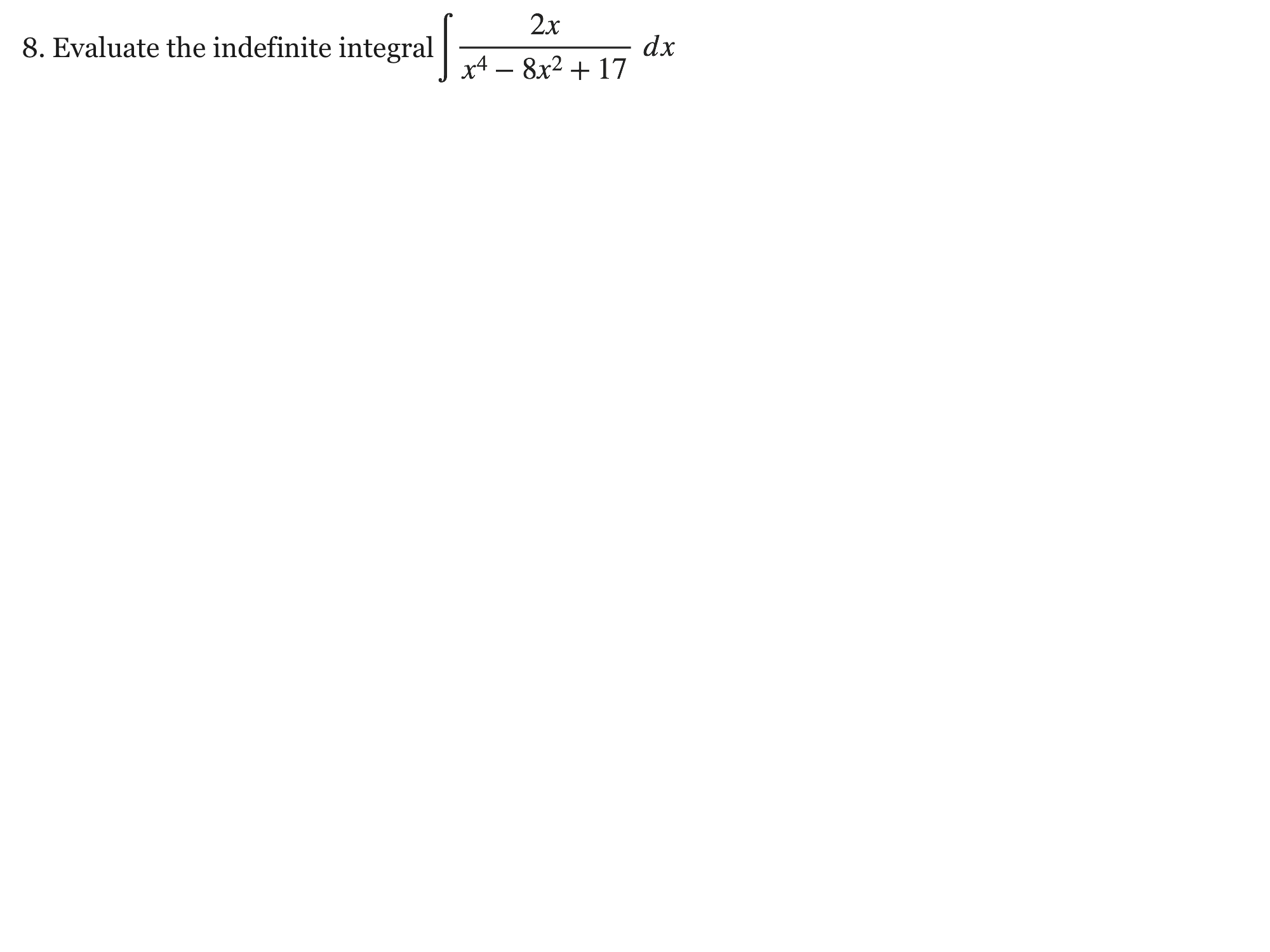
Drawing is temporarily unavailable. Work on paper if needed, then record your reasoning here.
Saving written working requires JavaScript. Keep your work on paper or in your own notes; the source problem above remains available.
- Evaluate the definite integral
- Evaluate the indefinite integral
Show your work for Problem 10
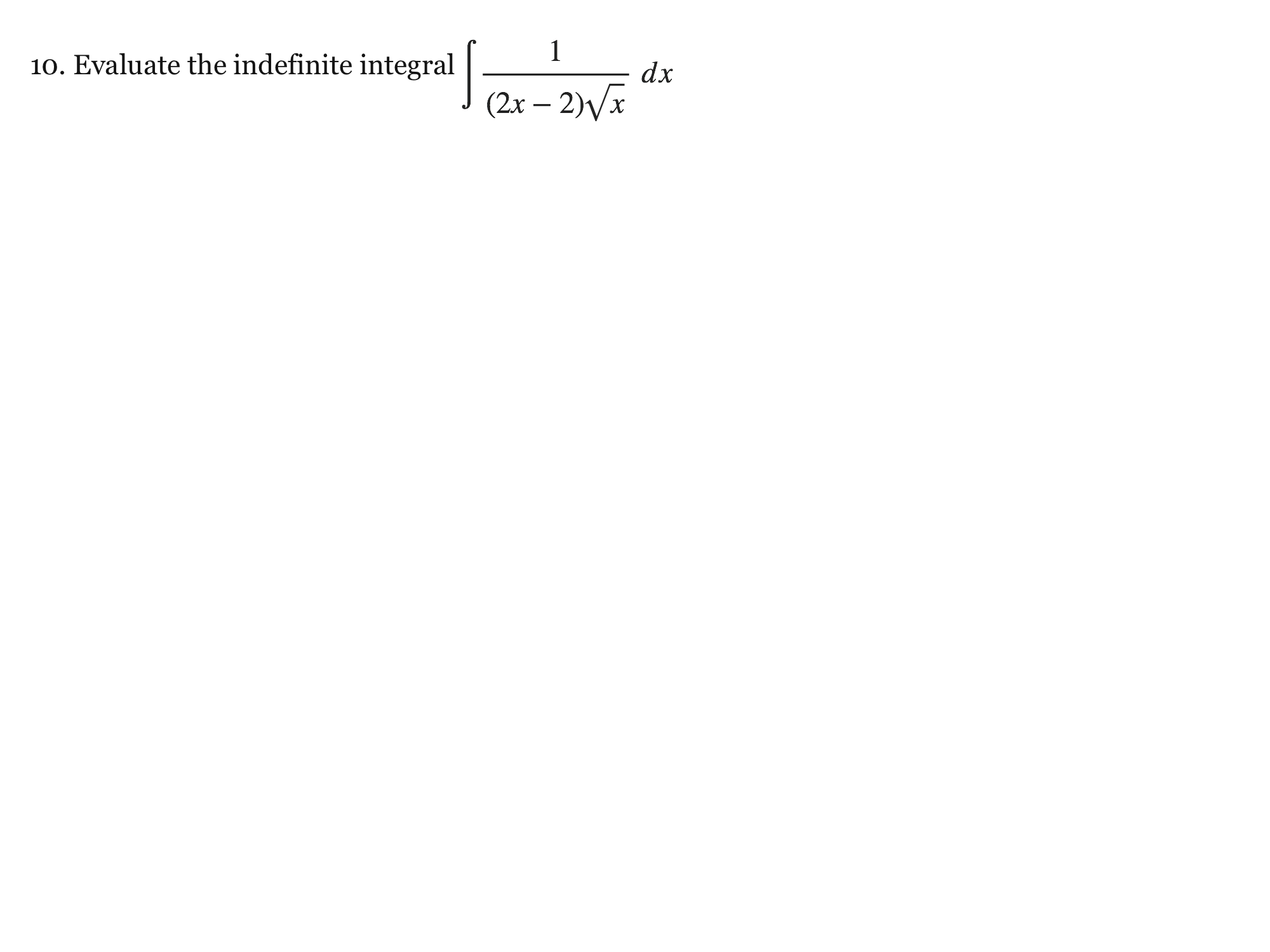
Drawing is temporarily unavailable. Work on paper if needed, then record your reasoning here.
Saving written working requires JavaScript. Keep your work on paper or in your own notes; the source problem above remains available.
Show your work for Problem 9
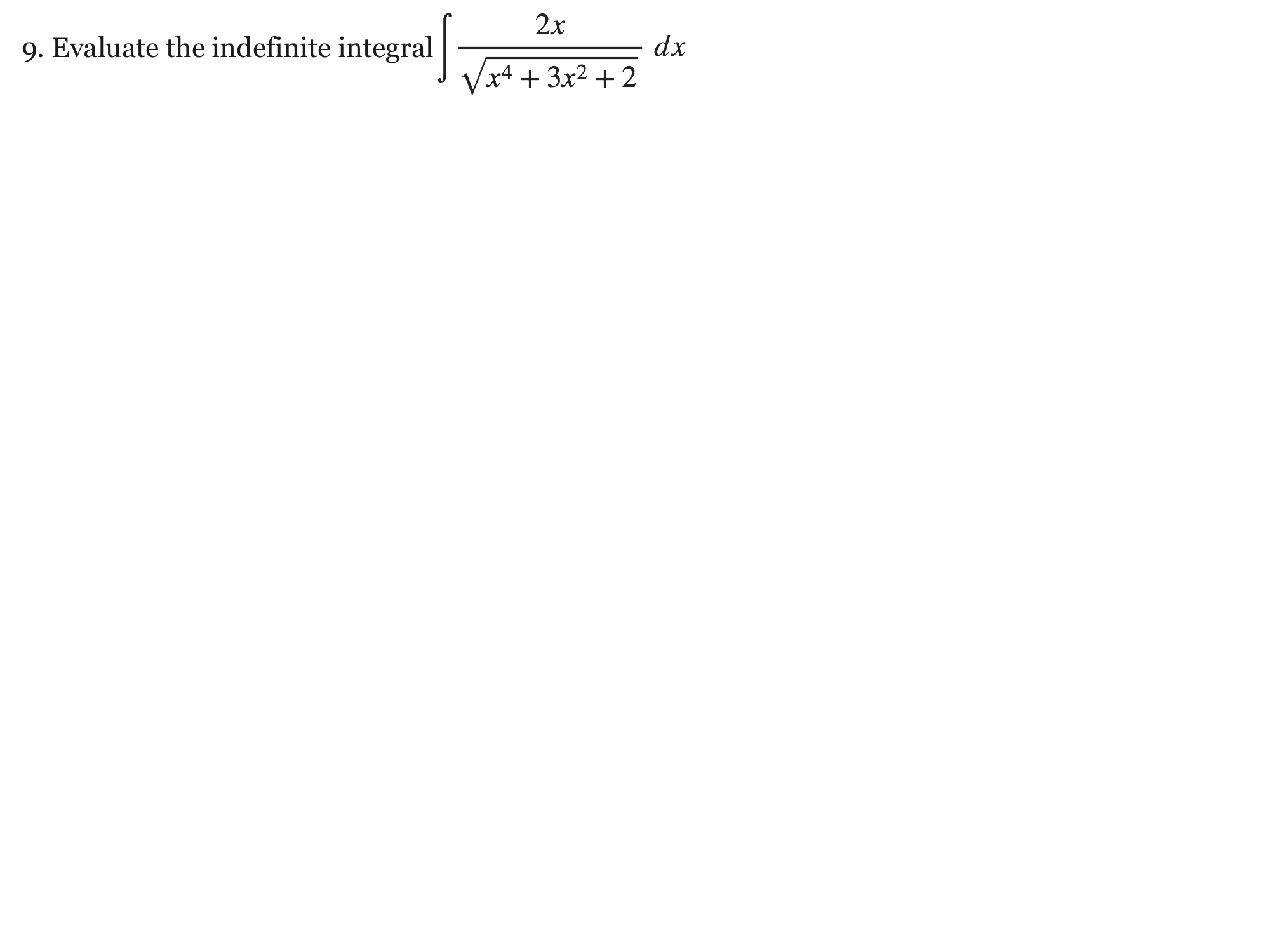
Drawing is temporarily unavailable. Work on paper if needed, then record your reasoning here.
Saving written working requires JavaScript. Keep your work on paper or in your own notes; the source problem above remains available.
- Evaluate the indefinite integral
- Evaluate the indefinite integral
Glossary and deeper reading · 4 refreshers
These editorial refreshers supplement the reading. Definitions and examples are added guidance; original source wording and recorded answers remain in their original context.
-
Chain rule
The chain rule differentiates a composition by multiplying the outer derivative at the inner output by the inner derivative. For differentiable functions, (f(g(x)))′=f′(g(x))g′(x). For example, the derivative of sin(x²) is cos(x²)·2x. Nested compositions require a factor for each successive layer.
-
Derivative
A derivative gives the instantaneous rate of change of a function with respect to its input. At a point, it is the finite limit of the difference quotient when that limit exists. For example, the derivative of x² is 2x, so the tangent slope at x=3 is 6. A derivative function collects those rates across the inputs where the function is differentiable.
-
Differential
For a differentiable function y=f(x), the differential dy is defined as f′(x) dx. It represents the tangent-line estimate of the output change associated with an input change dx. For example, y=x² at x=3 and dx=0.01 gives dy=6·0.01=0.06. The actual change in y can differ from this linear estimate.
-
Definite integral
A definite integral accumulates a function over a specified interval as a limit of Riemann sums when that limit exists. Its sign includes the function’s sign and the orientation of the limits. For example, the integral of the constant −2 from 0 to 3 is −6, although the geometric area is 6. In a rate model, the result has rate units multiplied by input units.