Calculating Potentials
Beyond AP Physics 1
Original source retained for reference; this draft does not establish AP coverage.
Original author draft. Original wording and recorded answer states are preserved without claiming reviewed scientific correctness or AP alignment.
Physics 2 original textbook · Chapter 2
Section 2 Overview
Section 2
Calculating Potentials
In the previous section we introduced the electric potential. Like with the electric field calculating electric potentials requires a certain finesse. In this section we will then be discussing manners in which you may come to the electric potential.
The first method we will be studying is the direct approach. The definition of the electric potential is given by
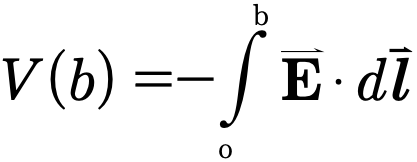
This means that if we have the electric field of something we can quickly calculate the electric potential for it.
Example 2.2.2
Optional Gaussian-flux and potential-integral derivation. Prerequisites: spherical symmetry and radial integration; the outside point-charge result can also be used directly. This preserved source example makes no AP coverage claim.
A uniformly charged solid sphere has radius R and volume density ρ. Find V at r>R.
Authored clarification: V(∞)=0; spherical symmetry.
Interactive 1.3 Electric Potential of a Sphere
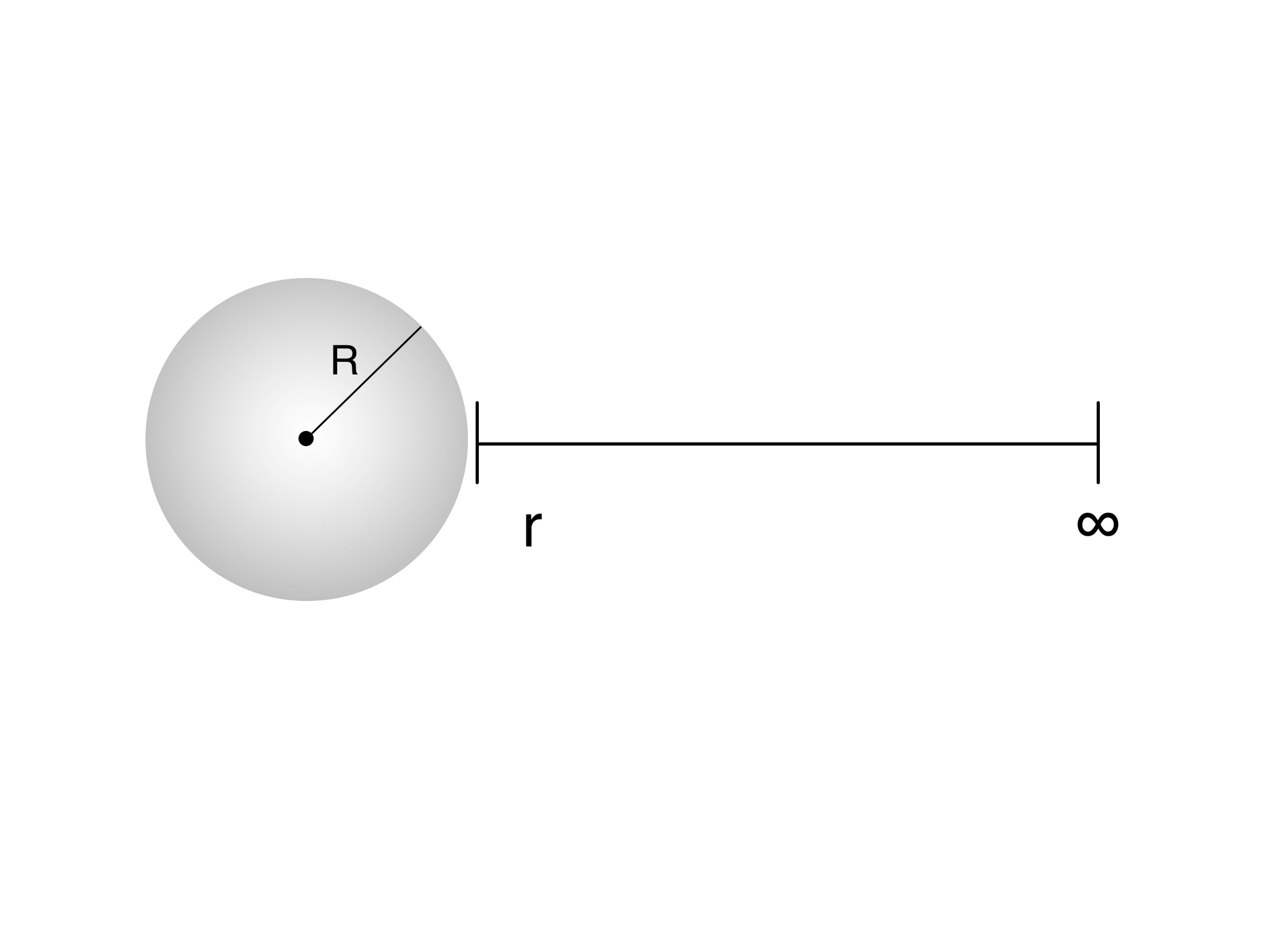
The Radius
The radius we chose is outside the sphere. This is an important fact since the electric field charges once inside the radius R which will give a different value for the electric potential.
The Reference Point
Choosing infinity as the reference point is a standard practice when calculating the electric potential in this manner so we have done so here.
To find the electric potential outside the sphere all that must be done is to apply the integral for the electric potential given above.
Since we expect for the potential to be zero an infinite distance away from the sphere we choose our reference point to be at infinity. b simply becomes the distance from the center of the sphere. These considerations lead our integral to become
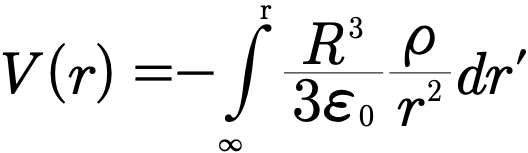
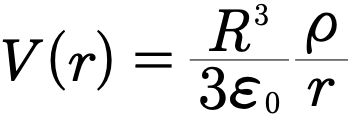
Carrying out the integration we get that

or that
In the first section the definition for the electric potential of a point charge was mentioned to be defined by
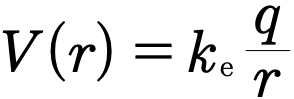
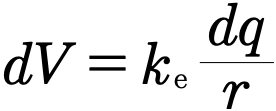
Similar what we did for the electric field we will extend this definition to continuous distributions of charge. The process is the same. Consider an infinitesimal pice of charge dq. It contributes an infinitesimal amount to the electric potential a distance r away
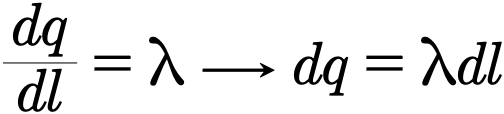
If we have a uniform distribution of charge (say charge distributed over a line) we can define dq in terms of dl, an infinitesimal bit of line.
This makes the expression for our infinitesimal bit of voltage become
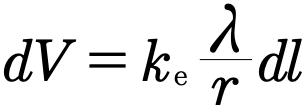
If we integrate both sides this then gives us an expression for the voltage caused by an object with uniformly distributed charge q.
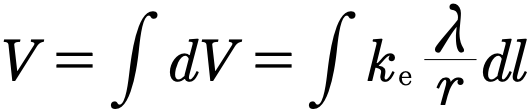
This process can be easily repeated for any type of uniform charge distribution.
Example 2.2.1
Optional calculus evaluation. The antiderivative identity is supplied and defined below; the far-distance limit checks the physical result. See the reviewed worked example below for the supplied identity and evaluation.
Optional finite-rod potential method. Prerequisites: a continuous-charge integral and logarithms. The inverse-hyperbolic-sine identity is defined in the supplied evaluation below. This preserved source example makes no AP coverage claim.
A uniform thin rod of length 2L and total charge q lies from −L to L on the x axis. Find V at (0,h), h>0.
Authored clarification: V(∞)=0; correct the source’s contradictory axis wording.
We encountered this problem once before when we were discussing electric fields of objects with charge distributions but it is worth tackling again as a starting point for calculating electric potentials.
Place the uniformly charged thin rod along the x axis from −L to L, centered at the origin. The observation point is (0,h), h>0. Then dl=dx and . The rod cannot simultaneously be parallel to the y axis.
Now the point a distance h above the rods center forms a triangle with every point on the rod a distance x away. This causes r, the distance between those points on the rod and the point above the rods center to become
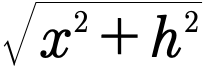
We can now substitute all this into the integral for the potential.

Like with the electric field of the rod we must use trigonometric substitution to solve this problem. The form of the denominator demands a substitution of x=htan(θ). Doing so leads to the follow after a little algebra
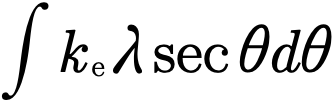
Evaluating the given integral leaves us with

If we make the appropriate substitutions for our trigonometric functions we get that

Now all that’s left to do is apply our bounds. Since we centered our rod with respect to the x axis we will be going from -L to L which finally gives us that

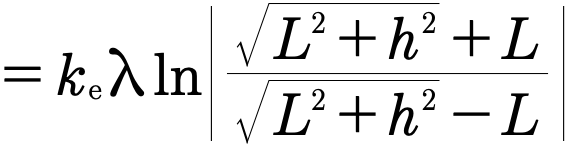
As the definition of the electric potential suggests it is also possible to calculate the electric potential directly from a given electric field at some given point. To do this you must specify both specify some reference point at which we will say V=0 (typically out at infinity) then preform a line integral from the reference point to the point you want to know the potential.
Interactive 1.4 Electric Potential of a Thin Rod
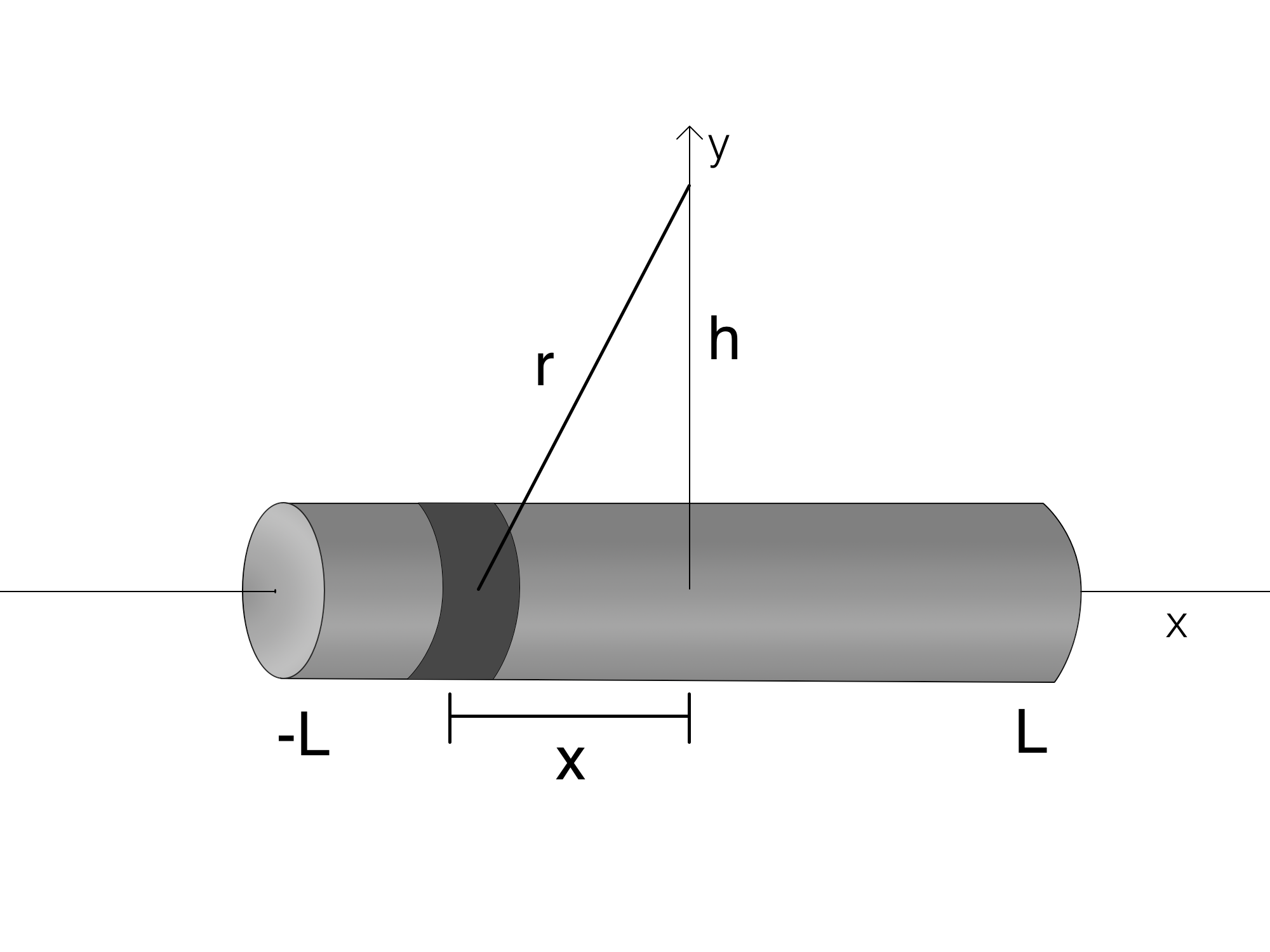
The Triangle
Each bit of rod form help for the vertices of a right triangle. Using the pythagorean theorem we can then determine how much each bit of rod contributes to the potential.
No Cancellation
Unlike the electric field counterpart of this setup no cancellation occurs. This happens because unlike the electric field electric potential is a scalar quantity so there is no direction involved so that each piece of rod contributes something to the value of the potential
Interactive 1.5 The Charged Thin Ring
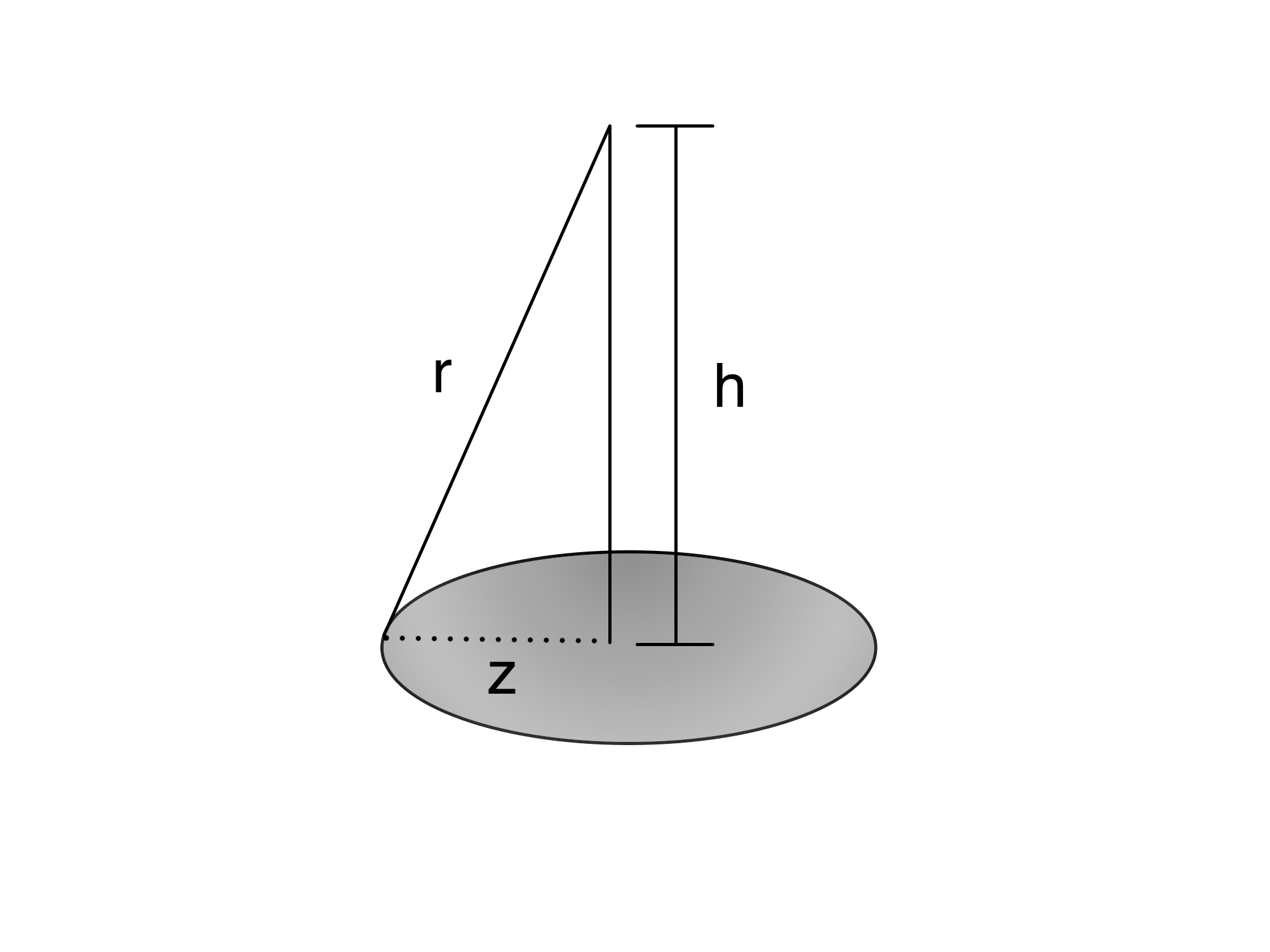
An interesting fact
For this uniformly charged ring with nonzero total charge Q and radius R, . At distances , it approaches . This conclusion assumes a localized distribution with nonzero net charge and the reference V(∞)=0.
R is constant
As you move around the ring the radius stays a constant value.
Archived original widget · contains the source error
As with the electric field as you move far away from the source of your electric potential you should expect to see the electric potential of a point charge. Here if you let h >> z you should recover the electric potential of a point charge.
As you move around the ring the radius stays a constant value.
Optional continuous-ring potential derivation. Prerequisites: scalar superposition and a charge integral; symmetry simplifies the final result. This preserved source example makes no AP coverage claim.
Find V at height h on the axis of a radius-R uniform thin ring with total charge q.
Authored clarification: The original omits a charge symbol in this prompt; q is explicitly supplied; V(∞)=0.
In this problem we have a thin uniformly charged ring laying on the ground and we are asked to determine the electric potential some distance above its center. At this point it should be clear that in order to solve this problem we will need to use the integral form of the electric potential.
To find the electric potential due to this ring we will have to integrate around the ring. Luckily our point is above the rings center. This means that the distance from the ring to the point in question is constant and for our integral (assuming a linear charge distribution) we get that
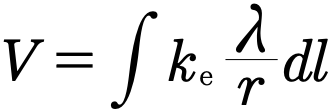
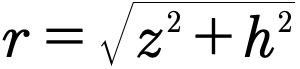
The distance from the ring to the point above its center is given by
The length we must integrate over is the circumference of the ring since we must find the electric potential contribution of each piece of the ring. Putting all this into the integral gives us the potential of our setup

Review 1.2 Section 2 Review
This review preserves the author’s recorded prompts, choices, and answer states. Corrected items have separate reviewed explanations and keys; unchanged draft keys are marked unreviewed. Unfinished items are not scored.
Original question 1
A uniformly charged thin ring has fixed positive total charge Q. At a fixed axial height h>0 above its center, what happens to V as its radius R increases, with V(∞)=0?
V decreases
V increases
V is constant
Reviewed answer and reasoning
A
For fixed positive total Q and axial height h, decreases as R increases. Holding positive line density λ fixed instead changes total charge to and gives , which increases with R for h>0. The constraint determines the answer.
This reviewed version states the assumptions or convention needed for one determinate answer. The archived source prompt and key are retained.
Archived original question and recorded key · contains the source error
Consider the ring of example 2.2.3. Would you expect the electric potential above its center to decrease or increase as the radius of the ring is increased?
Increase
Decrease
Original recorded key: A
Original question 2
If you take the limit of the electric potential for the ring of charge where h >> z what equation do you recover?
None of the above
Reviewed answer and reasoning
D
V~kQ/h=2 pi k lambda z/h for uniform ring with total Q=2 pi z lambda; h much larger than z.
The independent semantic audit confirms this source prompt and recorded key under its stated conditions.
Archived original question and recorded key · contains the source error
If you take the limit of the electric potential for the ring of charge where h >> z what equation do you recover?
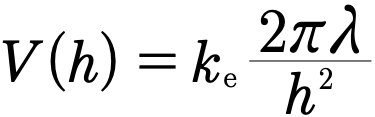
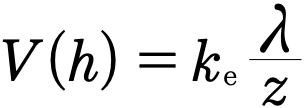

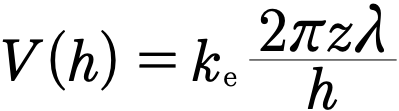
None of the above
Original recorded key: D
Original question 3
A sphere of radius R has uniform volume charge density ρ. With V(∞)=0, what is V at r<R?
Reviewed answer and reasoning
A
Match V(R)=ρR²/(3ε₀) and integrate the interior field ρr/(3ε₀) inward.
Authored correction or explicit assumptions; this reviewed key is separate from the archived original recorded states.
Archived original question and recorded key · contains the source error
Consider the sphere from Example 2.2.1. What is the electric potential a distance r from the spheres center when r<R
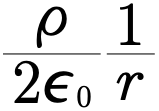
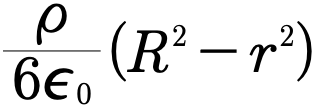
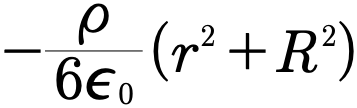
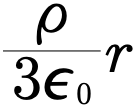
None of the above
Original recorded key: B
Original question 4
With V(∞)=0, what is the potential of a finite uniformly charged rod as the observation distance tends to infinity?
0
Infinity
A reference-independent nonzero constant
Reviewed answer and reasoning
A
A localized finite charge distribution has potential approaching zero under this explicitly chosen reference.
This reviewed version states the assumptions or convention needed for one determinate answer. The archived source prompt and key are retained.
Archived original question and recorded key · contains the source error
What is the electric potential an infinite distance away from a from a thin charged rod of length 2L?
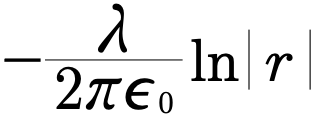
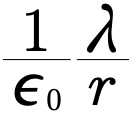
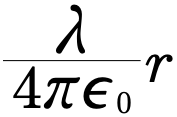
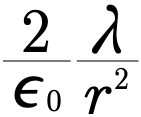
None of the above
Original recorded key: E
Original question 5
A thin rod of length L has uniform line charge λ. Find V a distance d>0 beyond its nearer end on its axis, with V(∞)=0.
0
Reviewed answer and reasoning
A
Integrate kλ dx/(d+x) from x=0 to L. The logarithm has a dimensionless ratio.
This reviewed version states the assumptions or convention needed for one determinate answer. The archived source prompt and key are retained.
Archived original question and recorded key · contains the source error
A thin uniformly charged rod is laid on the ground on its side. What is the electric potential a distance d away from one of its caps?
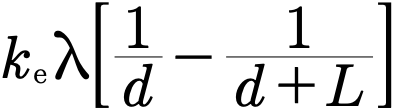
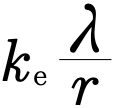

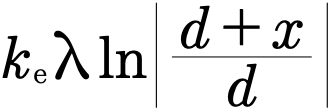
None of the above
Original recorded key: D
Reviewed worked examples
These authored derivations are paired with the original example identities. Added assumptions are stated.
Optional Gaussian-flux and potential-integral derivation. Prerequisites: spherical symmetry and radial integration; the outside point-charge result can also be used directly. This preserved source example makes no AP coverage claim.
Example 2.2.2 · reviewed solution
A uniformly charged solid sphere has radius R and volume density ρ. Find V at r>R.
Authored clarification: V(∞)=0; spherical symmetry.
Integrate density over volume.
Use the exterior Gauss-law field.
Integrate from infinity.
Check
V is continuous with the interior formula at r=R.
Optional finite-rod potential method. Prerequisites: a continuous-charge integral and logarithms. The inverse-hyperbolic-sine identity is defined in the supplied evaluation below. This preserved source example makes no AP coverage claim.
Example 2.2.1 · reviewed solution
A uniform thin rod of length 2L and total charge q lies from −L to L on the x axis. Find V at (0,h), h>0.
Authored clarification: V(∞)=0; correct the source’s contradictory axis wording.
Optional calculus evaluation. The antiderivative identity is supplied and defined below; the far-distance limit checks the physical result.
Set density and source distance.
Integrate scalar potential.
Use the supplied antiderivative identity and define the unfamiliar function.
For dimensionless u, . With h>0, the supplied identity can be verified by differentiation.
Apply the symmetric limits and substitute λ=q/(2L).
. Therefore .
Check
For h≫L, V≈kq/h.
Optional continuous-ring potential derivation. Prerequisites: scalar superposition and a charge integral; symmetry simplifies the final result. This preserved source example makes no AP coverage claim.
Example 2.2.3 · reviewed solution
Find V at height h on the axis of a radius-R uniform thin ring with total charge q.
Authored clarification: The original omits a charge symbol in this prompt; q is explicitly supplied; V(∞)=0.
All elements have equal distance.
Add element potentials.
Integrate total charge.
Check
Far away V≈kq/|h|.
Glossary and deeper reading · 2 refreshers
These editorial refreshers supplement the reading. Definitions and examples are added guidance; original source wording and recorded answers remain in their original context.
-
Electric potential
Electric potential is electric potential energy per unit charge relative to a chosen reference. It is a scalar measured in volts and can be positive, negative, or zero even where the electric field is nonzero. For example, contributions from equal positive and negative source charges can cancel the potential at a point without canceling their field vectors.
-
Electric field
An electric field assigns the electric force per unit positive test charge to each location. The field is produced by the sources and is a vector, while the force on a negative charge points opposite the field. For example, the electric field between ideal parallel capacitor plates can accelerate an electron opposite the field arrows.