An Introduction to Circuits
Original source retained for reference; this draft does not establish AP coverage.
Original author draft. Original wording and recorded answer states are preserved without claiming reviewed scientific correctness or AP alignment.
Physics 2 original textbook · Chapter 4
Section Overview
Section 1
An Introduction to Circuits
Almost any electrical device you own relies on something called a circuit. A circuit is an object typically composed of a wire whose ends are connected to a provider of electro-motive force. A current is run through a circuit so that it may provide some type of functionality which enables complex electronics to be made.
The electro-motive force, abbreviated emf, is the voltage which creates current in a circuit. Devices which provide emf do so by creating two different poles one of which we call positive and denote by a + and another which we call negative and denote by a -. These poles correspond to the voltage which is needed to create the current in a circuits wire.
Emf is provided through some power source such as a generator or battery. The power which you receive from the plug at your home can be generated from many different sources. Turbines (wind or water), solar panels, or fossil fuel engines are all commonly used to create power which is fed through power lines.
Gallery 1.1 Types of Power Sources
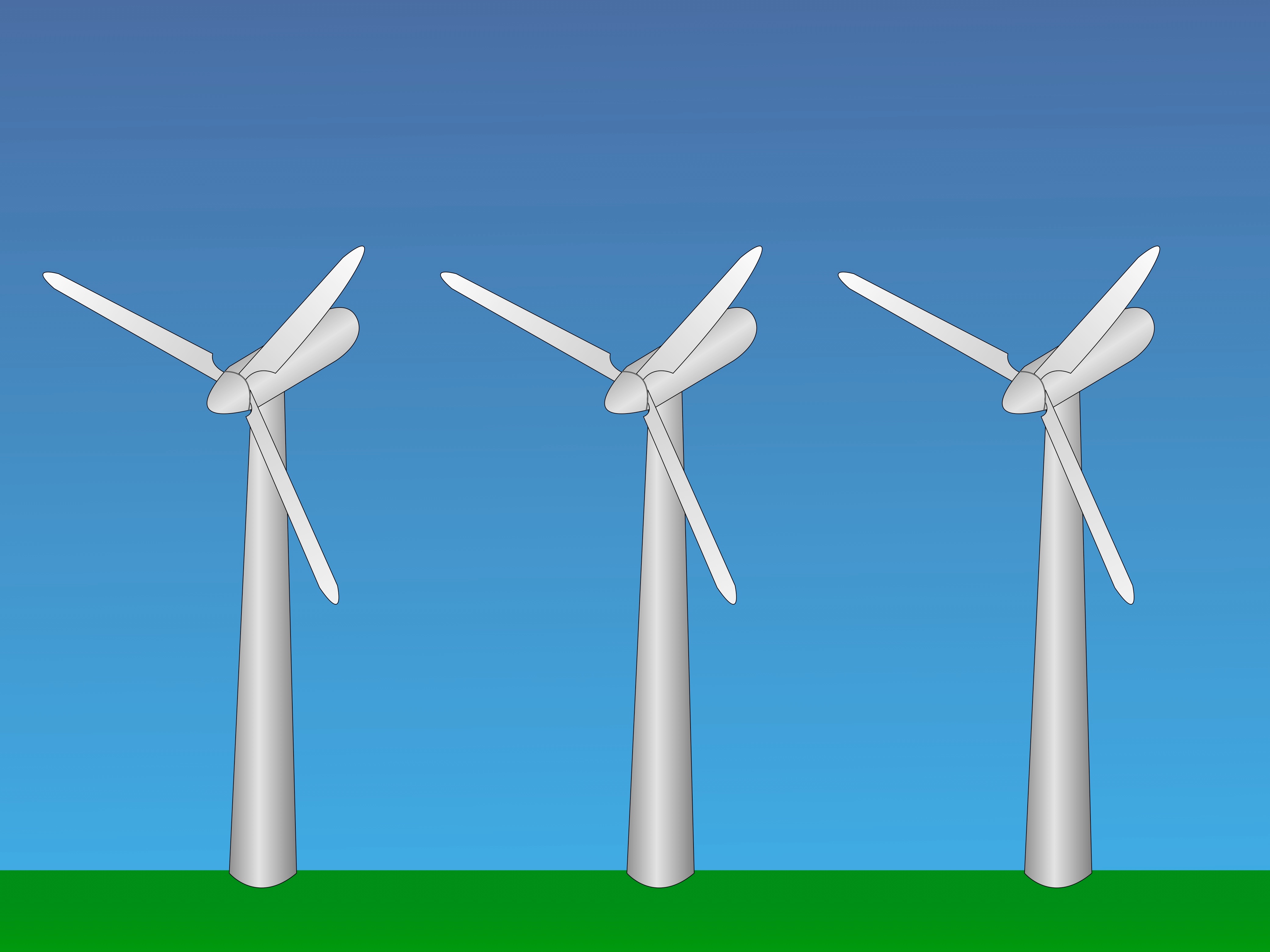
Wind energy is generated by spinning wind turbines. Power from this type of source is generally used as a supplement to other sources.
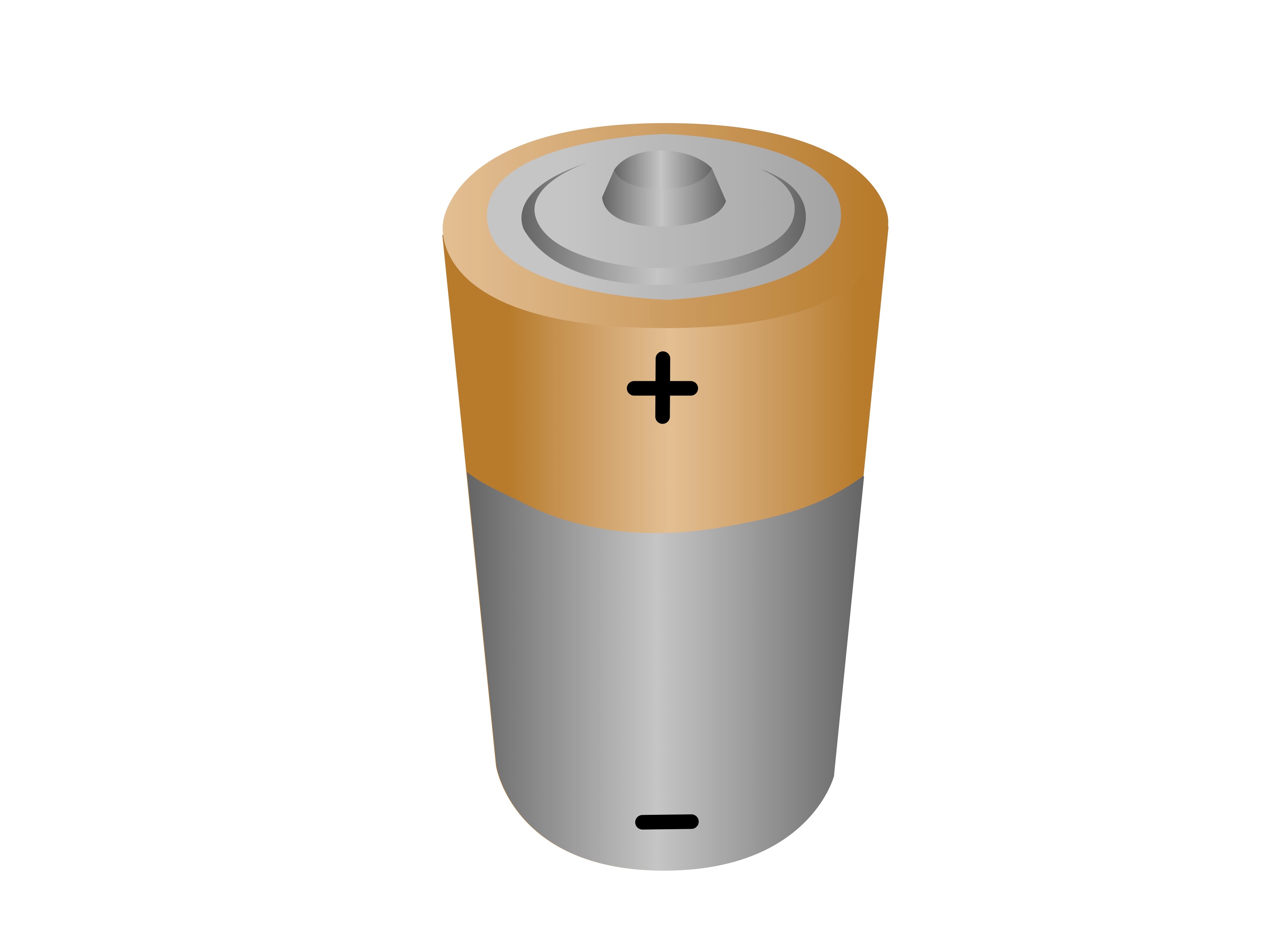
Batteries are the most general suppliers of DC power. In the circuits we discuss it would probably be both convenient and realistic to consider power as coming from batteries.
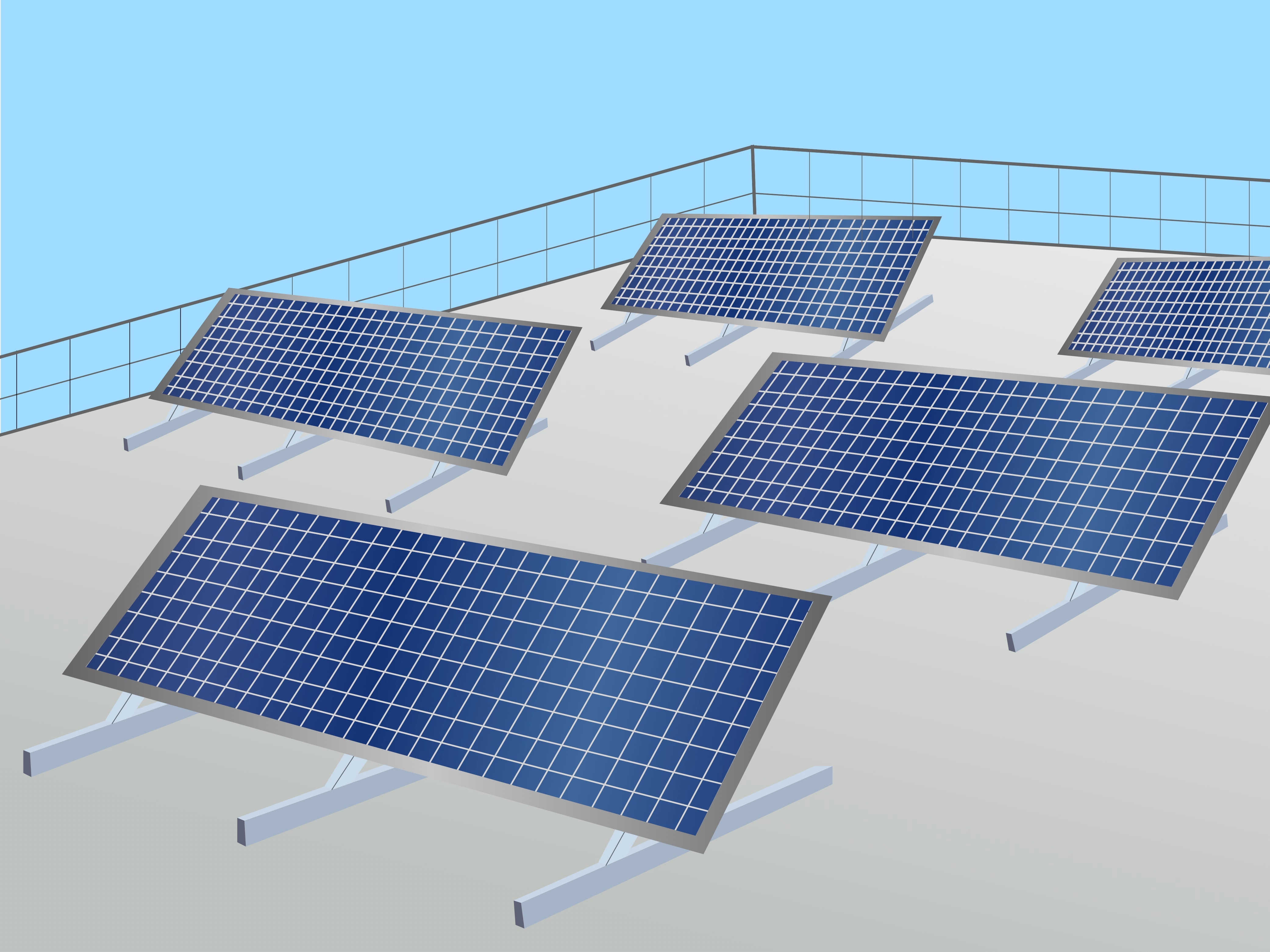
Like wind energy solar power is not amazingly reliable under particular circumstances and is used as a supplement to other less renewable sources of energy.
When we discuss a particular circuit we will often be using a circuit diagram to demonstrate the circuits setup. A circuit diagram is a visual representation of a circuit. Typically in a circuit diagram wires will be represented by lines and attached to those lines will be various symbols representing electronic devices. Although a circuit diagram will properly represent the function of a circuit it will almost never (except perhaps in cases of simple circuits) be a replica for the circuit itself. This is because circuit diagrams are meant to be readable since they are often used as documentation for electrical instruments.
In more complex circuit it is possible to have a wire split or have multiple wires meet at a certain point. When a wire splits or two or more lines meet we have what is called a node.
As mentioned before electronic devices are typically attached to circuits so that they can carry out some type of function. Among the devices which can be attached to circuits include some things we have learned about and others we haven not. In this chapter we will only look at the emf, capacitors, and resistors. Later on we will also discuss something called an inductor but there are also other devices we can use such as transistors, diodes, switches, etc. which all play extremely important roles in modern electronics.
Direct current (DC) has a fixed direction; its magnitude can change with time. A constant current is steady DC. An ideal battery supplies constant emf, but the current it drives can change, for example while a capacitor charges. Alternating current reverses direction periodically.
Gallery 1.2 Circuits and Circuit Elements
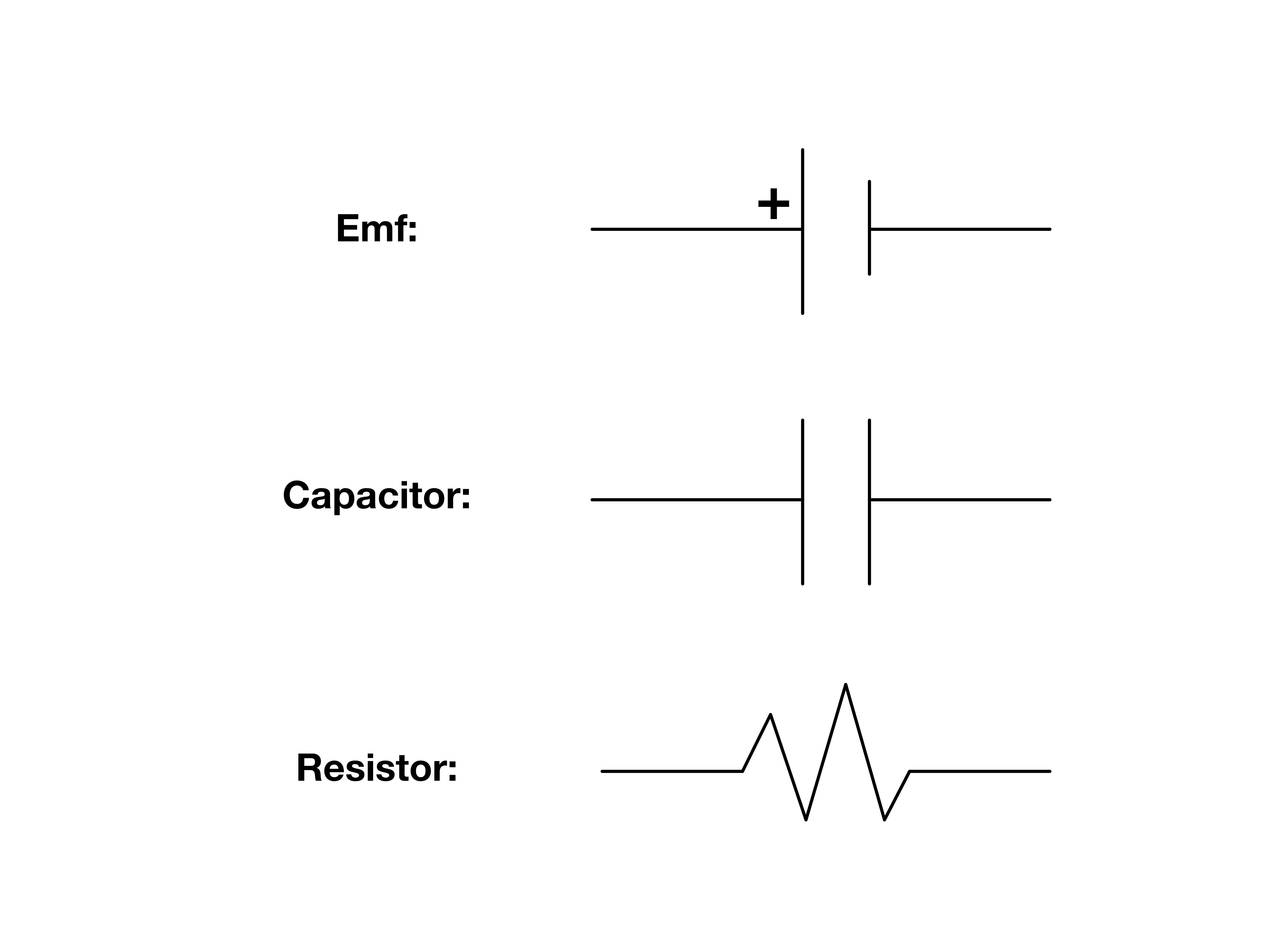
These are the symbols of the circuit elements we will be working with. The emf depicted here produces DC current. A separate symbol is used for AC current.
Scroll within this figure to read its labels. Open the full-size reviewed figure.
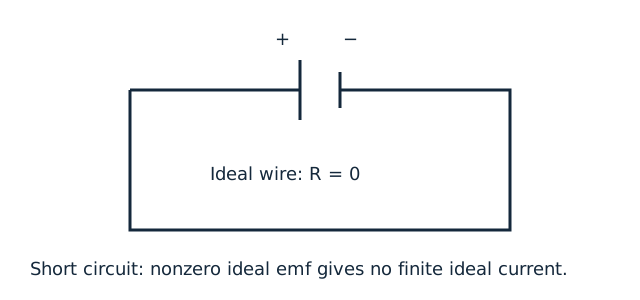
This is probably as bare of a circuit diagram as you can get. Here an emf is connected to some wire. Since there are no other elements attached to the circuit this circuit really wouldn’t be much use.
Reviewed drawing: The wire is connected to both ideal source terminals without resistance. For nonzero ideal emf and zero loop resistance, the model has no finite ideal-current solution. Real source resistance limits short-circuit current; it is excluded from this ideal illustration.
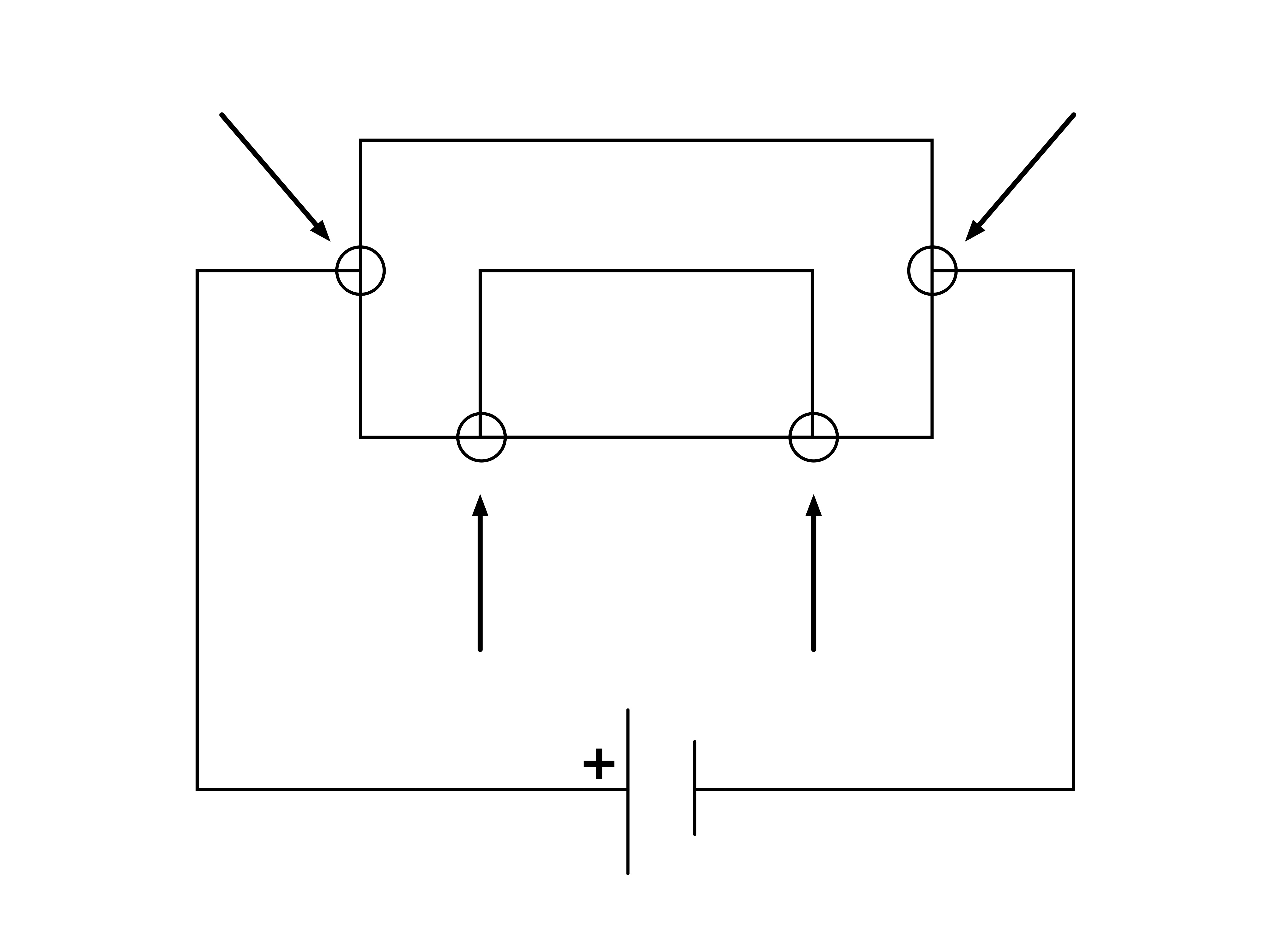
This circuit is again very bare bones but we have added extra wire to create nodes. Each node in this diagram is circled and has an arrow pointing to it.
Archived original widget · contains the source error
These are the symbols of the circuit elements we will be working with. The emf depicted here produces DC current. A separate symbol is used for AC current.
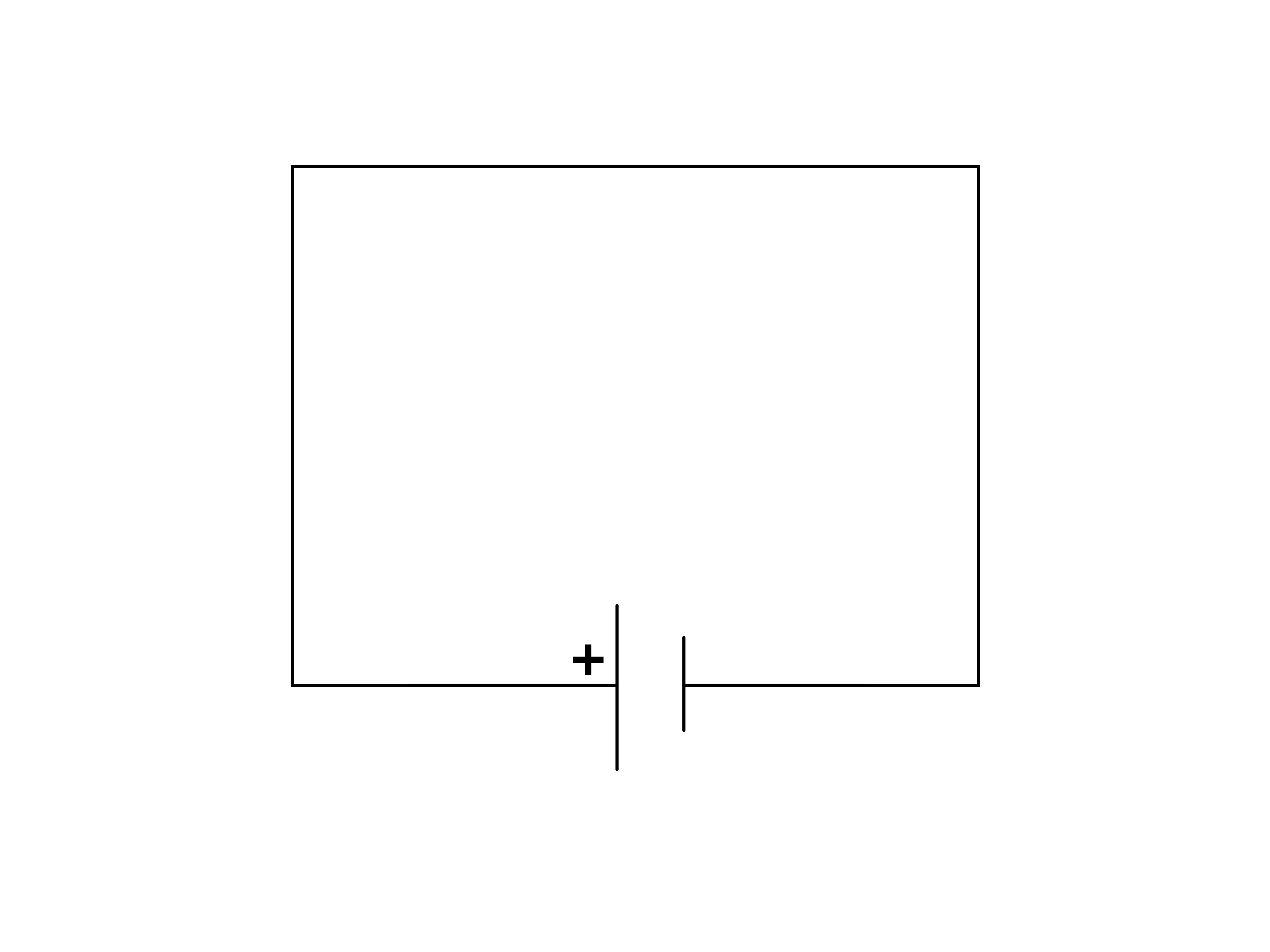
This is probably as bare of a circuit diagram as you can get. Here an emf is connected to some wire. Since there are no other elements attached to the circuit this circuit really wouldn’t be much use.
This circuit is again very bare bones but we have added extra wire to create nodes. Each node in this diagram is circled and has an arrow pointing to it.
Gallery 1.3 Example 4.1.1
Scroll within this figure to read its labels. Open the full-size reviewed figure.
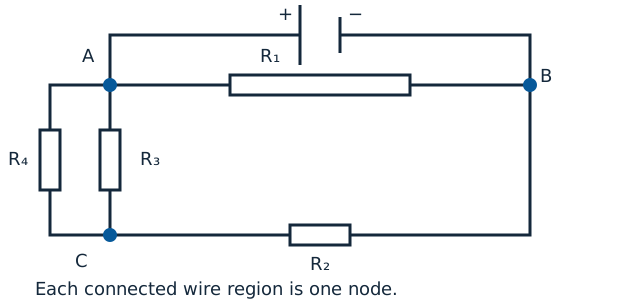
An electrical node is an entire connected ideal wire region; a corner is not a new node. Under a junction definition, a branch meeting is a junction. The corrected network below marks three distinct nodes A, B, C.
Reviewed drawing: The reviewed circuit has four resistor branches: R₁ between A and B, R₂ between B and C, and separate R₃ and R₄ branches between A and C. A DC source connects across A–B. Each connected wire region is one distinct node, and A, B and C are true branch junctions; no ideal wire shorts two nodes together.
Archived original widget · contains the source error
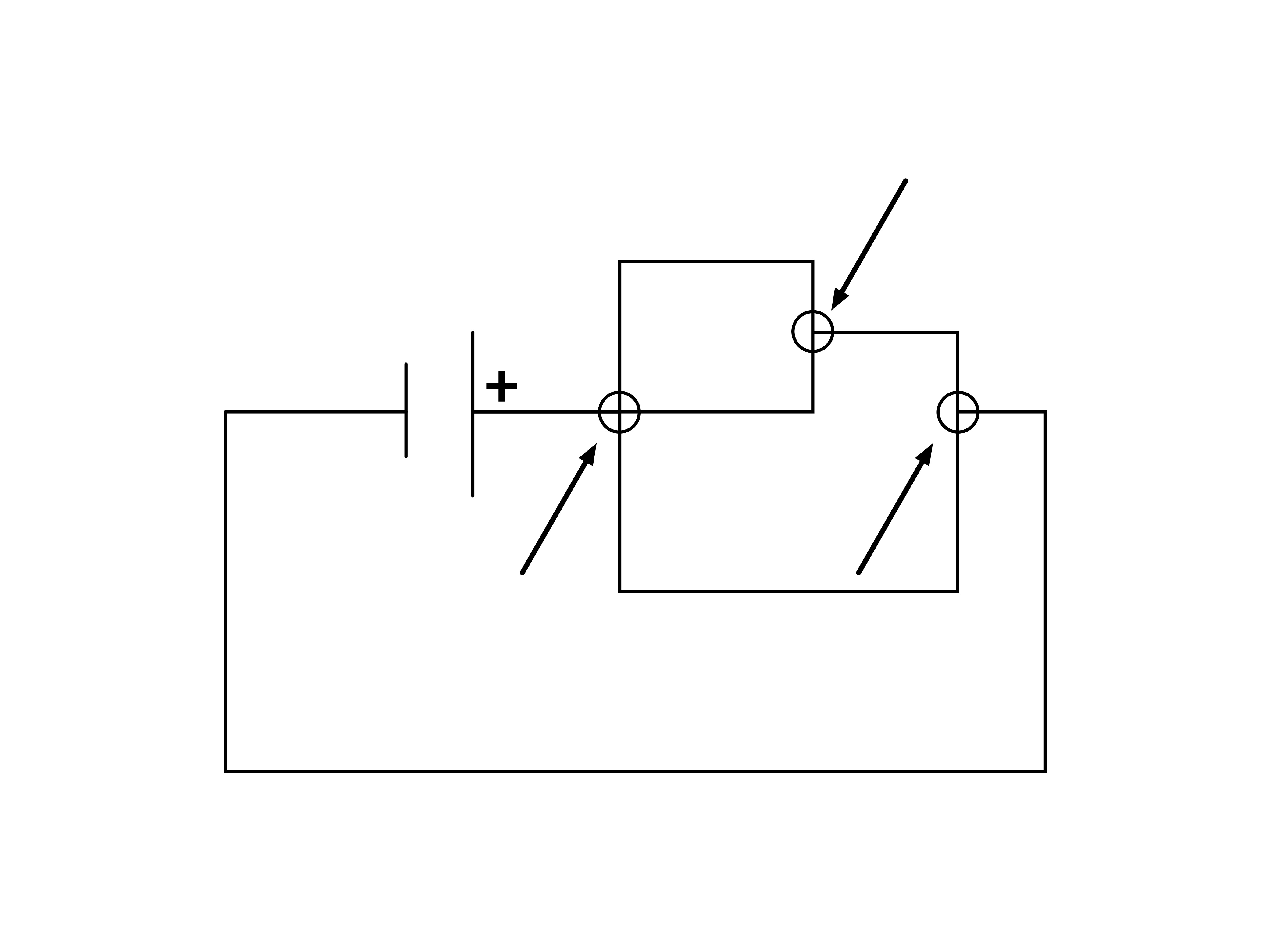
The three nodes are circled and pointed to.
Example 4.1.1
Construct an ideal DC circuit with three distinct electrical nodes.
Authored clarification: A connected ideal wire region is one node; ordinary corners do not create new nodes.
There are many possibilities here. We present one.
Example 4.1.2
A crane motor lifts 1500 kg at 30 cm/min at constant speed with g=9.8 m/s². Find mechanical power and whether a 20 kΩ winding resistance determines current.
Authored clarification: Mechanical output is distinct from winding Joule heating.
Reviewed worked solution:
Convert speed.
Use mechanical power.
Identify missing motor data.
Winding I²R is heat; input power VI also supplies mechanical output and other losses. Supply voltage, back emf, or efficiency is needed to solve for I.
Answer: Mechanical output is 73.5 W. Current is underdetermined by the supplied resistance alone.
Check: Equating I²R to useful lift power would confuse a loss with output.
Review 1.1 An Introduction to Circuits
This review preserves the author’s recorded prompts, choices, and answer states. Corrected items have separate reviewed explanations and keys; unchanged draft keys are marked unreviewed. Unfinished items are not scored.
Original question 1
A direct current can keep a fixed direction while its magnitude changes with time.
True
False
Reviewed answer and reasoning
A
Fixed direction defines DC. Constant magnitude is the additional steady-current condition.
Authored correction or explicit assumptions; this reviewed key is separate from the archived original recorded states.
Archived original question and recorded key · contains the source error
A direct currents magnitude varies in time.
True
False
Original recorded key: B
Original question 2
An emf is a device which generates power
True
False
Reviewed answer and reasoning
B
emf is energy supplied per charge in volts, not a physical device.
The independent semantic audit confirms this source prompt and recorded key under its stated conditions.
Archived original question and recorded key · contains the source error
An emf is a device which generates power
True
False
Original recorded key: B
Original question 3
Which can provide a circuit emf when appropriately connected or equipped?
A battery, photovoltaic cell, or turbine-driven electrical generator
A turbine without an electrical generator
Only a battery
Reviewed answer and reasoning
A
A turbine supplies mechanical energy; a generator converts that energy to electrical emf.
This reviewed version states the assumptions or convention needed for one determinate answer. The archived source prompt and key are retained.
Archived original question and recorded key · contains the source error
Are any of the following sources of emf?
Batteries
Turbines
Solar cells
All are sources of emf
None are sources of emf
Original recorded key: D
Original question 4
A circuit diagram is a perfect copy of a real circuit.
True
False
Reviewed answer and reasoning
B
A real circuit has nonideal internal resistance, wire resistance, heating etc; perfect ideal copy false.
The independent semantic audit confirms this source prompt and recorded key under its stated conditions.
Archived original question and recorded key · contains the source error
A circuit diagram is a perfect copy of a real circuit.
True
False
Original recorded key: B
Original question 5
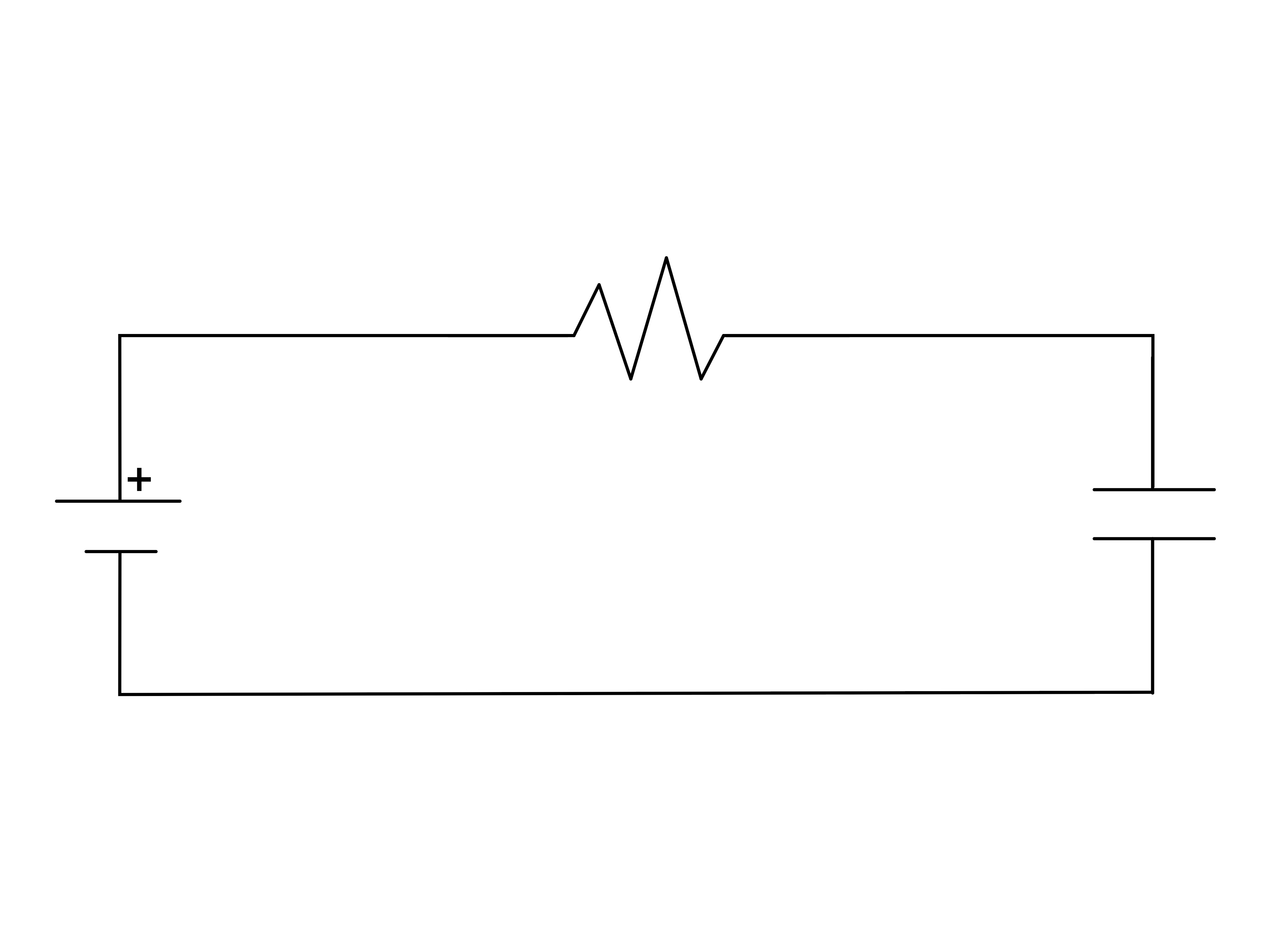
Identify the circuit-component symbols. The archived diagram and target placement cannot support a scored matching exercise, so this source item is unscored.
DC emf
Resistor
Capacitor
Archived original question and recorded key · contains the source error
Drag the component name to the correct component symbol on the circuit.
DC emf
Resistor
Capacitor
Original target geometry is unreviewed. Archived raw points: DC emf: 503.34704370179946, 1510.0411540096002; Resistor: 1884.8740359897172, 1178.0462903620994; Capacitor: 3116.4678663239074, 1435.0745718956484
Original recorded key: A, B, C
Unscored source item · A DC source is drawn with unequal parallel plates, often labeled + and −. A resistor is represented by a zigzag in this notation; a capacitor has two equal parallel plates. The original matching targets cannot be established reliably, so no target placement or score is assigned.
Reviewed worked examples
These authored derivations are paired with the original example identities. Added assumptions are stated.
Example 4.1.1 · reviewed solution
Construct an ideal DC circuit with three distinct electrical nodes.
Authored clarification: A connected ideal wire region is one node; ordinary corners do not create new nodes.
Choose three labels A, B, C.
Connect a resistor between A–B and B–C, and two separate resistor branches between C–A. Each of A, B and C is then a true branch junction.
Add a DC source branch.
Connect an ideal source across A–B, retaining the four resistor branches.
Check node identities.
No ideal wire shorts two labels together; each label remains a distinct equipotential region.
The specified three-node resistor network with a DC source across A–B has three distinct equipotential nodes and three branch junctions.
Check
A source directly shorted by ideal wire instead has no finite ideal-current solution.
Example 4.1.2 · reviewed solution
A crane motor lifts 1500 kg at 30 cm/min at constant speed with g=9.8 m/s². Find mechanical power and whether a 20 kΩ winding resistance determines current.
Authored clarification: Mechanical output is distinct from winding Joule heating.
Convert speed.
Use mechanical power.
Identify missing motor data.
Winding I²R is heat; input power VI also supplies mechanical output and other losses. Supply voltage, back emf, or efficiency is needed to solve for I.
Mechanical output is 73.5 W. Current is underdetermined by the supplied resistance alone.
Check
Equating I²R to useful lift power would confuse a loss with output.
Glossary and deeper reading · 6 refreshers
These editorial refreshers supplement the reading. Definitions and examples are added guidance; original source wording and recorded answers remain in their original context.
-
Force
A force describes an interaction that can change an object’s momentum. It is a vector measured in newtons, so both size and direction matter when forces are added. For example, a rope can pull a cart while the floor exerts friction in another direction.
-
Electric current
Electric current is the net rate of charge flow through a specified cross section. It is measured in amperes, or coulombs per second, with direction defined by positive-charge motion. For example, the same steady current passes through each element of a simple unbranched series loop.
-
Electromotive force
Electromotive force is energy supplied per unit charge by a source or induction process. Despite its name it is measured in volts, rather than newtons, and can exist even when no current flows. For example, an ideal battery supplies an emf while an induced emf can be produced by changing magnetic flux.
-
Potential difference
Potential difference is the change in electric potential between two locations. It represents electric potential-energy change per unit charge and is measured in volts. For example, the potential difference across a resistor describes the energy transferred per coulomb passing through it.
-
Capacitor
A capacitor stores energy by separating charge between conducting regions. In the ideal two-plate model, opposite plate charges create a potential difference related to charge by the capacitance. For example, disconnecting a charged capacitor from a battery leaves energy stored until a discharge path is provided.
-
Electric charge
Electric charge is a conserved property that determines electric interactions. It can be positive or negative and is measured in coulombs; ordinary net charges arise from an imbalance of charged particles. For example, transferring electrons between initially neutral objects leaves one negatively charged and the other positively charged.