Stored Energy and Dielectrics
Original source retained for reference; this draft does not establish AP coverage.
Original author draft. Original wording and recorded answer states are preserved without claiming reviewed scientific correctness or AP alignment.
Physics 2 original textbook · Chapter 3
Section 3
Stored Energy and Dielectrics
Arguably the most important and practical concept of the capacitor is that the capacitor can be considered to store energy. This arises because when you charge a capacitor you are in essence moving charges onto the plates. When these charges are put onto the plate they begin to create an electric field and each charge after the first then has to work against this field to get onto the plate which then creates an even greater electric field. When the capacitor discharges this work done charging the capacitor is then released as usable energy.
To get an expression for this energy we must consider the capacitance of the capacitor.
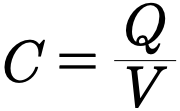
Since the capacitance is a property of the geometry of the capacitor and not the charge and voltage this ratio holds for any amount of charge and voltage on the capacitor so that at any point in time
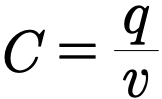
Recall that potential energy and voltage are related by the fact that

If we move charges onto the capacitor we are then creating potential energy. If we solve the capacitance equation for v we then get that
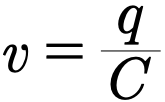
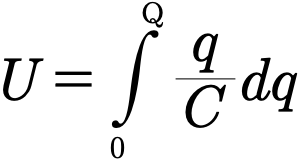
If we were to then add an infinitesimal amount of charge dq to the capacitor plate we would be increasing the potential energy by an infinitesimal amount du
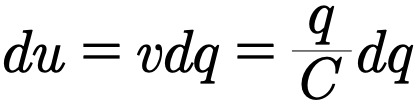
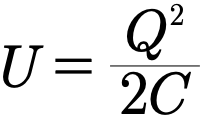
Finally when we completely charge the capacitor we then creating a potential energy
or
Example 3.3.1
A 2200 μF capacitor is charged to 25 V. Find its stored energy.
Authored clarification: Use ideal lumped capacitance; μF=10⁻⁶ F.
In this problem we are given the capacitance and maximum voltage of a capacitor and asked for the maximum amount of energy the capacitor can store. Unfortunately we do not yet have a formula which relates the appropriate quantities.
Let’s recall what we do known very quickly. For one we know how that capacitance relates to the charge on a capacitor and the voltage across the plate. This relation is the definition of capacitance.
Reviewed worked solution:
Choose the energy formula.
Convert capacitance.
Substitute.
Answer: Stored energy is 0.6875 J.
Check: C·V² has units joules; the source’s 1100 J is incorrect.
Gallery 1.2 Stored Energy
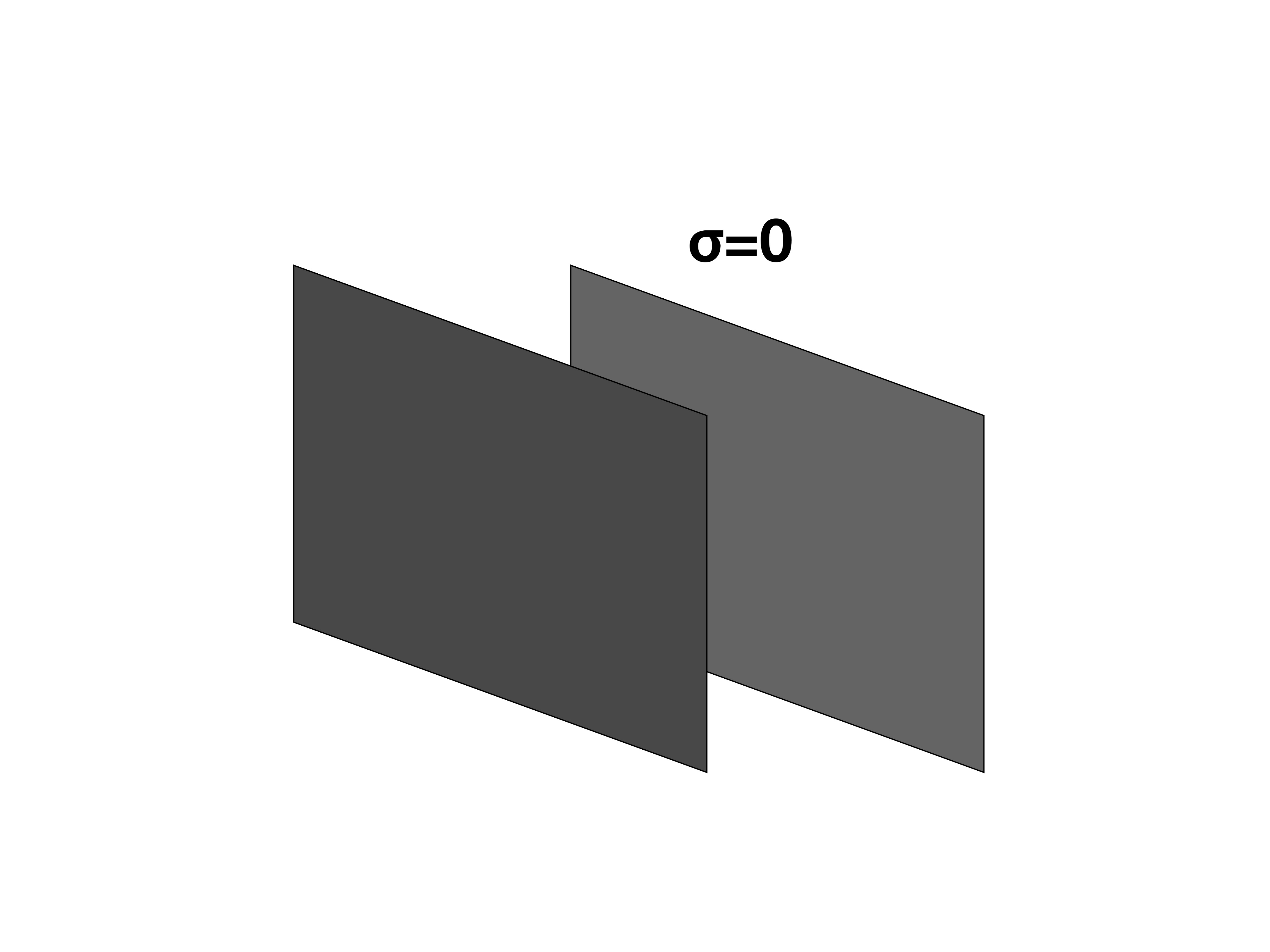
When the plates are uncharged there is no force on an approaching charge.
Scroll within this figure to read its labels. Open the full-size reviewed figure.
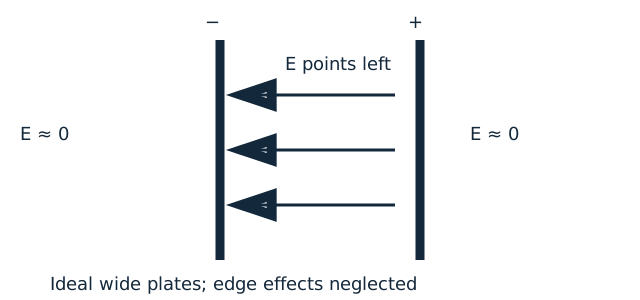
In the ideal wide parallel-plate model, the interior electric field points from the positive right plate toward the negative left plate. Exterior field is negligible away from the edges. The corrected illustration shows this direction.
Reviewed drawing: In the ideal wide-plate model, electric field points left from the positive right plate toward the negative left plate. The exterior field is negligible away from the edges.
Archived original widget · contains the source error
When the plates are uncharged there is no force on an approaching charge.
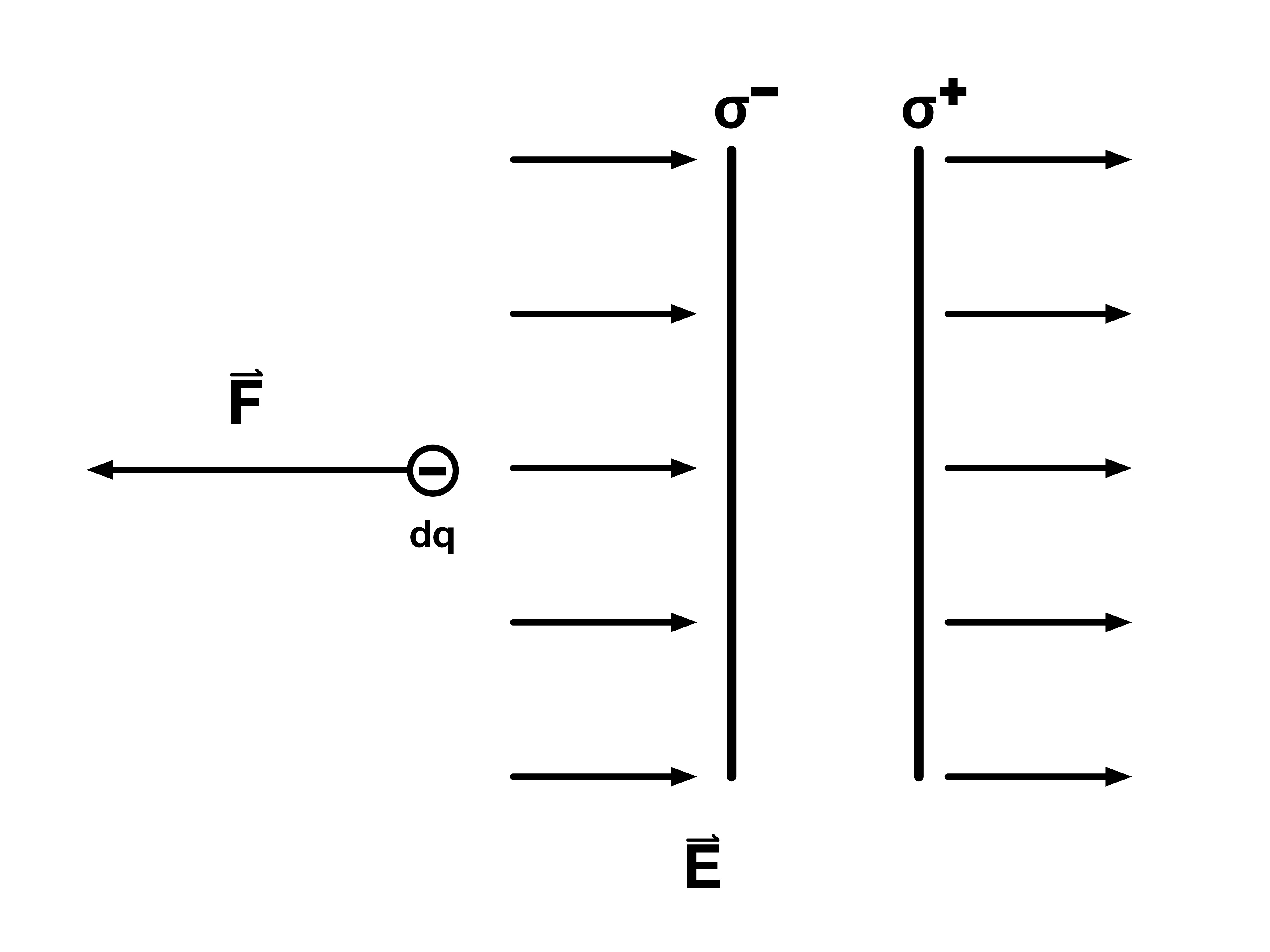
Once the plates gain charge they exert an electric field. This field applies force on the approaching charges which causes work to be done on the system to get the charges in place. This work done on the system becomes the stored energy.
A neutral conductor polarizes through redistribution of free electrons opposite the applied field. Insulating materials can also polarize: their bound charges shift slightly or molecular dipoles align, without free conduction across the material. Both processes conserve total charge.
A dielectric is an insulating material whose bound charges can polarize. It is not a third class between conductors and insulators. For a linear dielectric, the polarization is proportional to the local electric field; bound charges remain tied to their atoms or molecules.
Many different types of dielectrics exist but for this book we will limit ourselves to what are called linear dielectrics. In a linear dielectric the polarization and hence the electric field within the material varies linearly with the electric field outside.
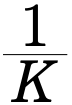
For a capacitor completely filled by a linear dielectric of relative permittivity K, . At fixed free charge Q (an isolated capacitor), . At fixed voltage V (a connected ideal supply), the plate separation fixes E=V/d, while Q and stored energy U increase by K. The boundary condition must be stated.
Gallery 1.3 Dielectric Media
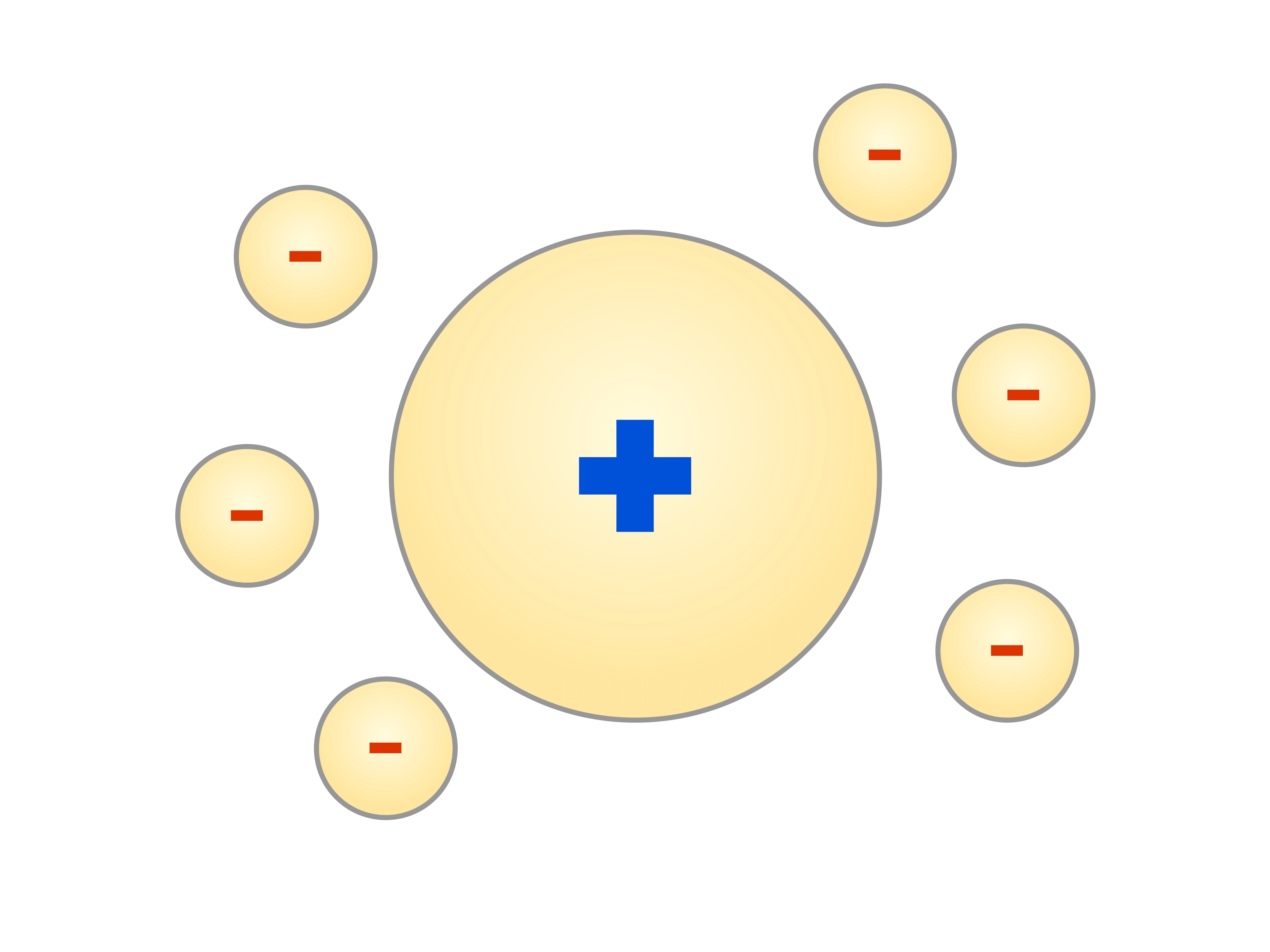
When no electric field is applied to an atom is remains in a “natural” state.
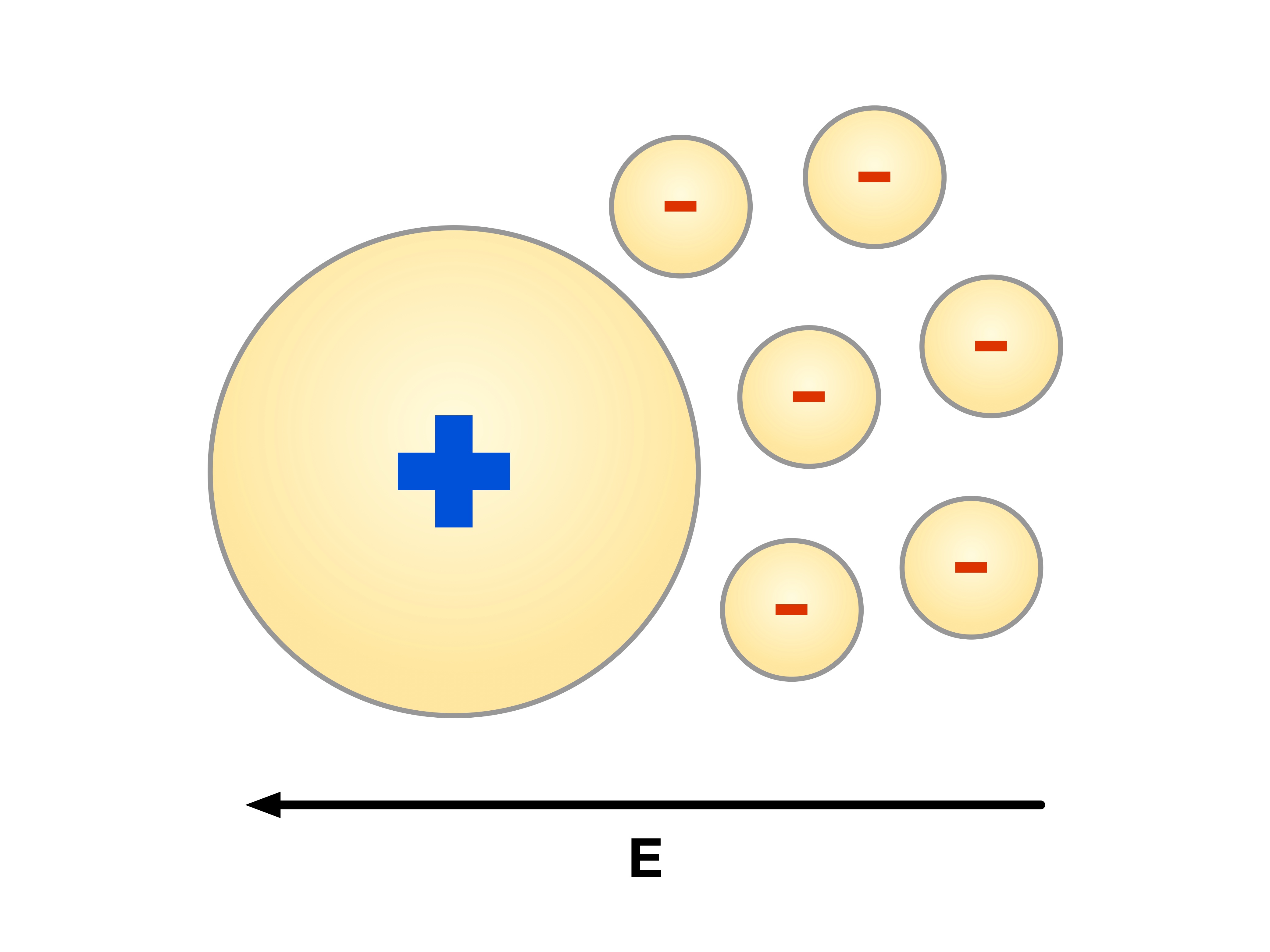
In a dielectric the atoms composing the material become slightly polarized but the electrons still remain near their starting positions because they are “attached”.
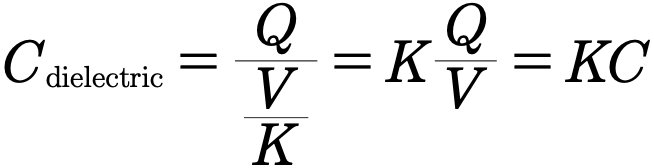
Interestingly despite a decrease in the field between the plates the capacitance of the capacitor changes by a multiple of the dielectric constant K.
Example 3.3.2
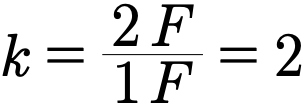
An air-filled capacitor has capacitance 1 F; complete filling by a linear dielectric makes it 2 F. Find K.
Authored clarification: Geometry is unchanged and the dielectric fully fills the field region.
To solve this problem all we must remember is the relationship between a capacitor with a dielectric and the capacitance of a capacitor

Solving for K we have that
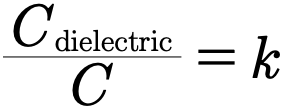
Now all we have to do is plug in a few numbers.
Review 1.3 Stored Energy and Dielectrics
This review preserves the author’s recorded prompts, choices, and answer states. Corrected items have separate reviewed explanations and keys; unchanged draft keys are marked unreviewed. Unfinished items are not scored.
Original question 1
An ideal vacuum parallel-plate capacitor has area A, gap d and free plate charge densities ±σ. What is its energy?
0
Reviewed answer and reasoning
A
Use E=σ/ε₀ and electric energy density ε₀E²/2 over volume Ad.
Authored correction or explicit assumptions; this reviewed key is separate from the archived original recorded states.
Archived original question and recorded key · contains the source error
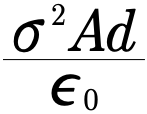
Calculate the energy stored in a parallel-plate capacitor of area A, separation d, and charge distribution σ.
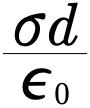
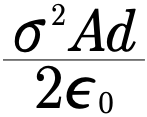
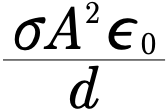
None of the above
Original recorded key: A
Original question 2
A linear dielectric with relative permittivity K completely fills a capacitor while an ideal supply keeps V fixed. By what factor does its stored electric energy change?
1
Reviewed answer and reasoning
A
Since C becomes KC₀ and , the energy becomes KU₀. An isolated fixed-Q capacitor instead has U₀/K.
Authored correction or explicit assumptions; this reviewed key is separate from the archived original recorded states.
Archived original question and recorded key · contains the source error
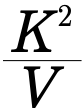
In real world applications dielectrics are used to increase the energy capacity of a capacitor. By what factor does a dielectric with constant K increase the stored energy?

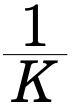

None of the above
Original recorded key: D
Original question 3
A long vacuum coaxial capacitor has inner radius a and outer radius b>a. The outer radius becomes 2b while length and voltage stay fixed. What is U′/U?
2
1
Reviewed answer and reasoning
A
At fixed V, energy is proportional to . Both nonzero Q and V cannot remain fixed if C changes.
Authored correction or explicit assumptions; this reviewed key is separate from the archived original recorded states.
Archived original question and recorded key · contains the source error
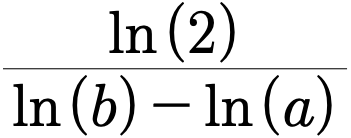
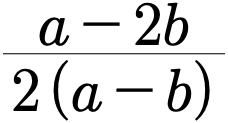
If charge and voltage are assumed to be constant by what factor does the energy capacity of a cylindrical capacitor increase if the outer cylinder is doubled.
0
2
None of the above
Original recorded key: C
Original question 4
A parallel-plate capacitor’s area doubles with its plate separation and voltage kept fixed. What is U′/U?
2
1
1/2
4
Reviewed answer and reasoning
A
Capacitance doubles because C=εA/d; at fixed V, U=CV²/2 also doubles. Charge is not fixed in this setup.
Authored correction or explicit assumptions; this reviewed key is separate from the archived original recorded states.
Archived original question and recorded key · contains the source error
If charge and voltage are kept constant by what factor does the stored energy of a parallel plate capacitor increase if the area of the plates is doubled?
1
2
3
4
None of the above
Original recorded key: B
Original question 5
A dielectric material polarizes when placed into an electric field.
True
False
Reviewed answer and reasoning
A
A dielectric polarizes in an applied electric field.
The independent semantic audit confirms this source prompt and recorded key under its stated conditions.
Archived original question and recorded key · contains the source error
A dielectric material polarizes when placed into an electric field.
True
False
Original recorded key: A
Reviewed worked examples
These authored derivations are paired with the original example identities. Added assumptions are stated.
Example 3.3.1 · reviewed solution
A 2200 μF capacitor is charged to 25 V. Find its stored energy.
Authored clarification: Use ideal lumped capacitance; μF=10⁻⁶ F.
Choose the energy formula.
Convert capacitance.
Substitute.
Stored energy is 0.6875 J.
Check
C·V² has units joules; the source’s 1100 J is incorrect.
Example 3.3.2 · reviewed solution
An air-filled capacitor has capacitance 1 F; complete filling by a linear dielectric makes it 2 F. Find K.
Authored clarification: Geometry is unchanged and the dielectric fully fills the field region.
Use dielectric capacitance relation.
Solve for relative permittivity.
Substitute.
The relative permittivity is K=2.
Check
K is dimensionless.
Glossary and deeper reading · 6 refreshers
These editorial refreshers supplement the reading. Definitions and examples are added guidance; original source wording and recorded answers remain in their original context.
-
Dielectric
A dielectric is an insulating material that polarizes in an electric field. In a capacitor it changes the field response and capacitance; charge or voltage changes depend on whether the battery remains connected. For example, inserting a dielectric into an isolated charged capacitor can reduce its voltage while its free plate-charge magnitude remains fixed.
-
Capacitor
A capacitor stores energy by separating charge between conducting regions. In the ideal two-plate model, opposite plate charges create a potential difference related to charge by the capacitance. For example, disconnecting a charged capacitor from a battery leaves energy stored until a discharge path is provided.
-
Electric charge
Electric charge is a conserved property that determines electric interactions. It can be positive or negative and is measured in coulombs; ordinary net charges arise from an imbalance of charged particles. For example, transferring electrons between initially neutral objects leaves one negatively charged and the other positively charged.
-
Capacitance
Capacitance is the plate-charge magnitude divided by the potential difference for an ideal capacitor. It is measured in farads and depends on geometry and the material between the conductors. For example, increasing the overlap area of ideal parallel plates increases their capacitance when separation and dielectric stay fixed.
-
Potential difference
Potential difference is the change in electric potential between two locations. It represents electric potential-energy change per unit charge and is measured in volts. For example, the potential difference across a resistor describes the energy transferred per coulomb passing through it.
-
Potential energy
Potential energy describes energy associated with the configuration of interacting parts of a system. Its numerical zero is a chosen reference, while differences in potential energy determine physical energy changes. For example, separating Earth and a ball changes their gravitational potential energy even though the energy belongs to their interaction.