FFR - Volumes
This original textbook reading covers part of the AP topic. Follow the AP course outline for complete topic instruction and practice.
This reading includes verified answer corrections and explicitly stated clarifications.
Integration connects rates with changes. If s(t) is position and v(t) is velocity, then ∫ab v(t) dt = s(b) − s(a), the displacement. Total distance travelled is ∫ab |v(t)| dt; split at velocity sign changes when needed. Similarly, integrating acceleration gives a change in velocity, and an initial velocity is needed to recover the velocity function.
In addition to physics, integrals also have many other applications. So far we have been taking single integrals, which give us areas. Double integrals are used in Calculus 3 to give complex volumes.
This is not a calculus 3 book, but we can still use single integrals to get simpler volumes. What kind of volumes? Mostly prisms and rotated shapes. All prism volumes are derived from integrals! The same goes for the volume of a sphere and other symmetric spherical shapes.
For example, take the volume of a very familiar shape–a cylinder. Its volume is simply the area of its circle shape on top, multiplied by its height (in other words, the area of the circle is “integrated” from 0 to h).
There is a special name for the circular shape on top of the cylinder. It’s called a disc because it is infinitely thin and in the shape of a circle. Whereas before we were integrating really thin rectangles, now that we are finding volumes, we work with discs.
Interactive 9.3.1 Volume of a cylinder
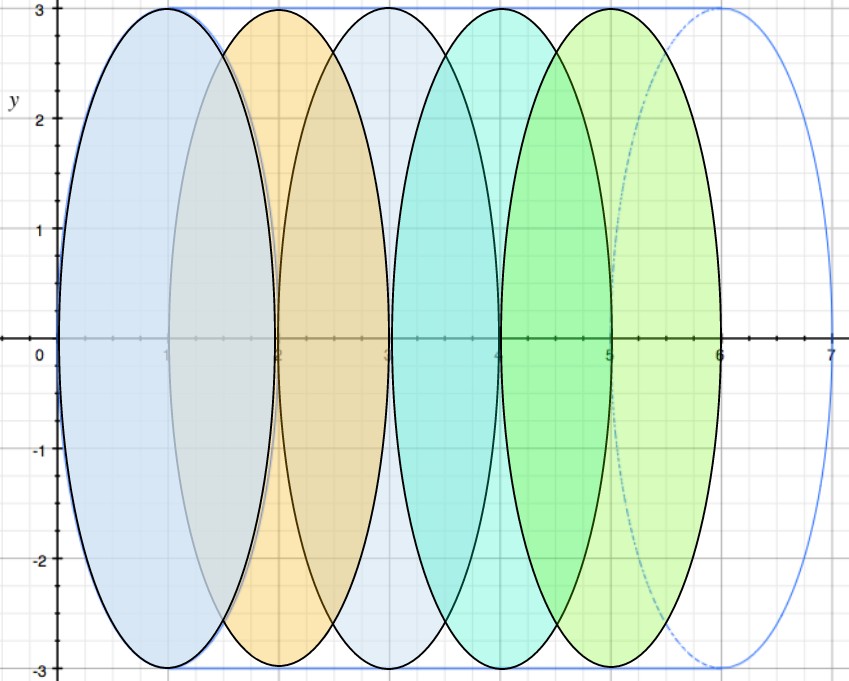
Read all original figure notes
Interval of Integration
Infinitely thin discs or “washers”
As a point of comparison, recall that the formula for the volume of a cylinder is: .
The integral for solving this volume problem would look something like this:
represents the “radius,” but the equation holds true whether is a constant function (like this case) or whether it is any other function. If we were trying to find the volume of a cone, might be .
represents something different this time. Whereas before it represented really tiny, infinitely thin rectangles (you can almost think of them as line segments, that’s how thin they are), now it represents infinitely thin rotated discs. Integrating these discs over an interval gives us the entire volume.
Finally, the interval of integration is equal to the height. Using this general integral, we will be able to derive the volume of cones and even spheres.
Interactive 9.3.2 Cylindrical shells
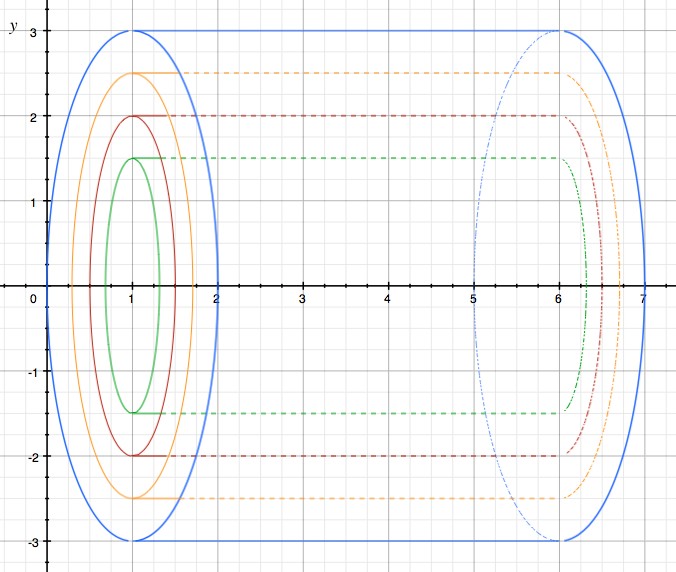
Read all original figure notes
Different direction and interval of integration
Area of each shell
An alternate method of finding volumes
The previous method we discussed is also known as the method of discs, because we sum up the area of each individual disc to find the total volume. The next method is known as the method of cylindrical shells, because we divide up the cylinder into smaller “shells” and find the volume by summing the area of these infinitely thin shells. It looks something like this:
Now, is equal to the summation of the circumference of the cylindrical shells. Notice that the circumference of one shell is different from the circumference of the next shell.
now represents the height. In this case, it is constant (6-1=5) for all shells, but for more complex shapes like cones, this may have to be rewritten as a function of y so that the integral is defined.
Also notice that the intervals of integration have changed. Some of you might wonder why it’s not from -3 to 3, and it’s because the intervals of integration represent the radius (“y”). The outermost shell has a radius of 3, not 6.
Which method is better? Each has its advantages. The rule of thumb is that if a shape is rotated around the y-axis, cylindrical shells is usually better. Conversely, if a shape is rotated around the x-axis, the method of discs is usually a better choice because integrating in the y-direction is not something most of us are familiar with.
Imagine how the formula for the cylindrical shells method might be different if the cylinder was centered around the y-axis rather than the x-axis, with the same radius and height? It would look something like this:
This time, y is the constant height, and x is the varying radius. Again, for more complex functions, y represents a function of x, so the integral would naturally be more complicated for shapes like cones or parabolic cylinders.
Let’s solve both of the integrals we discussed earlier to see whether they both give us the same volume.
In this case, f(x) is a constant function (), so we integrate with respect to x from 1 to 6.
Recall that x is constant and equal to 5 here, so we can factor it out of the integral. Evaluating the integral gives us
Both methods give us a consistent answer!
Show your work for Problem 1
Drawing is temporarily unavailable. Work on paper if needed, then record your reasoning here.
Saving written working requires JavaScript. Keep your work on paper or in your own notes; the source problem above remains available.
Show your work for Problem 2
Drawing is temporarily unavailable. Work on paper if needed, then record your reasoning here.
Saving written working requires JavaScript. Keep your work on paper or in your own notes; the source problem above remains available.
Show your work for Problem 4
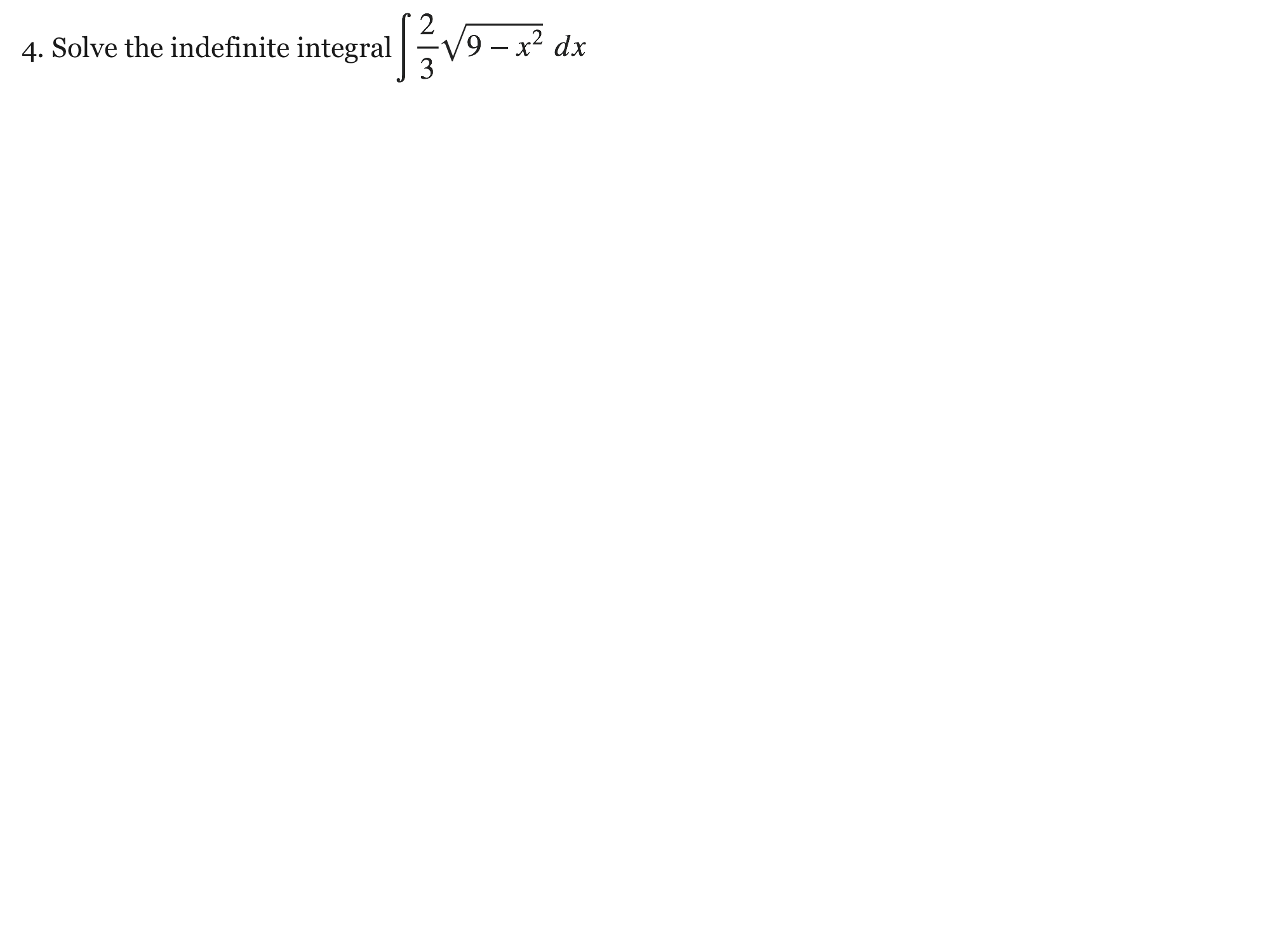
Drawing is temporarily unavailable. Work on paper if needed, then record your reasoning here.
Saving written working requires JavaScript. Keep your work on paper or in your own notes; the source problem above remains available.
Show your work for Problem 3
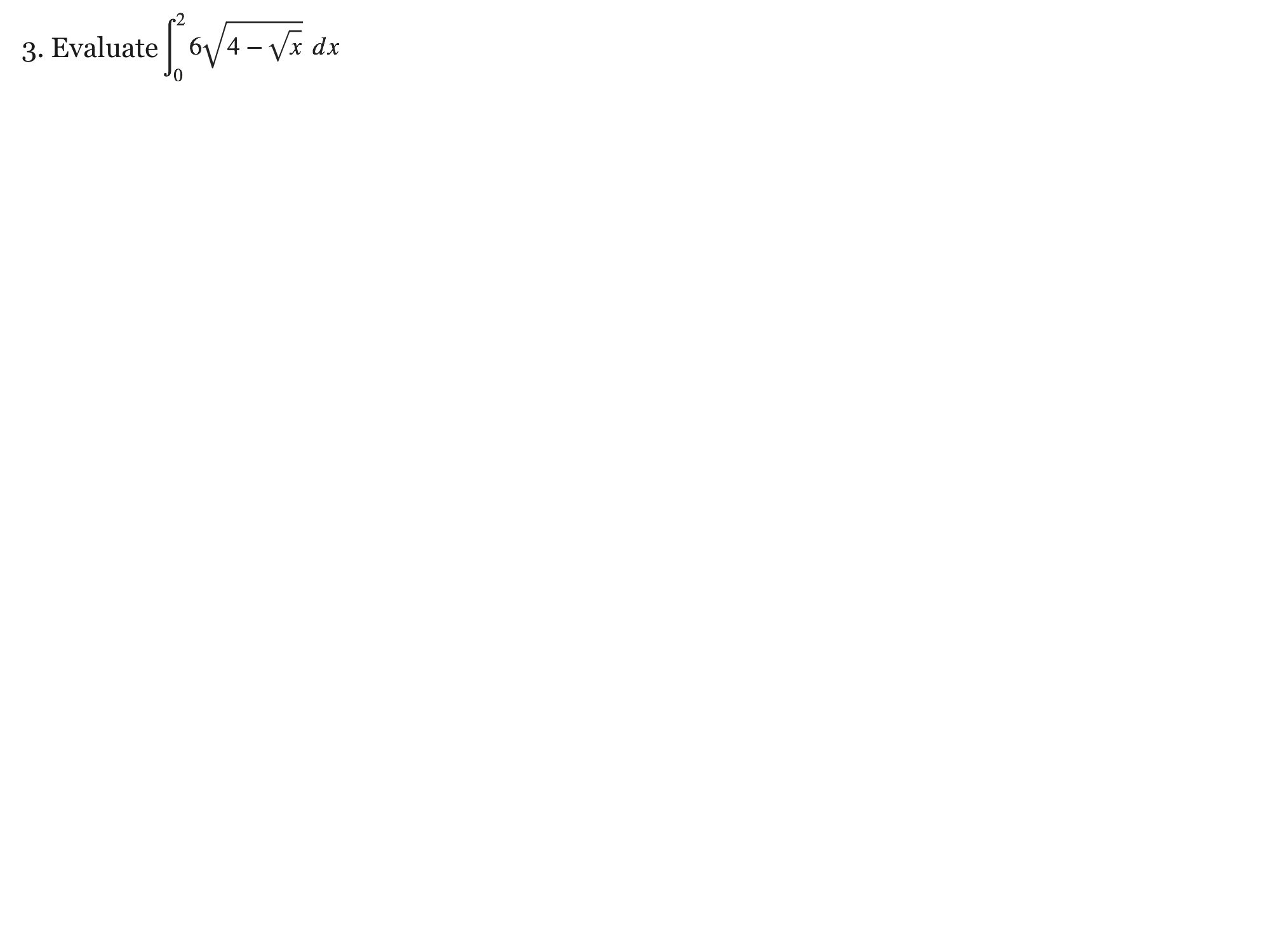
Drawing is temporarily unavailable. Work on paper if needed, then record your reasoning here.
Saving written working requires JavaScript. Keep your work on paper or in your own notes; the source problem above remains available.
Show your work for Problem 6
Clarification: Interpret the removable hole at x=2 by taking the finite one-sided limits, or equivalently by using the continuous extension.
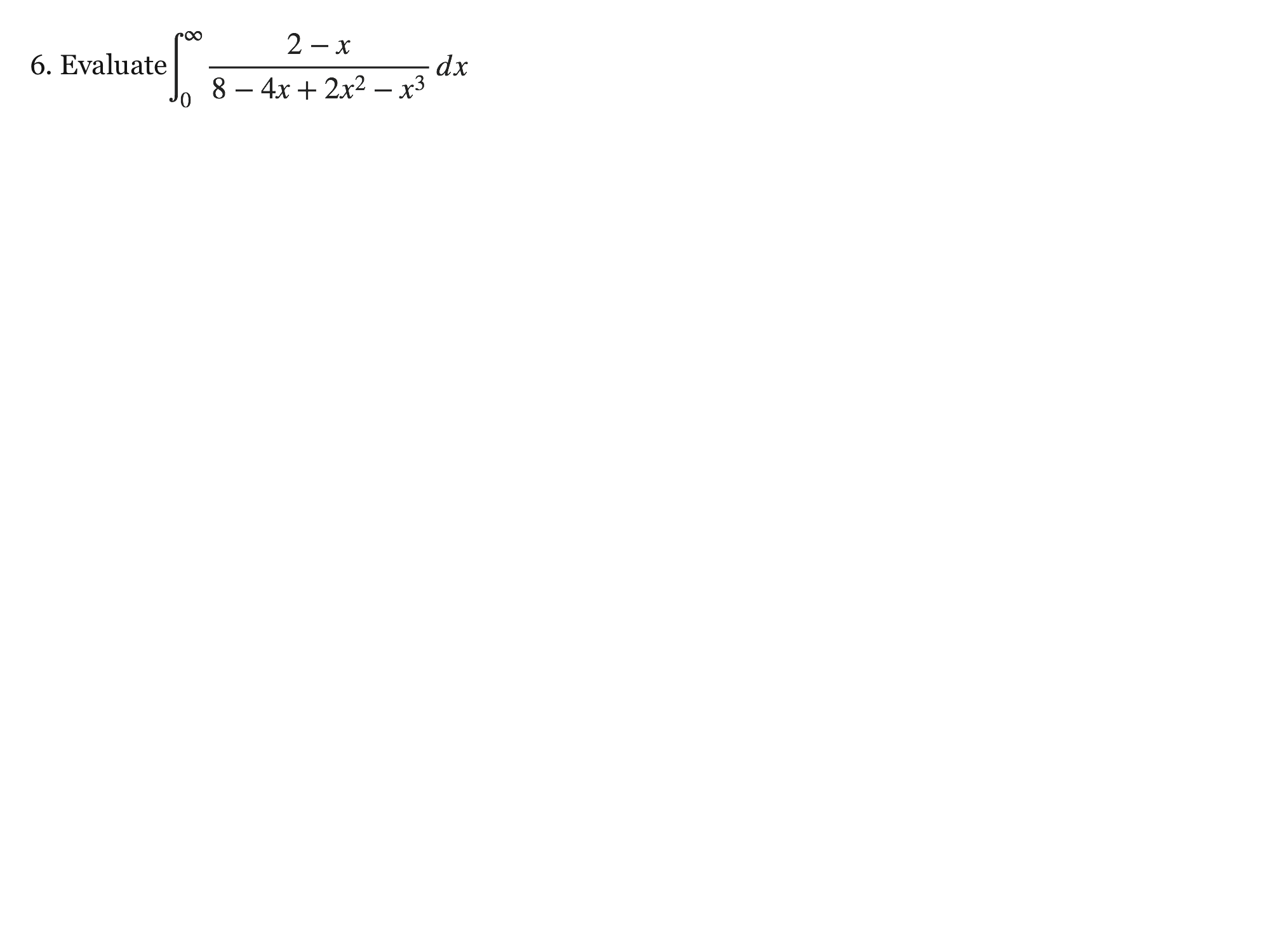
Drawing is temporarily unavailable. Work on paper if needed, then record your reasoning here.
Saving written working requires JavaScript. Keep your work on paper or in your own notes; the source problem above remains available.
Show your work for Problem 8
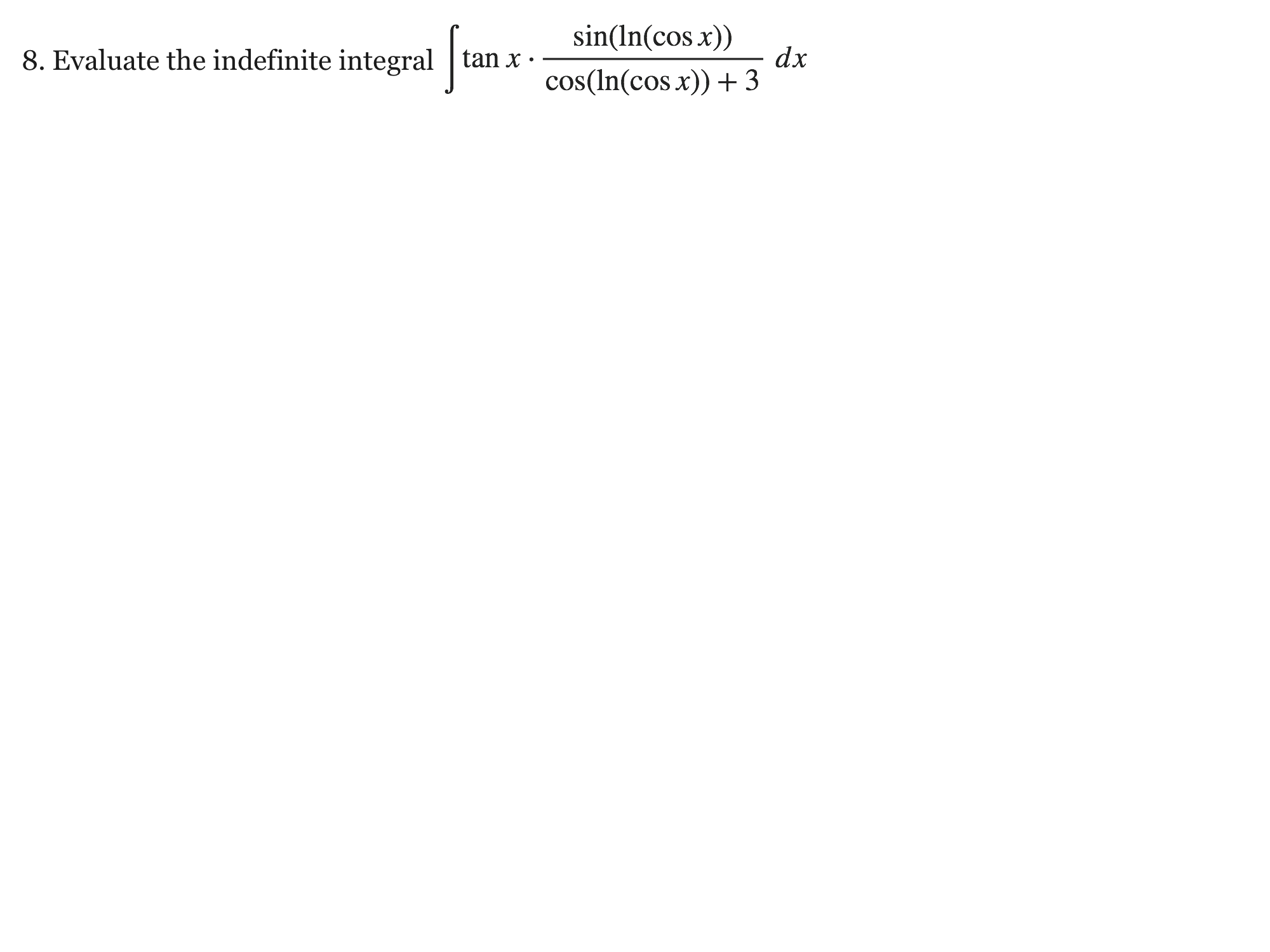
Drawing is temporarily unavailable. Work on paper if needed, then record your reasoning here.
Saving written working requires JavaScript. Keep your work on paper or in your own notes; the source problem above remains available.
Show your work for Problem 7
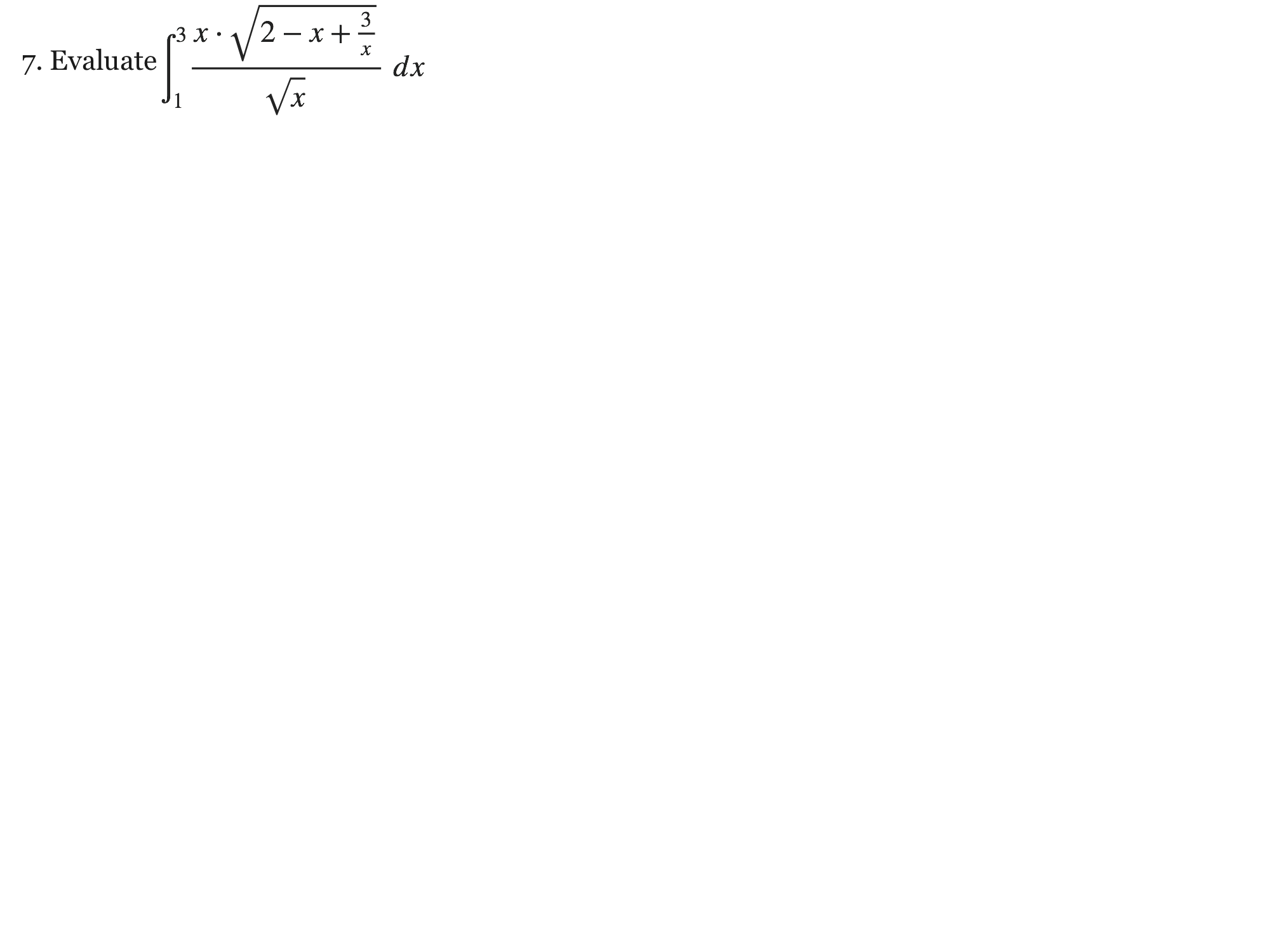
Drawing is temporarily unavailable. Work on paper if needed, then record your reasoning here.
Saving written working requires JavaScript. Keep your work on paper or in your own notes; the source problem above remains available.
Show your work for Problem 9
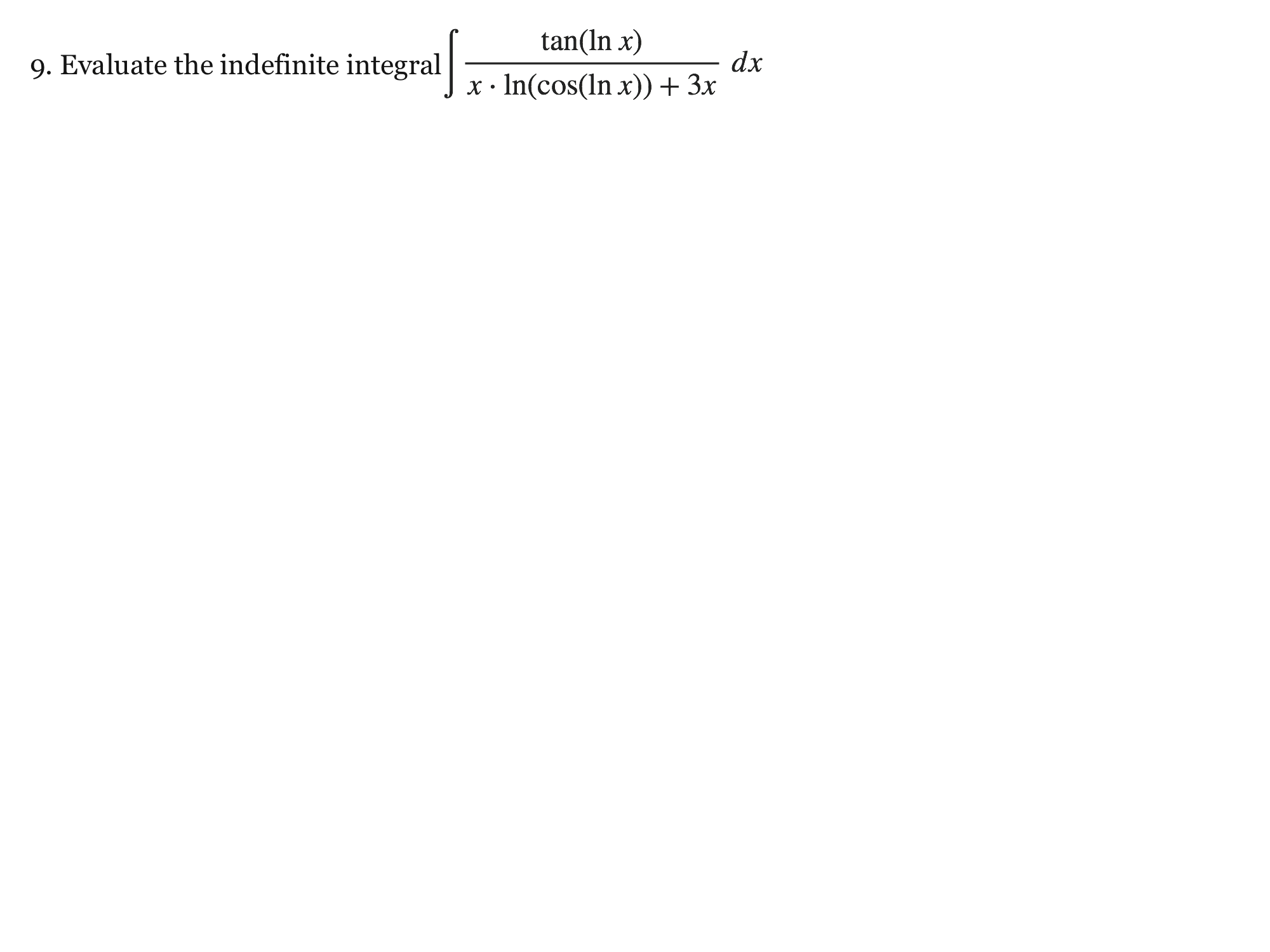
Drawing is temporarily unavailable. Work on paper if needed, then record your reasoning here.
Saving written working requires JavaScript. Keep your work on paper or in your own notes; the source problem above remains available.
Show your work for Problem 10
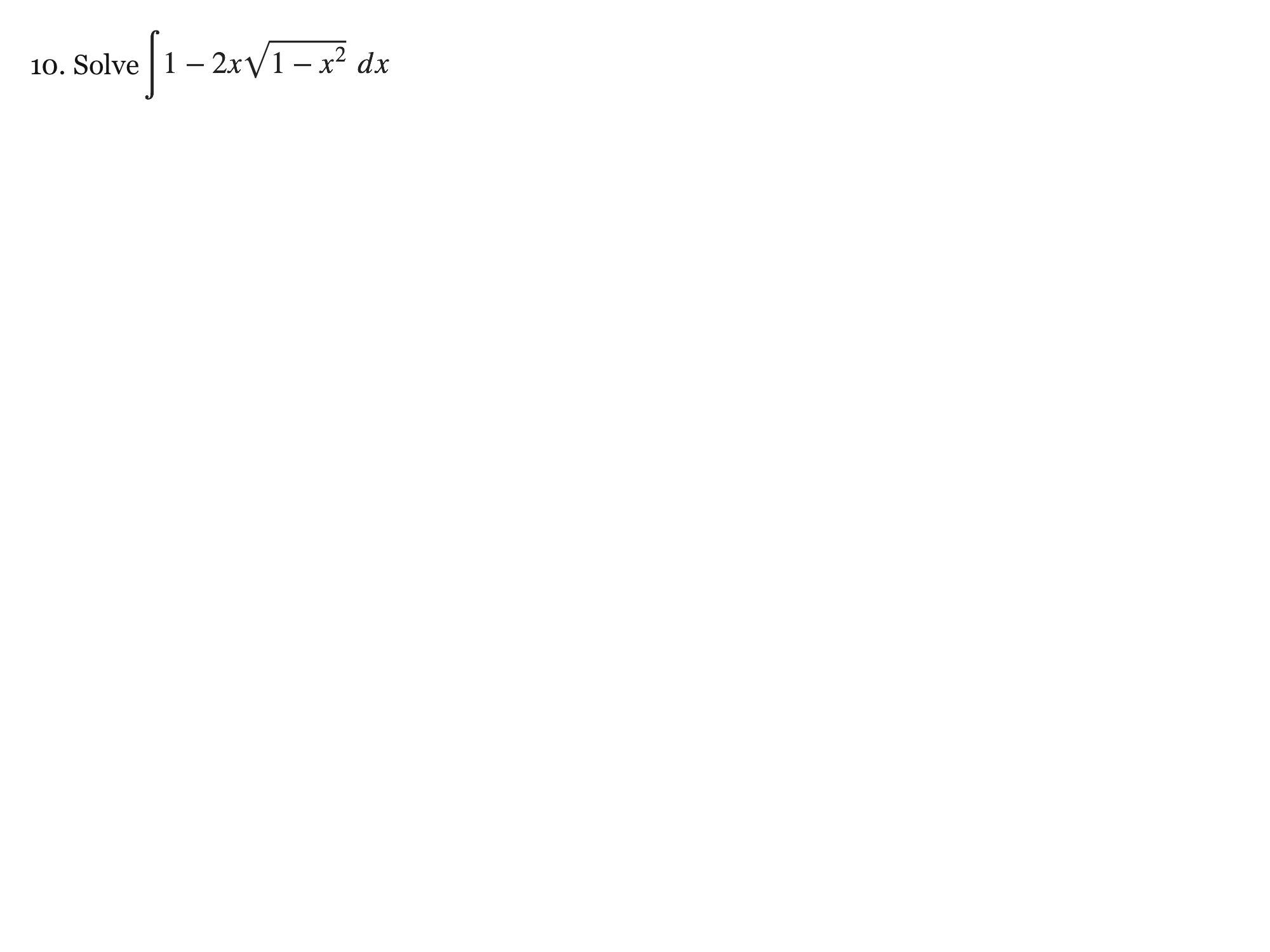
Drawing is temporarily unavailable. Work on paper if needed, then record your reasoning here.
Saving written working requires JavaScript. Keep your work on paper or in your own notes; the source problem above remains available.
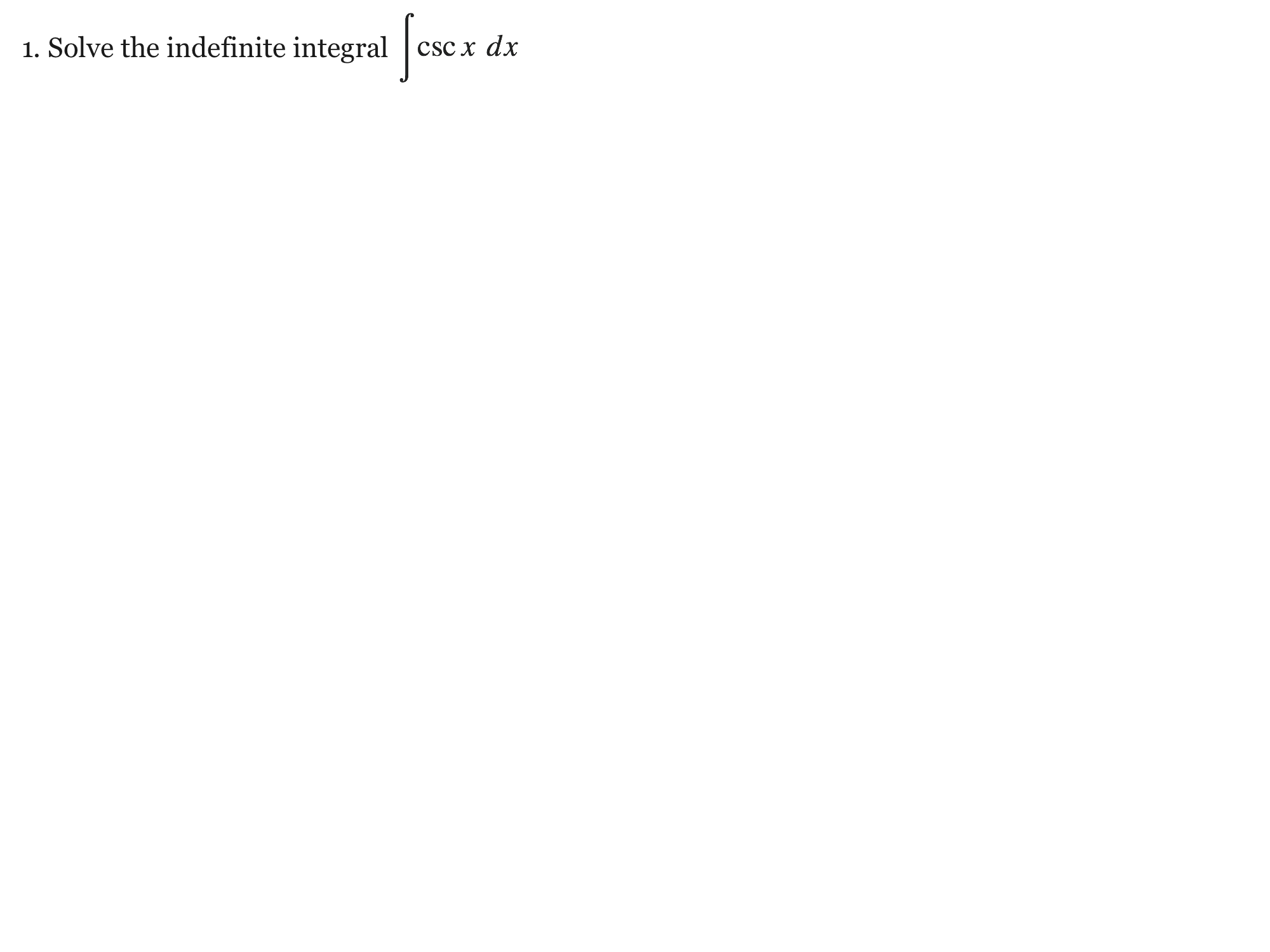
- Evaluate the indefinite integral
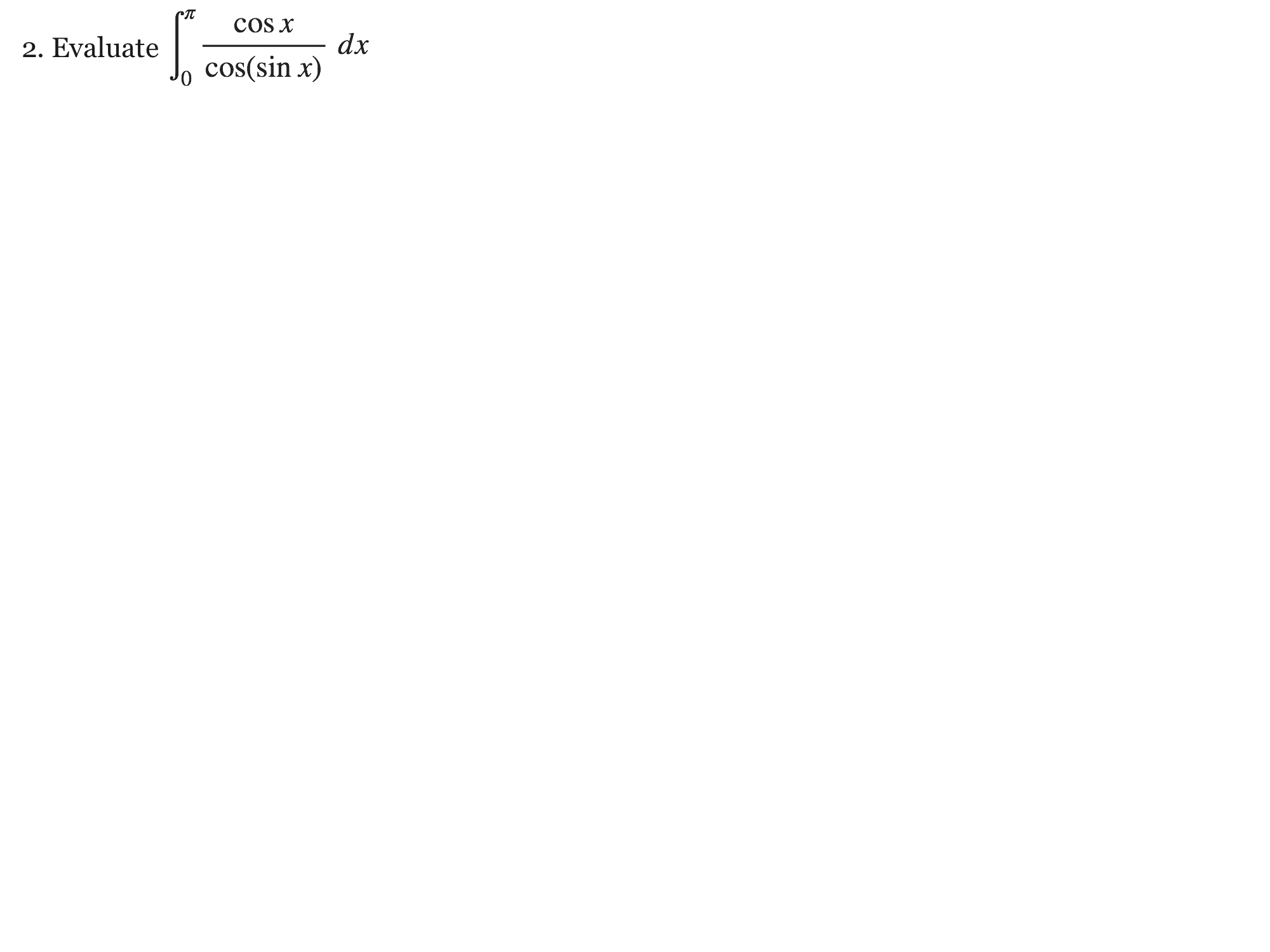
- Solve
Glossary and deeper reading · 6 refreshers
These editorial refreshers supplement the reading. Definitions and examples are added guidance; original source wording and recorded answers remain in their original context.
-
Integral
Integration can mean accumulating a function over an interval or finding an antiderivative. A definite integral gives a number, while an indefinite integral represents a family of antiderivatives. For example, integrating 2x indefinitely gives x²+C, and integrating it from 0 to 2 gives 4. The Fundamental Theorem of Calculus connects these two operations under its hypotheses.
-
Velocity in calculus
In one-dimensional motion, velocity is the derivative of position with respect to time. Its sign records direction relative to the chosen positive axis. For example, s(t)=t²−4t meters gives velocity 2t−4 meters per second. Speed is the magnitude of velocity and therefore cannot be negative.
-
Disc method
The disc method finds a solid’s volume using circular slices perpendicular to the rotation axis. A slice with radius R has area πR². For example, rotating the region under y=x on [0,1] around the horizontal axis gives volume equal to the integral of πx². If the region leaves a hole around the axis, a washer rather than a full disc is needed.
-
Interval
An interval is a set of real numbers containing every number between any two of its members. Parentheses exclude an endpoint, while square brackets include it. For example, (1,4] includes 4 and every number between 1 and 4, but excludes 1. An infinite endpoint always uses a parenthesis because infinity is not a real endpoint.
-
Cylindrical shell method
The cylindrical shell method computes volume by accumulating thin cylindrical layers parallel to a rotation axis. The volume contribution is circumference times shell height times thickness. For example, rotating a vertical strip at x>0 around the vertical axis gives a contribution 2πx·height·dx. Choose the radius as a distance from the axis and check the shell height against the bounding region.
Read more: Original source · Cylindrical Shells (beyond AB) →
-
Function
A mathematical function assigns exactly one output to each input in its domain. Inputs can share an output, but one input cannot have two different outputs. For example, f(x)=x² assigns the output 9 to both 3 and −3. Function notation names the rule and its input; f(3) means the output when the input is 3.