FFR - Applications
This original textbook reading covers part of the AP topic. Follow the AP course outline for complete topic instruction and practice.
This reading includes verified answer corrections and explicitly stated clarifications.
How do we use derivatives in real life?
There are many natural processes that are governed by what we have been studying most in higher level in mathematics: functions. The decay of uranium, the increasing balance due to compounded interest in your bank account, the increasing amount you owe the bank due to mortgage, the decrease in your purchasing power due to inflation, the rotation of the earth around the sun in an elliptical orbit, among many others. We are going to decode how to translate these processes from math to english and vice versa. Here are some key words that indicate that you must take the derivative of a function.
Buzz words for a derivative:
•Change in some variable (ex: pressure, concentration, velocity) with respect to another variable (ex: altitude, time, distance)
•Instantaneous
•Rate of increase/decrease
As we get farther, we will learn to visualize what a question is asking from more than just the above key words. Let’s learn by doing though.
Example Problem 5.4.1
Let’s use an idealized carbon-14 decay model with a half-life of about 5700 years. The independently supplied initial amount is B = 4 g, and the present amount is M = 10 mg = 0.01 g. Assume no isotope enters or leaves the sample after the model begins, apart from radioactive decay. These supplied model amounts replace the earlier unsupported calculation from a mammoth’s total body mass. Real radiocarbon dating uses the remaining isotope ratio in once-living material and calibration; we cannot infer an initial carbon-14 amount from total fossil mass alone.
a) According to this decay model, how much time has elapsed?
b) What is the current rate of change of the tracked carbon-14 mass, in mg per millennium?
Interactive 5.4.1 Sample Problem 5.4.1
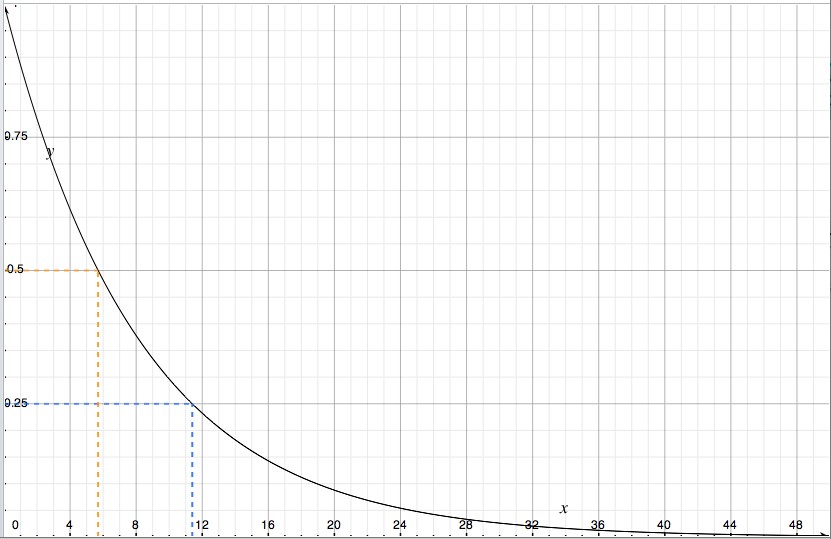
Read all original figure notes
Model positivity and measurement limits
Half-Life 1
Half-Life 2
Show your work for Problem 1
Clarification: Assume continuous compounding at an annual rate of 0.10, with t in years since the deposit.
Drawing is temporarily unavailable. Work on paper if needed, then record your reasoning here.
Saving written working requires JavaScript. Keep your work on paper or in your own notes; the source problem above remains available.
Show your work for Problem 2
Clarification: Take the real-domain limit as x approaches 3 from the right.
Drawing is temporarily unavailable. Work on paper if needed, then record your reasoning here.
Saving written working requires JavaScript. Keep your work on paper or in your own notes; the source problem above remains available.
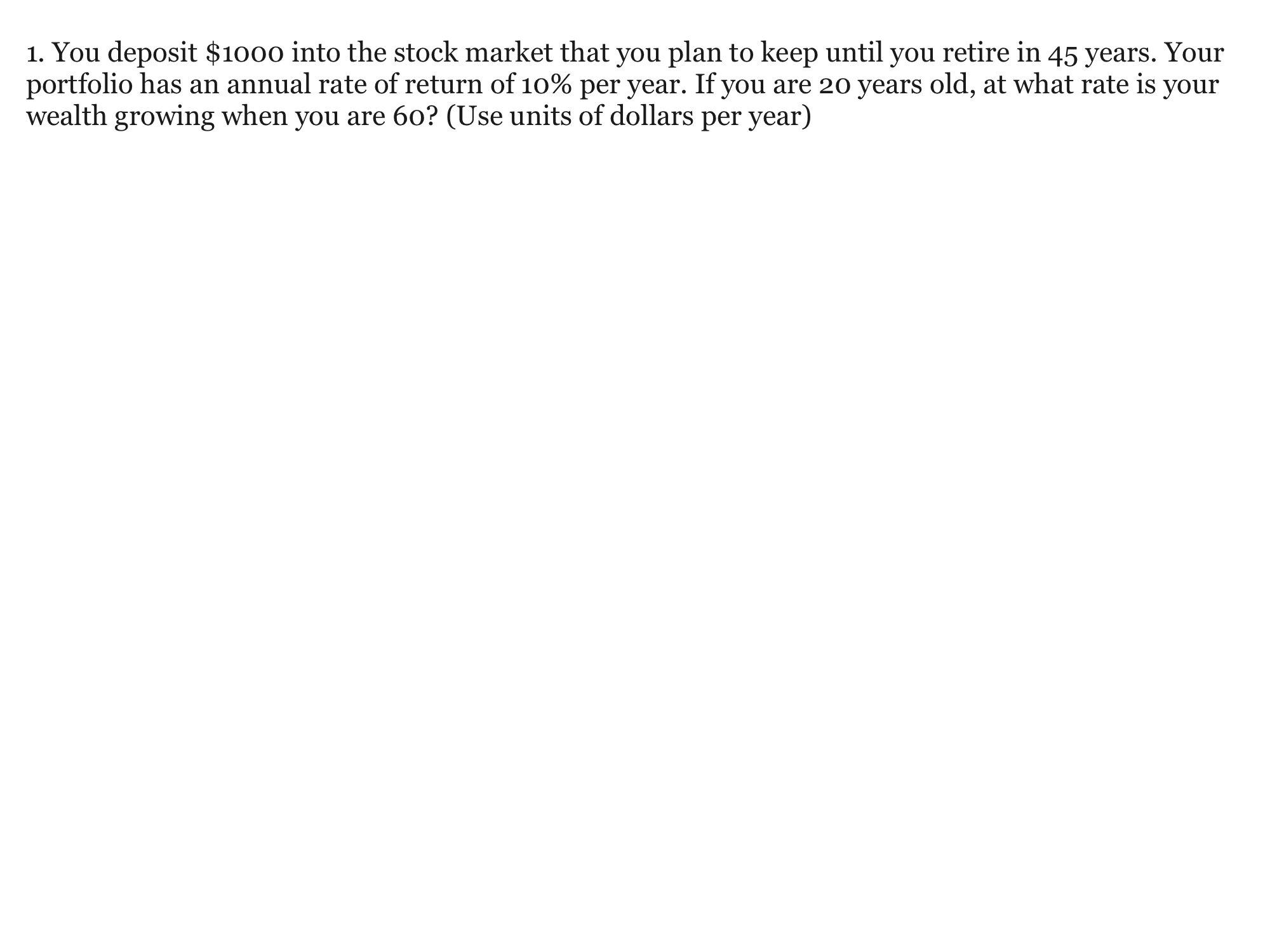
- You deposit $1000 into the stock market that you plan to keep until you retire in 45 years. Your portfolio has an annual rate of return of 10% per year. If you are 20 years old, at what rate is your wealth growing when you are 60? (Use units of dollars per year)
Clarification: Assume continuous compounding at an annual rate of 0.10, with t in years since the deposit.
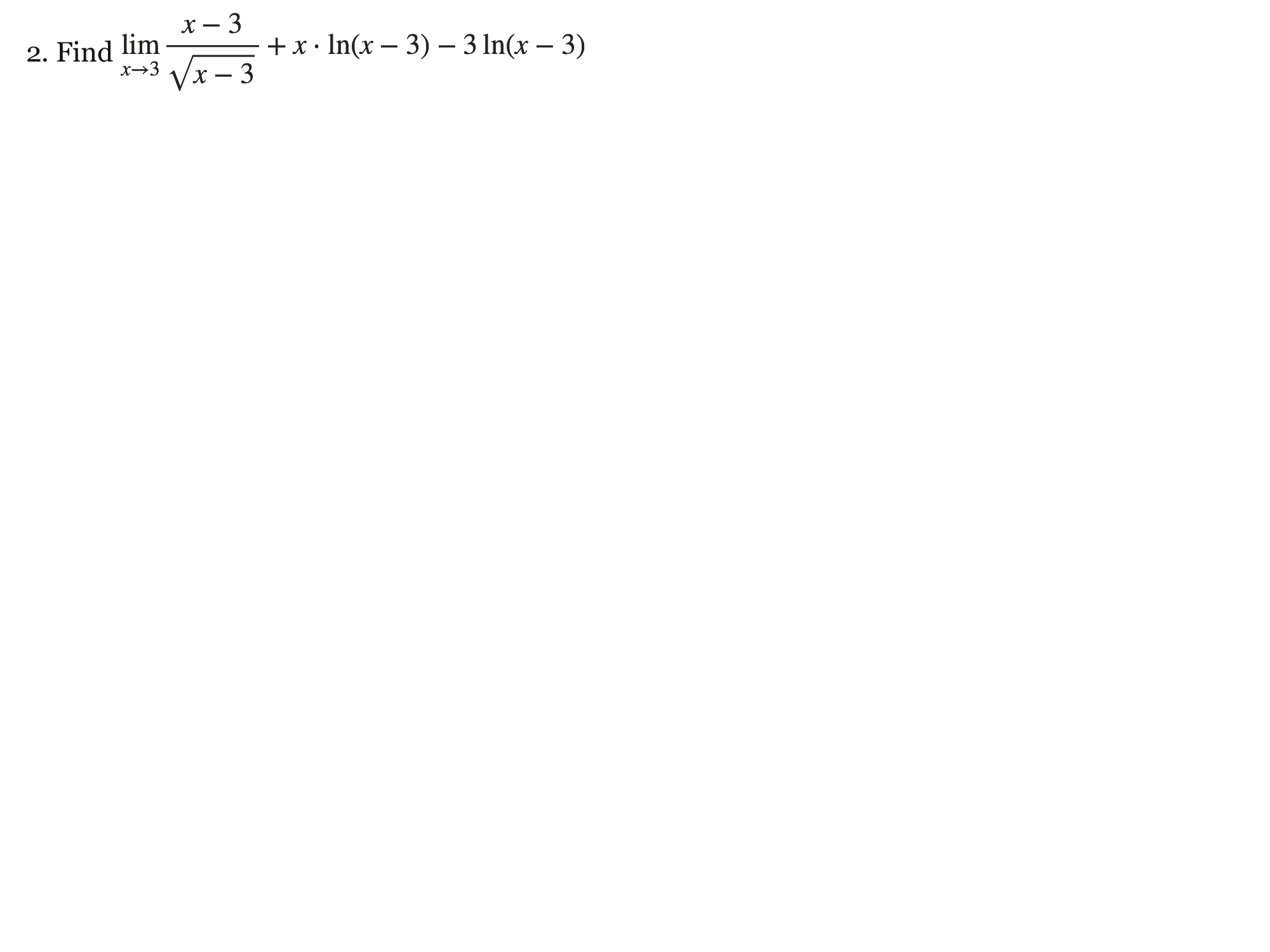
- Find
Clarification: Take the real-domain limit as x approaches 3 from the right.
Show your work for Problem 4
Drawing is temporarily unavailable. Work on paper if needed, then record your reasoning here.
Saving written working requires JavaScript. Keep your work on paper or in your own notes; the source problem above remains available.
Show your work for Problem 3
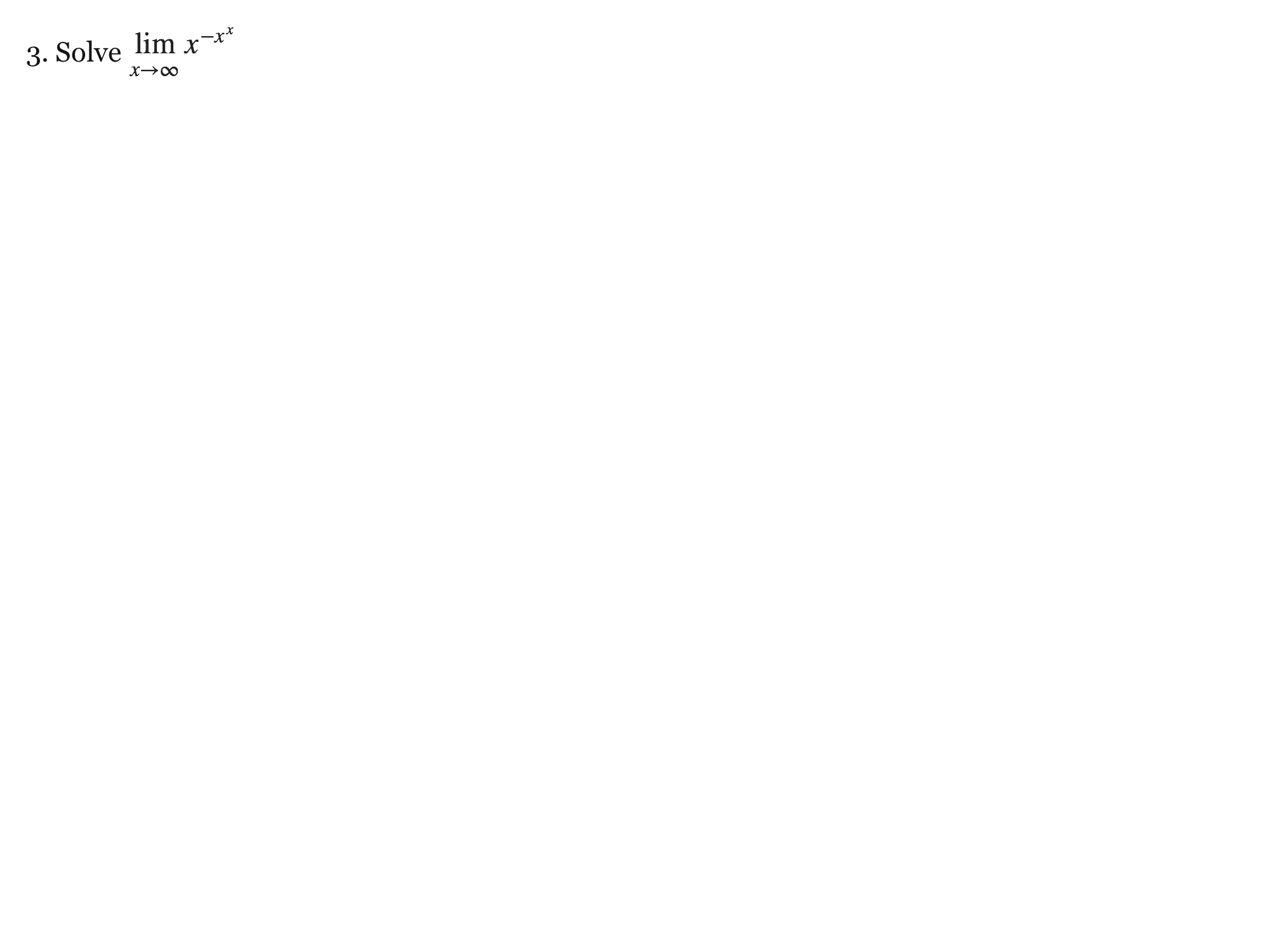
Drawing is temporarily unavailable. Work on paper if needed, then record your reasoning here.
Saving written working requires JavaScript. Keep your work on paper or in your own notes; the source problem above remains available.
Show your work for Problem 6
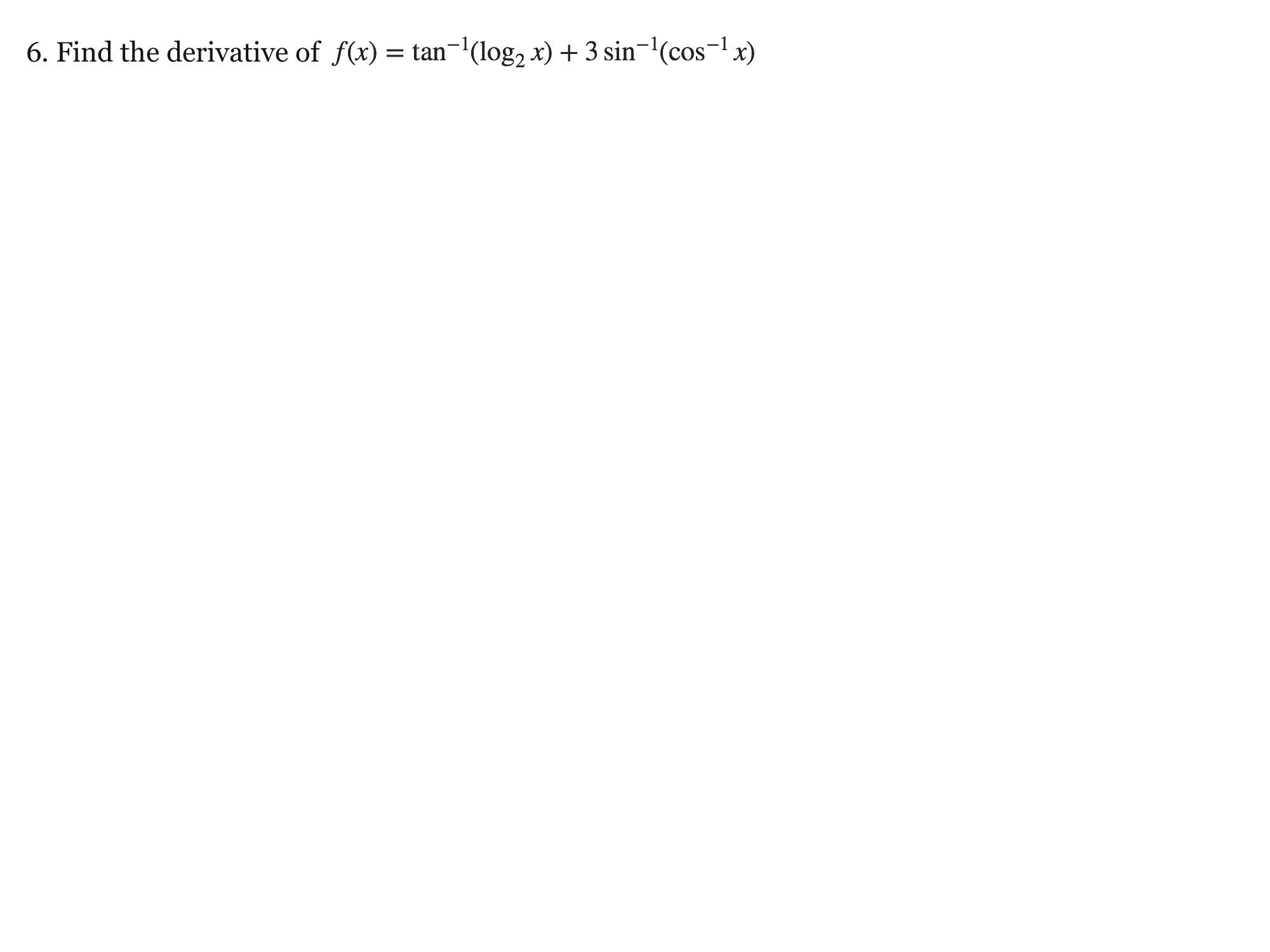
Drawing is temporarily unavailable. Work on paper if needed, then record your reasoning here.
Saving written working requires JavaScript. Keep your work on paper or in your own notes; the source problem above remains available.
Show your work for Problem 5
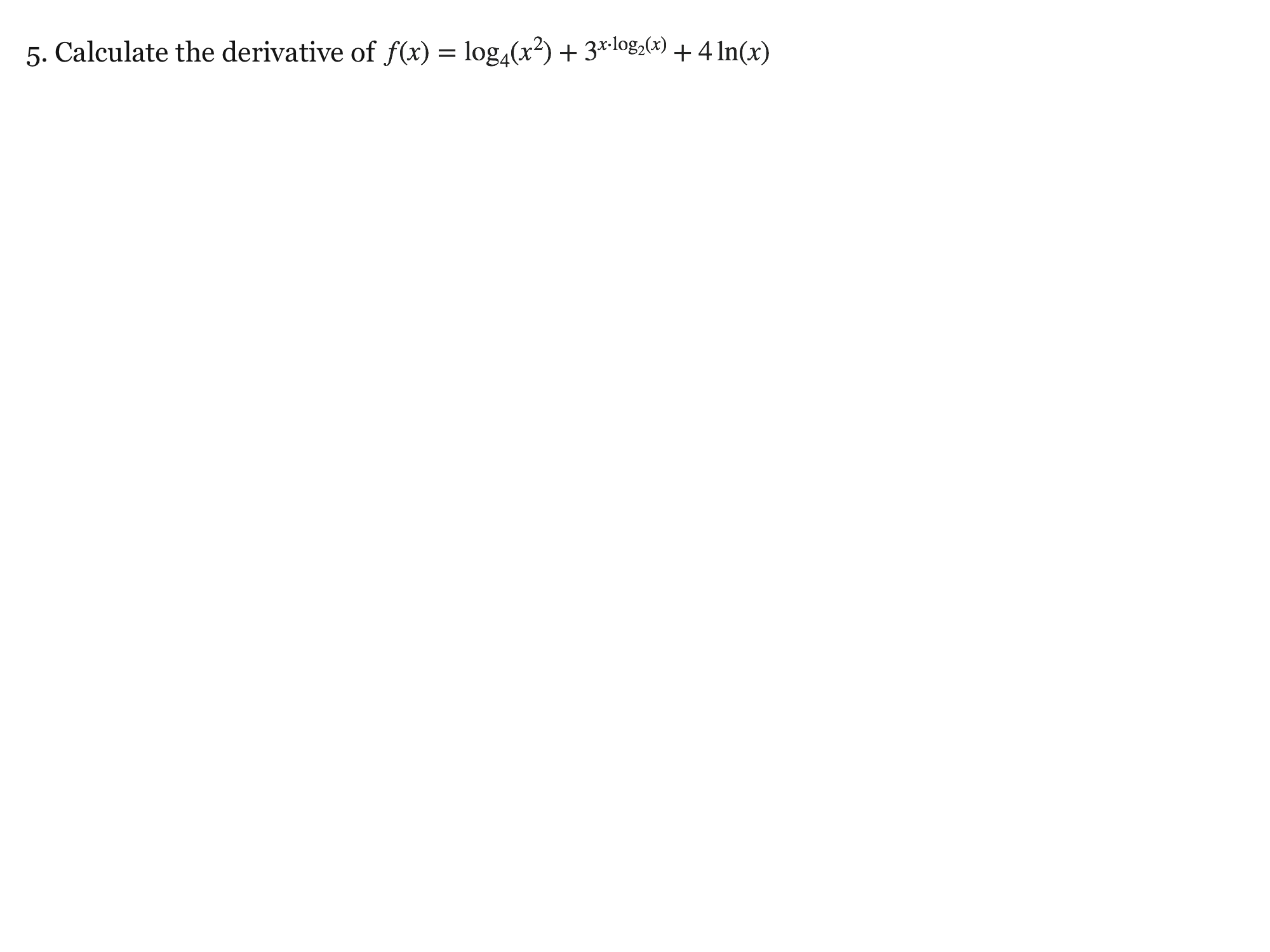
Drawing is temporarily unavailable. Work on paper if needed, then record your reasoning here.
Saving written working requires JavaScript. Keep your work on paper or in your own notes; the source problem above remains available.
Show your work for Problem 8
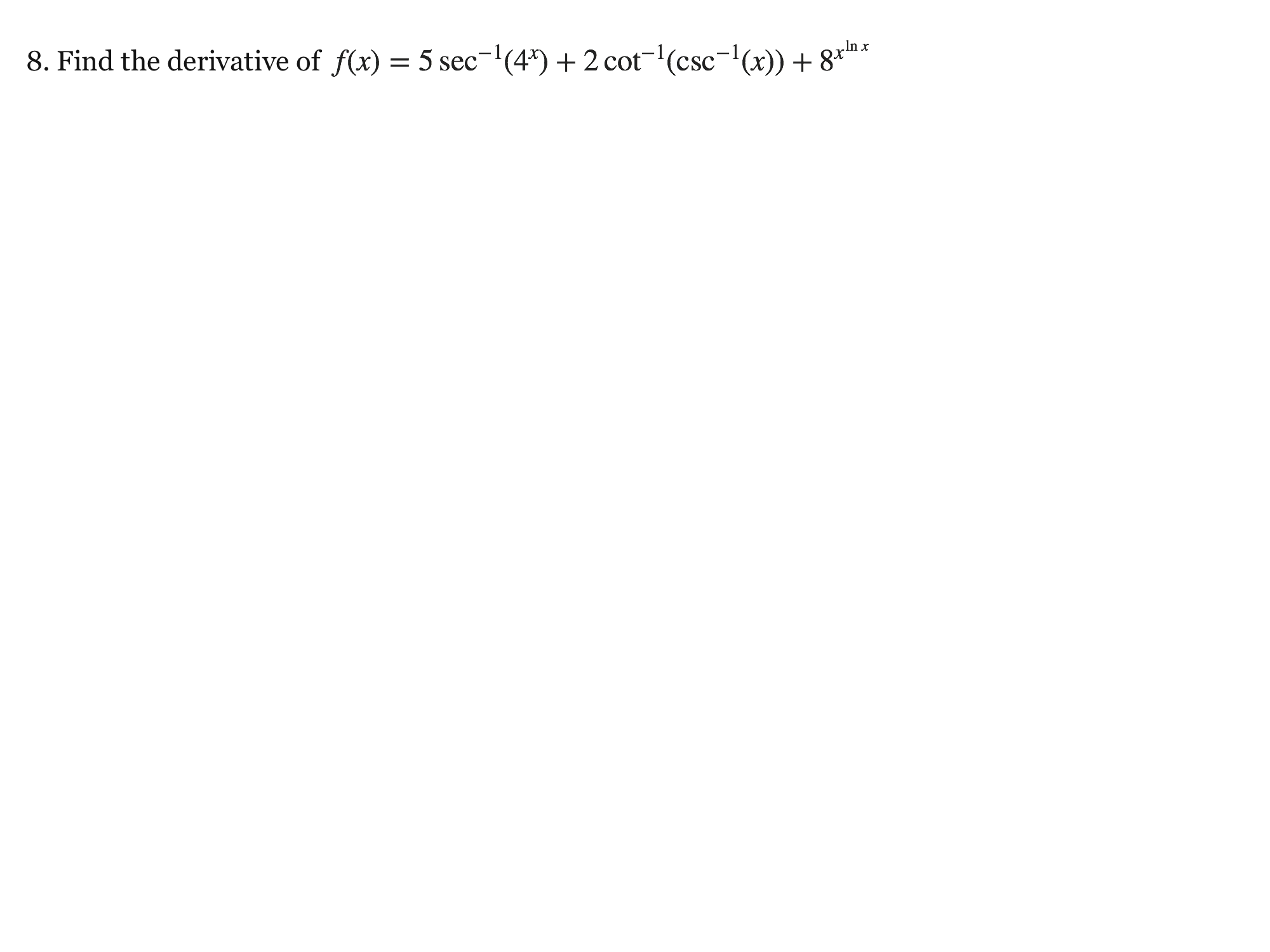
Drawing is temporarily unavailable. Work on paper if needed, then record your reasoning here.
Saving written working requires JavaScript. Keep your work on paper or in your own notes; the source problem above remains available.
Show your work for Problem 7
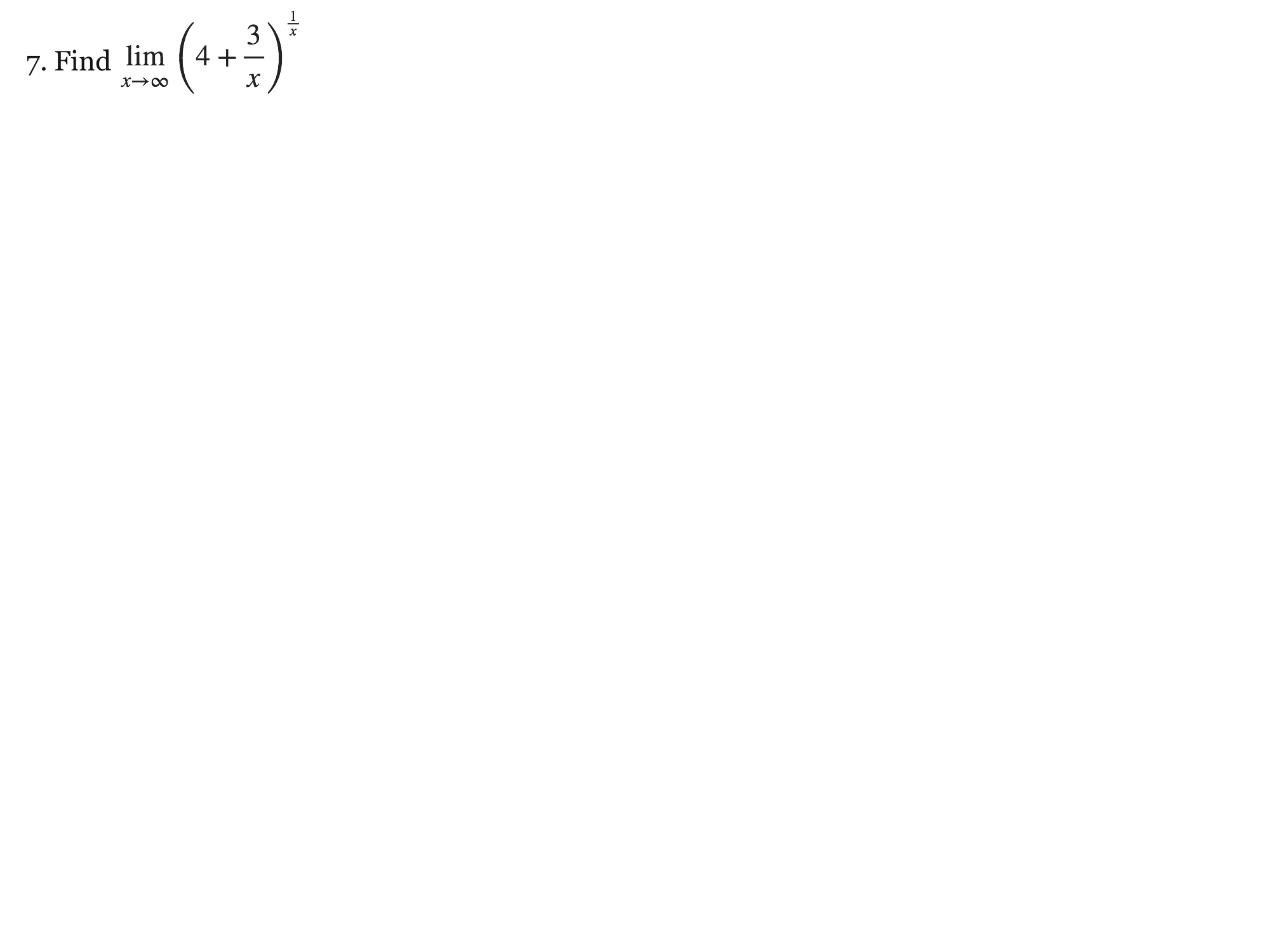
Drawing is temporarily unavailable. Work on paper if needed, then record your reasoning here.
Saving written working requires JavaScript. Keep your work on paper or in your own notes; the source problem above remains available.
Show your work for Problem 10
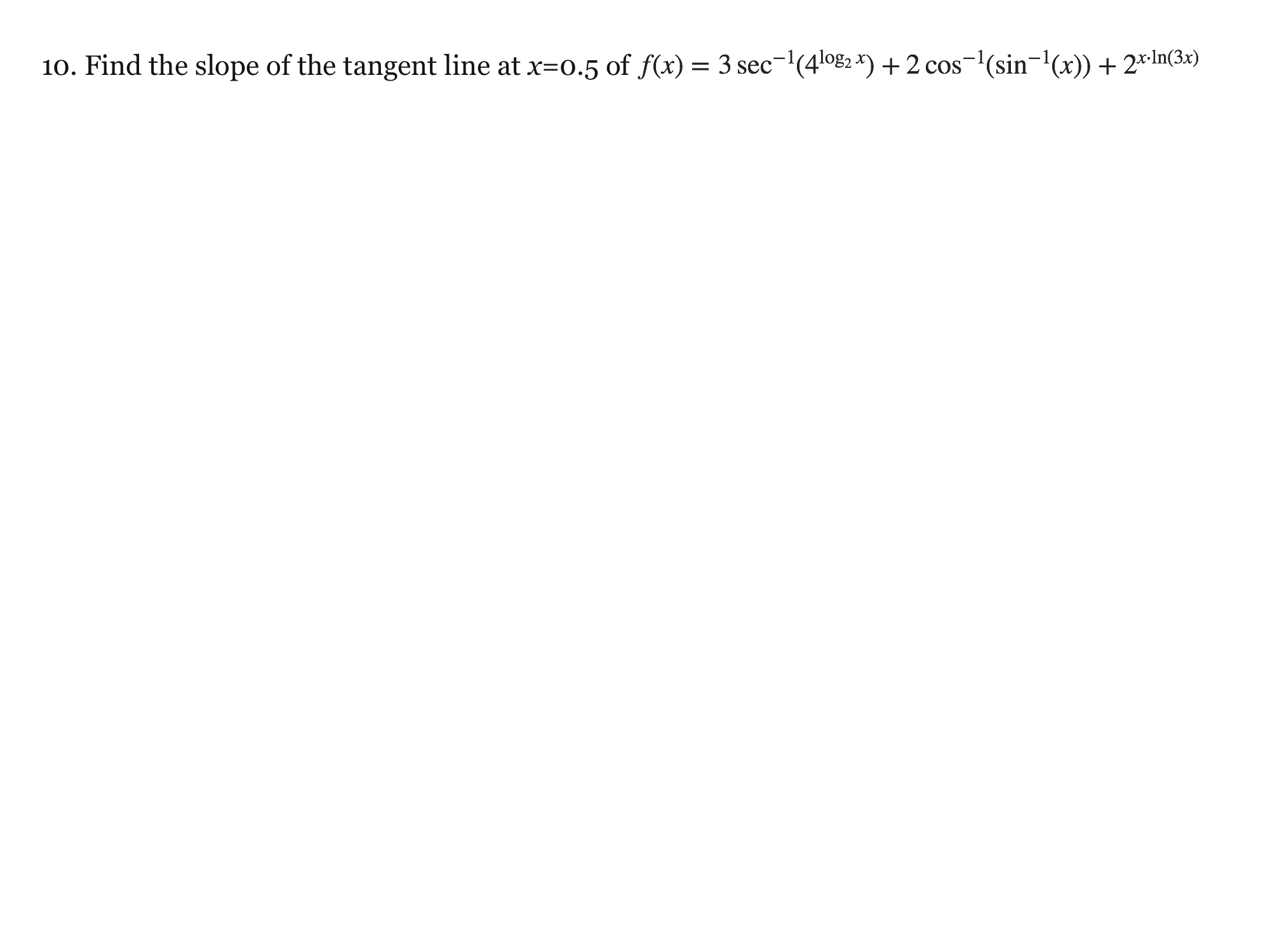
Drawing is temporarily unavailable. Work on paper if needed, then record your reasoning here.
Saving written working requires JavaScript. Keep your work on paper or in your own notes; the source problem above remains available.
Show your work for Problem 9
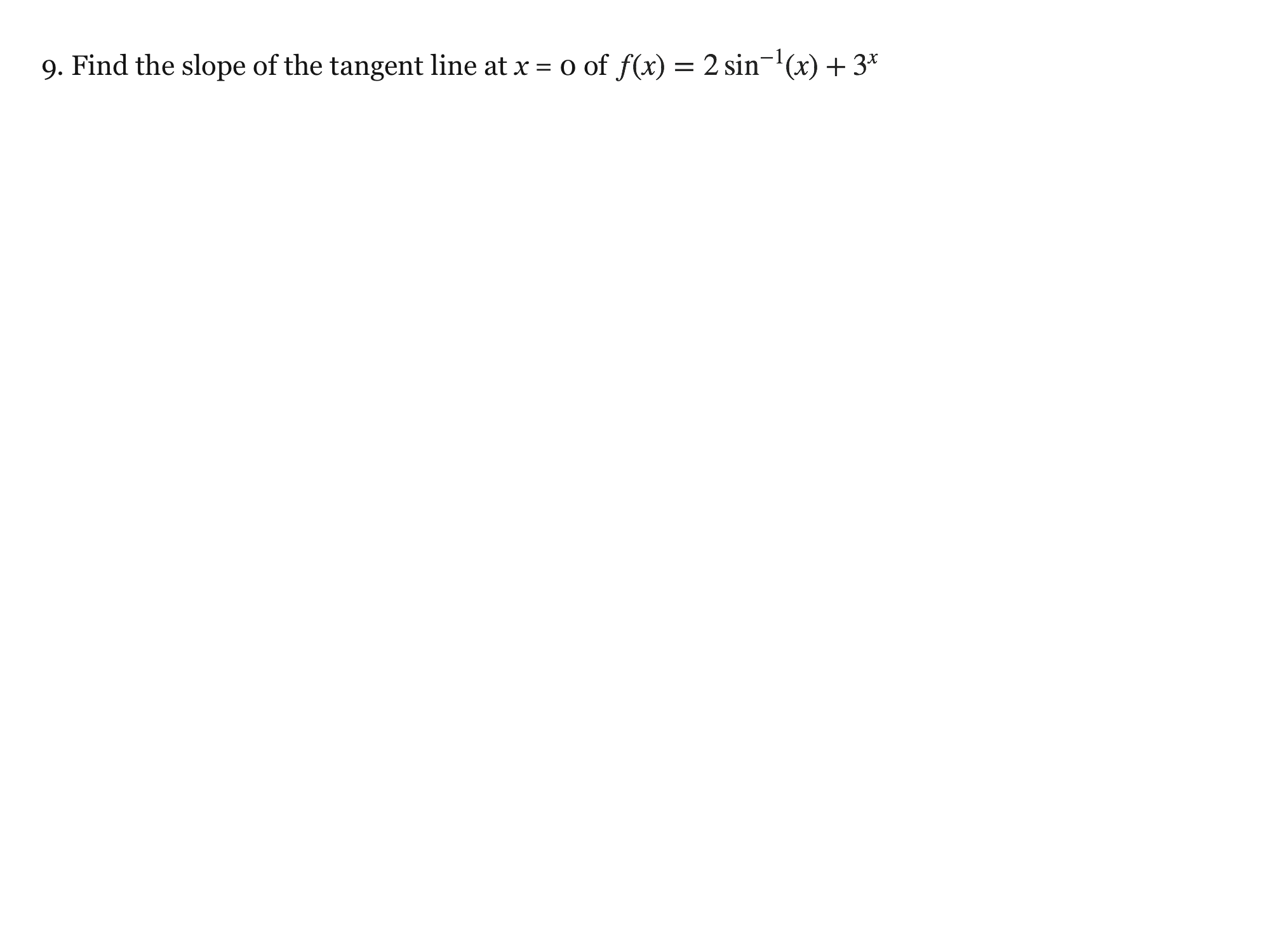
Drawing is temporarily unavailable. Work on paper if needed, then record your reasoning here.
Saving written working requires JavaScript. Keep your work on paper or in your own notes; the source problem above remains available.
- Find the slope of the tangent line at x=0 of
- Find the slope of the tangent line at x=0.5 of
Glossary and deeper reading · 3 refreshers
These editorial refreshers supplement the reading. Definitions and examples are added guidance; original source wording and recorded answers remain in their original context.
-
Function
A mathematical function assigns exactly one output to each input in its domain. Inputs can share an output, but one input cannot have two different outputs. For example, f(x)=x² assigns the output 9 to both 3 and −3. Function notation names the rule and its input; f(3) means the output when the input is 3.
-
Derivative
A derivative gives the instantaneous rate of change of a function with respect to its input. At a point, it is the finite limit of the difference quotient when that limit exists. For example, the derivative of x² is 2x, so the tangent slope at x=3 is 6. A derivative function collects those rates across the inputs where the function is differentiable.
-
Velocity in calculus
In one-dimensional motion, velocity is the derivative of position with respect to time. Its sign records direction relative to the chosen positive axis. For example, s(t)=t²−4t meters gives velocity 2t−4 meters per second. Speed is the magnitude of velocity and therefore cannot be negative.