FFR - Limits and Slopes
This original textbook reading covers part of the AP topic. Follow the AP course outline for complete topic instruction and practice.
In the previous section, we briefly touched on how limits can be used to define actual functions in Gallery 2.3 with f(x)=ex. Limits are actually even more flexible than that. A limit can be used to find the slope of a line tangent to any point on a curve! Before we go into that, however, recall how to find the slope, m:
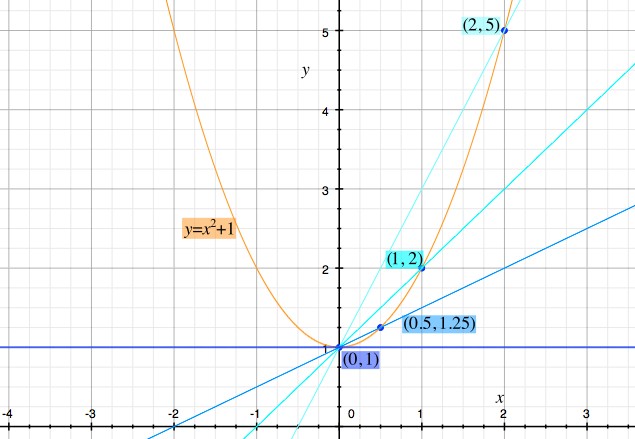
Plugging in two function values corresponding to two x-values in the above graph would give the slope of the secant line going through those two points of the function. Imagine what might happen as these two points came really close to each other, and the secant line began to go through a smaller and smaller section of the graph, until the two points it went through were so close that it looked like it only went through one point. This is shown on the next page.
Other Methods of Solving Limits
Interactive 2.4.1 Secant lines and tangent lines.
Read all original figure notes
Tangent Line
Slope = 0.5
Slope = 1
Slope = 2
Gallery 2.4.1 How to make lines tangent.
Read all original image captions
Image 1
Image 2
Image 3
Ever since computers became widely used, it has been possible to easily solve limits through simply being able to read and understand graphs. However, the programmers of these computers had to understand how these limits worked. Besides solving limits graphically, it is also possible to solve them using approximations, by calculating how the function behaves near the limit. If only you could bring laptops to your Calculus exams!
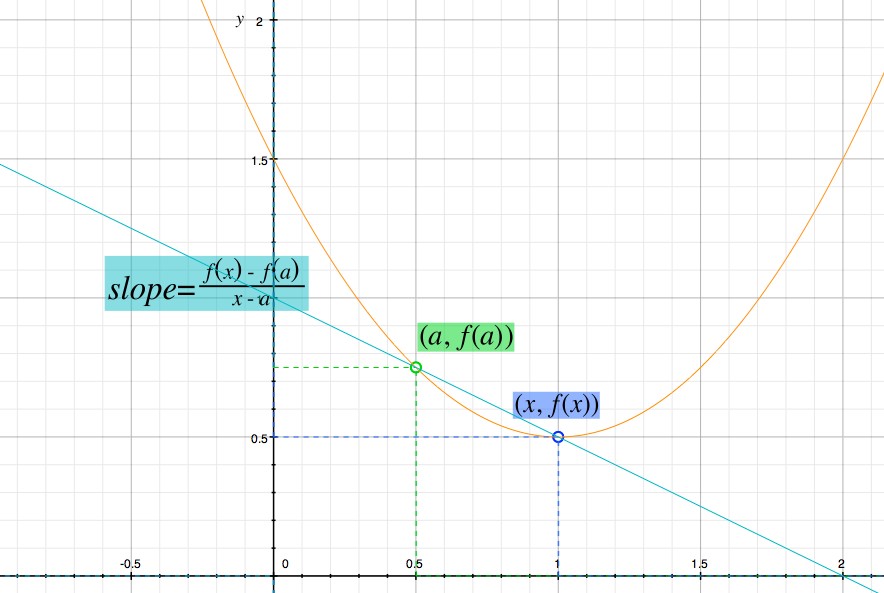
Gallery 2.4.1 explains visually the concept behind secant and tangent lines. In the first image of the gallery, notice how this is the traditional way of looking at the slope of a secant line going through two points in a graph. What would happen as x approaches a?
The second image in the gallery demonstrates a slightly different way of looking at the same problem of the slope of a secant line going through two points of a known function. By replacing (x-a) and x approaching a with a single term, h, approaching zero, we can make the entire equation easier to solve as a limit.
The third and final image demonstrates this visually. What would happen as h approaches zero? We would get the slope of a tangent line to the point of interest, in this case, (a, f(a)).
Absolutely nothing... No, it means something very interesting. It means that by using limit properties, we can calculate the slope of a tangent line at any point on a graph. Think about it, (a, f(a)) is an arbitrary point we have selected of our own free will. What if we replace (a, f(a)) with (x,f(x))? In this case, x is a variable. If we varied our point of interest, we are still picking another point very close to it as h approaches 0, so we still get the slope of a tangent line at that point! The slope of the tangent line at a in the last slide can be calculated by the limit . In this case, this equation would give a negative answer, and that is to be expected since the slope is negative! Now if we replace a constant a with the variable x, the general slope of a line that is tangent to any point on a graph becomes:
The equation above is a very special limit in calculus. It is so special that half of the rest of this book is based on that limit, and even has its own name, a derivative.
Note: Derivative Rules - Although a derivative is based on limits, many of the laws do not carry over. The only laws we can apply to derivatives that we can also apply to limits are addition/subtraction and coefficient laws. When finding general derivatives of one function multiplied/divided by another function, or composed into another function, derivatives have their own rules. These will be covered in later chapters.
Example Problem 2.4.1.
Find the derivative function of using limits.
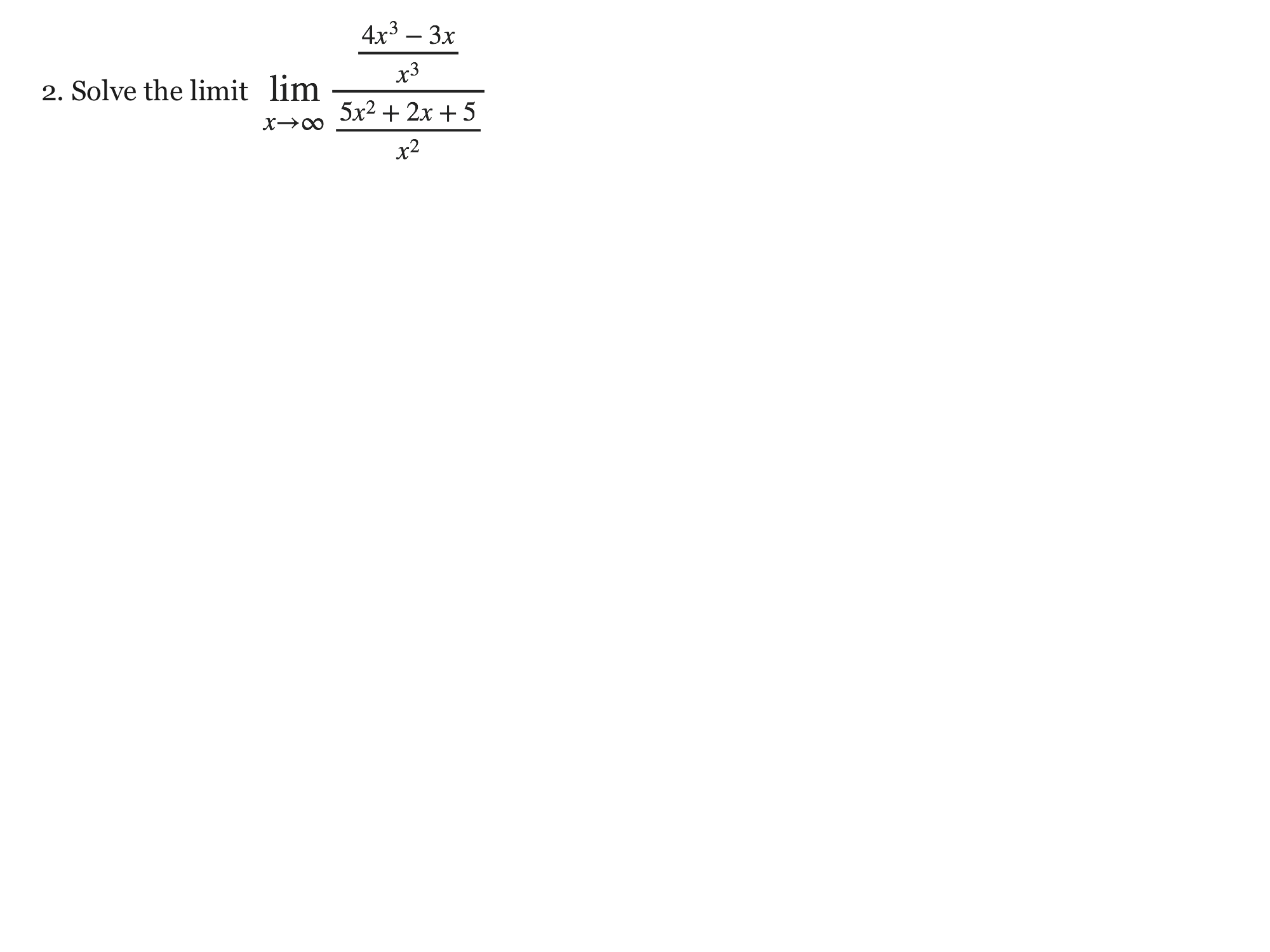
Show your work for Problem 2
Drawing is temporarily unavailable. Work on paper if needed, then record your reasoning here.
Saving written working requires JavaScript. Keep your work on paper or in your own notes; the source problem above remains available.
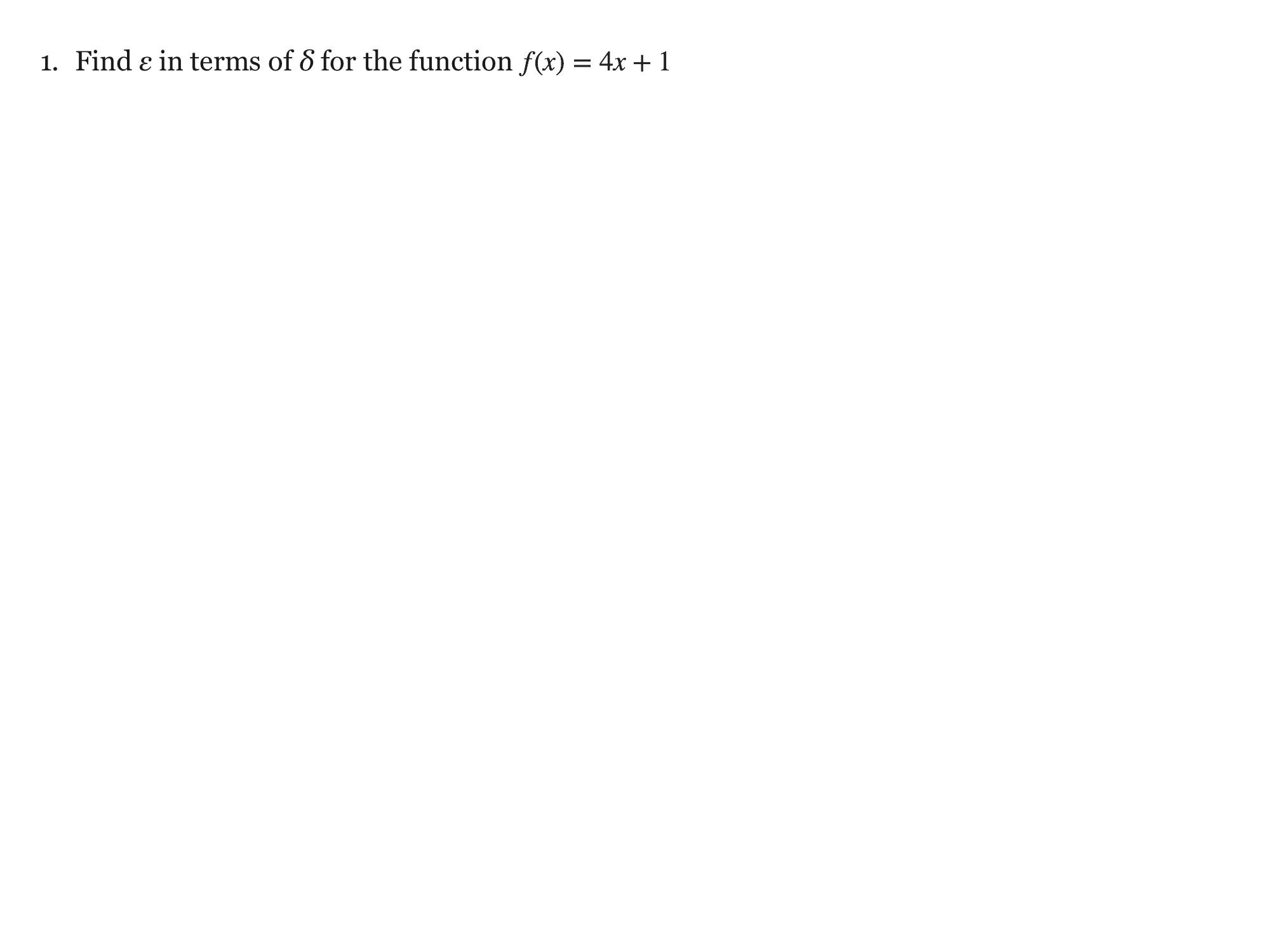
Show your work for Problem 1
Drawing is temporarily unavailable. Work on paper if needed, then record your reasoning here.
Saving written working requires JavaScript. Keep your work on paper or in your own notes; the source problem above remains available.
Show your work for Problem 3
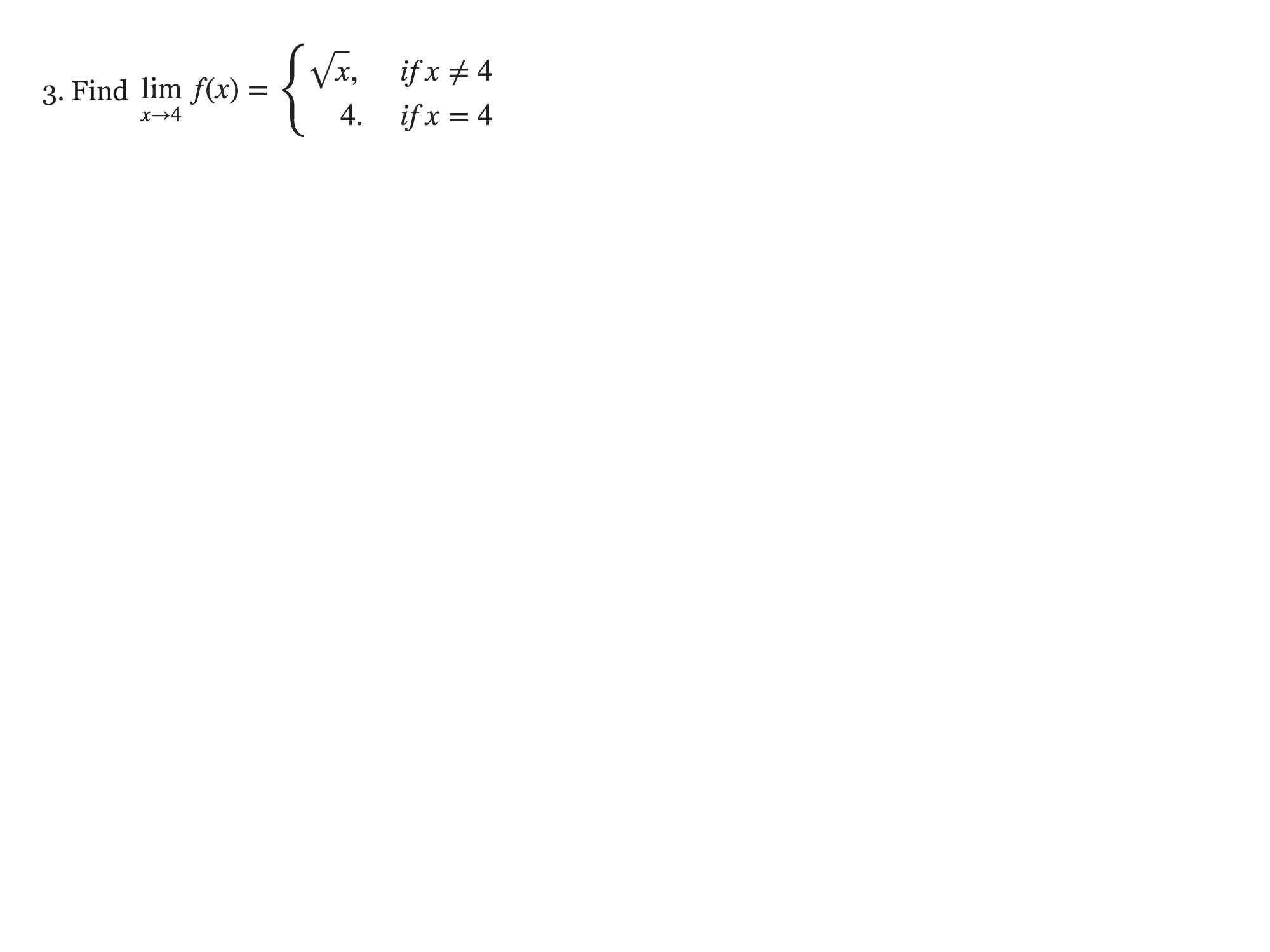
Drawing is temporarily unavailable. Work on paper if needed, then record your reasoning here.
Saving written working requires JavaScript. Keep your work on paper or in your own notes; the source problem above remains available.
Show your work for Problem 4
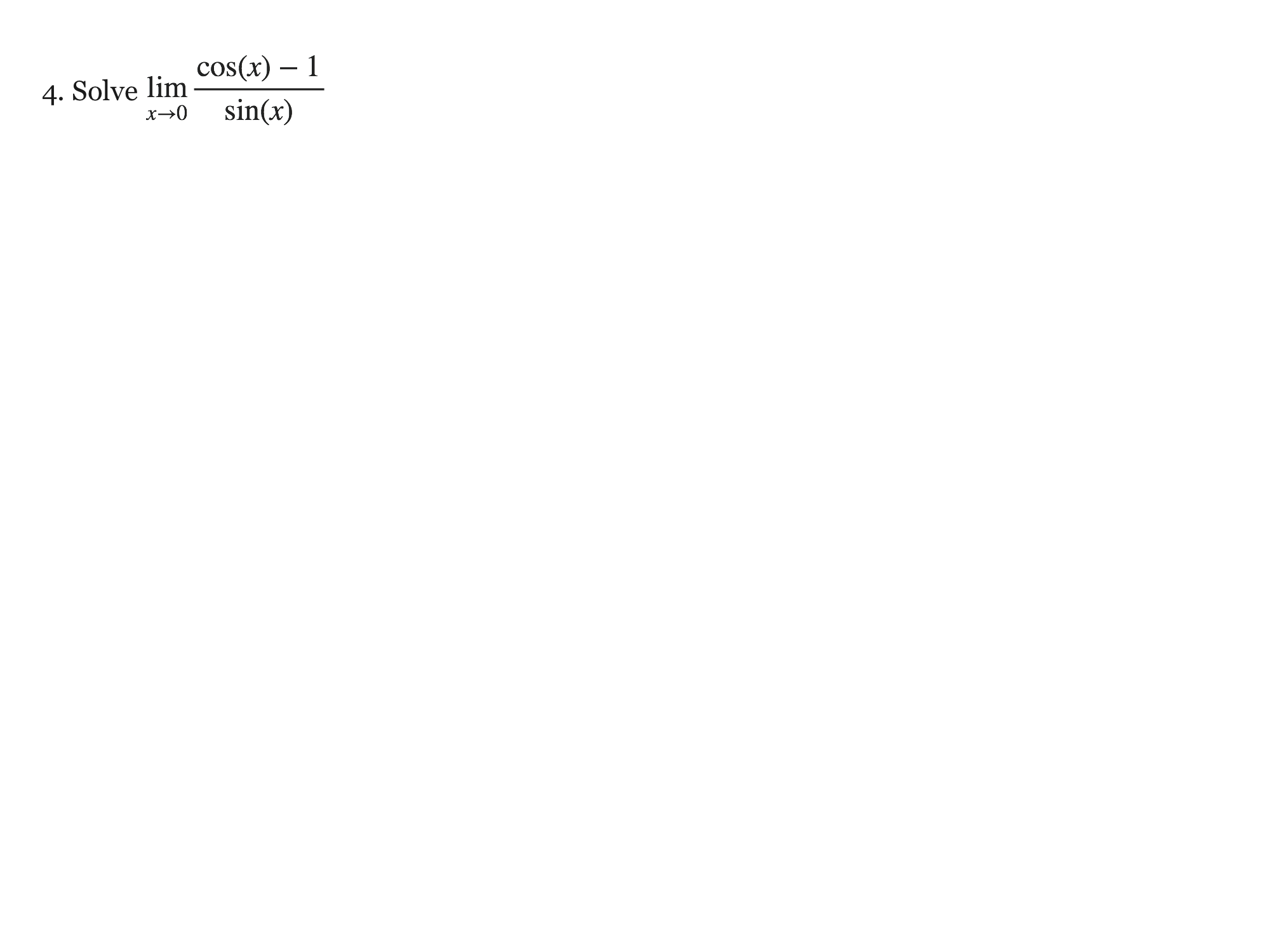
Drawing is temporarily unavailable. Work on paper if needed, then record your reasoning here.
Saving written working requires JavaScript. Keep your work on paper or in your own notes; the source problem above remains available.
Show your work for Problem 6
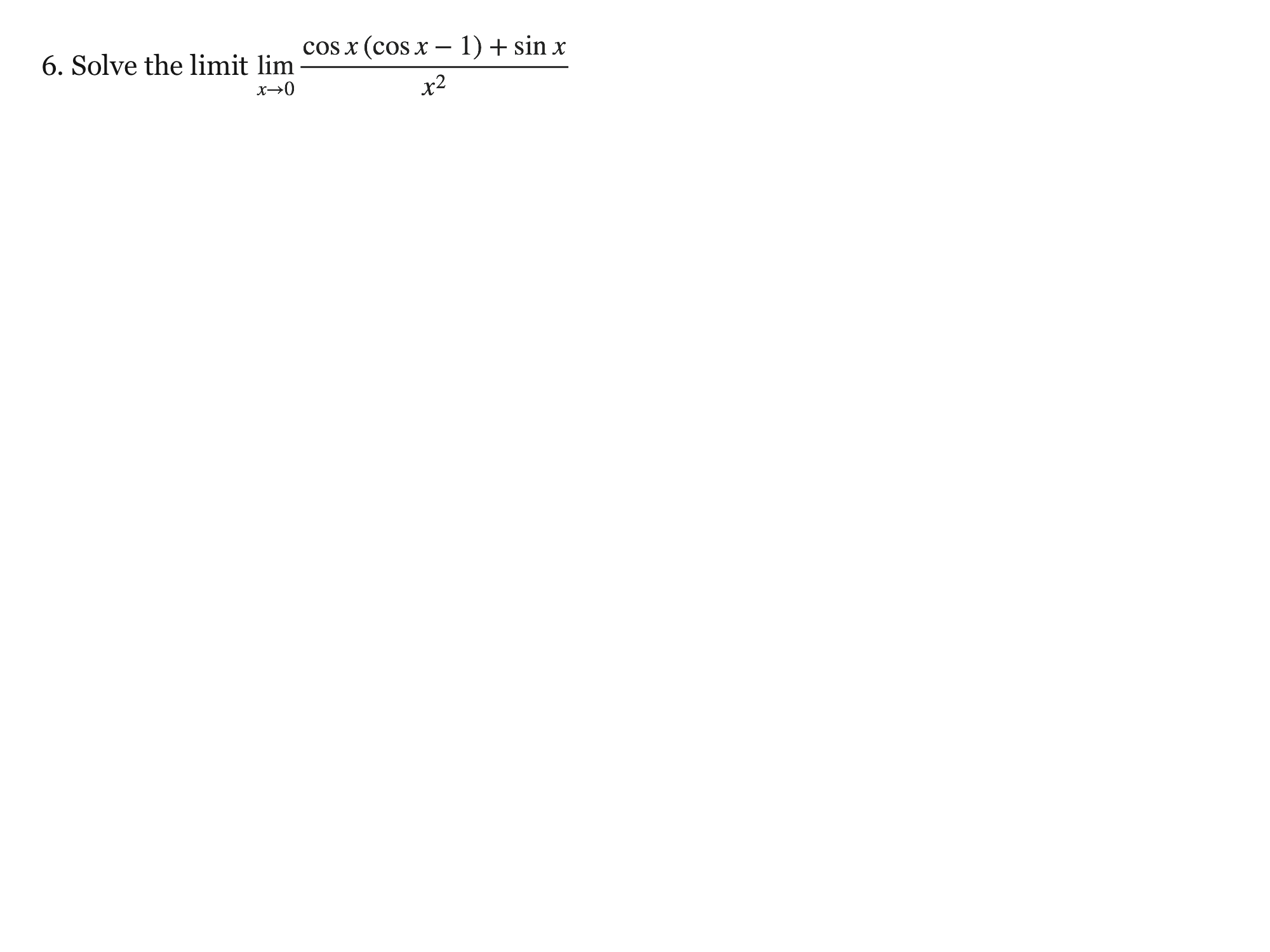
Drawing is temporarily unavailable. Work on paper if needed, then record your reasoning here.
Saving written working requires JavaScript. Keep your work on paper or in your own notes; the source problem above remains available.
Show your work for Problem 5
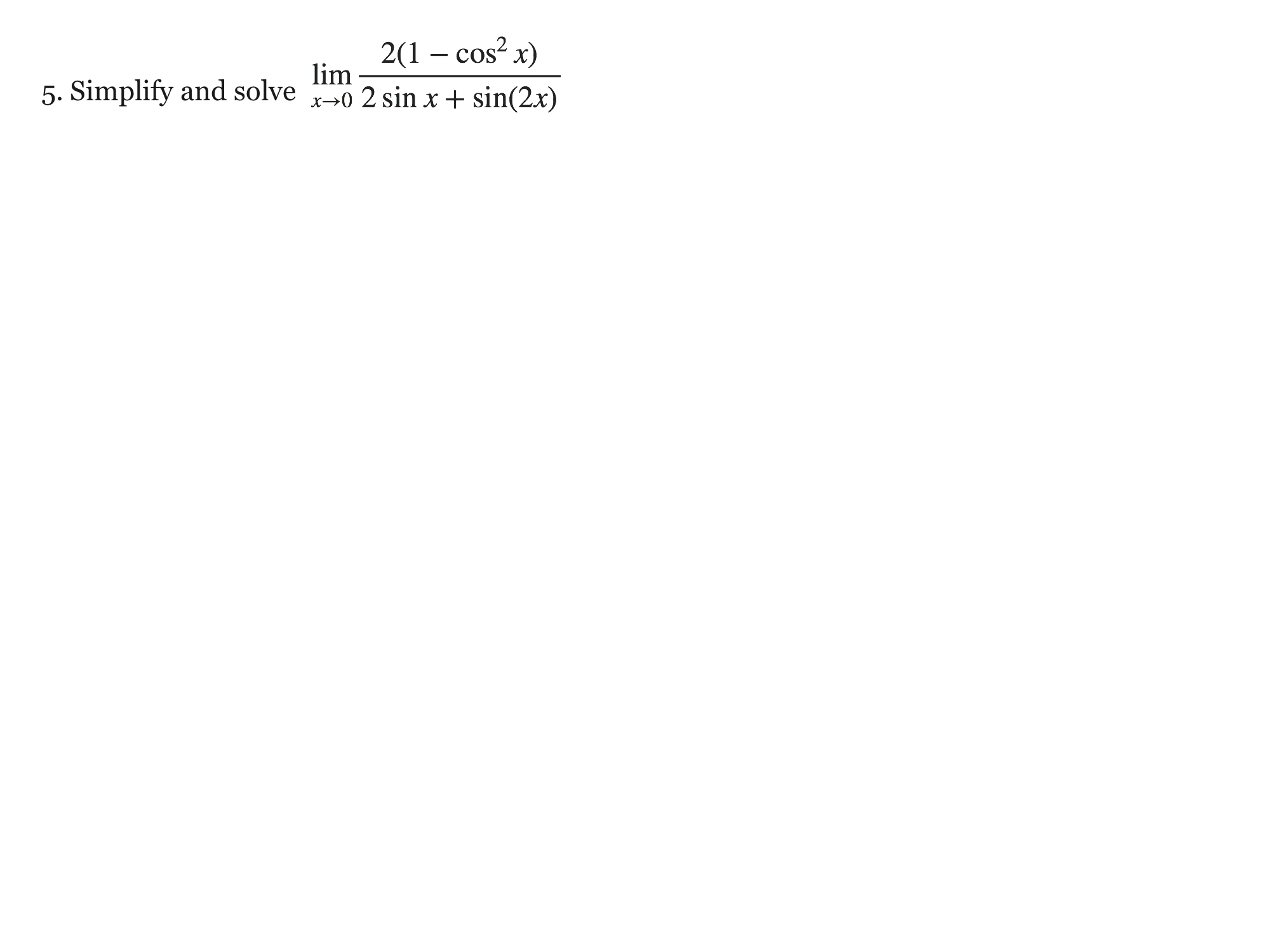
Drawing is temporarily unavailable. Work on paper if needed, then record your reasoning here.
Saving written working requires JavaScript. Keep your work on paper or in your own notes; the source problem above remains available.
Show your work for Problem 7
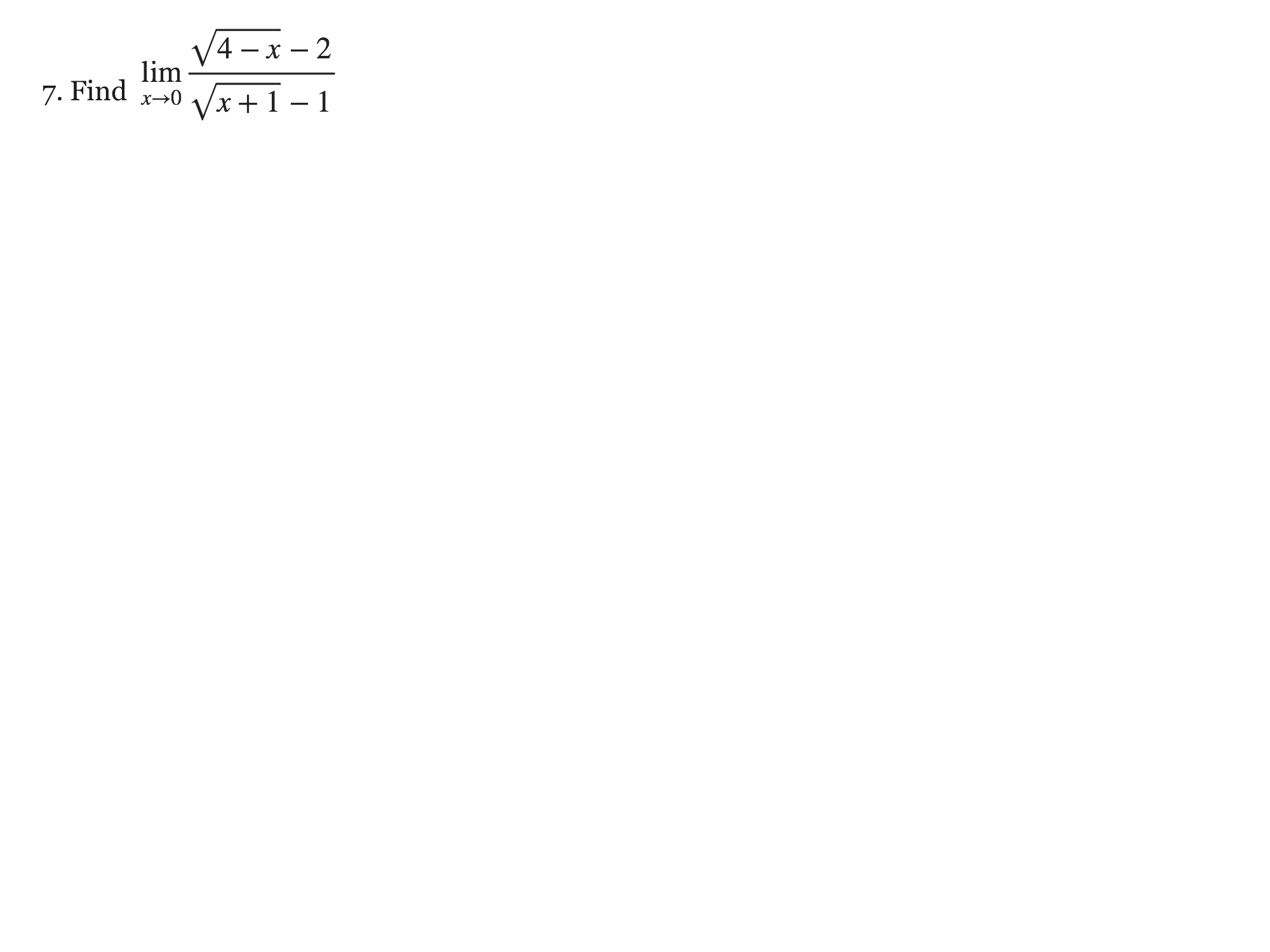
Drawing is temporarily unavailable. Work on paper if needed, then record your reasoning here.
Saving written working requires JavaScript. Keep your work on paper or in your own notes; the source problem above remains available.
Show your work for Problem 8
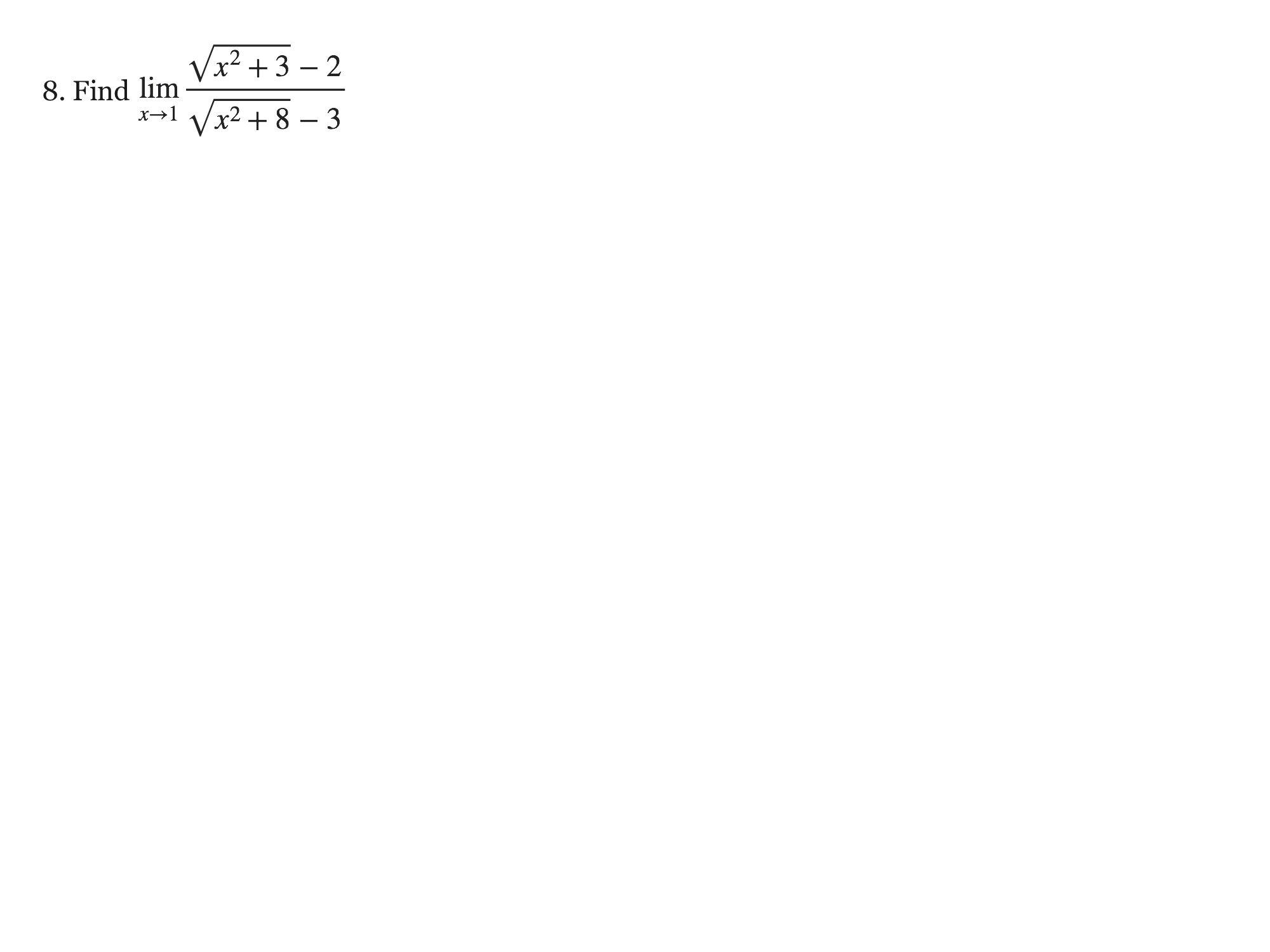
Drawing is temporarily unavailable. Work on paper if needed, then record your reasoning here.
Saving written working requires JavaScript. Keep your work on paper or in your own notes; the source problem above remains available.
Show your work for Problem 9
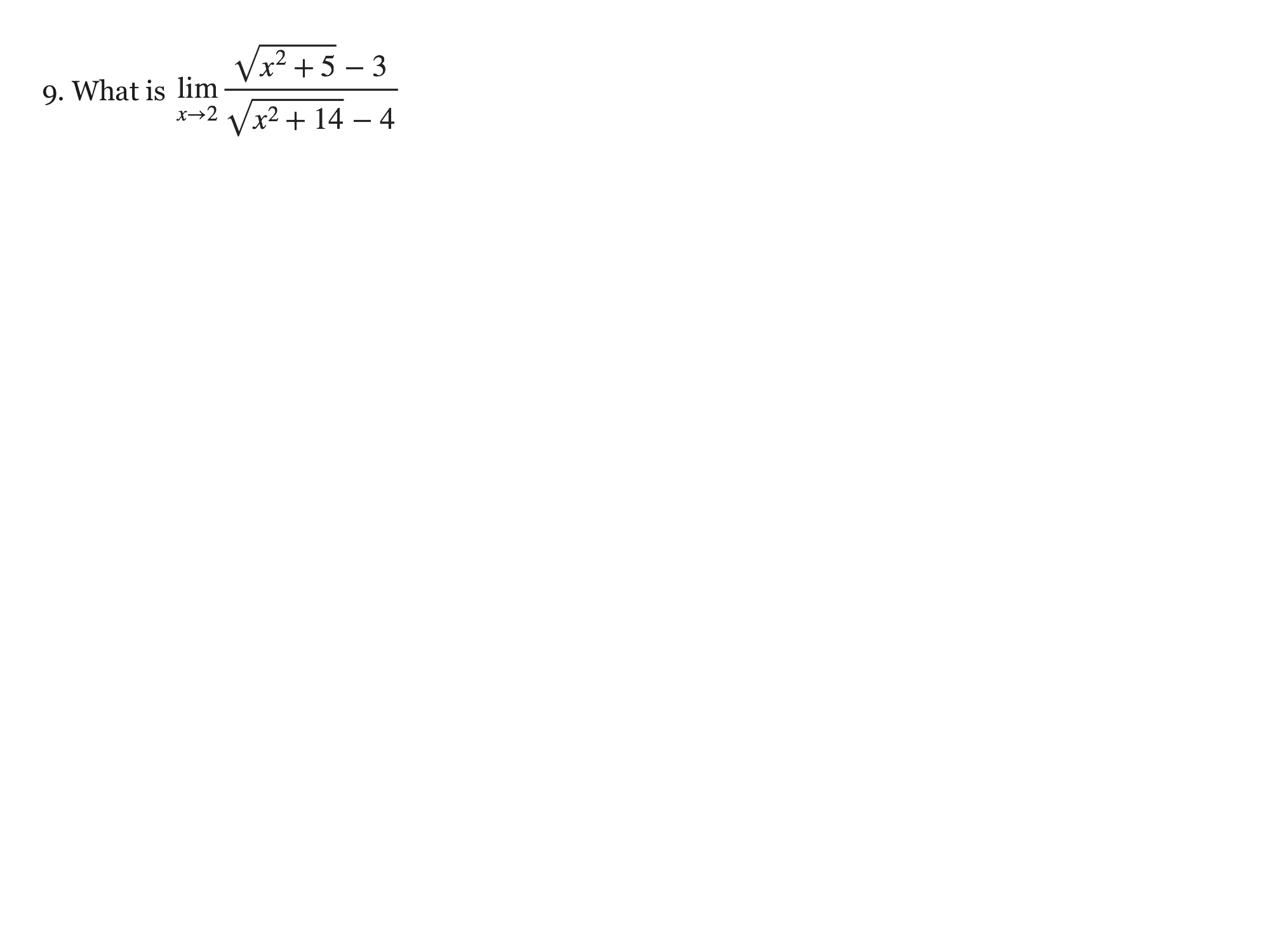
Drawing is temporarily unavailable. Work on paper if needed, then record your reasoning here.
Saving written working requires JavaScript. Keep your work on paper or in your own notes; the source problem above remains available.
Show your work for Problem 10
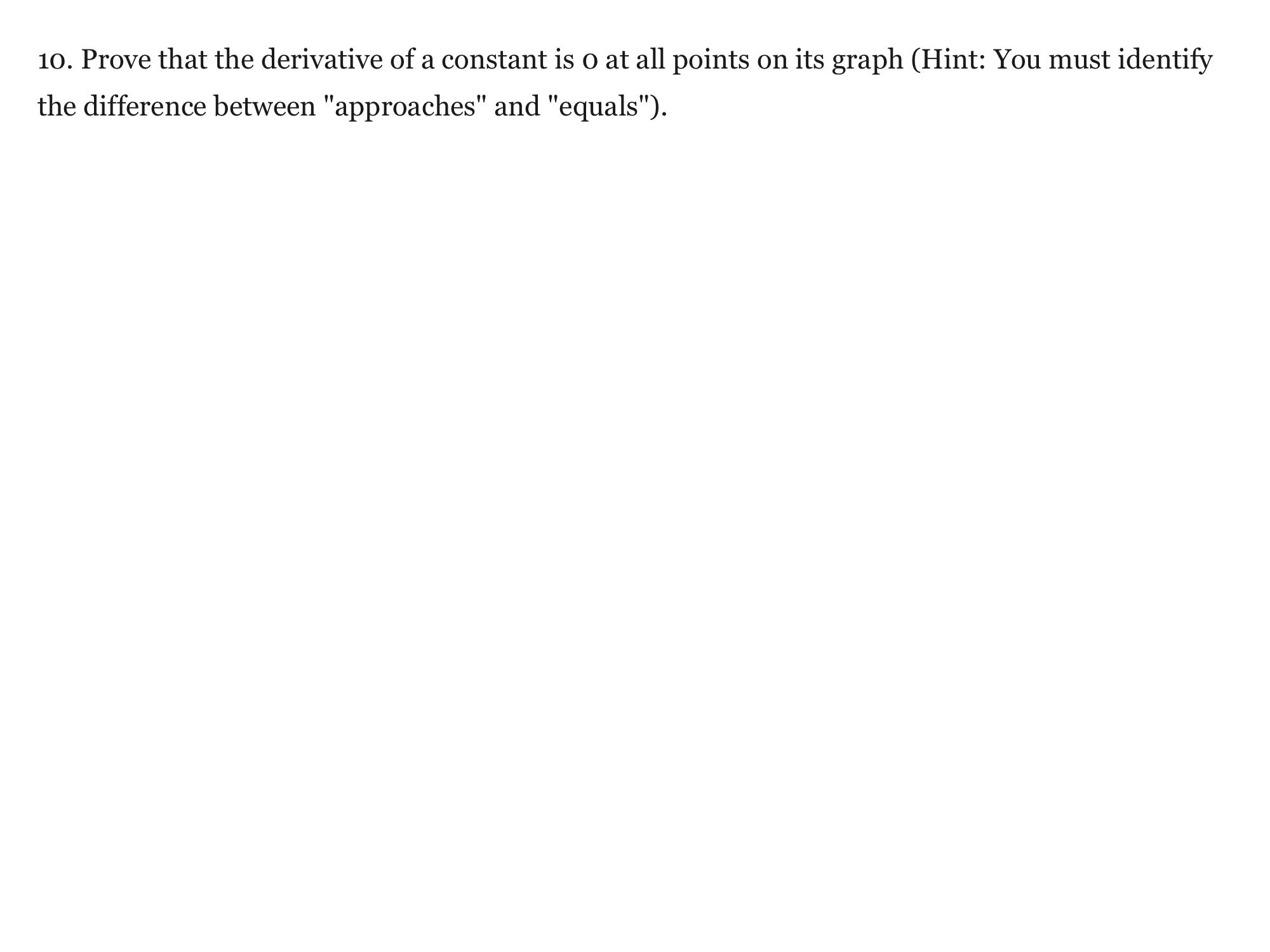
Drawing is temporarily unavailable. Work on paper if needed, then record your reasoning here.
Saving written working requires JavaScript. Keep your work on paper or in your own notes; the source problem above remains available.
- What is ?
- Prove that the derivative of a constant is 0 at all points on its graph (Hint: You must identify the difference between “approaches” and “equals”).
Glossary and deeper reading · 5 refreshers
These editorial refreshers supplement the reading. Definitions and examples are added guidance; original source wording and recorded answers remain in their original context.
-
Limit
A limit describes the value approached by outputs as inputs approach a specified target or grow without bound. For an input approaching a finite target, its value at that exact input does not determine the limit. For example, (x²−1)/(x−1) approaches 2 as x approaches 1 even though the original expression is undefined at 1. A finite two-sided limit requires the left and right approaches to agree.
-
Function
A mathematical function assigns exactly one output to each input in its domain. Inputs can share an output, but one input cannot have two different outputs. For example, f(x)=x² assigns the output 9 to both 3 and −3. Function notation names the rule and its input; f(3) means the output when the input is 3.
-
Tangent line
A tangent line at a differentiable point passes through the point and has slope equal to the derivative there. It describes the function’s local linear behavior. For example, y=x² has tangent line y=4+4(x−2) at x=2. A tangent can cross the curve, so touching at exactly one point is not its general definition.
-
Secant line
A secant line passes through two distinct points on a curve. Its slope is the average rate of change between their inputs. For example, the secant to y=x² through inputs 1 and 3 has slope (9−1)/(3−1)=4. Tangent slopes arise from limits of these secant slopes when the second point approaches the first.
-
Derivative
A derivative gives the instantaneous rate of change of a function with respect to its input. At a point, it is the finite limit of the difference quotient when that limit exists. For example, the derivative of x² is 2x, so the tangent slope at x=3 is 6. A derivative function collects those rates across the inputs where the function is differentiable.