Review of Redox
Supporting original reading. Follow the AP topic pathway for reviewed scope, worked reasoning and targeted practice.
Chemistry II · original Chapter 8 · combined Chapter 16
Section Breakdown
- Why Redox?
- Oxidation states
- Identifying oxidation states with Lewis Structure
- Identifying oxidation states with molecular formula
Section 1
Review of Redox
Gallery 8.1.1 The many forms of Electricity

Read all original image captions
Image 1
Image 2
Image 3
Image 4
So, what is Electrochemistry, and why is this section called Review of Redox?
As you probably would imagine, electrochemistry is the chemistry of reactions that involve electricity. Well that’s fine and dandy, but what do we mean, reactions that involve electricity? Electricity is just a form of power, right? How can it be related to chemical reactions?
Gallery 8.1.2 Redox Reactions

Read all original image captions
Image 1
Image 2
Image 3
Image 4
The movement of electrons. Hmm, what kind of chemical reactions can move electrons? Oh right! Redox reactions! This explains the need to review Redox if we want to learn about electrochemistry.
Redox chemistry involves two major factors: Reduction and Oxidation. Both of these factors are related to the transfer of electrons from one place to another. When an electron moves from one atom to another, we say that the atom giving up its electron gets oxidized, and the atom gaining the electron gets reduced.
Oxidation state is a formal bookkeeping assignment: assign bonding electrons to the more electronegative atom, splitting bonds between identical atoms equally. It need not equal the atom’s actual partial charge in a covalent molecule.
The two components of a redox reaction are the electron donor and the electron acceptor. We already said that the electron donor is getting oxidized and the electron acceptor is getting reduced. However, another term is used that can be pretty confusing.
Sometimes, you might see an atom referred to as an oxidizing agent, or a reducing agent. An oxidizing agent is an atom causes other atoms to become oxidized during a redox reaction. In order to do so, atoms must lose electrons, meaning that the atom causing that to happen is taking the electrons from them. Therefore, in a redox reaction, the atom that gets reduced is referred to as the oxidizing agent, as it caused its partner to become oxidized. Similarly, this oxidized partner is the reducing agent of the reaction.
Example Problem 8.1.1
Determine which atom gets oxidized, which atom gets reduced, which atom is the oxidizing agent, and which atom is the reducing agent in the following reaction (which shows all oxidation states of involved atoms):
Step 1: Identify the changed Oxidation States
This reaction has 4 involved atoms, Na, Cl, H, and O.
Sodium remains in its +1 oxidation state before and after the reaction, so there is no redox there.
Chlorine changes from a -1 to a 0 oxidation state, so that is involved in redox.
Hydrogen starts out at +1, and ends up in two separate molecules, one of which also has a +1 state, but the other which has a 0 state. Therefore, the hydrogen is also involved in redox, but only the hydrogen used to make .
Oxygen goes from a -2 to a -2 state. Therefore, there is no electron transfer involved there.
Our Redox atoms are Chlorine and Hydrogen.
Step 2: Determine which atom gets reduced and which gets oxidized.
The reduced atom gains electrons, which drops its oxidation state. Our choices are Chlorine, which goes from a -1 to a 0 state, or Hydrogen, which goes from a +1 to a 0 state.
Hydrogen decreases in oxidation state, meaning it is the reduced atom. The oxidized atom increases in oxidation state, as we see in Chlorine, increasing from -1 to 0. Therefore, Hydrogen is the reduced atom, and Chlorine is the oxidized atom.
Step 3: Determine the oxidizing and reducing agents.
The oxidizing agent is the atom which gets reduced, allowing its partner to be oxidized. This means that Hydrogen is the oxidizing agent, as it causes Chlorine to be oxidized.
Similarly, Chlorine is the reducing agent, causing Hydrogen to get reduced.
Our answers are as follows:
Reduced Atom: Hydrogen
Oxidized Atom: Chlorine
Reducing Agent: Chlorine
Oxidizing Agent: Hydrogen
That problem was a little too easy, as you had the oxidation state of each involved atom just written out for you to identify. If you are having trouble remembering which atom gets oxidized or reduced, just recall:
LEO the lion says GER!
LEO: Loss of Electrons = Oxidation
GER: Gain of Electrons = Reduction
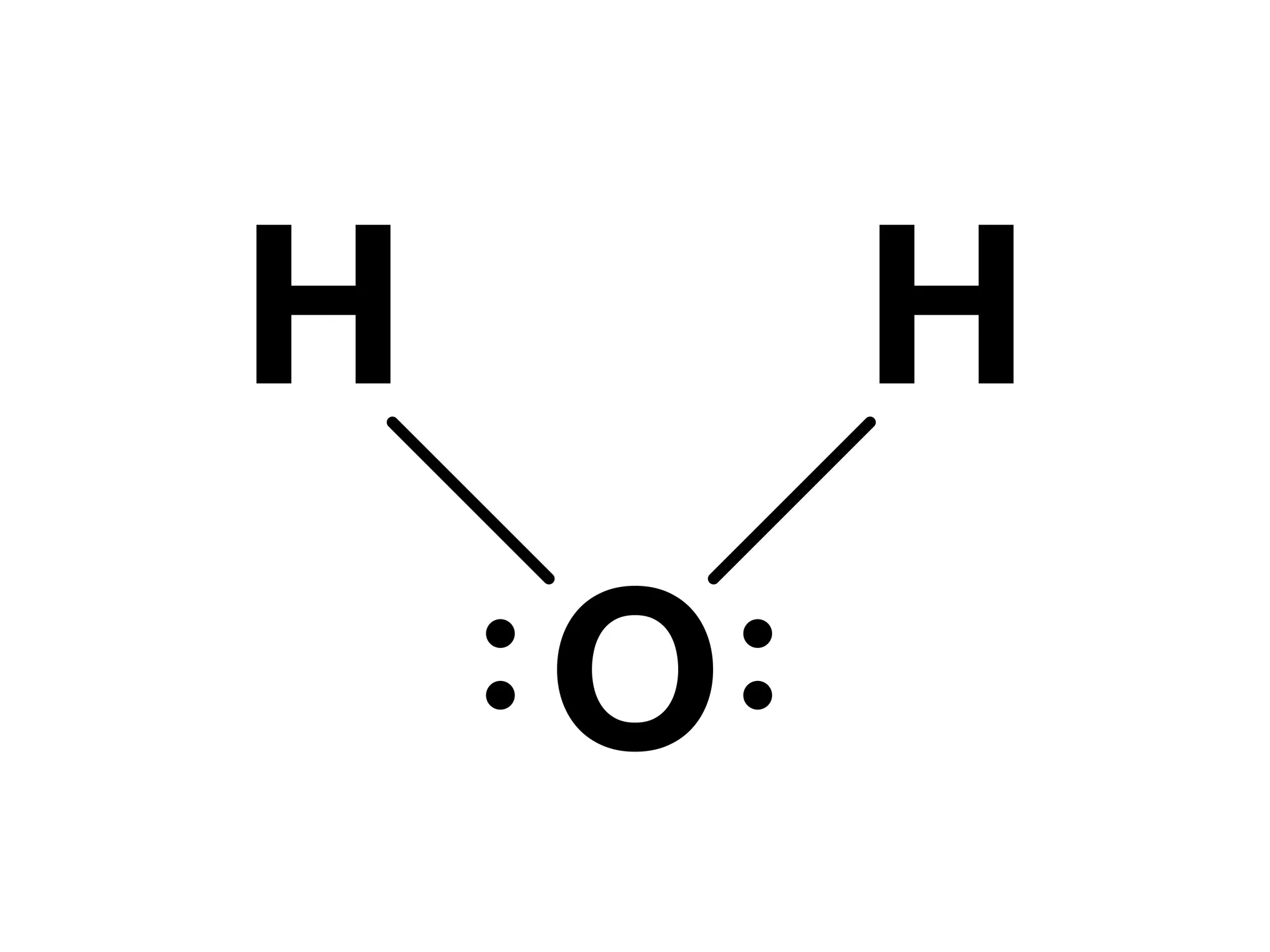
Gallery 8.1.3 Oxidation states in water
Read all original image captions
Image 1
Image 2
Image 3
Probably the most useful skill in redox chemistry is identifying oxidation states of atoms. Without knowing what the oxidation states are, you don’t know where the electrons are going, and you can’t identify the redox reaction.
Determining the oxidation states relies heavily on the electronegativity of the involved atoms. Recall that electronegativity tends to increase as you go up and as you go right on the periodic table.
The reason electronegativity is so important is that the oxidation state refers to the difference between the number of electrons an atom has associated with it and the number of electrons in that atoms base valence orbital.
Put simply, an atom has its own electrons that it might give up, or it might get more electrons from somewhere else. The oxidation state tracks the number of electrons the atom gains or loses compared with its base state.
The most robust way of identifying oxidation states is by utilizing the Lewis Structure of the molecule as well as the electronegativities of the involved atoms.
The oxidation state is the difference between the number of electrons an atom currently has and the number of valence electrons that atom should have. In a bond, all the electrons of the bond are associated with the more electronegative atom of the bond.
For example, has two bonds involved, each between oxygen and hydrogen. As oxygen is more electronegative than hydrogen, the electrons of the bond are associated with oxygen alone.
This gives oxygen 8 electrons, and each hydrogen 0. Oxygen normally has 6 valence electrons, meaning its oxidation state is given as 6-8= -2. Hydrogen normally has 1 valence electron. Therefore, it has a state of 1-0 = +1.
Oxidation state is the normal number of valence electrons minus the current number of associated electrons.
Example Problem 8.1.2
Use the Lewis Diagram method to determine the oxidation states on all atoms of Carbonic Acid ().
Step 1: Draw out the Lewis Diagram.
For , the Lewis Diagram looks like:
Step 2: Determine the number of electrons on each atom.
We have 6 atoms to catalog. Let’s start on the outside with each hydrogen. Both hydrogen are in the same situation, singly bonded to an oxygen atom. Oxygen is much more electronegative, meaning that the electrons in the oxygen-hydrogen bond are both associated with the oxygen, leaving hydrogen without any electrons:
Hydrogen: 0
Next we look at the Carbon atom. The carbon atom is bonded to 3 oxygen atoms with 4 bonds. Oxygen is still the more electronegative atom, and as carbon doesn’t have any lone pairs, it doesn’t retain any electrons.
Carbon: 0
Finally, we have Oxygen to look at. Let’s start with the doubly bonded oxygen first. That oxygen has two bonds with carbon, and two lone pairs. It is more electronegative than carbon, so it claims all 4 electrons from the bonds. Coupling that with the 2 lone pairs it has, the oxygen atom has 8 electrons.
As for the other two oxygen atoms, they are each singly bonded to a hydrogen and singly bonded to a carbon. Neither atom is more electronegative than oxygen, so oxygen again has all the electrons in the two bonds. Each oxygen also has its two lone pairs, so these two oxygen are also full with 8 electrons claimed.
Oxygen: 8
Step 3: Determine the valence electrons on each atom.
If we were to draw the Lewis structure for each individual atom, we would see the following:
By counting the number of electrons around each atom, we see the valence electrons for that atom:
Oxygen: 6
Carbon: 4
Hydrogen: 1
Step 4: Determine the Oxidation state of each atom
Oxidation state is Valence - Associated, so for each atom we have:
Oxygen:
Carbon:
Hydrogen:
Notice that we added a + to the positive oxidation states, instead of leaving it implied. This is similar to labeling charge on an ion.
So our answer for this problem is:
Example Problem 8.1.3
Use the Lewis Diagram to determine the oxidation state of each atom in .
Step 1: Draw out the Lewis Diagram.
For , the Lewis Diagram looks like:
Step 2: Determine the number of electrons on each atom.
There are 12 atoms in this molecule, that’s a huge number! However, all the Fluorine and both Sulfur atoms are in the exact same setup. That makes it quite a bit easier.
So starting with the easiest one, fluorine:
Each fluorine exists with a single bond between itself and a sulfur atom. Fluorine is the most electronegative atom on the periodic table, so we can safely say it is more electronegative than sulfur. Therefore, the fluorine carries both electrons in that bond. As there are also three lone pairs on each fluorine, bringing the total electrons up to 8 on each fluorine.
Fluorine: 8
Now for sulfur. Each sulfur is connected to 5 fluorine atoms and the other sulfur atom. All the electrons involved in each fluorine bond are held by the fluorine, and as there
are no lone pairs, the only electrons available are in the sulfur-sulfur bond. As this bond is between two of the same atom, their electronegativities are equal. This means that they share the electrons in the bond, each getting one. With no other electrons available, this means that each sulfur atom has one electron.
Sulfur: 1
Step 3: Determine the valence electrons on each atom.
There are only two unique atoms in this molecule, sulfur and fluorine. Their Lewis Diagrams are:
As can be seen, fluorine has 7 valence electrons, and Sulfur has 6.
Step 4: Determine the oxidation states.
For sulfur:
For fluorine:
So our answer for this problem is:
While that option for determining oxidation state is extremely reliable, it is many times quicker to use a set of rules and trends to identify oxidation state just by looking at the molecular formula.
When determining oxidation states by looking at the molecular formula, you need to follow a few simple rules.
- The oxidation state of atoms in their pure form is always 0.
- chlorine has an OS of 0.
- The sum of all oxidation states in a molecule or ion must equal the charge of that molecule or ion.
- chlorine has an OS of -1.
- iron has an OS of +2.
- Fluorine has oxidation state −1 in its compounds. Other halogens often have −1 but can be positive when bonded to oxygen or a more electronegative halogen. For example, chlorine is +7 in ClO₄⁻ because x+4(−2)=−1.
- Chlorine has an OS of -1.
Sodium has an OS of +1.
(see rule 2)
- Fluorine has an OS of -1.
Chlorine has an OS of +1.
- Hydrogen has an oxidation state of +1 unless it is in a hydride (, , ), where it would have an oxidation state of -1.
- Oxygen has an oxidation state of -2, unless this would violate any of the previous rules.
- Alkali metals have an oxidation state of +1, with very few exceptions.
- Alkali earth metals have an oxidation state of +2, with very few exceptions.
By following these rules, you can easily predict the oxidation states of atoms in simple to mildly complex molecules. It becomes harder with larger molecules, but the scope we are covering won’t get to those.
Those rules really complicate things, but if we look at the oxidation state determination as a priority based process, it is actually pretty simple.
Apply oxidation-state rules with their exceptions. Fluorine is −1; oxygen is usually −2, but is −1 in peroxides and positive when bonded to fluorine. Chlorine, bromine and iodine can be positive in oxygen-containing compounds. The sum must equal the species’ charge.
Another tip is that sometimes you can split the molecule into component ions, and solve for those individually.
To summarize, atomic groups in order of highest priority to lowest:
Example Problem 8.1.4
Determine the oxidation states of the atoms in .
Step 1: Determine priority of the involved atoms.
Priority for determining oxidation state is Alkali Metals, Alkali Earth Metals, Halogens, Hydrogen, Oxygen, other.
We only have two atoms, carbon, which fits into other, and chlorine, a halogen. Therefore, chlorine is a higher priority in this molecule.
Step 2: Assign states in order of priority.
As chlorine is a higher priority, we will set it first. As a halogen, its oxidation state is -1.
Chlorine: -1.
Now we need to set carbon’s state. To do so, we will use the fact that the molecule has a net charge of 0.
With 4 atoms of chlorine each at an oxidation state of -1, we set up the total oxidation state for the molecule:
Therefore, the oxidation state of carbon is +4.
Carbon:+4
Example Problem 8.1.5
Determine the oxidation states of the atoms in .
Step 1: Determine priority of the involved atoms.
We have three types of atoms in our molecule, Carbon, Hydrogen, and Oxygen. The priority puts Hydrogen as highest priority, Oxygen below that, and then Carbon as lowest priority.
Step 2: Assign states in order of priority.
Hydrogen in this molecule is of the highest priority. Therefore, we start by setting the oxidation state of hydrogen to +1.
Hydrogen: +1
Next on priority list is oxygen, which we can set to -2.
Oxygen: -2
Finally, we have carbon, which will have to be set by utilizing the overall charge of 0. Let’s set up the equation:
Carbon: 0.
This past example shows where the Lewis structure can be more useful in identifying oxidation states compared with the molecular formula approach.
One big drawback to the molecular formula approach is that it relies on the assumption that every atom in the molecule has the same oxidation state. Therefore, if for some reason two atoms have different oxidation states, then this method would give you the average of the two states, instead of differentiating between them. Let’s see what a Lewis Structure approach would tell us about acetic acid.
Example Problem 8.1.6
Using the Lewis Structure, determine the oxidation states of atoms in acetic acid.
Step 1: Draw out the Lewis Diagram.
For , the Lewis Diagram looks like:
Step 2: Determine the number of electrons on each atom.
The Hydrogens are easy, as all four are singly bonded to an atom more electronegative than itself (carbon or oxygen). This means none of the Hydrogens have any associated electrons.
Hydrogens: 0
At first glance, the two oxygens appear to be in a different set-up, but both simply have two bonds to less electronegative atom(s) and two lone pairs, meaning they each have 8 electrons.
Oxygen: 8
Now, the two carbon atoms are completely different from one another. The carbon in the complex is bonded to three hydrogen atoms, each of which it is more electronegative then, and it is also bonded with another carbon, meaning it gets 6 electrons from its bonds with the three hydrogen, and 1 more from the carbon-carbon bond.
Carbon ( complex): 7
The other carbon has three bonds between two oxygen atoms, which is more electronegative than itself, meaning it doesn’t get any electrons from those bonds. It also is bonded to another carbon atom, though, netting it a single electron.
Carbon ( complex): 1
Step 3: Determine the valence electrons on each atom.
Our three atoms are Carbon, Hydrogen, and Oxygen. Their Lewis Diagrams are:
This means that carbon has 4 valence electrons, hydrogen has 1, and oxygen has 6.
Step 4: Determine the oxidation states.
Oxygen:
Hydrogen:
Carbon ():
Carbon ():
Therefore our answer is:
Interactive 8.1.2 Acetic Acid Split

The source placement has no attached COLLADA geometry.
Interactive 8.1.1 Acetic Acid

The source placement has no attached COLLADA geometry.
and
Now if we apply the priority rules, we find that the carbon in the is at a -3 state, and the carbon in the is at a +3 state.
This will only be a problem when you use the overall charge to solve for multiple atoms. Another time this might come up that’s easier to solve is in an ionic molecule where each ion has an atom not on the priority list.
In that case, we can apply the tip of separating the molecule into its ionic components, and solving for the oxidation states that way.
Example Problem 8.1.7
Determine the oxidation state of each atom in .
Step 1: Determine priority of the involved atoms.
We have Nitrogen, Hydrogen, Carbon, and Oxygen. This puts the priority as Hydrogen, then Oxygen, then Carbon or Nitrogen.
Step 2: Assign states in order of priority.
Hydrogen starts us off with an oxidation state of +1. Then oxygen lets us set a state of -2. But once we get to nitrogen and carbon, we need to use the overall charge. As we can’t do that for more than one atom, we need to split this one.
Step 3: Split up the molecule.
We have a nice ionic molecule here, ammonium carbonate. Therefore, we can easily split the molecule into constituent ions.
For ammonium carbonate, we split it into ammonium and carbonate. Who would’ve guessed that?
and
But wait! These are ions, so we need to add in the charges associated with each.
and
Perfect, now we can solve for the oxidation states.
Step 4: Assign states in order of priority
We can start with the ammonium ion, . We have the high priority hydrogen and the low priority nitrogen. So therefore, we set hydrogen’s priority first.
Hydrogen: 1
Now all that’s left is one nitrogen atom. This means we can use overall charge to determine the oxidation state of the nitrogen.
We have successfully determine the oxidation state of nitrogen:
Nitrogen: -3
Now we can move onto the other ion, Carbonate. Here, we have high priority oxygen and lower priority carbon. We assign oxygen’s value first:
Oxygen: -2
Now we use the overall charge to solve for carbon’s state.
That is all the atoms determined, now that carbon has been found.
Carbon: +4
Step 5: Reassemble molecule and check the state.
We need to make sure that our logic worked. Let’s look at the whole molecule.
We need to check the overall charge is going to be 0 with our calculated states for each atom.
Hooray! Our oxidation states gave us the correct charge on the molecule. This means that we correctly split the molecule.
Glossary and deeper reading · 9 refreshers
These editorial refreshers supplement the reading. Definitions and examples are added guidance; original source wording and recorded answers remain in their original context.
-
Redox reaction
A redox reaction combines oxidation of one species with reduction of another. Electron loss and gain must balance in the net equation along with atoms and total charge. For example, zinc reducing copper ions involves zinc oxidation and copper-ion reduction.
-
Oxidation number
An oxidation number is a formal electron-accounting value assigned using specified rules. Changes in oxidation number help identify oxidation and reduction but are not always actual atomic charges. For example, oxygen usually has oxidation number −2 in water while hydrogen has +1.
-
Lewis structure
A Lewis structure represents valence electrons using bonds and lone pairs. Its construction requires an electron count, an atom arrangement, and a final check against the total available electrons and charge. For example, water's Lewis structure has two O–H bonds and two lone pairs on oxygen.
-
Molecular formula
A molecular formula gives the actual number of each kind of atom in a molecule. It can be a whole-number multiple of the empirical formula. For example, glucose has molecular formula C₆H₁₂O₆ and empirical formula CH₂O.
-
Reduction
Reduction is electron gain, represented by a decrease in oxidation number. It is paired with oxidation in an electron-transfer reaction. For example, a copper ion with charge +2 gaining two electrons to form copper metal undergoes reduction.
-
Oxidation
Oxidation is electron loss, represented by an increase in oxidation number. It occurs together with reduction so that electrons are conserved in the overall reaction. For example, a zinc atom becoming a zinc ion with charge +2 undergoes oxidation.
-
Partial charge
A partial charge describes an uneven distribution of electron density within a bond or molecule. It is marked by a delta symbol and does not necessarily represent a full ionic charge. For example, oxygen carries a partial negative charge in water while its hydrogens carry partial positive charges.
-
Oxidizing agent
An oxidizing agent causes another species to lose electrons. The agent accepts those electrons and is itself reduced. For example, a copper ion acts as an oxidizing agent when it accepts electrons from zinc metal.
-
Reducing agent
A reducing agent causes another species to gain electrons. The agent supplies those electrons and is itself oxidized. For example, zinc acts as a reducing agent when it transfers electrons to copper ions.