FFR: Complex Ions
Beyond AP Physics 1
Original enrichment beyond the AP requirements; relevant foundational ideas are linked separately.
Chemistry II · original Chapter 2 · combined Chapter 10
Section Outline
- Ligands
- Complex Ions
- Naming Complex Ions
- Complex Ion Formation
- Chapter Problems
Section 4
FFR: Complex Ions
When an ionic compound dissolves in water, it typically just exists in solution as it’s ions in aqueous forms. For example, NaCl dissolved in water exists as aqueous Na+ and aqueous Cl-. Sometimes, these aqueous ions will react with one another and form complex ions.
When a complex ion is formed, it is the result of a ligand bonding to a central ion or compound. A ligand is a compound that will bind to a dissolved ion, forming a new compound. A the central ion that the ligand bonds to is always going to be a metal ion. The metal can bond with ligands through both ionic and covalent means. If it is an ionic bond, the number of ligands a metal can bond with is determined by the charge number of the atom. For example, iron can exist as Fe2+ or Fe3+, and both of them can bond with the Hydroxide ligand (OH-). This leads to the complexes of Fe(OH)2 and Fe(OH)3, as this type of complexation is ionically bonded.
What other types of Ligands can you think of besides OH-? To help you come up with ideas, here are some properties of most ligands.
- Ligands donate electrons to the metal atom.
- Ligands tend to be negatively charged or neutral.
- Ligands can donate more than one pair of electrons to form a bond.
- Most metals are nearly always bound to one or more ligands.
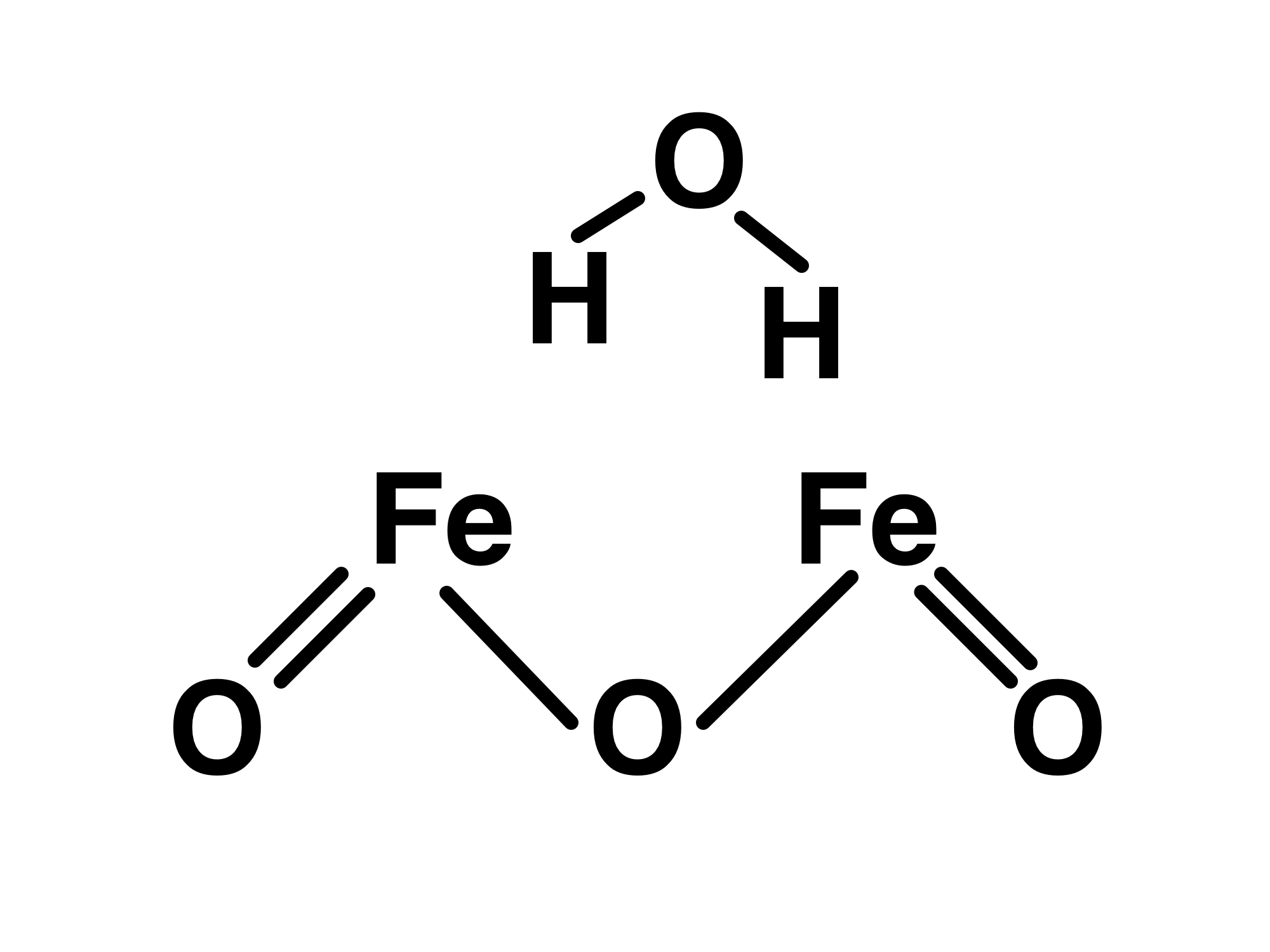
Interactive 2.4.1 Iron(III)Oxide
Read all original figure notes
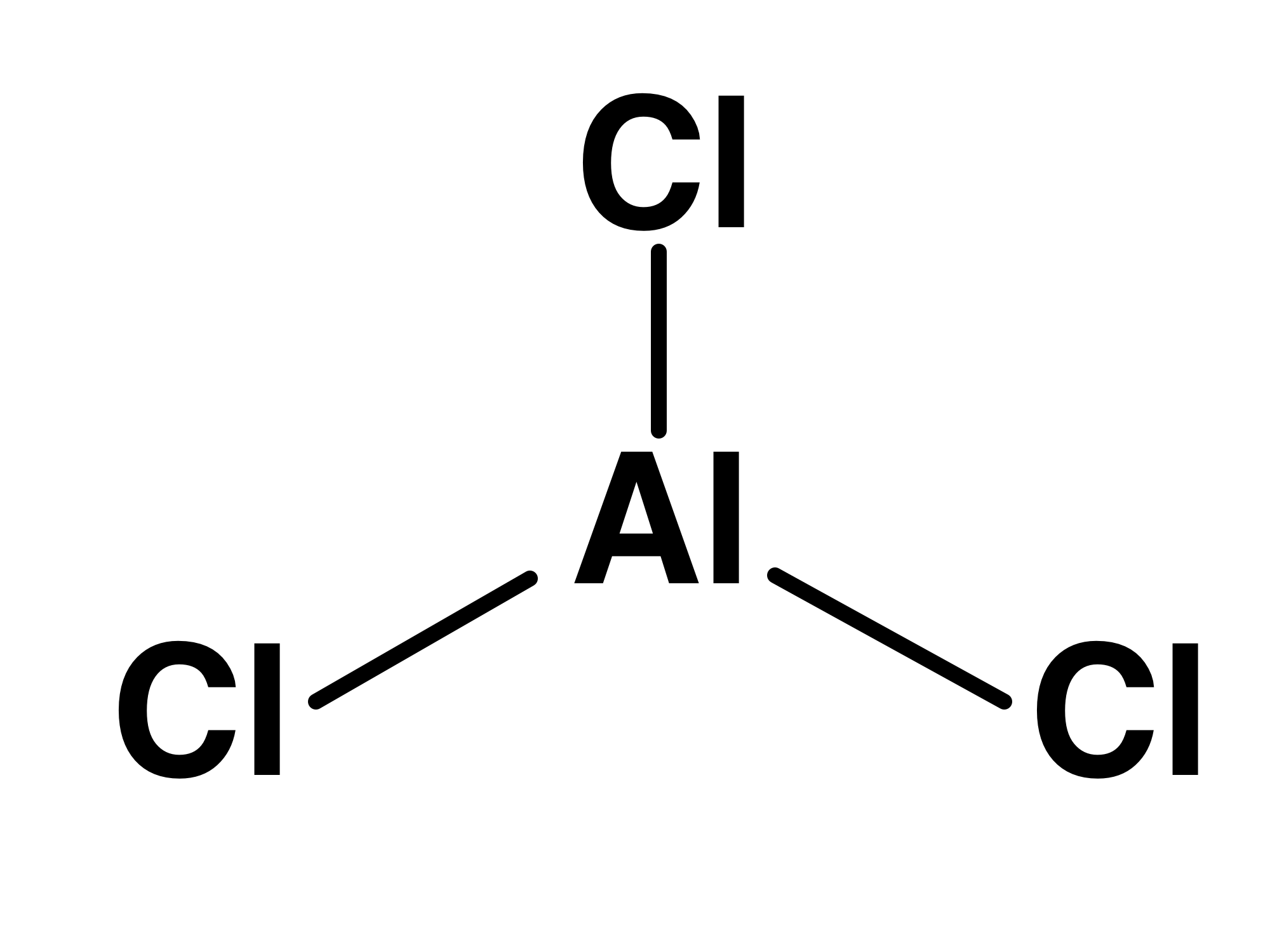
Gallery 2.4.1 Complex Ion Structure
Read all original image captions
Image 1
Image 2
Image 3
Image 4
Complex formation can change the properties of a dissolved metal ion, but rusting also involves oxidation and formation of solid corrosion products. Iron metal loses electrons and is oxidized to positive iron ions; it is not reduced when it becomes positively charged. Oxygen reduction can accompany that process in moist air. Rust is a mixture of iron oxides and oxyhydroxides with varying water content, not simply a shiny metal to which a couple of water ligands were added.
- If the Ligand is an anion, change the name based on how the anion ends:
- Change -ide to -o (phosphide becomes phospho)
- Change the -ate to -ato (sulfate becomes sulfato)
- Change the -ite to -ito (nitrite becomes nitrito)
- If the Ligand is neutral, use the normal name of the ligand EXCEPT for the following:
- Water becomes aqua
- Carbon Monoxide becomes Carbonyl
- Ammonia becomes ammine
- O becomes dioxygen
- N becomes dinitrogen
- There are others, but these are the most common.
- Number the ligands in the complex ion with the following prefixes: mono (1), di (2), tri (3), tetra (4), penta (5), hexa (6), hepta (7), octa (8).
As for the central metal atom, there are two rules for that. If the complex ion is an anion (there is a negative charge) you will need to suffix the metal’s name with ‘ate’, i.e. aluminate or chromate. Sometimes, the latin name is used instead. These include Iron (Ferrate), Copper (Cuprate), Lead (Plumbate), and Gold (Aurate).
Chapter Problems
- What is the solubility of () in a 1M solution of ?
- Reviewed rate/equilibrium task: describe how crushing and stirring can speed dissolution of MgCl₂ at a fixed temperature, then explain why that does not necessarily change equilibrium solubility. Smaller pieces expose more surface; stirring transports dissolved material from the interface. To claim a changed saturation amount, supply equilibrium measurements under new specified conditions.
- You have of water, and you add 41mol of and 10mol of . After bringing the solution to equilibrium, you find out you have of the less soluble salt left. What is the new boiling point of the solution?
- A solution of 0.3M and 0.75M is saturated with (). What is the concentration of in the solution?
- You have 5L of water, 200g of (), 400g of (), and 330g of (). After adding two salts, you are able to completely dissolve them. The third salt is unable to be fully dissolved in the solution. Which salt is left, and how much is left undissolved?
- Acid rain can occur if the concentration of exceeds . What would the concentration (in ppm) need to be in the air for acid rain to develop. Assume , and .
- An evaporation tower is used to strip dissolved gas from water. If a water treatment plant is removing
() from groundwater, what is the minimum concentration that can be met if they heat up the water during the process to ? In ambient air, H2S has a concentration of . - How much does the concentration of Carbon Dioxide change throughout the year if pressure is constant at 0.9 atm (remember makes up of the atmosphere)? The maximum temperature is and the minimum temperature is .
- At what temperature will the solubility of exceed ?
- If seawater is about by weight , the rest being water, what is the freezing point?
- You have three solutions of the same compound at varying molarities. Name two ways you can easily rank the three solutions in order of increasing concentration if you only know the compound involved in the solution?
- A chemist decides he wants to invent a new type of windshield washer fluid that won’t freeze in a Russian winter. If he wants to use and Aluminum Sulfate at a ratio by mass, what will the molality of be if winter can reach ?
- A beaker of water is held under of gas. What temperature do you need if you want an equilibrium concentration of ?
- A solution of Lithium Sulfate is being heated. At , Lithium Sulfate is added until it remains as a precipitate in the solution. What would you expect to happen after you take the solution off of heat?
- If rain forms at a height where , at a temperature of , what will the concentration be in the raindrop, assuming it spends enough time in the cloud to equilibrate and it doesn’t gain any further along its descent?
- Reviewed coordination enrichment: explain why metallic copper placed in ordinary aqueous NaCl cannot simply be assumed to become a copper-ion hydrate or complex. An oxidation process must first supply Cu⁺ or Cu²⁺; identify an oxidant and an electron-balanced reaction before discussing those ions’ complex formation. Salt and water alone do not justify the original proposed synthesis.
- Seawater meets river water at an estuary. The salinity of the seawater begins to infiltrate the river. If the salinity of the water can be shown to be , where is distance from river mouth in and is the concentration of salt as in . At what point up the river will the water freeze if the surface temperature reaches ?
- Carbon dioxide is dissolved into the oceans of the world. If the top of our oceans were to increase in average temperature from to , what would be the mass of CO2 released? The surface area of the oceans is .
- When Ammonia gas dissolves in water, it reacts to form Ammonium and Hydroxide ions. If you have 4 atm of ammonia over water at 25ºC and 30% of the dissolved ammonia dissociates, what is the solubility of Ammonium Chloride (ksp = 30.9)?
- If a bubbler keeps a fish tank saturated in oxygen, what temperature does the tank need to be kept at to ensure that the concentration is at least 11mg/L?
Glossary and deeper reading · 18 refreshers
These editorial refreshers supplement the reading. Definitions and examples are added guidance; original source wording and recorded answers remain in their original context.
-
Ligand
A ligand is an ion or molecule that binds to a central atom or ion in a coordination complex. In the common introductory model, it donates an electron pair to the central metal. For example, water molecules can act as ligands around a metal ion.
-
Complex ion
A complex ion is a charged coordination species containing a central atom or ion and bound ligands. Ligand binding can change properties such as color and the amounts of free metal ions in solution. For example, ammonia ligands can bind to a copper ion to form a differently colored complex.
-
Ion
An ion is an atom or group of atoms with a net electric charge. Ordinary ion formation changes electron count without changing the element's proton count. For example, a sodium atom losing one electron becomes a sodium ion with charge +1.
-
Aqueous solution
An aqueous solution is a solution in which water is the solvent. The dissolved substance may originate as a solid, liquid, or gas, so aqueous does not mean that a solid has melted. For example, sodium chloride dissolved in water is aqueous even though the pure salt is solid.
-
Ionic bonding
Ionic bonding is electrostatic attraction among oppositely charged ions. An ionic solid normally forms an extended lattice rather than separate ion-pair molecules. For example, sodium chloride consists of a repeating array of sodium and chloride ions.
-
Anion
An anion is a negatively charged ion. It has more electrons than needed to balance its positive nuclear charge. For example, a chlorine atom gaining one electron forms a chloride anion.
-
Oxidation
Oxidation is electron loss, represented by an increase in oxidation number. It occurs together with reduction so that electrons are conserved in the overall reaction. For example, a zinc atom becoming a zinc ion with charge +2 undergoes oxidation.
-
Corrosion
Corrosion is deterioration of a material through chemical or electrochemical reactions with its environment. Metal corrosion commonly involves oxidation coupled to a reduction process. For example, rust formation involves iron oxidation together with reactions involving oxygen and water.
-
Carbonyl group
A carbonyl group contains a carbon atom double-bonded to oxygen. Its surrounding attachments distinguish classes such as aldehydes, ketones, and carboxylic acids. For example, the carbonyl carbon in acetone is attached to two carbon-containing groups.
-
Solubility
Solubility describes how much of a substance can dissolve in a specified solvent under stated conditions. It depends on the solute, solvent, temperature, and other relevant conditions and is distinct from how fast dissolution occurs. For example, two salts can have different equilibrium solubilities in water at the same temperature.
-
Chemical equilibrium
Chemical equilibrium is a dynamic state in which forward and reverse reaction rates are equal. Macroscopic composition remains constant in a closed system under fixed conditions, but reactant and product concentrations need not be equal. For example, a reversible reaction can reach equilibrium with much more reactant than product.
-
Saturated solution
A saturated solution has the dissolved concentration corresponding to equilibrium with the undissolved phase under the stated conditions. Microscopic dissolution and precipitation can continue at equal rates when the solid is present. For example, additional solid may remain undissolved after a saturated salt solution is reached at fixed temperature.
-
Evaporation
Evaporation is vaporization occurring at a liquid's surface. It can occur below the boiling point as some particles escape into the gas phase. For example, liquid water can evaporate at room temperature and leave less liquid behind.
-
Molarity
Molarity is the amount of a solute in moles divided by the final solution volume in liters. It describes concentration rather than the total amount of solute. For example, 0.10 mole dissolved to make 0.50 liter of solution gives a molarity of 0.20 mole per liter.
-
Molality
Molality is the amount of solute in moles divided by the solvent mass in kilograms. It uses solvent mass rather than solution volume and differs from molarity. For example, one mole of solute dissolved in two kilograms of water has molality 0.50 mole per kilogram.
-
Precipitate
A precipitate is a solid phase that forms from species in a solution. Whether it forms depends on the ion concentrations and the relevant equilibrium conditions. For example, silver ions and chloride ions can produce a silver chloride precipitate.
-
Oxidizing agent
An oxidizing agent causes another species to lose electrons. The agent accepts those electrons and is itself reduced. For example, a copper ion acts as an oxidizing agent when it accepts electrons from zinc metal.
-
Solubility product
A solubility product is an equilibrium constant for a specified dissolution reaction. Its expression includes dissolved-species activities and omits the pure solid. For example, dissolving one formula unit that releases two anions gives an anion activity squared in the expression.