For Future Reference
Supporting original reading. Follow the AP topic pathway for reviewed scope, worked reasoning and targeted practice.
Chemistry I · original Chapter 4 · combined Chapter 4
Section Breakdown
- VSEPR Theory
- Determining Structure using VSEPR
- Base Structure
- AXE Method structures
Section 4
For Future Reference
Gallery 4.4.1 VSEPR Model
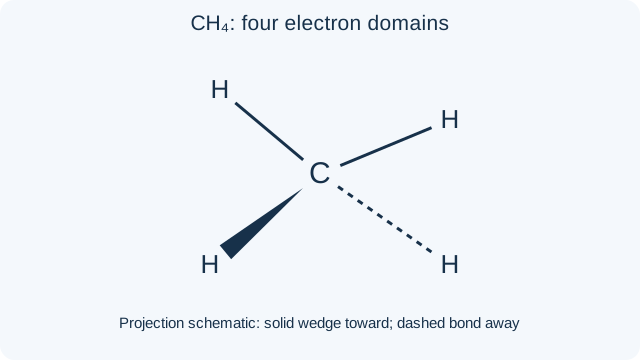
New reviewed diagram replaces the source numeral placeholder.
Reviewed replacement species:CH₄ has four C–H bonding domains and no lone pairs on its central carbon. An isolatedNe atom is not aNe molecule with a VSEPR central atom.
Read all reviewed image captions
Image 1
New reviewed diagram replaces the source numeral placeholder.
Reviewed replacement species:CH₄ has four C–H bonding domains and no lone pairs on its central carbon. An isolatedNe atom is not aNe molecule with a VSEPR central atom.
Image 2
New reviewed diagram replaces the source numeral placeholder.
Four electron domains give tetrahedral electron-domain geometry in this model. A domain describes a region of electron density, not a little electron parked at a vertex.
Image 3
New reviewed diagram replaces the source numeral placeholder.
VSEPR models the domain arrangement that reduces repulsions. It predicts molecular geometry; it does not draw atomic electron trajectories.
Image 4
New reviewed diagram replaces the source numeral placeholder.
Methane’s electron-domain and molecular geometries are tetrahedral, with ideal bond angles about109.5°. The drawing is a projection, not a flat square molecule.
To be able to predict the 3-D geometry, one approach is the VSEPR theory.
VSEPR stands for Valence Electron Pair Repulsion. It relies on the idea that bonded atoms and electron pairs tend to repel one another, and the closer they are, the stronger the repulsion. It therefore follows that if you minimize the repulsion (maximize the distance) you have the most stable structure.
That idea is probably quite confusing, so we will go over a few examples in this gallery.
The supplied COLLADA file is byte-identical across 13 source placements with different titles. This viewer shows that original geometry.
Interactive 4.4.2 Most stable structure
Loading the original 3D model…
Original preview and model

This viewer rotates the original source mesh. Lighting and controls are a web adaptation.
Download original COLLADA modelThe supplied COLLADA file is byte-identical across 13 source placements with different titles. This viewer shows that original geometry.
Interactive 4.4.3 Geometry of Stick and Ball
Loading the original 3D model…
Original preview and model

This viewer rotates the original source mesh. Lighting and controls are a web adaptation.
Download original COLLADA modelThe supplied COLLADA file is byte-identical across 13 source placements with different titles. This viewer shows that original geometry.
Interactive 4.4.1 Stick and Ball concept
Loading the original 3D model…
Original preview and model
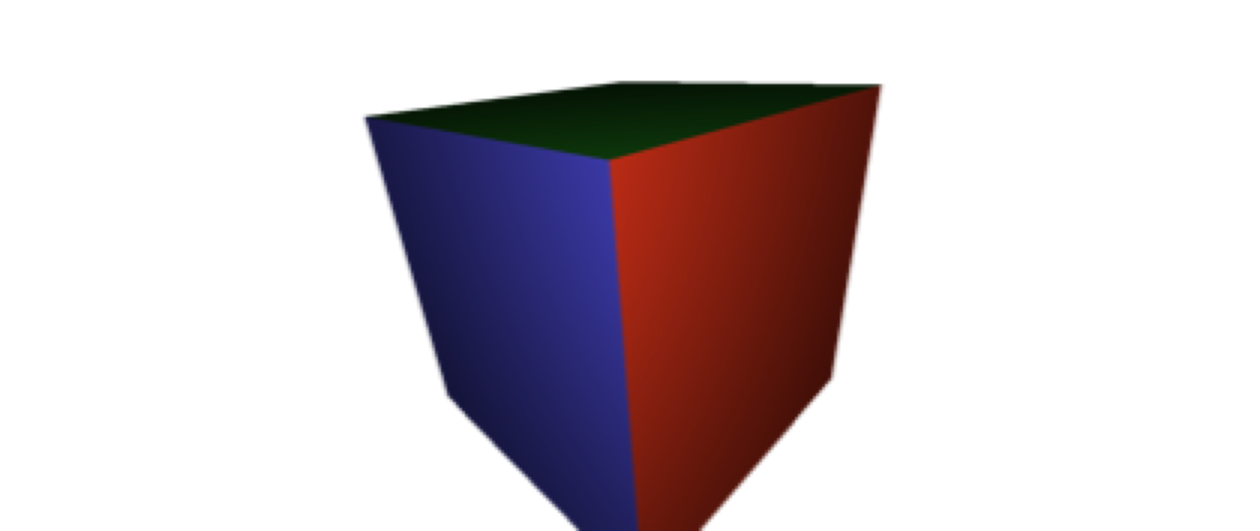
This viewer rotates the original source mesh. Lighting and controls are a web adaptation.
Download original COLLADA modelLet’s take water, for example.
Water’s Lewis Structures looks like this:
<Image 1>
So, if we want to minimize the repulsion between the two hydrogen atoms and the two lone pairs, what kind of structure are we left with?
One way of thinking about this problem is to imagine a ball with 4 sticks protruding from it, representing the bonds and lone pairs.
Now, we need to evenly distribute the sticks around the ball. To do this, we need to go back to our geometry. To have an even distribution, we will draw triangular planes between all adjacent points.
Now, we know we have a 3-D object with 4 triangular faces. What kind of object would that be when we make each face the same area? A regular triangular pyramid:
The supplied COLLADA file is byte-identical across 13 source placements with different titles. This viewer shows that original geometry.
Interactive 4.4.5 Water in 3-D
Loading the original 3D model…
Original preview and model

This viewer rotates the original source mesh. Lighting and controls are a web adaptation.
Download original COLLADA modelThe supplied COLLADA file is byte-identical across 13 source placements with different titles. This viewer shows that original geometry.
Interactive 4.4.4 Tetrahedral Structure
Loading the original 3D model…
Original preview and model

This viewer rotates the original source mesh. Lighting and controls are a web adaptation.
Download original COLLADA modelIf we then assign two sticks to be the hydrogen atoms (represented by white balls) and the other two to be lone pairs (represented by the yellowish oblong ovals), we have the following structure:
The supplied COLLADA file is byte-identical across 13 source placements with different titles. This viewer shows that original geometry.
Interactive 4.4.6 Water in 3-D
Loading the original 3D model…
Original preview and model
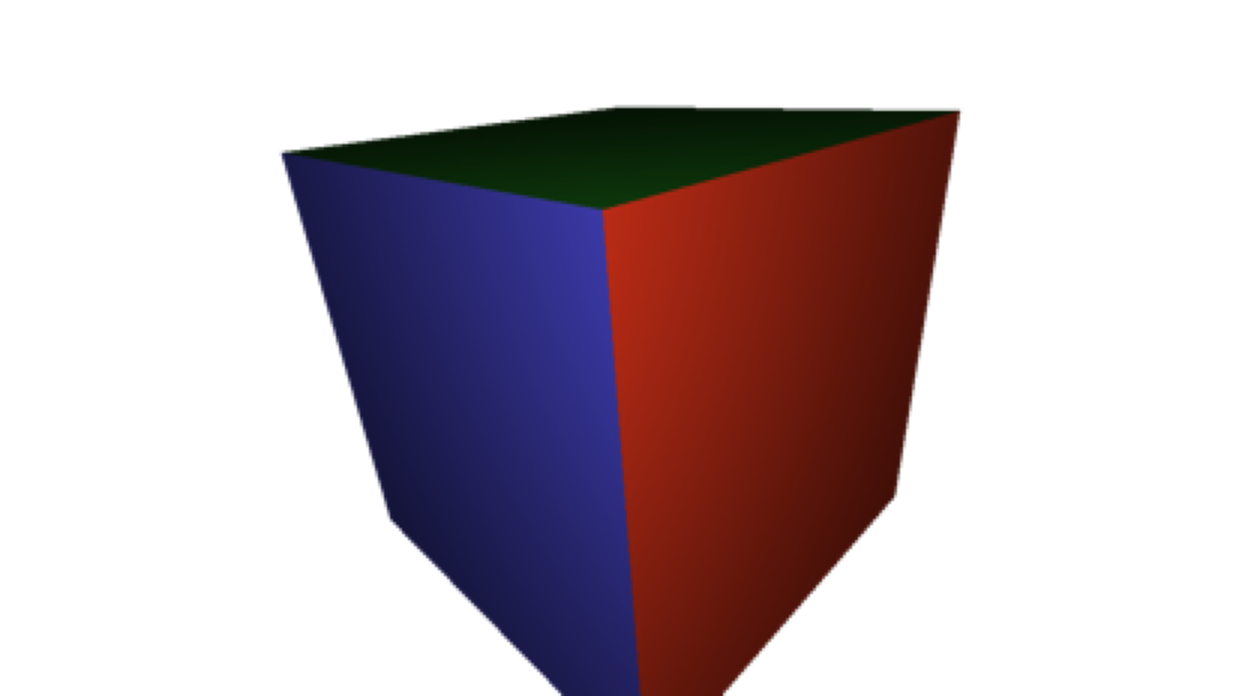
This viewer rotates the original source mesh. Lighting and controls are a web adaptation.
Download original COLLADA modelWhen drawing only the atoms and bonds, you may leave lone-pair dots out of a simplified picture. The lone pairs still exist and affect electron-domain geometry and bond angles. VSEPR first counts all domains—bonding and nonbonding—then names the molecular geometry from the positions of the atoms. Water therefore has four domains around O and a bent molecular shape.
This structure is referred to a ‘bent’, due to the bent shape you see.
Instead of going through the derivation for each structure, you should instead learn the patterns outlined below.
Before we begin, you need to know how to draw 3-D structures, as you won’t be making 3-D models for every problem you encounter.
If we want to draw the water molecule (including the electron pairs), we pick one plane on the molecule to act as our paper, and then we draw the bonds that lie on that plane normally. When picking the plane, try to have as many bonds as possible. Next, you add in the bonds that would go into the paper using a dashed triangle instead of a simple line. The bonds that would be coming out of the paper should be solid triangles. This gallery shows what these will look like.
Gallery 4.4.2 Drawing 3-D structures
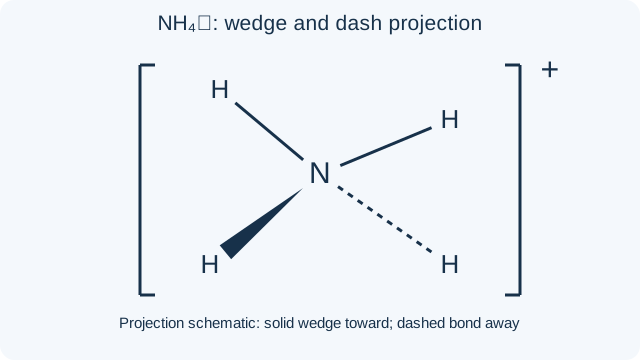
New reviewed diagram replaces the source numeral placeholder.
The chosen species is ammonium,NH₄⁺, with four N–H bonds and no nitrogen lone pair. The positive charge is required; it is not neutralNH₄.
Read all reviewed image captions
Image 1
New reviewed diagram replaces the source numeral placeholder.
The chosen species is ammonium,NH₄⁺, with four N–H bonds and no nitrogen lone pair. The positive charge is required; it is not neutralNH₄.
Image 2
New reviewed diagram replaces the source numeral placeholder.
Ordinary lines represent bonds in the drawing plane. We choose that plane to communicate a three-dimensional tetrahedral arrangement.
Image 3
New reviewed diagram replaces the source numeral placeholder.
A solid wedge points toward the viewer; a dashed wedge or hashed bond points away. The source caption reversed those meanings. Ordinary lines remain in the plane.
| AXE | Shape |
|---|---|
AX2E0 | Linear |
AX2E1 | Bent |
AX2E2 | Bent |
AX2E3 | Linear |
AX3E0 | Trigonal Planar |
AX3E1 | Trigonal Pyramidal |
AX3E2 | T-Shaped |
AX4E0 | Tetrahedral |
AX4E1 | Seesaw |
AX4E2 | Square Planar |
AX5E0 | Triangular Bipyramidal |
AX5E1 | Square Pyramidal |
AX6E0 | Octahedral |
To determine the structure of any centralized molecule (i.e. one atom with multiple atoms bonded to it), we will utilize the AXE method.
The AXE method starts with the central atom: A, and then counts the number of bonds (double bonds and triple bonds only count as one bond for this case). This is X. Then E is the number of lone pairs of electrons on the central atom.
To represent Water, We look at the central atom, O, then see 2 bonds with Hydrogens, and 2 lone pairs. The AXE method shows . The AXE method can let you use the following table to identify the structure:
Gallery 4.4.3 Base Structures by Steric Number
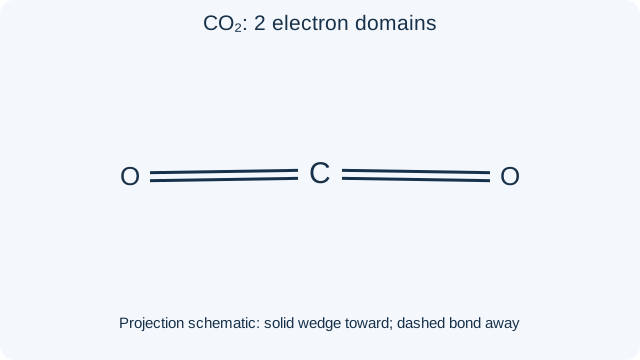
New reviewed diagram replaces the source numeral placeholder.
Reviewed example:CO₂ has 2 bonding domains and no central-atom lone pairs, giving linear electron-domain and molecular geometry. A double bond counts as one domain. CO₂ has two double bonds; this single-line domain sketch counts regions rather than replacing its Lewis structure. H₂ has no central atom for this example.
Read all reviewed image captions
Image 1
New reviewed diagram replaces the source numeral placeholder.
Reviewed example:CO₂ has 2 bonding domains and no central-atom lone pairs, giving linear electron-domain and molecular geometry. A double bond counts as one domain. CO₂ has two double bonds; this single-line domain sketch counts regions rather than replacing its Lewis structure. H₂ has no central atom for this example.
Image 2
New reviewed diagram replaces the source numeral placeholder.
Reviewed example:BF₃ has 3 bonding domains and no central-atom lone pairs, giving trigonal planar electron-domain and molecular geometry. A double bond counts as one domain.
Image 3
New reviewed diagram replaces the source numeral placeholder.
Reviewed example:CH₄ has 4 bonding domains and no central-atom lone pairs, giving tetrahedral electron-domain and molecular geometry. A double bond counts as one domain.
Image 4
New reviewed diagram replaces the source numeral placeholder.
Reviewed example:PCl₅ has 5 bonding domains and no central-atom lone pairs, giving trigonal bipyramidal electron-domain and molecular geometry. A double bond counts as one domain. IF₅ instead has six domains:five bonds and one lone pair; its molecular geometry is square pyramidal. It is not a five-domain example.
Image 5
New reviewed diagram replaces the source numeral placeholder.
Reviewed example:SF₆ has 6 bonding domains and no central-atom lone pairs, giving octahedral electron-domain and molecular geometry. A double bond counts as one domain.
Let’s introduce a concept called the Steric Number, which is the sum of the lone pairs and the bonds of the molecule. Every steric number has its own base structure.
This gallery shows the structure of Steric Numbers 2 - 6, with each component as a bond with Hydrogen, and the central atom X.
Now when we start adding bonded atoms to replace those lone pairs, they start taking shapes in a pattern that’s a lot more understandable. Time for a new table, where we have the steric number, the AXE number, the name of the shape, and finally a small image to help you visualize that shape:
| Steric No. | AXE | Shape | Image |
|---|---|---|---|
| 2 | AX2E0 | Linear | <Image> |
| 3 | AX2E1 | Bent | <Image> |
| 3 | AX3E0 | Trigonal Planar | <Image> |
| 4 | AX2E2 | Bent | <Image> |
| 4 | AX3E1 | Trigonal Pyramidal | <Image> |
| 4 | AX4E0 | Tetrahedral | <Image> |
| Steric No. | AXE | Shape | Image |
|---|---|---|---|
| 5 | AX2E3 | Linear | <Image> |
| 5 | AX3E2 | T-Shaped | <Image> |
| 5 | AX4E1 | Seesaw | <Image> |
| 5 | AX5E0 | Triangular Bipyramidal | <Image> |
| 6 | AX4E2 | Square Planar | <Image> |
| 6 | AX5E1 | Square Pyramidal | <Image> |
| 6 | AX6E0 | Octahedral | <Image> |
Glossary and deeper reading · 4 refreshers
These editorial refreshers supplement the reading. Definitions and examples are added guidance; original source wording and recorded answers remain in their original context.
-
VSEPR
VSEPR is a model for predicting molecular geometry from electron domains around a central atom. Bonding domains and lone pairs arrange to reduce repulsion, and a multiple bond counts as one domain for the basic geometry classification. For example, water has four electron domains around oxygen but a bent molecular shape.
-
Lewis structure
A Lewis structure represents valence electrons using bonds and lone pairs. Its construction requires an electron count, an atom arrangement, and a final check against the total available electrons and charge. For example, water's Lewis structure has two O–H bonds and two lone pairs on oxygen.
-
Lone pair
A lone pair is a pair of valence electrons assigned to one atom rather than to a bond in a Lewis model. Lone pairs influence geometry and can participate in interactions or new bonds. For example, oxygen's two lone pairs help explain water's bent molecular shape.
-
Electron domain
An electron domain is a region of electron density around an atom in the VSEPR model. A bond of any order counts as one domain, and a lone pair counts as another. For example, two bonds and two lone pairs give water's oxygen four domains and a steric number of four.