Polarity
Supporting original reading. Follow the AP topic pathway for reviewed scope, worked reasoning and targeted practice.
Chemistry II · original Chapter 1 · combined Chapter 9
Table of Contents
- Review of Electronegativity
- What is Polarity?
- The Dipole
Section 1
Polarity
You might recall from your previous Chemistry experience a subject called Electronegativity. This term refers to the affinity an atom has for electrons. The general trend for electronegativity is that it increases as you go up the periodic tables and also as you go from left to right in the periodic table. Remember, however, that the first few Noble Gases: Helium, Neon, Argon, are not electronegative at all. This makes Fluorine the most highly Electronegative atom on the table.
We must also now recall another concept you have previously covered: Covalent Bonds. These bonds form between atoms who share their electrons. That seems pretty simple, but as electronegativity points out, some atoms are less likely to share their electrons. What does that mean for a molecule which has a stingy atom that won’t give up its electrons?
Well, in a word, it becomes polarized. When a molecule becomes polarized, that means that the electrons are not evenly distributed throughout the molecule. This results in a portion of the molecule with a high concentration of electrons. To have a highly concentrated area, you have to pull from another area, making a lower concentrated area.
The next piece to the polarity puzzle is to realize that electrons have a negative (-) charge to them, while protons have a positive (+) charge. Typically, these charges cancel out, and they become neutral. However, if the electrons are concentrated one spot in the molecule, that area gets more negatively charged than it should be. Comparably, the area losing electrons becomes more positively charged. As these charges are typically low, we call them partial charges. A partial charge is represented by the lowercase delta: δ. To declare any charge on it, merely add a - or +: -δ, +δ.
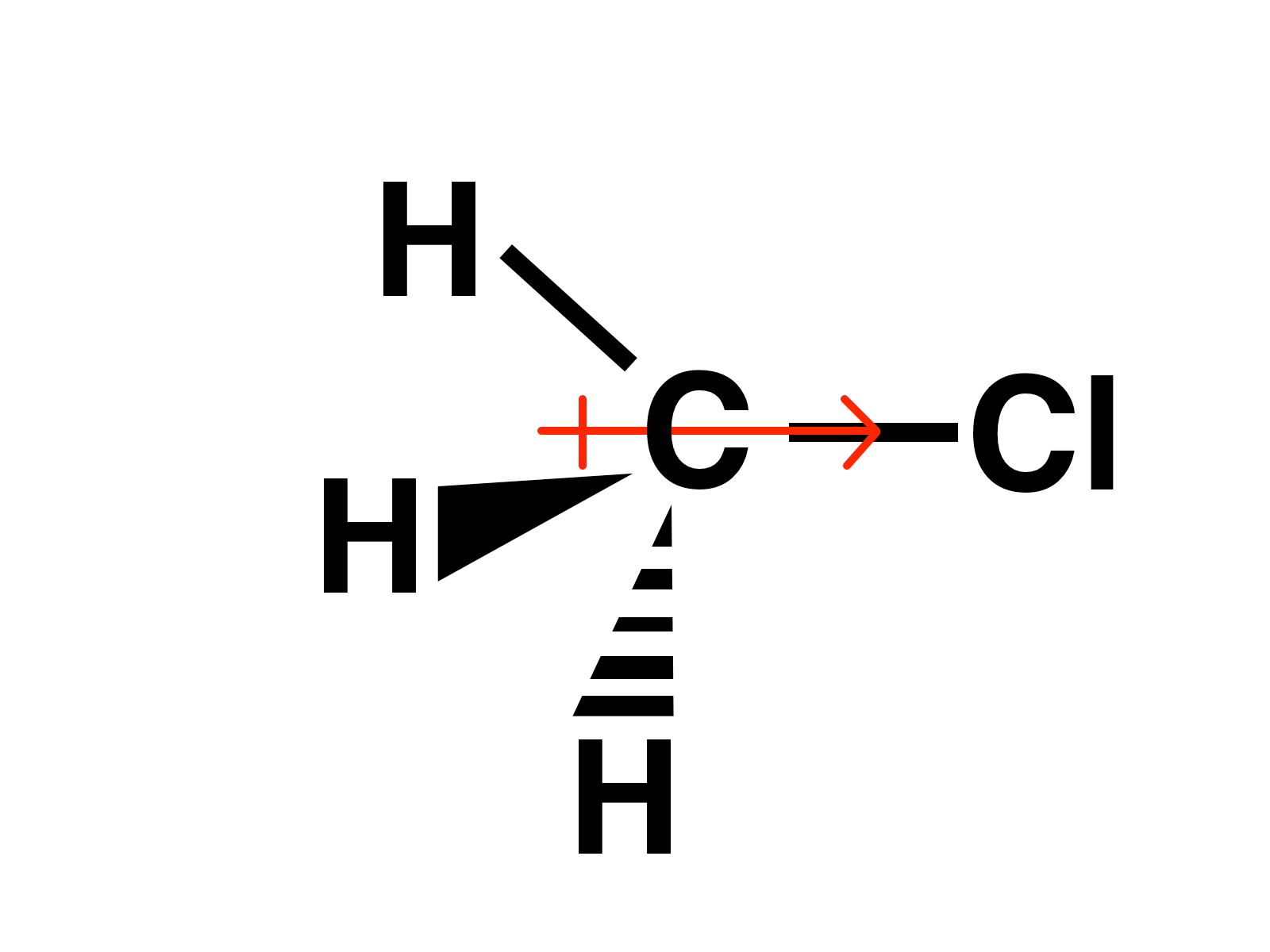
Interactive 1.1.1 The Dipole of CH3Cl
Read all original figure notes
Positive Side
Over here, the Hydrogen atoms are fairly comparable to Carbon in electronegativity compared to Chlorine, and because chlorine is over to the right, this side is at a loss of electrons. This leads to a partial positive charge.
Negative Side
Because Chlorine is much more electronegative compared to H or C, the electrons will gravitate towards this side of the molecule, leading to a partial negative charge.
Gallery 1.1.1 Determining Polarity of Methane (CH4)
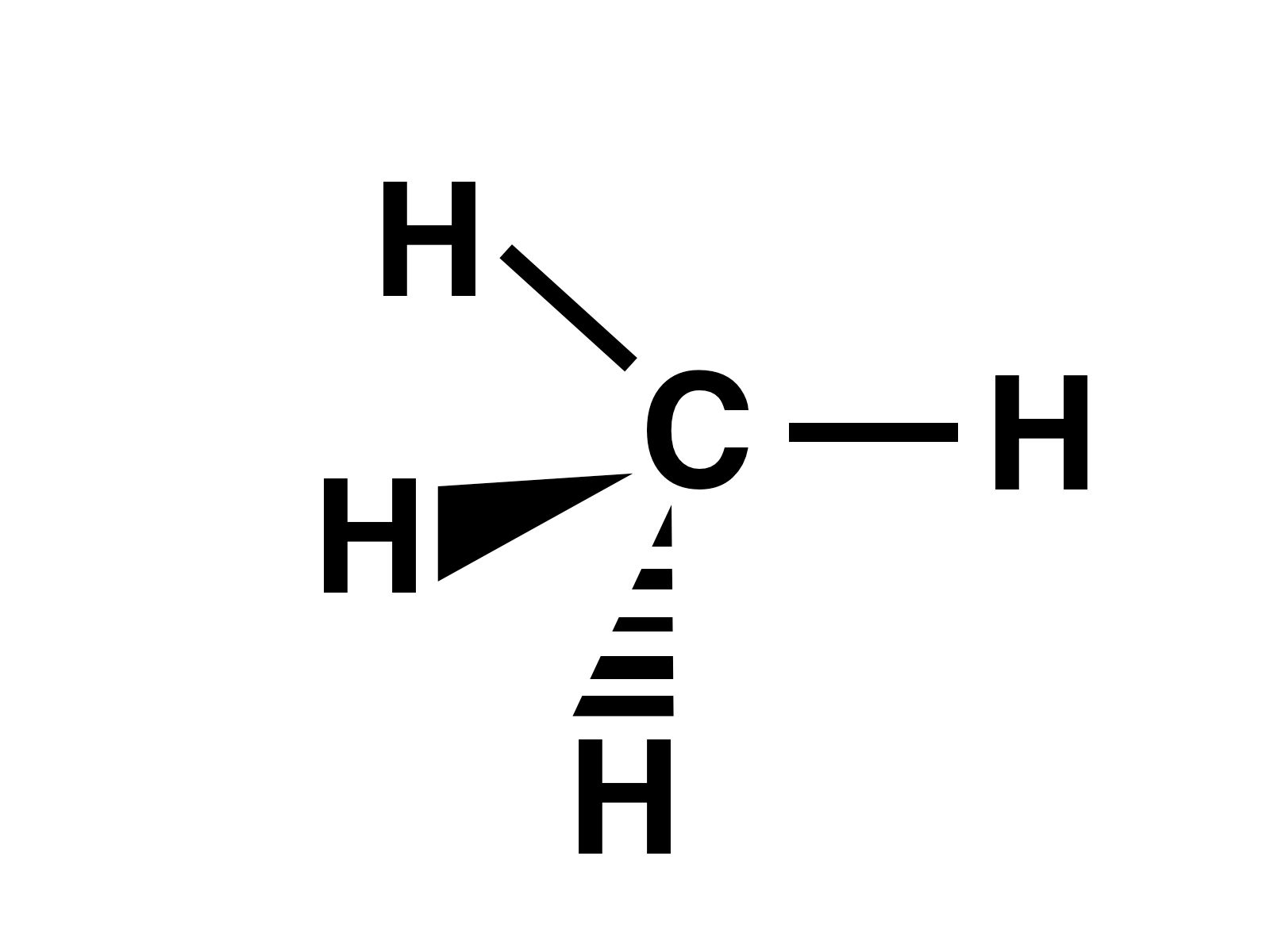
To start, we need to identify the dipoles on each bond.
Read all original image captions
Image 1
To start, we need to identify the dipoles on each bond.
Image 2
Carbon is a bit more electronegative than Hydrogen, so we have dipoles that look like this.
Image 3
Because all the dipoles were in equal strength and pointing towards the center from opposite ends, they all will cancel one another, leading to no dipole forming on the methane molecule.
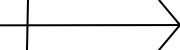
The arrow points from the +δ to the -δ.
To determine whether or not a molecule has an overall dipole is to determine whether that molecule is polar or not. If the dipole of the molecule exists, then it is polar. If no such dipole is present, the molecule is non-polar.
Just because there is a partial charge present in the molecule does not mean that there is a dipole present in the molecule. This is because in some cases there are local dipoles present between each atom, but on the whole these dipoles cancel each other out. Therefore, it is necessary to look at the dipoles of each bond in a molecule before deciding on whether or not that molecule is polar or not.
Determine whether H2O is Polar or Non-Polar, and identify any partial charges on the molecule.
Step 1: Draw out the Molecule
In this case our molecule is water (H2O). This is a simple bent molecule. Therefore we can draw it as such:
Step 2: Identify points of high and low electronegativity
We know that Hydrogen will have a low electronegativity, and Oxygen will be pretty high.
Step 3: Place the partial charges (if any)
We will have partial charges, as we have a polar molecule. We know that oxygen represents the most highly electronegative portion of the atom, so we can therefore place our -δ there. As for the +δ, we have two places left: both Hydrogen atoms. As each atom has the same electronegativity, we will need to draw two positive partial charges. This gives us the following:
Step 4: Determine the polarity of the Molecule
As we have a large discrepancy of electronegativity throughout the molecule, we can say that the molecule is going to be polar.
Determine whether O2 is Polar or Non-Polar, and identify any partial charges on the molecule.
Step 1: Draw out the Molecule
Whenever you have only 2 atoms bonded, it always results in a linear structure:
Step 2: Identify points of high and low electronegativity
We recall that Oxygen is very electronegative, however as this molecule only contains Oxygen, there is no relative point which would be considered more electronegative.
Step 3: Place the partial charges (if any)
As the molecule has no points of high or low electronegativity, there are no partial charges.
Step 4: Determine the polarity of the Molecule
Due to the uniformity of the electronegativity, we can say that this molecule is non-polar. This might seem weird as Oxygen is so stereotypically electronegative, but due to the uniformity of the molecule, we resolve to say that it is non-polar.
Determine whether C6H14O is Polar or Non-Polar, and identify any partial charges on the molecule
Step 1: Draw out the Molecule
This molecule is pretty lengthy, so we have the following structure:
Step 2: Identify points of high and low electronegativity
We decided previously that Carbon and Hydrogen are both have similarly low electronegativity. However, that Oxygen on the end has a high electronegativity.
Step 3: Place the partial charges (if any)
This molecule has quite a few bonds, but the local dipoles in most of the carbon-hydrogen bonds would cancel one another out. To only look at the relevant partial charges, we will leave those out. This leaves us with:
Step 4: Determine the polarity of the Molecule
Thanks to the presence of the oxygen, this molecule is Polar.
Glossary and deeper reading · 2 refreshers
These editorial refreshers supplement the reading. Definitions and examples are added guidance; original source wording and recorded answers remain in their original context.
-
Electronegativity
Electronegativity describes an atom's tendency to attract shared electron density in a bond. It helps predict bond polarity but is not the same as ionization energy or electron affinity. For example, oxygen attracts shared electrons more strongly than hydrogen in an O–H bond.
-
Partial charge
A partial charge describes an uneven distribution of electron density within a bond or molecule. It is marked by a delta symbol and does not necessarily represent a full ionic charge. For example, oxygen carries a partial negative charge in water while its hydrogens carry partial positive charges.