Intermolecular Forces
Supporting original reading. Follow the AP topic pathway for reviewed scope, worked reasoning and targeted practice.
Chemistry II · original Chapter 1 · combined Chapter 9
Table of Contents
- Dipole-Dipole
- Dipole-Induced Dipole
- Induced Dipole - Induced Dipole
- H-Bonding
Section 2
You know a lot about atomic bonds, also known as intramolecular bonds. You know that there’s covalent bonding and ionic bonding, and that sometimes you’ll have double, or even triple bonds. What you haven’t really been exposed to is molecular bonds.
Just as atomic bonds are bonds between atoms, molecular bonds are bonds between molecules. When a molecule interacts with other molecules around it, it does so through intermolecular forces. One of the easiest objects to think about when coping with this idea is any solid object. Let’s take a piece of ice, just to use chemicals we are familiar with. We know that ice is comprised of water, which itself is comprised of two Hydrogen atoms and one Oxygen atom. We know even further that the molecule has a bent structure and looks like this:
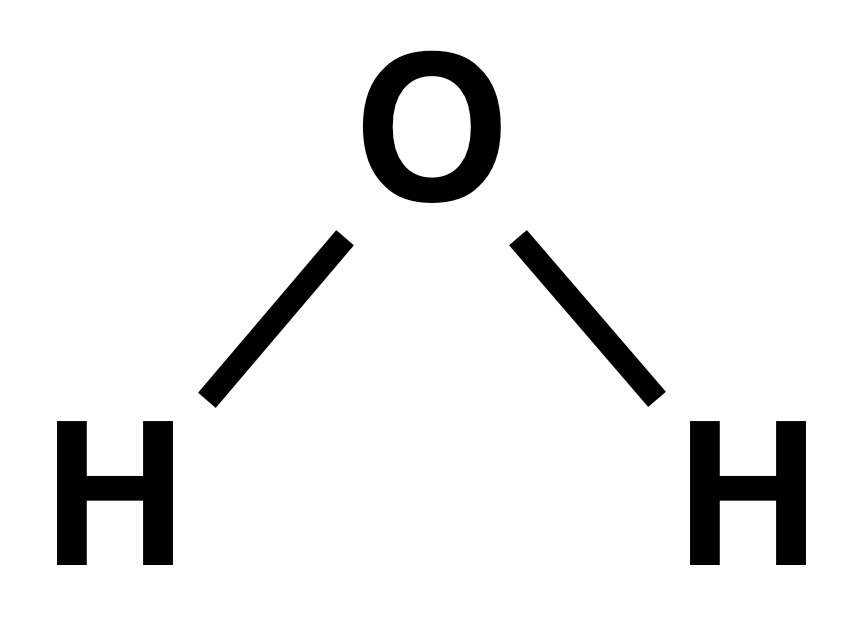
So we can safely say that on the atomic scale, ice should look like that. But then how does it have a different shape when we look at ice cubes? Each ice cube is itself comprised of many molecules. To get those molecules to retain their shape in the form of an ice cube, there must be some type of molecular force going on.
A salt crystal is an extended ionic lattice, not one very large molecule. Its formula unit states a fixed ratio of cations to anions. Melting an ionic solid disrupts the lattice arrangement while retaining ionic species; it differs from separating the molecules in a molecular liquid.
Gallery 1.2.1 Dipole-Dipole Bonds
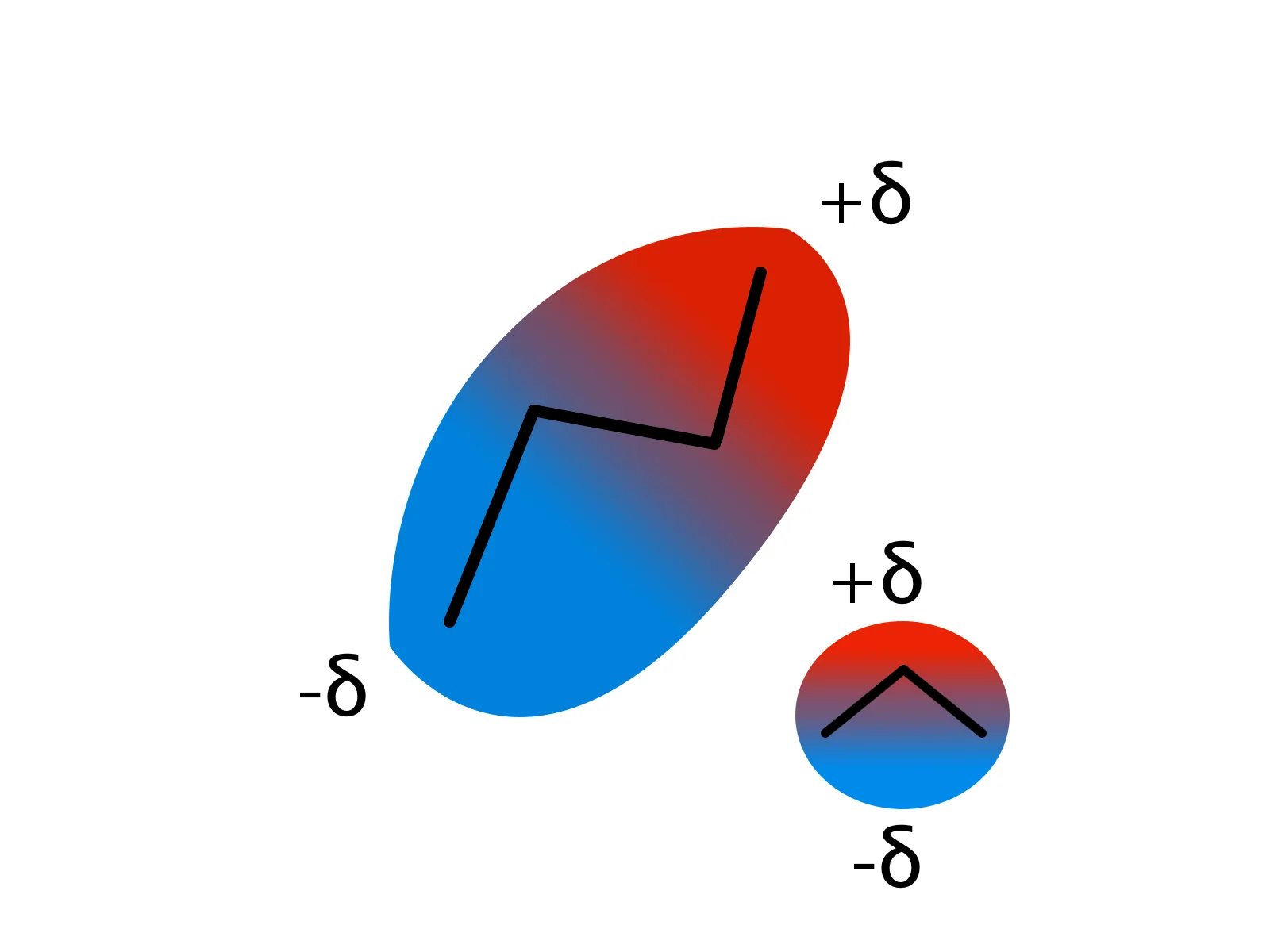
Here we see two molecules with a dipole on them. The red illustrates the more positive portion of the molecule while the blue shows the more negative part.
Read all original image captions
Image 1
Here we see two molecules with a dipole on them. The red illustrates the more positive portion of the molecule while the blue shows the more negative part.
Image 2
Once the two dipole-carrying molecules are near each other, the positive charges repel one another, causing the smaller molecule to begin to rotate away.
Image 3
Eventually, the positive charge of one dipole will line up with the negative charge of the other, leading to a charge-based bond forming between the two molecules.
Ice is a molecular solid with a hydrogen-bonded arrangement of H₂O molecules. The individual water molecules retain their covalent O–H bonds. Melting changes the intermolecular arrangement and leaves many transient hydrogen-bond interactions in liquid water; it does not normally split the water molecules into H and O atoms.
Not only do the van der Waals forces provide for ice’s solid form, they also allow for water to have surface tension. Just because the water is liquid doesn’t mean there isn’t at least some intermolecular forces going on.
So what is all this non-sense about van der Waals forces, anyway?
Well, it all stems from the idea of a dipole, which you learned about in the last section. As shown in the following gallery, a dipole occurs when you have a positively charged side of a atom and a negatively charged side. If you have two molecules that each have a positive and negative side, then you will see them arrange themselves such that the negative side of one atom is near the positive side of the other. This is due to the simple law of magnetism: that opposite charges attract one another.
For this type of bond to occur, however, the molecules must already have dipoles. What happens between a dipole-containing molecule and a non-polar molecule?
Gallery 1.2.2 Induced Dipole - Induced Dipole Bonds
Read all original image captions
Image 1
Image 2
Image 3
Image 4
Image 5
Gallery 1.2.3 Dipole - Induced Dipole Bonds
Read all original image captions
Image 1
Image 2
Image 3
You may think that covers it, but there is yet another case where molecules can interact with one another. This is the magic of induced dipole - induced dipole bonds.
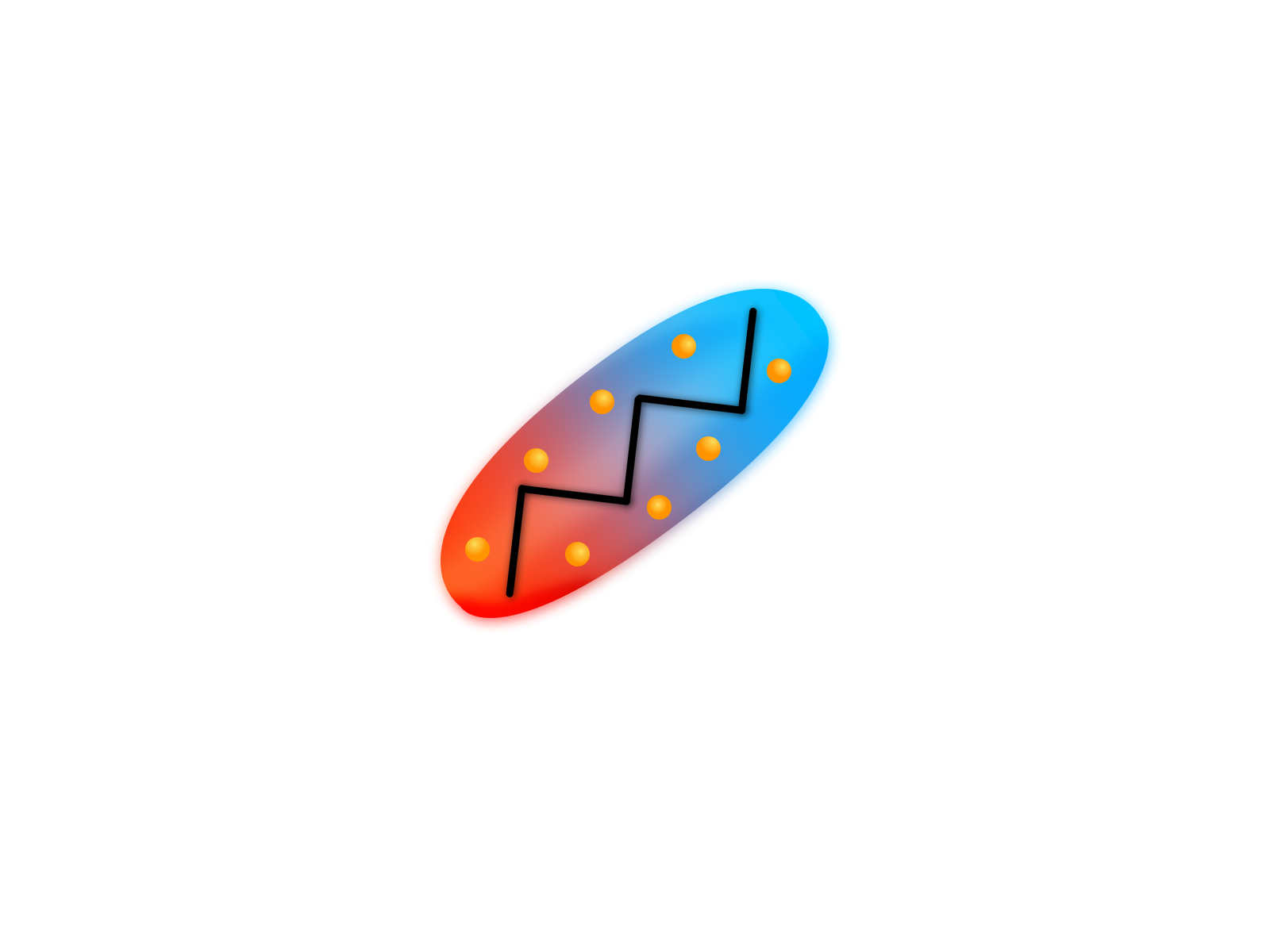
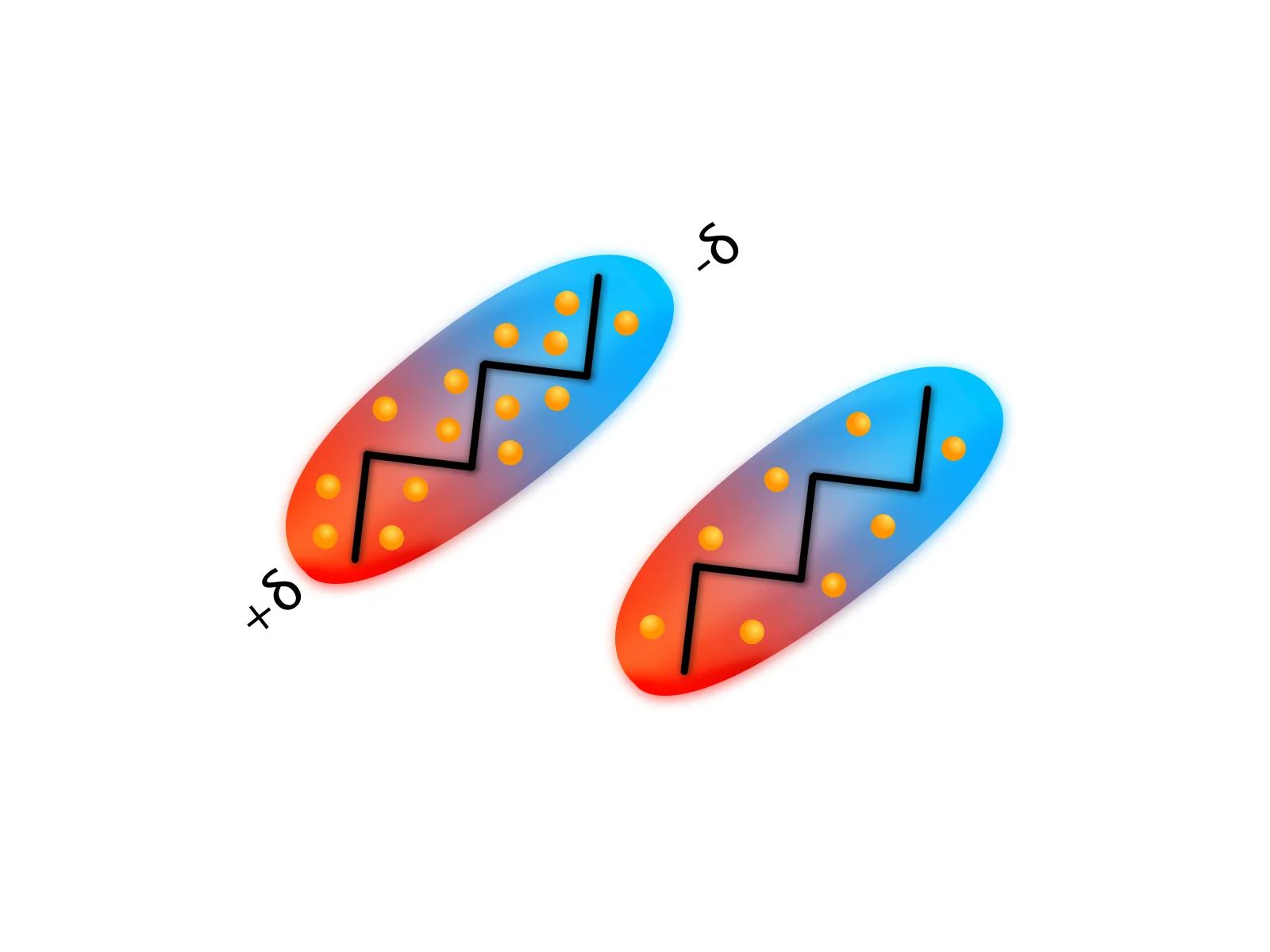
These bonds are very peculiar in that you start with two non-polar molecules and you wind up getting two dipoles out of them. Let’s try to paint a picture of what’s happening, and then I’ll actually paint you a picture in a gallery.
When a molecule has any sort of energy at all, its components are constantly moving. As the electrons are free to move as they want, they will wind up moving throughout the molecule. Even though they tend to congregate around the positively charged nuclei, periodically they are more heavily concentrated in one spot on the molecule, giving that molecule a dipole.
Typically these dipoles are very short-lived, as the electrons are still moving. Therefore, they will quickly revert to a normal non-polar molecule. However, when two molecules happen to gain opposing dipoles in the same instant, these dipoles will attract to one another, and provide an ‘anchor’ for each other, allowing both dipoles to persist. It is this remarkable occurrence that we call an ‘induced dipole - induced dipole’ bond.
Together, these three bonds comprise the van der Waals forces, and allow for molecules to interact with one another beyond the typical expansion of atomic bonds. In fact, the van der Waals forces are the primary means of molecular interaction in both liquids and gases.
That just about covers it for the intermolecular forces. Now it’s time to talk about the biggest and baddest of the intermolecular forces, the Hydrogen Bond (H-Bond).
An H-Bond is really just a special subset of the dipole-dipole bond. What makes it so different is that it is much stronger than the typical van der Waals bonds you normally see. What makes the H-Bond so potent is that it’s your most extreme case of a Dipole-Dipole bond. It requires a very electronegative atom (F, O, or N) and a very non-electronegative atom, which is your H. To form an H-Bond, you need both an H-Donor and and H-Acceptor. The H-Acceptor is the aforementioned electronegative atom, and is always either F, O, or N.
As for the H-Donor, obviously it has to be a Hydrogen if it is to donate the Hydrogen. It’s a bit more than that, though. The Hydrogen has to be subject to a fairly large dipole already. This means that the meager dipole between a Carbon and Hydrogen is not sufficient to allow the Hydrogen to offer itself to an H-Bond. Instead, your prototypical H-Donor is a Hydrogen bonded to a Nitrogen, Oxygen, or Fluorine atom.
A Hydrogen bonded to a Carbon or other atom which wouldn’t typically have a strong dipole can still sometimes donate itself. To do so, the molecule would need a strong dipole that makes the hydrogen even less electronegative than it normally is.
That about covers intermolecular forces, so to re-cap, let’s start with a comparison of the strengths of these forces:
In order of High > Low bond strength:
There is no universal strongest-to-weakest ranking that works for every pair of different substances. Hydrogen bonding can strongly affect small molecular compounds, while large polarizable species can have substantial dispersion attractions. Compare the actual particle sizes, shapes and available interactions, then connect the comparison to boiling-point or other data. All molecules experience dispersion.
If we wanted to include intramolecular forces:
Do not rank all substances by a universal list of force names. Bonding within a particle, attractions between particles, the number of contacts and the extended structure all matter. Compare specified substances with data and a model: for example, hydrogen bonding can explain why water boils above a similar-sized nonpolar molecule, but a sufficiently large polarizable molecule can have substantial dispersion attractions.
Gallery 1.2.4 Identifying H-Donors
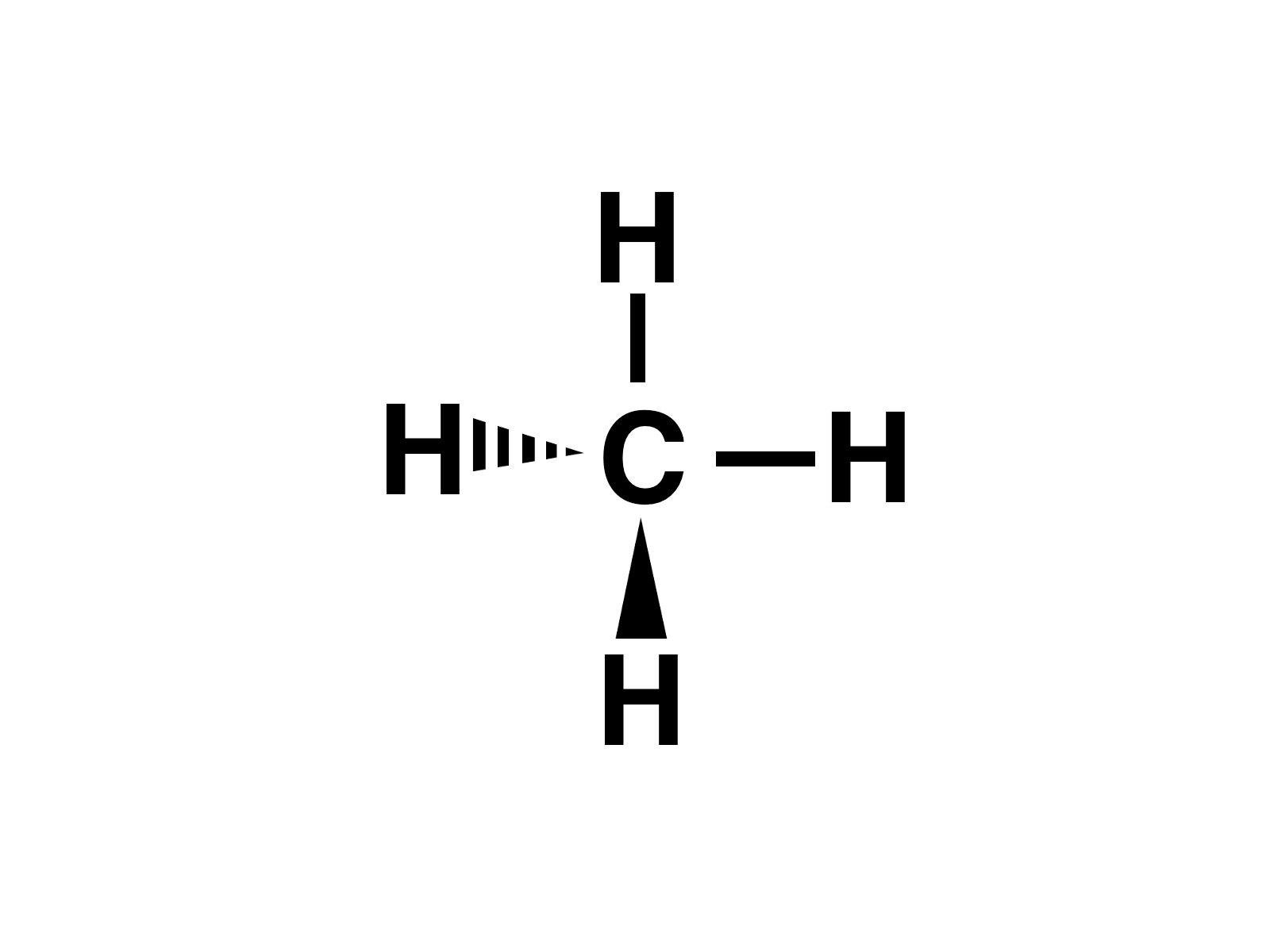
Read all original image captions
Image 1
Image 2
Image 3
Image 4
Dispersion is often the only intermolecular attraction in a nonpolar molecular substance, but that does not make it negligible or universally weakest. Polarizability and contact area can make its total contribution large. A larger hydrocarbon can therefore have a higher boiling point than a much smaller molecule with a permanent dipole. State the species before ranking.
Gallery 1.2.5 Identifying H-Acceptors
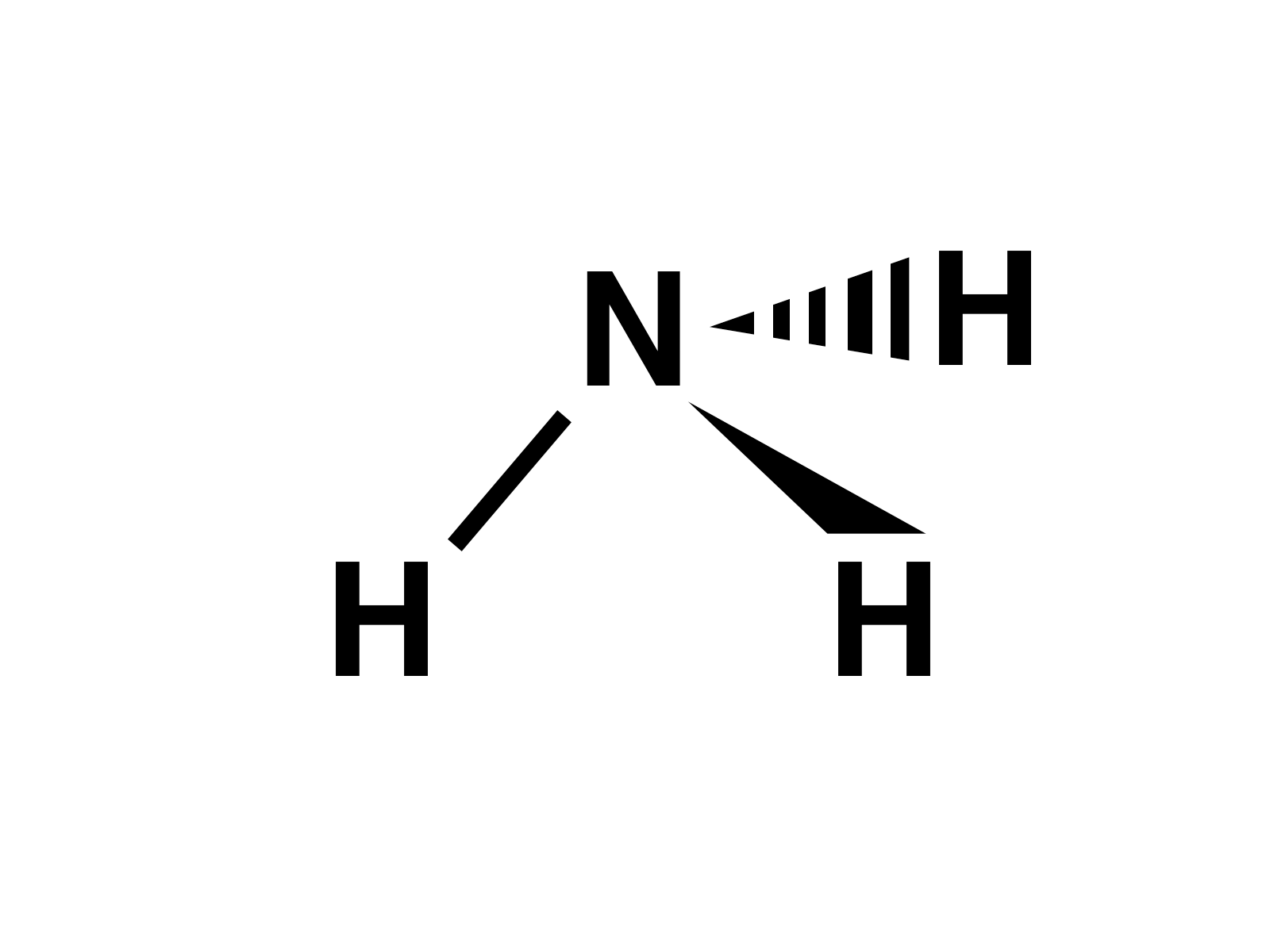
Read all original image captions
Image 1
Image 2
Image 3
Image 4
That is what occurs in the H-Bond. The Hydrogen Bond relies on a very high difference in charge, resulting in the strongest Dipole-Dipole bonds you’ve ever seen!
The next few galleries will outline a few examples of H-Donors and H-Acceptors.
Glossary and deeper reading · 13 refreshers
These editorial refreshers supplement the reading. Definitions and examples are added guidance; original source wording and recorded answers remain in their original context.
-
Dipole–dipole forces
Dipole–dipole forces involve interactions between permanent molecular dipoles. Favorable orientations place relatively positive and negative regions near one another. For example, neighboring hydrogen chloride molecules can attract through their permanent dipoles.
-
Hydrogen bond
Hydrogen bonding is a directional interaction involving hydrogen bonded to a sufficiently electronegative atom and an appropriate electron-rich acceptor. In the introductory model, N, O, and F commonly provide the relevant partners. For example, water molecules hydrogen bond when one molecule's O–H group interacts with another molecule's oxygen lone pair.
-
Intermolecular force
Intermolecular forces are interactions between molecules. They affect properties such as boiling point and solubility and are distinct from the bonds within each molecule. For example, vaporizing water separates molecules while largely preserving their O–H bonds.
-
Covalent bond
A covalent bond involves shared electron density between atoms. The sharing can be approximately equal or unequal depending on the atoms and their environment. For example, the bond in a hydrogen molecule shares electrons between two identical atoms.
-
Ionic bonding
Ionic bonding is electrostatic attraction among oppositely charged ions. An ionic solid normally forms an extended lattice rather than separate ion-pair molecules. For example, sodium chloride consists of a repeating array of sodium and chloride ions.
-
Crystal lattice
A crystal lattice describes the repeating arrangement of structural sites in a crystalline solid. The occupants can be ions, atoms, or molecules depending on the material. For example, an ionic lattice places opposite charges near one another throughout a sodium chloride crystal.
-
Formula unit
A formula unit specifies the simplest whole-number ratio of ions in an ionic compound. It is a counting unit for an extended solid rather than an isolated molecule. For example, one calcium chloride formula unit represents one calcium ion and two chloride ions.
-
Induced dipole
An induced dipole is a separation of charge produced when an external electric field distorts a particle's electron distribution. Induction can be caused by an ion, a permanent dipole, or a fluctuating dipole, so the term is broader than London dispersion. For example, a polar molecule can induce a dipole in a neighboring nonpolar molecule.
-
Molecular polarity
Molecular polarity concerns a molecule's overall separation of charge. Both bond polarity and molecular geometry determine whether individual bond dipoles cancel. For example, carbon dioxide has polar bonds but is nonpolar overall because its linear bond dipoles cancel.
-
Polarizability
Polarizability describes how readily a particle's electron distribution can be distorted. Larger, more diffuse electron clouds are often more polarizable, strengthening dispersion interactions when other factors are comparable. For example, iodine is more polarizable than fluorine.
-
Metallic bonding
Metallic bonding involves metal centers held together by electrons delocalized through the solid. The mobile electronic charge helps explain electrical conductivity and the ability of many metals to deform. For example, copper remains bonded as its atoms shift when a wire is bent.
-
Bond order
Bond order describes the degree of bonding between two atoms in a specified bonding model. Localized single, double, and triple bonds have orders one, two, and three, while delocalized models can give fractional values. For example, equivalent bonds in a resonance description can have bonding intermediate between a single and double bond.
-
Hydrocarbon
A hydrocarbon is a compound containing only carbon and hydrogen. Its carbon skeleton may contain chains, rings, or multiple bonds. For example, methane and ethene are both hydrocarbons despite having different bonding structures.